Getting a Legal Electric Bicycle in Canada
Power limits, helmet rules, provincial differences, and safety requirements—your complete guide to riding legally from coast to coast.
Electric bicycles are transforming personal transport across Canada, offering a cost-effective, environmentally friendly alternative to cars. Whether you’re commuting to work on an urban commuter e-bike or exploring trails on a mountain e-bike, understanding the legal landscape is essential before you ride.
Canadian e-bike law can feel complex because regulations exist at both the federal and provincial level. The federal government defines what qualifies as a legal e-bike, while each province layers on age restrictions, helmet rules, and path access policies. This guide cuts through the confusion so you can ride confidently and legally.
The Key Rule
To be classified as a legal “power-assisted bicycle” (PAB) in Canada, your e-bike must have a motor of 500 watts or less, a top motor-assisted speed of 32 km/h, and fully operable pedals. Meet these three requirements and you won’t need a licence, registration, or insurance.

Federal Requirements at a Glance
Transport Canada defines e-bikes under the Motor Vehicle Safety Regulations (MVSR). Since 2000, a “power-assisted bicycle” (PAB) has been a distinct legal category—separate from motor vehicles. If your e-bike meets all the criteria below, it is treated like a regular bicycle for licensing purposes. For a deeper overview of what to look for when purchasing, see our 12 things to consider before buying an e-bike.
| Requirement | Federal Standard |
|---|---|
| Motor Power | 500W max continuous output |
| Top Motor-Assisted Speed | 32 km/h on level ground |
| Pedals | Must be fully operable at all times |
| Motor Type | Electric only — no combustion |
| Wheels | 2 or 3 wheels touching the ground |
| Throttle | Permitted, within power & speed limits |
| Compliance Label | Permanent bilingual (EN/FR) PAB label from manufacturer |
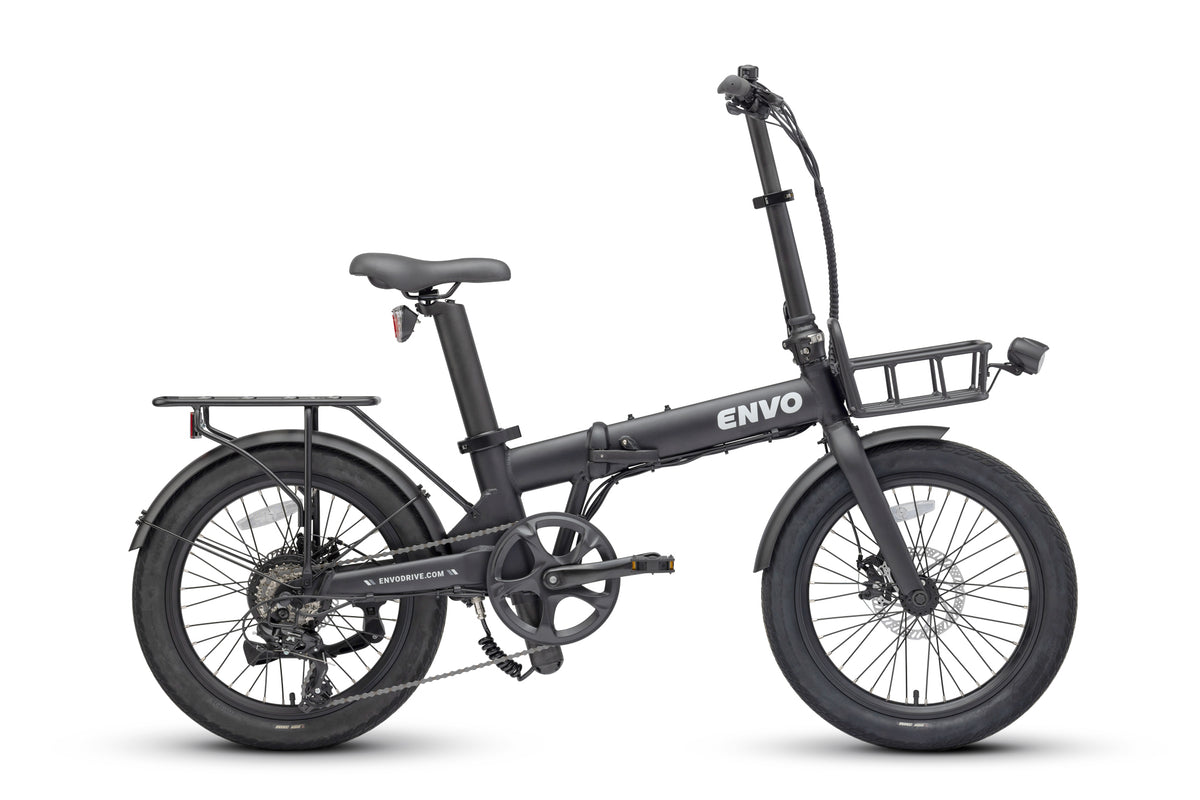
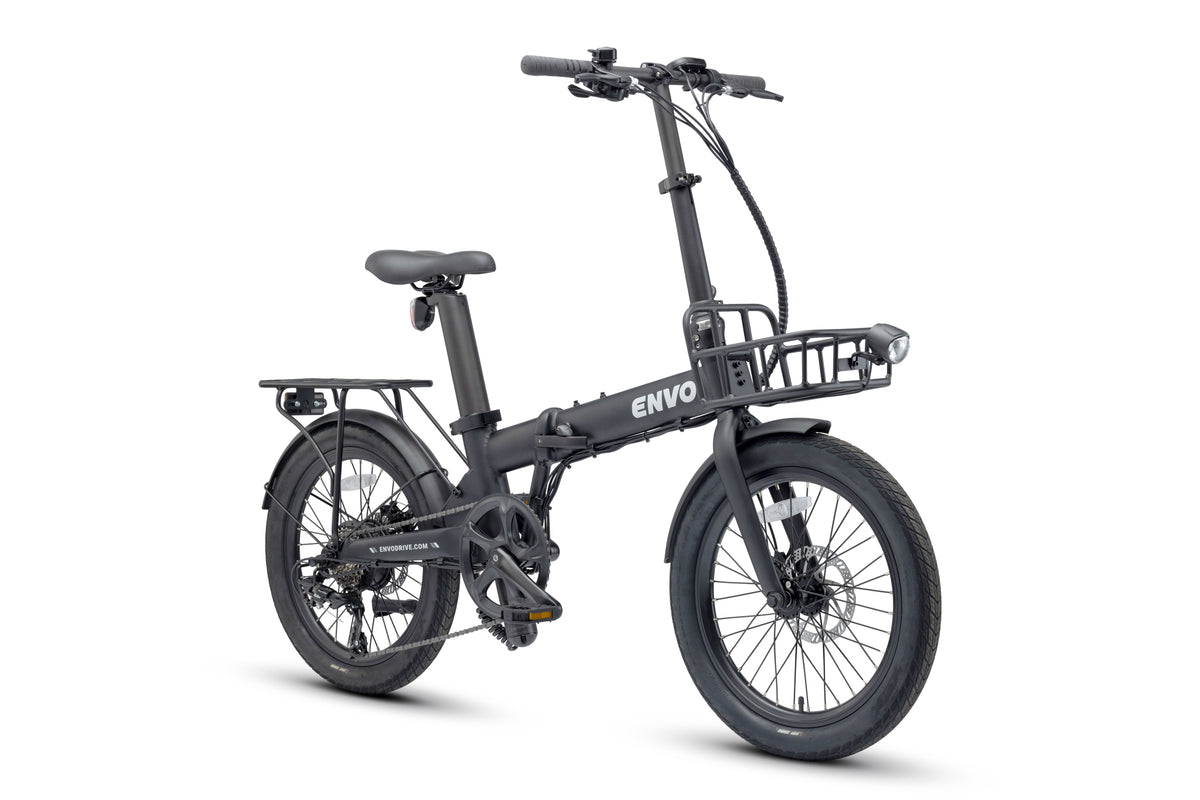
If your e-bike exceeds any of these limits—for example, a motor rated above 500W continuous—it is classified as a motor vehicle (moped or limited-speed motorcycle) and requires a driver’s licence, registration, and insurance. All ENVO Drive e-bikes ship with Canadian-compliant firmware, and their configurable class settings let you stay within the legal envelope.
E-Bike Classes: Class 1, 2, and 3 Explained
While Canada’s federal law doesn’t formally use a numbered “class” system the way the US does, these categories are widely used by manufacturers and retailers to describe how an e-bike operates. Understanding them helps you choose the right e-bike for your needs.
| Class | Assist Type | Max Speed | Throttle | Canada Legal? |
|---|---|---|---|---|
| Class 1 | Pedal-assist only | 32 km/h | No | Yes |
| Class 2 | Pedal-assist + throttle | 32 km/h | Yes | Yes |
| Class 3 | Pedal-assist only | 45 km/h | No | Conditional |
Class 1 and Class 2 e-bikes that stay within 500W and 32 km/h are legal PABs in all provinces. Class 3 bikes exceed the 32 km/h speed cap and are therefore classified as motor vehicles in most of Canada, requiring a licence, registration, and insurance. Some ENVO models like the ENVO D50 offer configurable class settings so you can switch between Class 1, 2, or 3 depending on your jurisdiction and riding context.
Peak vs. Continuous Power
Canadian law measures continuous (nominal) power, not peak. A motor rated at 500W continuous that can briefly spike to 750W during hill climbs is still legal. A motor with a 750W continuous rating is not legal, even if you typically ride at lower power. Always check the rated continuous wattage on the compliance label. For more on this topic, see our related article: Are 750W E-Bikes Legal in Canada?

Province-by-Province Breakdown
Every province enforces the federal 500W / 32 km/h baseline but adds its own age, helmet, and access rules. Here’s what you need to know in each major province:
Ontario
E-bikes are limited to 120 kg and must stop within 9 metres. Helmet is mandatory for all riders, not just minors. Municipalities may add local restrictions.
British Columbia
Canada’s first two-class system (2024): “light e-bikes” (250W, 25 km/h, pedal-assist only, 14+) and “standard e-bikes” (500W, 32 km/h, throttle OK, 16+). Helmet required for both.
Quebec
Riders aged 14–17 need a Class 6D moped licence. Helmet mandatory for all ages. E-bikes restricted from certain bike paths—check municipal rules.
Alberta
One of the lowest age requirements. Alberta requires a motorcycle-standard helmet (not just a bicycle helmet). E-bikes allowed on most public roads and paved trails.
Saskatchewan
Follows the federal framework closely. E-bikes treated as bicycles for most legal purposes. Helmet required for all riders.
Manitoba
One of the more relaxed provinces: helmets mandatory only for riders under 18. E-bikes allowed on roads, bike paths, and trails.
New Brunswick
Bikes exceeding 500W require engineer certification for highway use. Standard PAB rules apply otherwise.
Nova Scotia
Universal helmet law for all e-bike riders. Additional trail access restrictions may apply—verify local bylaws before riding off-road.
Safety Equipment Requirements
Beyond the e-bike itself, Canadian law requires specific safety equipment. These rules are consistent across most provinces, though details vary. Keeping your e-bike in top condition is equally important—see our complete e-bike tune-up guide for maintenance best practices.
Helmet
A CSA-approved bicycle or motorcycle helmet is mandatory in most provinces for all e-bike riders. Alberta specifically requires a motorcycle-standard helmet. Always choose a properly fitted, certified helmet.
Lights and Reflectors
A white front light and red rear light (or reflector) are required when riding between sunset and sunrise. PEI requires daytime lights as well. Many ENVO accessories include integrated lighting systems.
Bell or Horn
An audible warning device is required in BC, Ontario, Quebec, and most other provinces. It must be loud enough to be heard from a reasonable distance.
Brakes
Functional front and rear brakes are mandatory. BC specifies the ability to stop from 30 km/h within 9 metres. Hydraulic disc brakes with electric cut-off sensors (standard on ENVO commuter e-bikes) provide the safest stopping power.
Compliance Label
Your e-bike must display a permanent, bilingual (English/French) label declaring it a power-assisted bicycle. Police may check for this during stops. Never paint over or remove this label.
Where Can You Ride?
Legal e-bikes are generally treated like bicycles, meaning you can ride them on public roads and in bike lanes. However, access to trails, parks, and sidewalks varies significantly:
- Public RoadsE-bikes are allowed on public roads in all provinces, following the same rules as regular bicycles. Controlled-access highways (like the 400 series in Ontario) are off-limits.
- Bike LanesMost cities permit e-bikes in designated bike lanes. Some municipalities restrict higher-speed models, so check local bylaws.
- Trails and ParksBC allows Class 1 e-bikes on park trails where cycling is permitted. Class 2 and 3 are treated as motorised vehicles in parks. Rules vary widely by province and park authority.
- SidewalksGenerally prohibited. Some municipalities make exceptions with signage, but the default is no e-bikes on sidewalks.
- Private PropertyNo restrictions apply on private land with the owner’s permission. This is where higher-powered bikes like fat tire e-bikes can be used without concern for power limits.
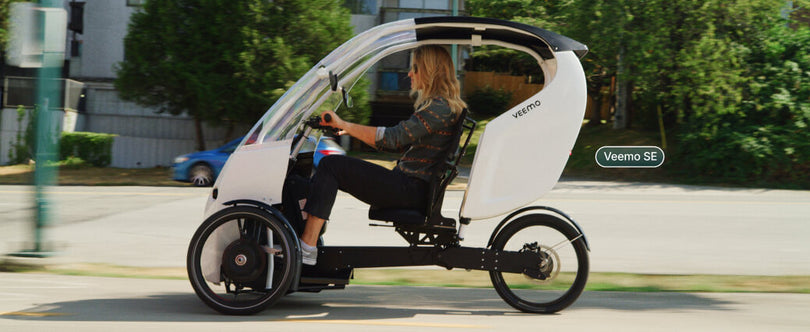
For all-season urban riding with weather protection and cargo capacity, the Veemo enclosed e-trike offers a unique solution that works within standard e-bike regulations.

Licensing, Insurance, and Registration
One of the biggest advantages of riding a legal e-bike in Canada is the lack of bureaucracy:
| Requirement | Legal PAB (≤ 500W) | Over-Limit E-Bike |
|---|---|---|
| Driver’s Licence | Not required | Required (M-class or equivalent) |
| Vehicle Registration | Not required | Required |
| Insurance | Not required | Required (liability minimum) |
| Licence Plate | Not required | Required |
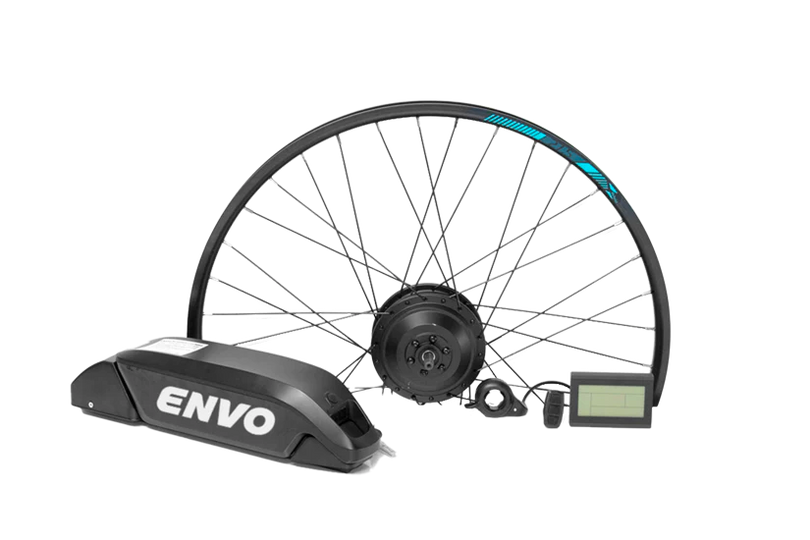
This simplicity is a major reason e-bikes are booming. If you’re interested in converting an existing bike to electric, ENVO conversion kits are available in both 36V and 48V configurations, both designed to keep you within the legal limit.
Penalties for Non-Compliance
Riding an e-bike that exceeds legal limits—or failing to meet safety requirements—can lead to serious consequences:
- FinesVary by province. In BC, fines for riding a non-compliant e-bike on trails can reach $575. Ontario and Quebec issue similar fines for missing helmets, lights, or operating an unregistered over-limit bike.
- ConfiscationPolice can seize non-compliant e-bikes. Getting your bike back involves storage fees and demonstrating compliance.
- No Insurance CoverageIf you’re in a collision on a non-compliant bike, you may have zero insurance coverage, leaving you personally liable for all damages and medical costs.
- Licence IssuesOperating what is legally a motor vehicle without a licence can result in points, suspensions, or criminal charges depending on the severity.
Warning: Unlocking Your E-Bike
Removing the speed limiter or flashing firmware to exceed 32 km/h immediately reclassifies your e-bike as a motor vehicle. This voids your PAB status, any applicable warranty, and could leave you uninsured in a collision. Vancouver and Montreal have conducted wattage and speed checks on popular cycling routes.
Tips for Staying Legal
Buy from a Reputable Canadian Retailer
Ensure your e-bike ships with the proper bilingual PAB compliance label and is configured for Canadian limits out of the box. Browse EbikeBC’s full collection of federally compliant e-bikes.
Check Your Province’s Specific Rules
Especially for age requirements, helmet standards, and trail access. BC riders should know the difference between light and standard e-bike classes. Ontario riders should confirm municipal bylaws.
Don’t Modify Beyond Legal Limits
Resist the temptation to unlock speed or power limits. The performance gain is marginal while the legal and safety risks are significant.
Maintain Your E-Bike Regularly
Brakes, lights, and tyres need regular attention. A well-maintained e-bike is safer and helps you avoid equipment-related fines. See the ENVO maintenance guide for details.
Keep Your Battery Safe
Use only the manufacturer’s charger, never leave batteries charging unattended overnight, and store them at room temperature. For peace of mind, choose UL 2849 certified e-bikes that have been independently tested for electrical, fire, and mechanical safety. Learn more about battery health in our battery percentage and charge level guide.
The Bottom Line
Riding a legal e-bike in Canada is straightforward once you know the rules: 500W motor, 32 km/h speed cap, working pedals, and a compliance label. Meet those federal requirements, add the safety gear your province mandates, and you’re free to ride without a licence, registration, or insurance.
The best way to guarantee compliance is to buy from a trusted Canadian retailer that understands these regulations. Every e-bike at EbikeBC ships ready for Canadian roads, backed by ENVO Drive’s commitment to sustainable, safe, and legal electric mobility. Stay informed, stay safe, and enjoy the ride.
Key Takeaways
Federal limit: 500W continuous motor, 32 km/h max assisted speed, operable pedals.
No licence needed: For legal PABs—no registration or insurance either.
Helmet required: In most provinces for all riders; Manitoba requires it only under 18.
Class 3 bikes (45 km/h): Not street-legal as PABs—require moped/LSM classification.
Stay compliant: Buy from a reputable retailer, don’t unlock speed limits, maintain your bike.
Explore more: EbikeBC Blog · ENVO Articles · Veemo
Continuer à lire