

Step-Through Frames and Speed Wobble: The Trade-Off Nobody Explains
Step-through e-bikes are super easy to live with, but their open frames bend a little more than regular frames. Add a heavy load on the back and the bike can start to shake at speed. Here is what is really going on, and how to ride safe.
It usually starts going downhill. You are cruising along, relaxed, maybe one hand off the bars, when the front wheel starts to flutter. A second later that flutter turns into a fast, violent side-to-side shake. The handlebars buzz quicker than you can react. Riders call it speed wobble, shimmy, or the "death wobble." Once you have felt it, you never forget it.
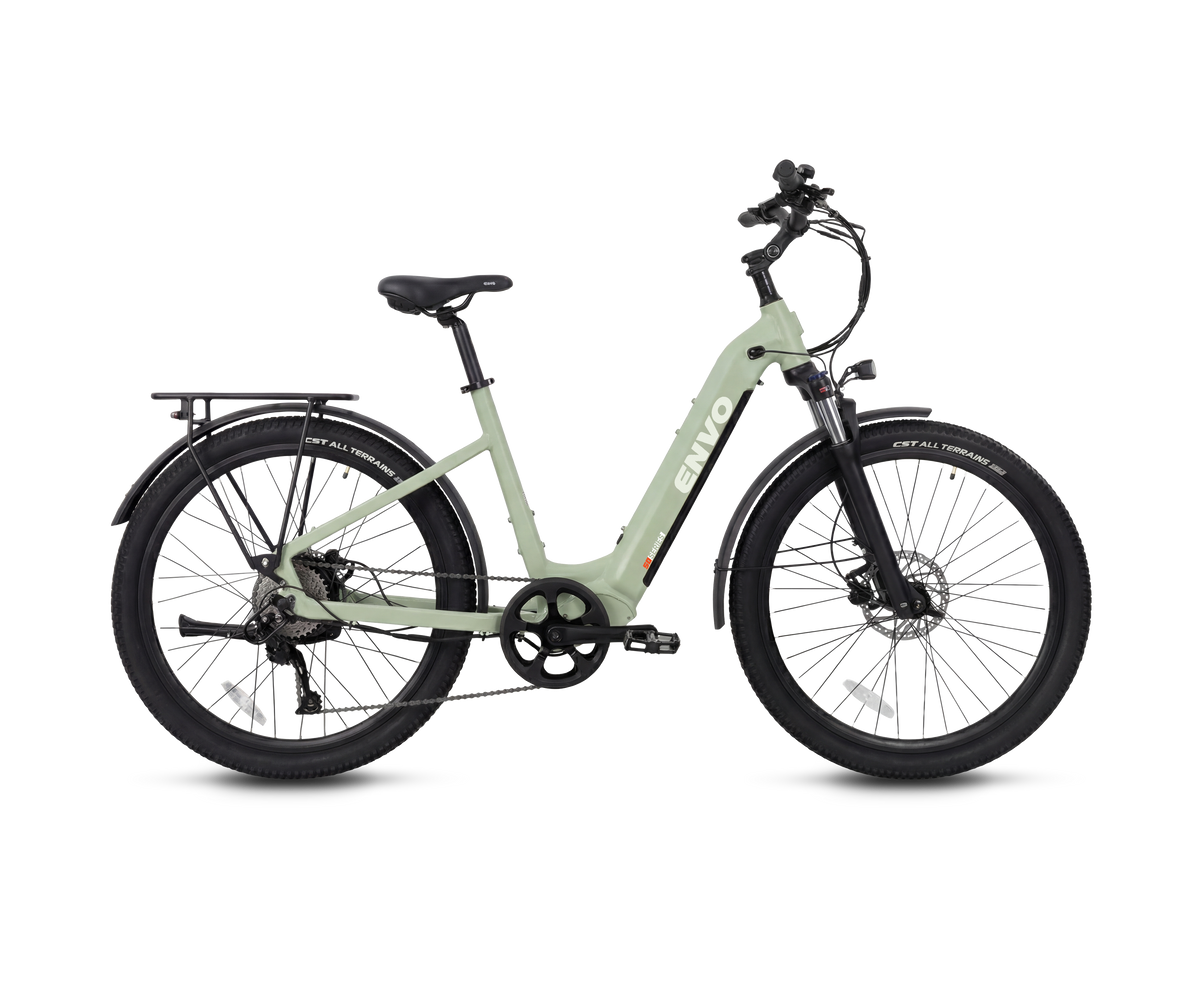
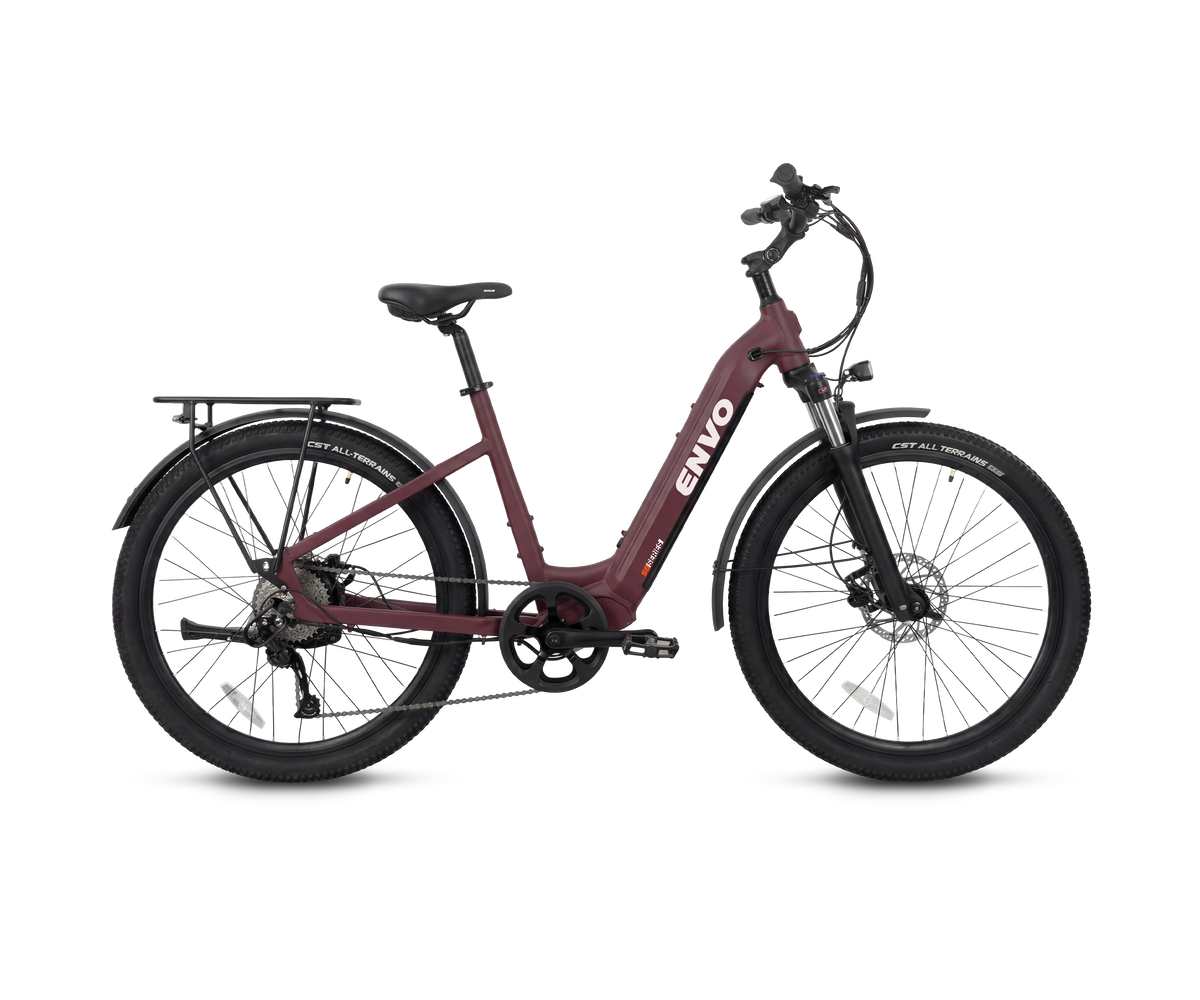
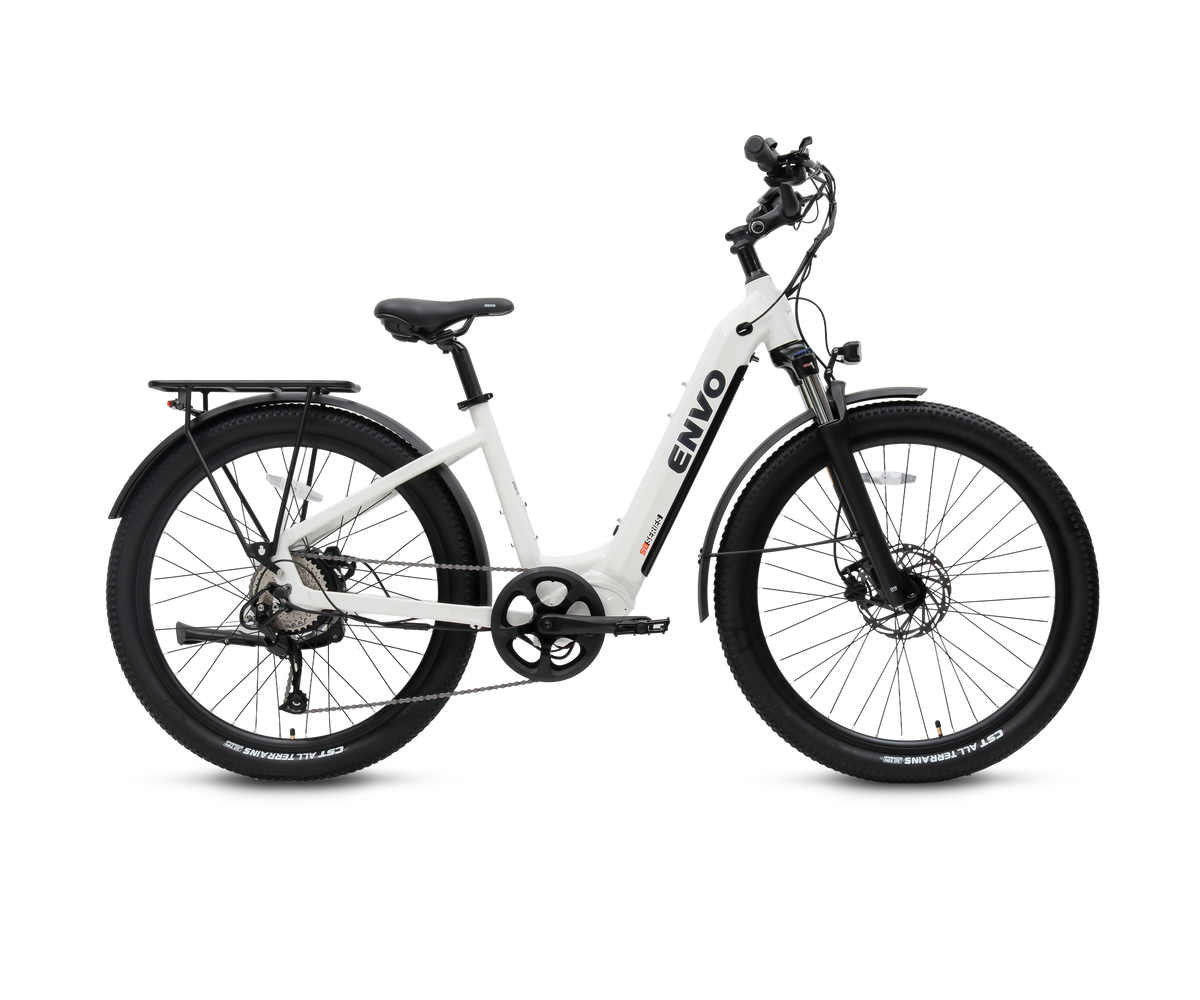
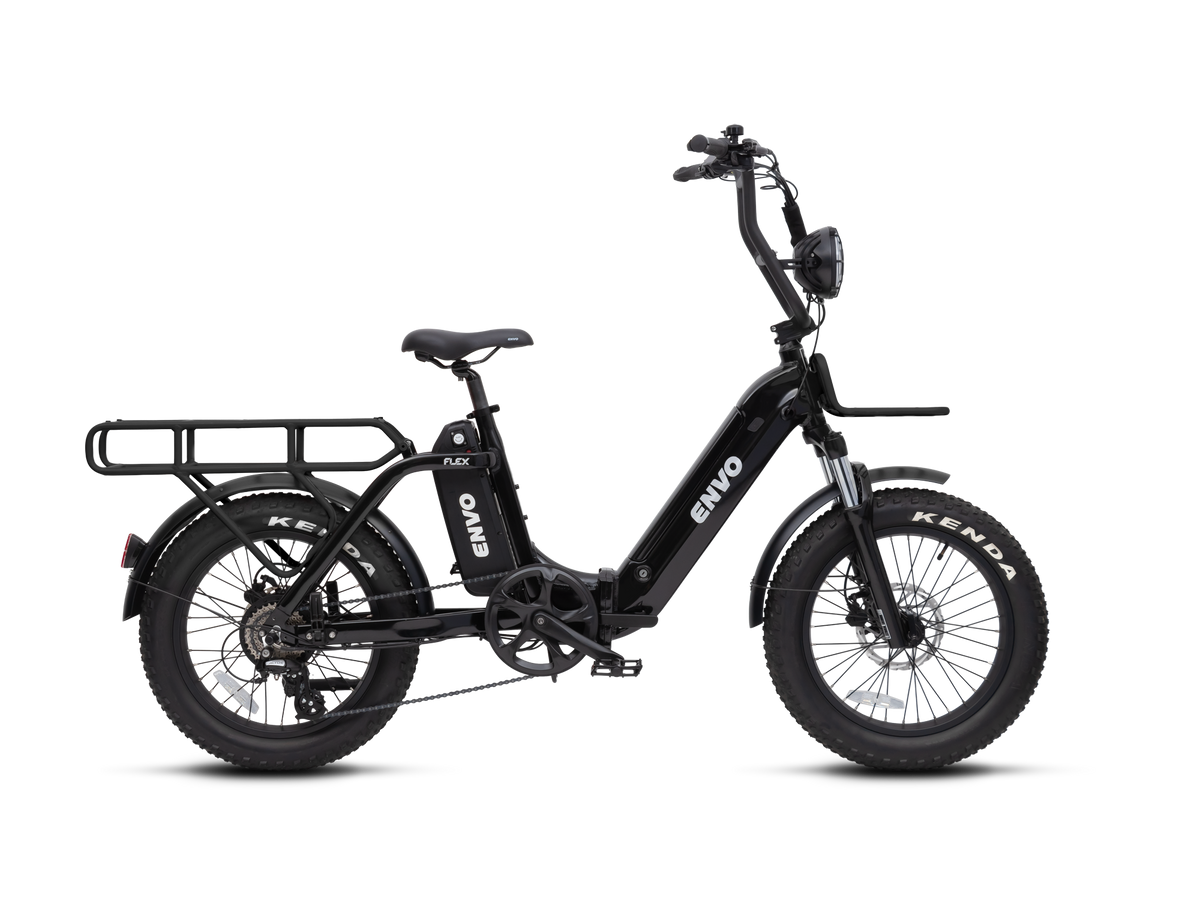
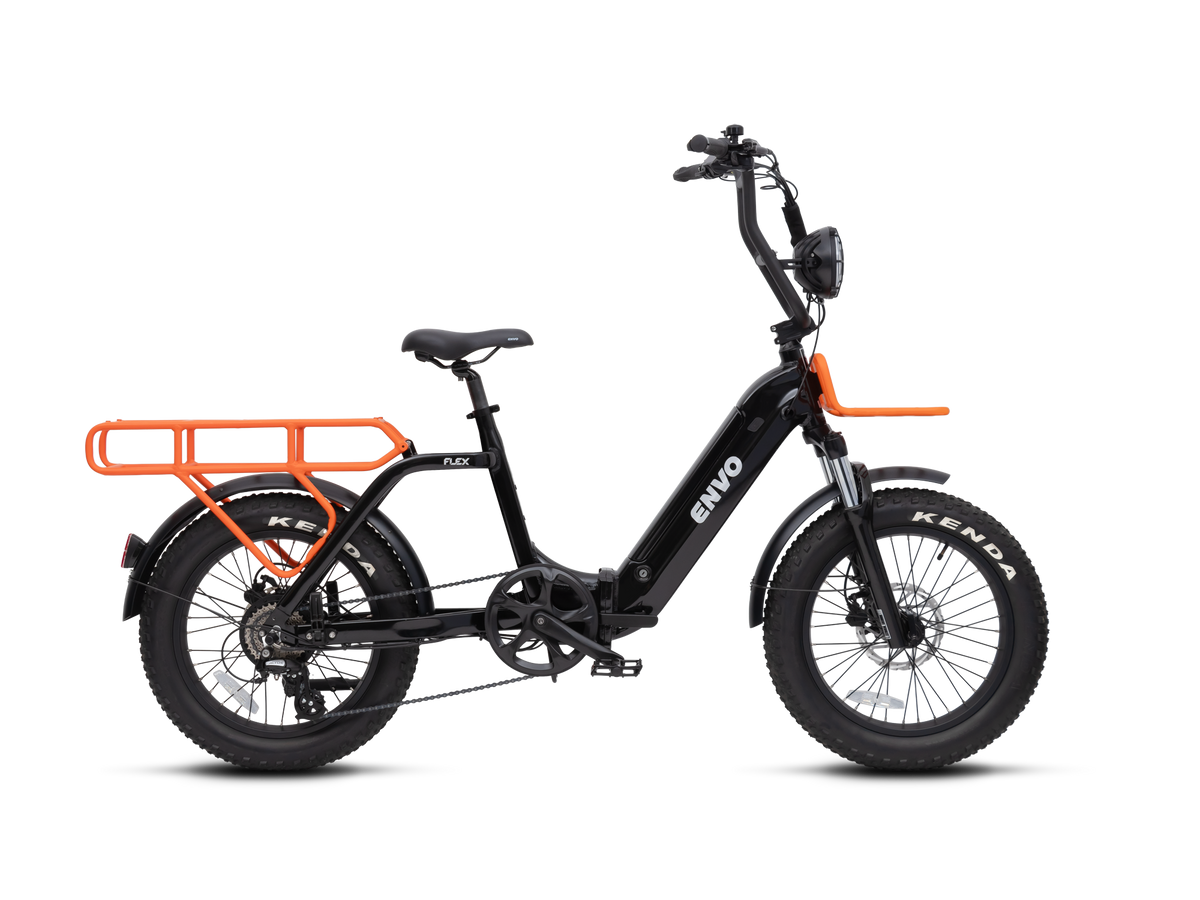
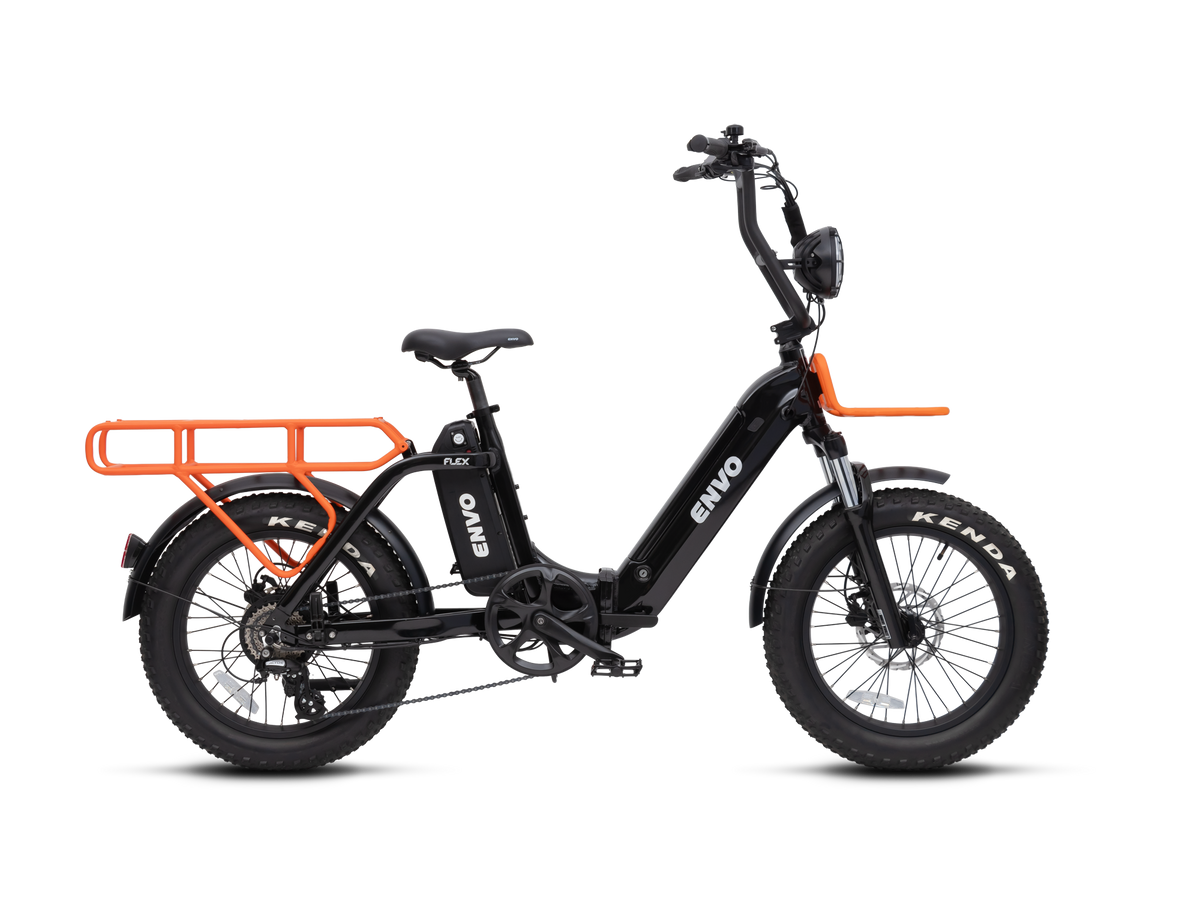
Here is the part almost nobody explains: a speed wobble is not bad luck, and it is not one broken bike. It needs two things at the same time. First, a frame that bends a little, because a wobble is really the frame springing back and forth like a plucked ruler. Second, heavy weight on the back of the bike: a loaded rear rack, a stuffed basket, a child seat, or a rear-mounted "monkey bar" child protector. Step-through frames, the low kind you step into instead of swinging a leg over, bend a bit more than classic diamond frames. That missing top bar leaves the front of the frame more open. Put a heavy load on the back of a step-through and you have one of the most wobble-prone setups on the road. The good news? The everyday fix is simple: keep both hands on the bars, and slow down whenever the back of your bike is loaded.
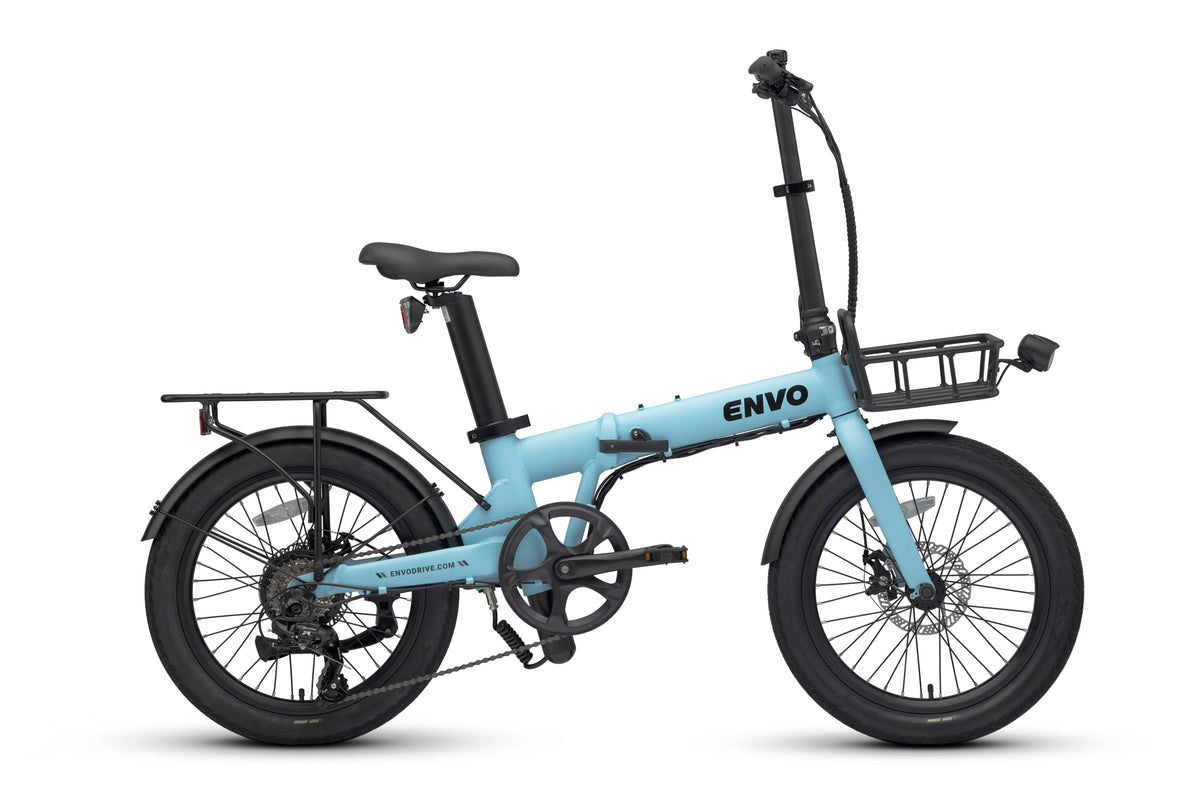
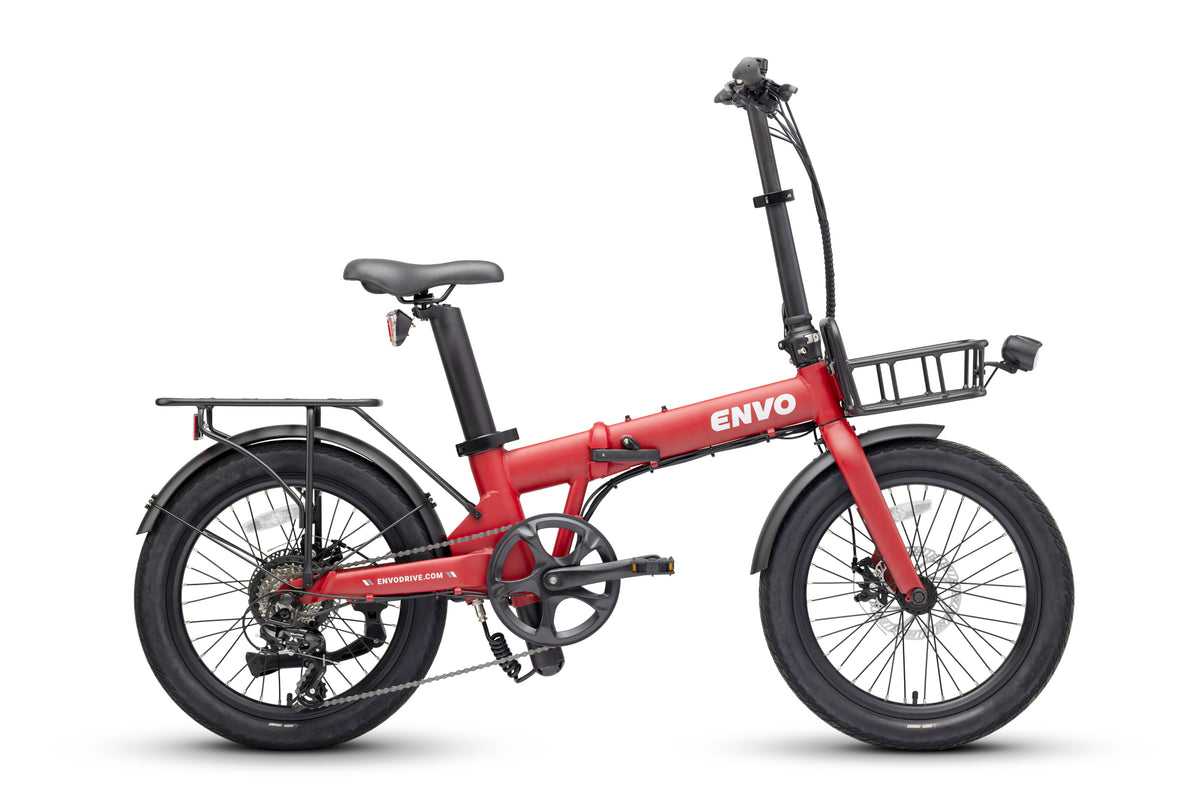
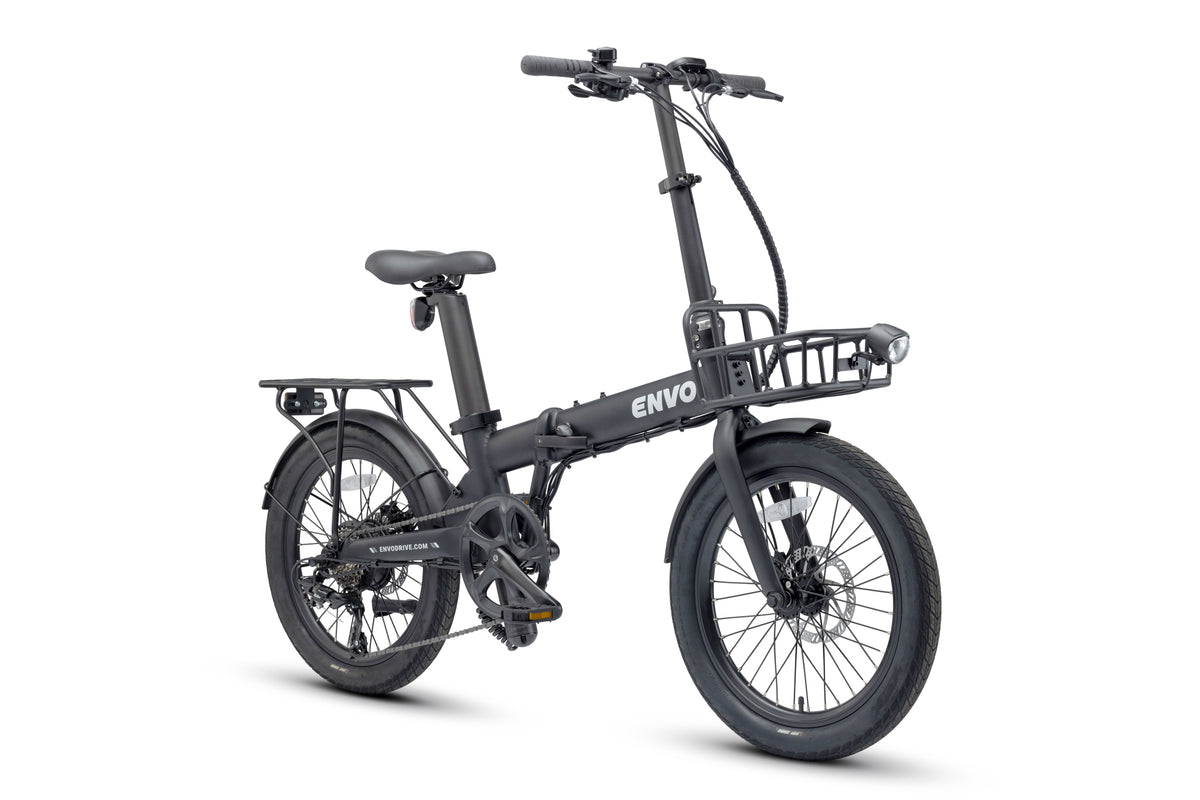
At EbikeBC we can be totally honest about this, because ENVO Drive Systems makes both kinds of frame: the ST50 step-through and the D50 diamond frame. Same bike underneath, same price. This article is not here to scare you away from step-throughs. They are safe at normal city speeds. It is here to help you pick the right frame and ride a loaded bike the right way.
Seeing is believing, so watch what frame flex actually looks like before we dig into why it happens.
What a Speed Wobble Actually Is
A bike can shake in two different ways, and it helps to know which is which. The slow one is called weave: a lazy sway of the whole bike from side to side, the kind you might feel rolling along slowly with no hands. Weave actually calms down as you go faster, so it is rarely the scary one. The scary one is wobble, also called shimmy or speed wobble: a fast shudder in the handlebars and front wheel. Unlike weave, wobble gets worse the faster you go. That is exactly why riders almost always meet it going downhill.
So why does it happen at all? Because no bike is perfectly stiff. Picture the frame as a springy diving board. The front of the bike can twist a tiny bit and spring back, over and over, several times a second. A stiff frame is like a short, firm board that barely moves. A bendy frame is like a long, bouncy one that keeps flexing. Scientists who study how bikes balance put it simply: a wobble comes from the bend in the frame, fork, and tires. A bike that could not bend at all could not wobble. That is why the frame's stiffness is the star of this whole story.
For the curious (skip this box if the math is not your thing): scientists wrote down a famous equation in 2007 that describes how a bike balances: M q̈ + v C₁ q̇ + (g K₀ + v² K₂) q = f, where q stands for how much the bike leans and steers. The cool part: one piece of the equation grows with speed (v), and another grows with speed squared (v²). In plain words, a bike's whole personality changes as it goes faster. A bike that feels rock solid at 25 km/h can act totally different at 45. It is a model, not a crystal ball, but it explains a lot.
Ingredient One: A Bendy Frame
Why would a step-through bend more than a diamond frame in the first place? One word: triangles. A classic diamond frame is really two triangles joined together. The front triangle is made by the head tube, top tube, down tube, and seat tube. The rear triangle sits behind the seat. Triangles are the strongest shape in building, which is why you see them in bridges and roof frames. Push on a triangle and every side pushes back along its own length, either stretching or squeezing. Tubes are amazing at handling that. The shape barely moves.
Now take away the top tube, or drop it way down low, which is exactly what a step-through does so you can step in easily. The front triangle is broken. The frame no longer works like a bridge truss. Instead, the long tubes have to fight the same forces by bending and twisting, and tubes are much weaker at bending and twisting than at stretching and squeezing. So the frame gets softer side to side. This is not a hot take, it is just how structures work, and bike makers openly design around it. The engineering references on step-through frames say the same thing in more technical words: open frames need thicker tubing or extra reinforcing pieces, and if a builder skims on that, the frame flexes too much, wastes pedaling effort, and wears out sooner.
The link from flex to wobble is just as direct. Engineers who study shimmy have found that a frame that resists twisting at the front triangle is less likely to wobble, because a stiffer spring vibrates faster and is harder to set off. Notice the words "front triangle": that is the exact part a step-through gives up. Jobst Brandt, a legendary bicycle engineer, explained that a shimmy needs a spring and a weight to swing around, and that the frame's top tube and down tube act as that spring. A step-through deletes one of those two tubes.
The one idea to remember: a wobble behaves like a weight bouncing on a spring. A softer spring bounces more slowly and is easier to get going. A bendier frame is a softer spring, so the wobble can start at a lower speed. Engineers have understood this direction of the effect since research in the 1970s. It is a rule of thumb about which way things go, not an exact prediction for your exact bike.
Honesty checkpoint: nobody has ever published a fair lab test comparing two identical bikes, one step-through and one diamond, so we will not make up a "step-throughs are X% less stiff" number. What we can say for sure is the direction: break the triangle and stiffness drops. Every serious builder of open frames adds extra material to fight this, which tells you they know it too. E-bikes raise the stakes even more. They are heavier, they cruise faster and longer than most pedal bikes, and the big battery slot cut into the down tube removes material from the one tube doing most of the work on a step-through.
The good news is that builders have real tricks to win stiffness back: bigger shaped down tubes, double down tubes, reinforcing plates at the joints, extra tubes that rebuild the triangle, and batteries built in as part of the structure. A well-built step-through, like ENVO's hydro-formed 6061 aluminum ST50, is a very different machine from a bargain open frame that ignores the problem. But physics gives no free passes: with the same effort, the closed triangle is always the stiffer one.
Ingredient Two: A Heavy Tail
A bendy frame alone rarely wobbles. It needs a partner: weight, fixed to the back. This is where rear racks, panniers, baskets, trunk bags, child seats, and the rear-mounted "monkey bar" style child protector come in. A respected bike expert writing on the Sheldon Brown website explains it like this: heavy stuff on the back pins the rear of the bike down, so all the twisting happens at the front instead. The frame becomes a spring that is clamped at one end, and the free end, your front wheel and handlebars, is what swings.
It stacks up from there. Weight carried high and behind the rear wheel shifts the bike's balance point back and up, and makes the whole bike slower to settle after a wiggle. Both changes let the shakes start at a lower speed and last longer. Cycling UK, a national cycling-safety charity in Britain, warns that child seats put weight above and behind the rear wheel, which makes the bike less stable.
Now put ingredient one and ingredient two together. That same charity warns that open frames, meaning frames without a top tube, "can flex and shimmy alarmingly" when you carry a heavier child on a rear seat, because the frame just is not stiff enough. That is the bendy frame and the heavy tail meeting in one sentence, from a safety group with no bikes to sell.
Researchers agree. A 2024 study on cargo bikes concluded that a rear rack added onto a normal bike should only carry light loads, because heavy rear weight plus a powerful rear-wheel motor could raise the risk of accidents. And the official safety standard for rear child seats requires the manual to warn you that a child's weight can change how the bike steers and brakes. None of this says "do not carry things." It says: a loaded tail changes your bike, and you should know it.
The key safety point: wobble usually shows up at higher speeds, often above roughly 40 km/h (25 mph), though it varies a lot with the bike, the rider, and the load. A heavy, high load on the back pulls that danger speed down toward everyday riding speeds, and a bendy open frame pulls it down even further. So when your bike is loaded, treat it like a different, touchier machine: both hands on the bars, easy on the speed, and extra care going downhill.
Diamond vs Step-Through: The Honest Trade-Off
None of this makes step-throughs bad bikes. It makes them specialized bikes. A step-through is the easy-living frame: you step in, not over. That matters a lot if you ride in regular clothes, stop often, have hip or knee trouble, or just like being able to put a foot down instantly. For city errands and relaxed commuting on urban and city commuter e-bikes, the step-through is often the genuinely better pick. Retailers like Brooklyn Bicycle Co. are right that at city speeds, the stiffness gap is not a structural problem.
The diamond frame is the load-and-speed frame. Its closed front triangle makes it stiffer for the same amount of metal: your pedaling power goes to the wheel instead of into flex, the bike feels calmer at high speed, and it resists the twisting that feeds a wobble. The price you pay is that top tube you have to swing a leg over every single time. Both frames are safe at normal city speeds. The difference only shows up in three situations: hard pedaling, heavy loads, and high speed.
Choose Your Frame in 30 Seconds
- Pick a step-through if: getting on and off easily matters most; you stop a lot; you ride in regular clothes; your loads stay light to medium; you cruise at relaxed city speeds.
- Pick a diamond frame if: you often carry a heavy rear load, a child seat, or full bags; you ride at or near top e-bike speeds; you are a heavier or taller rider; you go down hills a lot; you want the stiffest frame for your money.
- Either way: when the back is loaded, ride with both hands on the bars and keep your speed easy. The frame choice sets your safety margin; your riding habits protect it.
How to Ride a Loaded Bike Safely
Here is the practical part, and it starts with one rule that beats all the others: whenever the back of your bike is loaded, keep both hands on the bars and ride with extra care. This is not just an old saying, it is measured science. In 2014, a team of engineers modeled a rider with hands on the bars and hands off, and found that a wobble dies out much faster when your hands are on. Your arms act like shock absorbers for the steering. Take them off the bars and you have removed the main thing standing between a small flutter and a full-on wobble.
Bike engineer Jobst Brandt added a classic rider trick: pressing a leg against the top tube is the most common way to calm a shimmy, and taking some weight off the saddle (without fully standing up) helps too. Notice the catch: a step-through has no top tube to press your knee against. That makes the both-hands rule even more important on that frame. Pressing a knee against whatever frame tube you can reach still helps.
The Loaded-Bike Checklist
- Both hands on the bars, always, when the back carries weight. Relaxed but firm, not a white-knuckle squeeze.
- Slow down when loaded. Wobble usually shows up above roughly 40 km/h, so ease off on downhills and leave yourself room. That number is a guide, not a hard line.
- Keep loads low and as far forward as you can. Bags hanging beside the wheel beat a pile on top of the rack. Low and forward beats high and rearward every time.
- Mount child seats close to the rear wheel's axle. Cycling UK suggests keeping the seat base within about 10 cm behind it.
- Respect the weight ratings. ENVO's built-in rack is rated for 25 kg. A rack-mounted child seat like the Thule Yepp 2 Maxi is rated to 22 kg. Ratings are limits, not goals.
- Check that rack and seat bolts are tight before each ride. A loose rack turns a solid load into a swinging one.
- Do not mix a maxed-out rear load with full-throttle takeoffs on a rear-wheel motor. That exact combo is the risk the cargo-bike researchers flagged.
- If a wobble starts: keep a firm grip, press a knee against the frame, ease off the throttle and pedals gently, and do not grab the front brake hard. Let your speed drain away smoothly.
One more habit worth building: a quick check of your tire pressure and headset (the bearing your handlebars turn on) catches two other wobble helpers before they matter. Our e-bike tune-up guide walks you through both in a few minutes.
Choosing Your ENVO Frame
ENVO makes this decision refreshingly simple, because the ENVO ST50 and the ENVO D50 are the same bike in two frame shapes at the same price: $2,679.00 CAD. Same 48V/15Ah built-in LG battery, same 750W rear-hub motor (Class 3 up to 45 km/h, or Class 2 at 32 km/h). You give up nothing on the spec sheet either way. The only choice is frame shape: easy mounting versus load and stability.
Pick the D50 if you regularly carry a heavy rear load or a child seat, ride near top speeds, or are a heavier rider. Its closed front triangle is the stiffer structure, and everything in this article says stiffness is what you want under a loaded tail at speed. Pick the ST50 if easy step-in mounting and comfort matter most and your loads stay light to medium. It is the frame you will actually enjoy hopping on ten times a day. Both are hydro-formed 6061 aluminum, TIG-welded, with the battery built into the down tube, and ENVO markets both as UL 2849 certified, an electrical-safety standard (you can browse the full UL 2849 certified e-bike collection here).


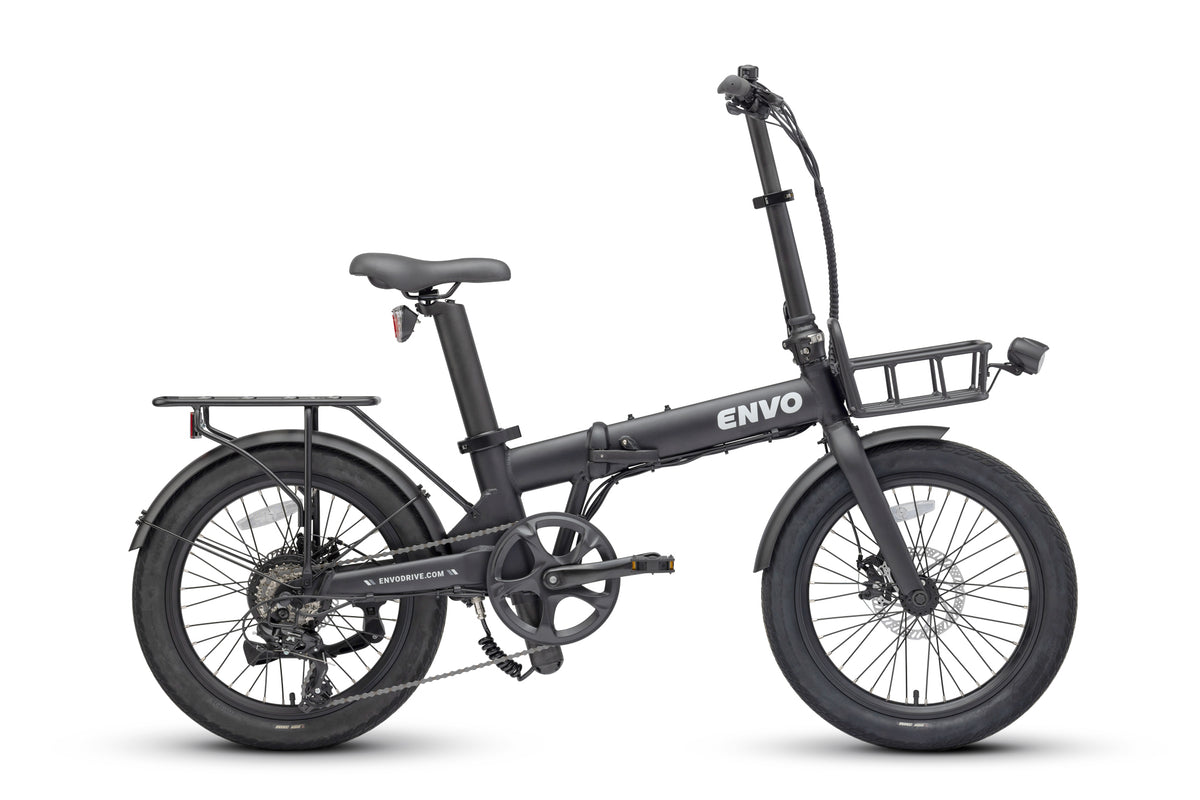
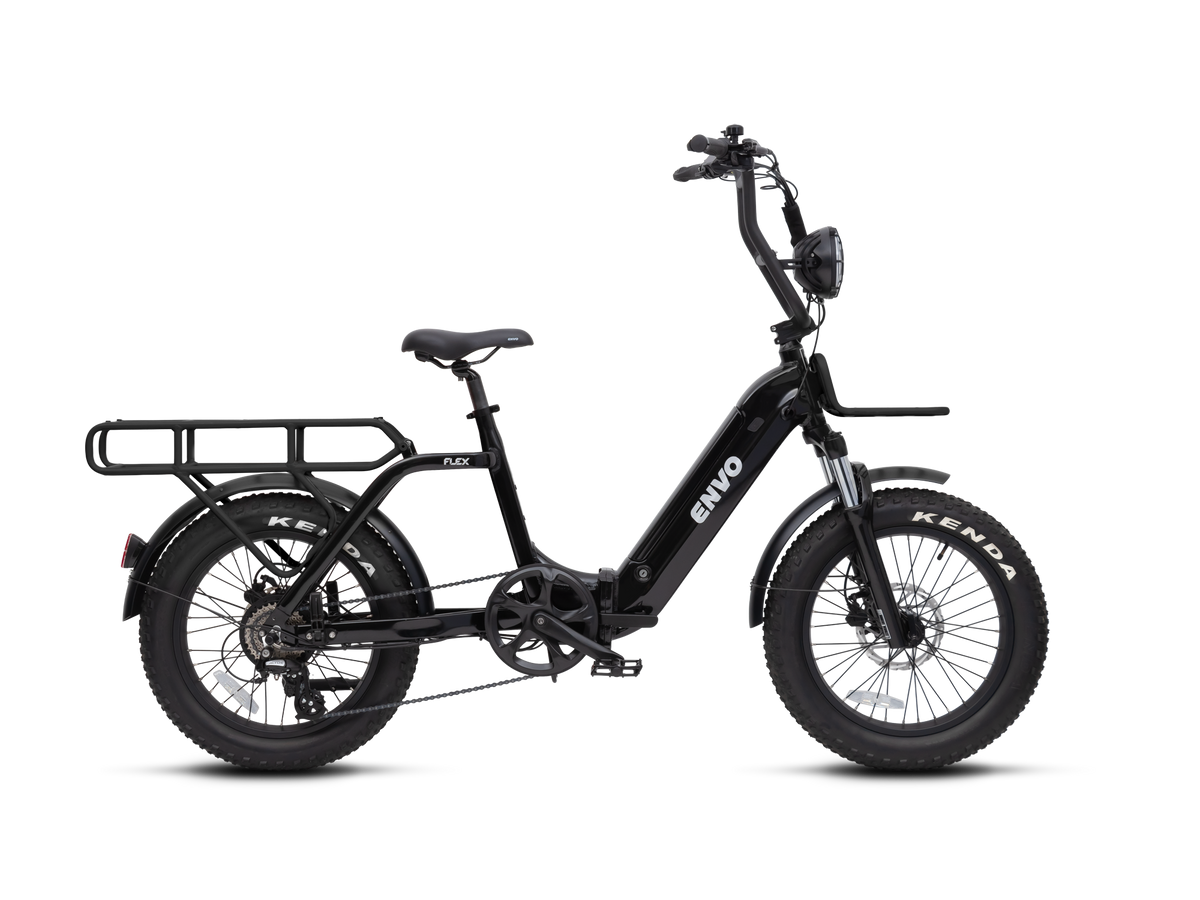
And if what you really want is to carry kids or a passenger all the time, the honest answer is neither of these. It is a longtail cargo bike, built for exactly that job. The ENVO Flex Overland carries its load on a rear carrier rated around 150 lb and fits two child seats, on a frame designed for hauling. Putting a maxed-out child seat on a light step-through is asking a comfort bike to do a cargo bike's job. The electric cargo bike lineup exists so you do not have to. And for matching a bike to how you ride more generally, our e-bike buying guide covers the whole decision.
Frequently Asked Questions
The Bottom Line
Comfort versus stability is a real engineering trade-off, not a marketing line. The step-through's open frame is what makes it so easy to hop on, and it is also what makes it a softer spring. Speed wobble needs that softer spring plus one more thing: heavy weight fixed to the back. Keep either ingredient out of the recipe and the wobble almost never happens.
So pick the frame that matches your loads and your speeds, and ride the loaded trips like they matter: both hands on the bars, speed held back, bolts checked, ratings respected. Step-through or diamond, an informed rider on the right frame is a safe rider.
A bendy frame plus a heavy tail invites the wobble. The right frame plus two hands on the bars keeps it away.
Not Sure Which Frame Fits You?
Same bike, same price, two frame shapes. Compare them side by side and pick the one your loads and speeds are asking for.
Sources
- Meijaard, J.P., Papadopoulos, J.M., Ruina, A. & Schwab, A.L. (2007). "Linearized dynamics equations for the balance and steer of a bicycle: a benchmark and review." Proceedings of the Royal Society A, 463(2084), 1955-1982. royalsocietypublishing.org
- Klinger, F., Nusime, J., Edelmann, J. & Ploechl, M. (2014). "Wobble of a racing bicycle with a rider hands on and hands off the handlebar." Vehicle System Dynamics, 52(sup1), 51-68. doi.org/10.1080/00423114.2013.877592
- Roe, G.E. & Thorpe, T.E. (1976). "A solution of the low-speed wheel flutter instability in motorcycles." Journal of Mechanical Engineering Science, 18(2), 57-65. doi.org/10.1243/JMES_JOUR_1976_018_011_02
- Sharp, R.S. (1971). "The Stability and Control of Motorcycles." Journal of Mechanical Engineering Science, 13(5), 316-329. doi.org/10.1243/JMES_JOUR_1971_013_051_02
- Covill, D., Begg, S., Elton, E., Milne, M., Morris, R. & Katz, T. (2014). "Parametric finite element analysis of bicycle frame geometries." Procedia Engineering, 72, 441-446. sciencedirect.com
- Wikipedia. "Speed wobble." en.wikipedia.org/wiki/Speed_wobble
- Wikipedia. "Step-through frame." en.wikipedia.org/wiki/Step-through_frame
- Brandt, J. "Shimmy, or Speed Wobble," and Allen, J., commentary (Sheldon Brown archive). sheldonbrown.com/brandt/shimmy.html and sheldonbrown.com/shimmy.html
- Cycling UK. "Beginner's guide to child bike seats." cyclinguk.org
- Heliyon (2024). "Analyzing the impact of bicycle geometry and cargo loading on the rideability and safety of cargo bikes: an investigative study." cell.com/heliyon
This article is for information only and is based on public sources as of August 2026. The shake rates, onset speeds, and load figures here are general guides that change with the exact bike, rider, tire pressure, and load. The balance equation shown is a teaching model, not an exact prediction for any particular bicycle. No published lab test compares an otherwise-identical step-through and diamond frame, so the frame comparison here explains which way the effect goes, using engineering principles, rather than giving a measured percentage. ENVO product specs, prices, load ratings, and UL 2849 certification status are the manufacturer's own published claims and should be checked on the current product pages before buying. Nothing here is engineering, medical, or safety-certification advice.