Aima eBikes Canada 2026
Complete Buyer's Guide
Everything Canadian shoppers need to know about Aima's 8-model 2026 lineup — pricing, specs, warranty, retail model, and how it compares to Canadian-assembled alternatives like the ENVO D50.
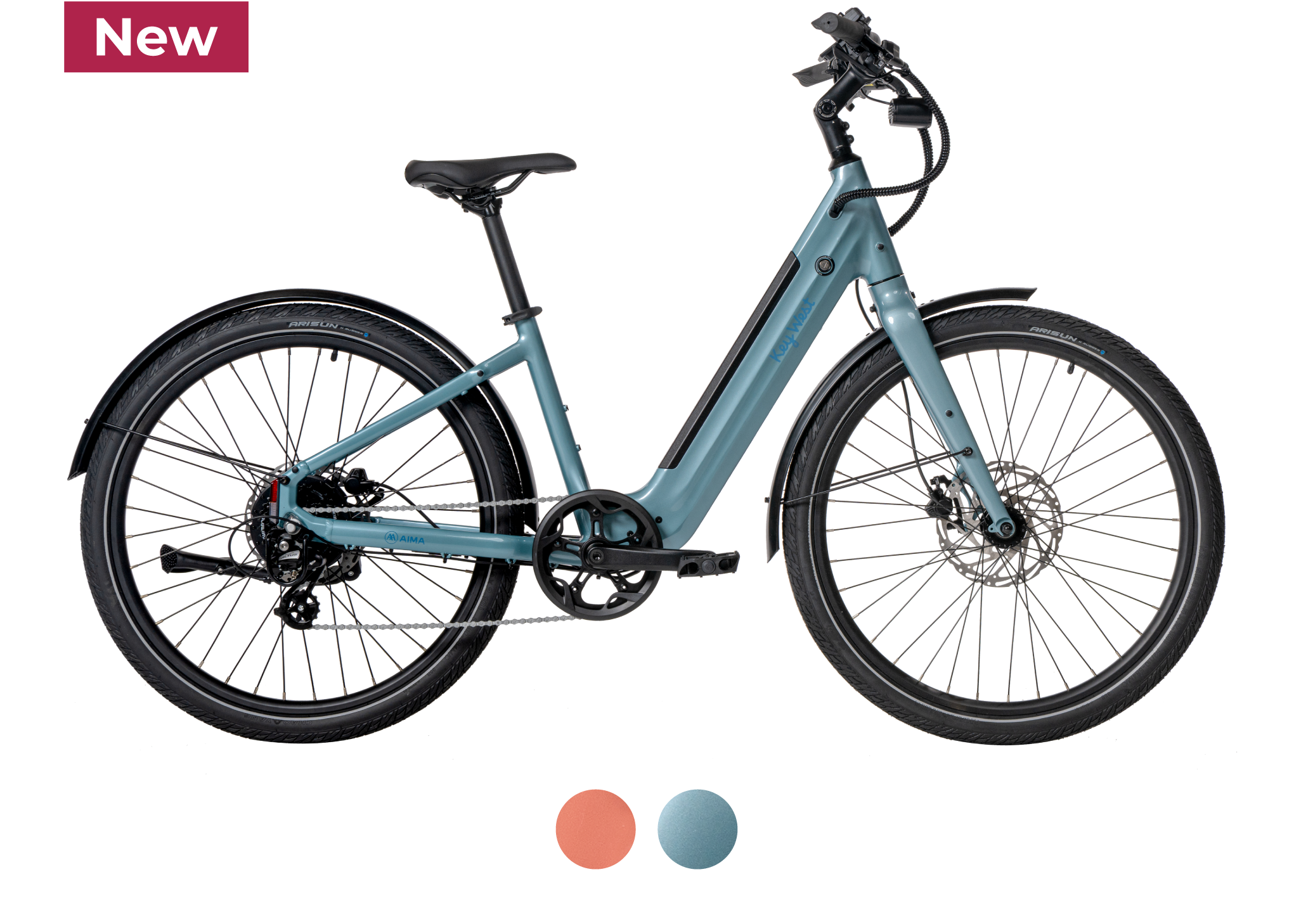
Table of Contents
- Introduction
- Brand Overview: Who Is Aima in Canada?
- Full Lineup Pricing & Specs
- What You Get Across the Lineup
- Warranty & Service
- Where Aima Excels
- Where Aima Falls Short
- Why Choose Canadian: The ENVO Argument
- Best Aima Model for Each Buyer
- When Aima Is Not the Best Fit
- Honest ENVO Alternatives
- The Long-Haul Question
- Final Purchase Guidance
Introduction
AIMA is one of the newest serious e-bike brand entries in Canada, but it is not a small company trying to look bigger than it is. The Canadian operation launched on November 28, 2024 through UNIVELO, an exclusive distributor based in Quebec, with bikes sold only through partner bicycle retailers. Behind that retail setup sits Aima Technology Group, founded in 1999 in Tianjin, China and listed on the Shanghai Stock Exchange under 603529.
In its 2024 annual report, AIMA reported RMB 21.61 billion in revenue, while overseas revenue accounted for only about 1.1% of total revenue. That last point matters: Canada is part of a still-small international expansion story, not the center of AIMA's business.
As of May 12, 2026, AIMA has therefore been in the Canadian market for roughly 18 months. That is long enough to take the brand seriously, but still short enough that buyers should think carefully about service model, parts continuity, and long-haul support expectations. This guide covers everything you need to know before buying an AIMA e-bike in Canada in 2026 — and how the lineup compares to Canadian-assembled options like the ENVO D50 at EbikeBC.
1. Brand Overview: Who Is Aima in Canada?
AIMA in Canada is not currently a broad direct-to-consumer experiment. It is a dealer-only retail model through UNIVELO and partner shops. That means the buying proposition is straightforward: you are not just purchasing a bike online from a website; you are buying into a retailer-mediated experience. For many customers, especially first-time e-bike buyers, that is a real plus.
It's important to understand the corporate structure behind that retail experience. Aima Technology Group is a Chinese public company. Its North American headquarters is in City of Industry, California, USA — through subsidiary AIMA EBIKE (aimatech.us). There is no Aima legal entity in Canada. The Canadian operation runs entirely through UNIVELO (a third-party Quebec distributor) under a single exclusive contract. So when you buy an AIMA bike in Canada, the support chain is: your local partner retailer → UNIVELO in Quebec → (limited) Aima USA in California → (ultimately) Aima Technology Group in Tianjin, China.
The flip side is equally important: if you prefer a more open direct-buy, self-service, or modular ecosystem, AIMA may feel more closed than some alternatives. In broad product terms, AIMA's Canadian lineup has been consistent in its design philosophy. The company is not trying to offer every category under the sun. Instead, it has built a range around:
- urban comfort commuters
- fat-tire all-terrain bikes
- utility/cargo variants
That focus can make shopping easier, but it also creates clear omissions that we'll get into later. For background on the corporate structure, our companion piece on whether Aima is a Canadian company goes deeper.
2. Full Lineup Pricing & Specs at a Glance
AIMA's Canadian lineup currently comprises 8 SKUs, with pricing spanning roughly C$2,590 to C$3,290. The easiest way to think about the range is by family.
| Model | Category | Approx. Price (CAD) | Notes |
|---|---|---|---|
| Key West | Commuter / City | ~C$2,590 | Entry city/comfort |
| Santa Monica | Step-thru Commuter | ~C$2,990 | 720Wh, torque sensor, integrated lighting |
| Venice / Venice+ | Commuter / Comfort | Varies by retailer | City-oriented; regional availability |
| Toledo | Commuter / Comfort | Varies by retailer | City-oriented; regional availability |
| Malibu | Commuter / Comfort | Varies by retailer | City-oriented; regional availability |
| Big Sur G2 15A 26" | Fat-tire All-Terrain | ~C$2,990 | 500W, 80Nm, 720Wh, 26" wheels |
| Big Sur Sport G2 15A 20" | Compact Fat-tire | ~C$2,990 | 20" wheels for compact stance |
| Big Sur Cargo 15A 20" | Cargo / Utility | ~C$3,090 | 720Wh, 20" wheels |
| Big Sur Cargo 20A 20" | Cargo / Long-Range | ~C$3,290 | 20Ah higher-capacity battery |
Not every product page is equally easy to surface in search at all times, but the collection page clearly establishes the lineup count and price corridor. If you want to compare Canadian-assembled options at similar prices, the EbikeBC e-bike collection is the easiest starting point.
3. What You Get Across the Lineup
This is one of AIMA's biggest strengths in Canada: consistency. Across the current Canadian bikes, AIMA leans on a repeatable package that includes:
The Standard Aima Canadian Package
- Bafang rear hub motors, generally 500W
- Bafang torque sensors
- Shimano drivetrains
- Tektro hydraulic brakes
- 203mm rotors
- 720Wh battery packs
- LG battery cells
- Advertised UL 2849-compliant electrical systems
That means a buyer cross-shopping different AIMA models is not constantly trading off quality tier. The geometry and use case change more than the underlying component philosophy does.
Motor and Sensor Package
AIMA's Canadian bikes use Bafang systems, which is reassuring for mainstream e-bike buyers because Bafang is a recognizable supplier and not an obscure private-label mystery component. On bikes like the Big Sur G2, AIMA publishes 500W output and up to 80Nm peak torque. On bikes like Key West and Santa Monica, AIMA publishes 500W and around 70Nm max torque. The torque sensor is also a meaningful inclusion, because it generally produces a more natural ride feel than cadence-only systems.
Battery Package
AIMA's batteries are a major talking point because the company explicitly references LG cells and 720Wh capacity. On the Canadian retail pages, replacement batteries for Santa Monica and Big Sur variants also reinforce the 48V/15Ah/720Wh format.
For buyers, that matters in two ways:
- 720Wh is a healthy real-world battery size for this price tier.
- Battery cell disclosure inspires more confidence than vague "premium lithium" language.
Braking and Drivetrain
AIMA's use of Shimano gears and Tektro hydraulic brakes with 203mm rotors is also better than many budget e-bikes that save money on generic brake systems or smaller rotors. A 203mm rotor setup is especially welcome on heavier fat-tire and cargo-adjacent bikes.
4. Warranty & Service: Understand the Retail Model
AIMA's service strategy in Canada is tightly linked to its retail strategy. UNIVELO's launch announcement specifically says AIMA would be available solely through partner bicycle retailers. That means support is intended to be channeled through the dealer ecosystem rather than handled like a pure online brand.
This can be a real advantage if:
- you want assembly handled professionally
- you prefer in-person warranty discussions
- you are new to e-bikes and want a retailer relationship
However, it also means your experience may vary more by dealer quality than with a brand that centralizes every support touchpoint. AIMA's parts listing on UNIVELO's site is encouraging — batteries, controllers, displays, hangers, lights, and small parts appear to be listed for Canadian servicing — but buyers should still ask their dealer very specific questions about lead times, battery replacement availability, and how warranty claims are actually processed.
5. Where Aima Excels
AIMA does several things well in Canada.
a) Strong baseline spec for the money
The Bafang + Shimano + Tektro + 720Wh + torque sensor formula is genuinely solid in this price band. You are not buying stripped-down hardware.
b) Consistency across the range
Many brands have one attractive model and several weak siblings. AIMA's lineup feels more coherent than that.
c) Attractive comfort-focused design
Models like Santa Monica and Key West especially appeal to riders who want upright comfort and polished styling.
d) Fat-tire and cargo value
The Big Sur line gives buyers a practical way into fat-tire and utility e-bikes without jumping to premium pricing.
e) Big-company backing
AIMA's parent is not a fragile startup. It is a large public company with real scale.
To be fair: Aima is not a suspicious brand. It's a legitimate large-scale manufacturer, and writing this off as "just another sketchy import" would be wrong. Aima has 25+ years of operating history, is publicly listed on the Shanghai Stock Exchange (603529), reported RMB 21.61 billion in 2024 revenue, and references recognized Bafang systems and LG cells across its Canadian product pages. The advertised UL 2849 compliance and published warranty package are not unusually weak on paper.
The fair conclusion is not that Aima is suspicious. The fair conclusion is that Aima is legitimate, but not Canadian — and those two things are independent of each other.
6. Where Aima Falls Short
This is where an honest guide matters. AIMA gets a lot right, but several structural and product-level issues need to be on the table before you make a 5+ year ownership decision.
a) No Canadian legal entity — North American HQ is in California
This is the structural fact most buyers don't realize. Aima's North American headquarters is in City of Industry, California, USA (subsidiary AIMA EBIKE; aimatech.us; info@aimausa.com; (213) 315-0602). There is no Aima-owned office, warehouse, or service centre in Canada. The closest Aima-corporate touchpoint to a Canadian buyer is a California subsidiary — and because of cross-border consumer-law and warranty-administration issues, Aima USA cannot directly support Canadian customers. The entire Canadian operation runs through UNIVELO, a third-party Quebec distributor operating under a single exclusive contract. For buyers who care about "buying Canadian," that's a meaningful structural reality.
b) Designed, engineered, AND made in China
It's worth being specific about this. Aima isn't a case of "designed in one country, manufactured in another." Product design, engineering, and production all happen in China. The North American sales arm is in California. Canadian distribution is in Quebec via a third party. Many solid e-bikes come from China and that isn't a strike against the product itself — but Canadian buyers should understand they are several layers removed from any Canadian-grounded entity.
c) Entry-tier Shimano drivetrain
Aima's Key West and Big Sur G2 use Shimano Acera ST-M315 Rapidfire shifters paired with the Shimano Altus RD-M310 derailleur. Acera/Altus is Shimano's entry tier — below Alivio, well below Deore. When a Canadian product page says "Shimano 8-speed," it's worth knowing which Shimano. By comparison, ENVO's ST50 and D50 use 9-speed drivetrains with wider gear range.
d) Undisclosed tire brand
Aima discloses Bafang motors and LG battery cells transparently — but the tire brand is conspicuously absent on Canadian product pages. The Santa Monica spec sheet lists "27.5 × 2.1″ reflective sidewall" with no manufacturer. That's consistent with an unbranded Chinese-source e-bike tire. Selective transparency on a consumable component is worth flagging because tires are usually the first part owners replace.
e) Heavier across the lineup
Across direct ENVO comparisons, AIMA is consistently heavier — and the fat-tire gap is dramatic:
Verified Weight Comparison
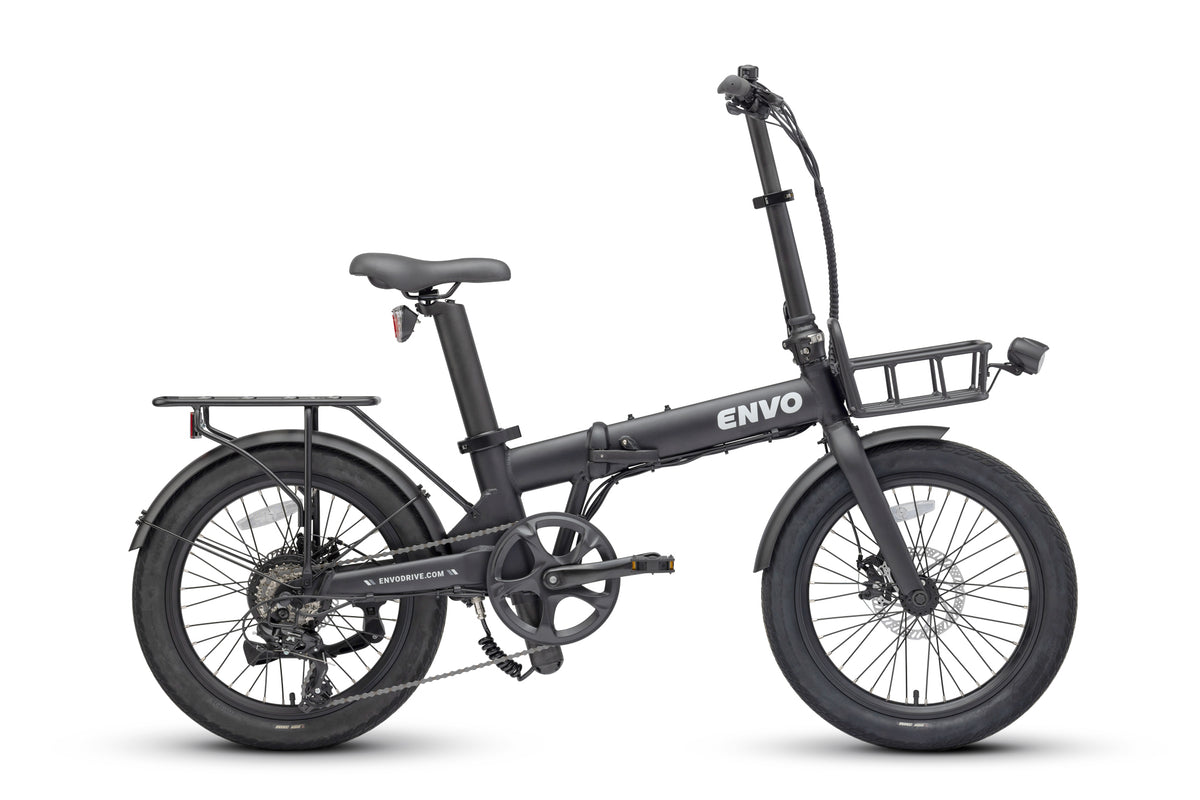
- ENVO Lynx 20 (22.5 kg) vs Aima Key West (25 kg) — ENVO 2.5 kg lighter
- ENVO ST50 (28 kg) vs Aima Santa Monica (29 kg) — ENVO 1 kg lighter
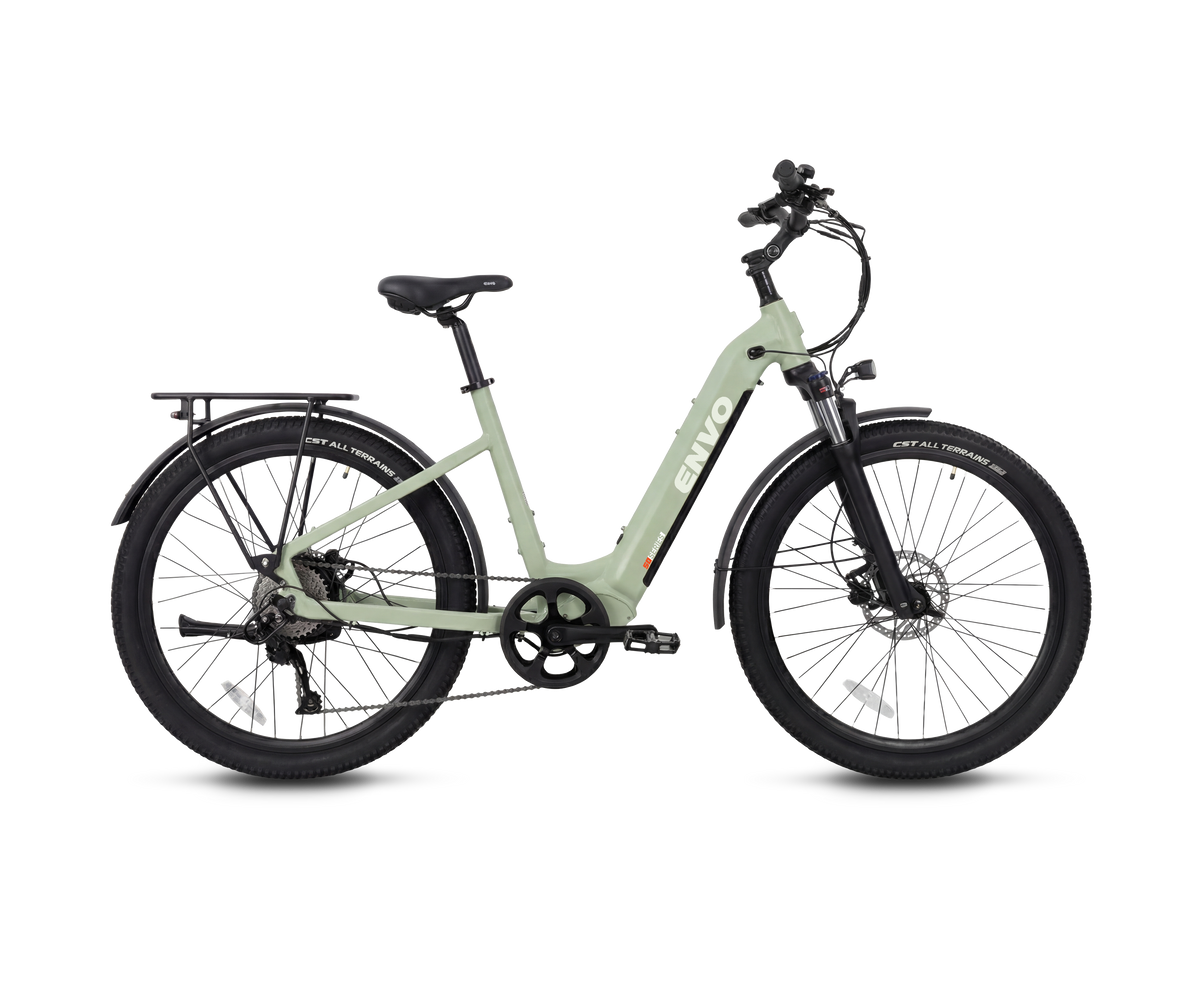
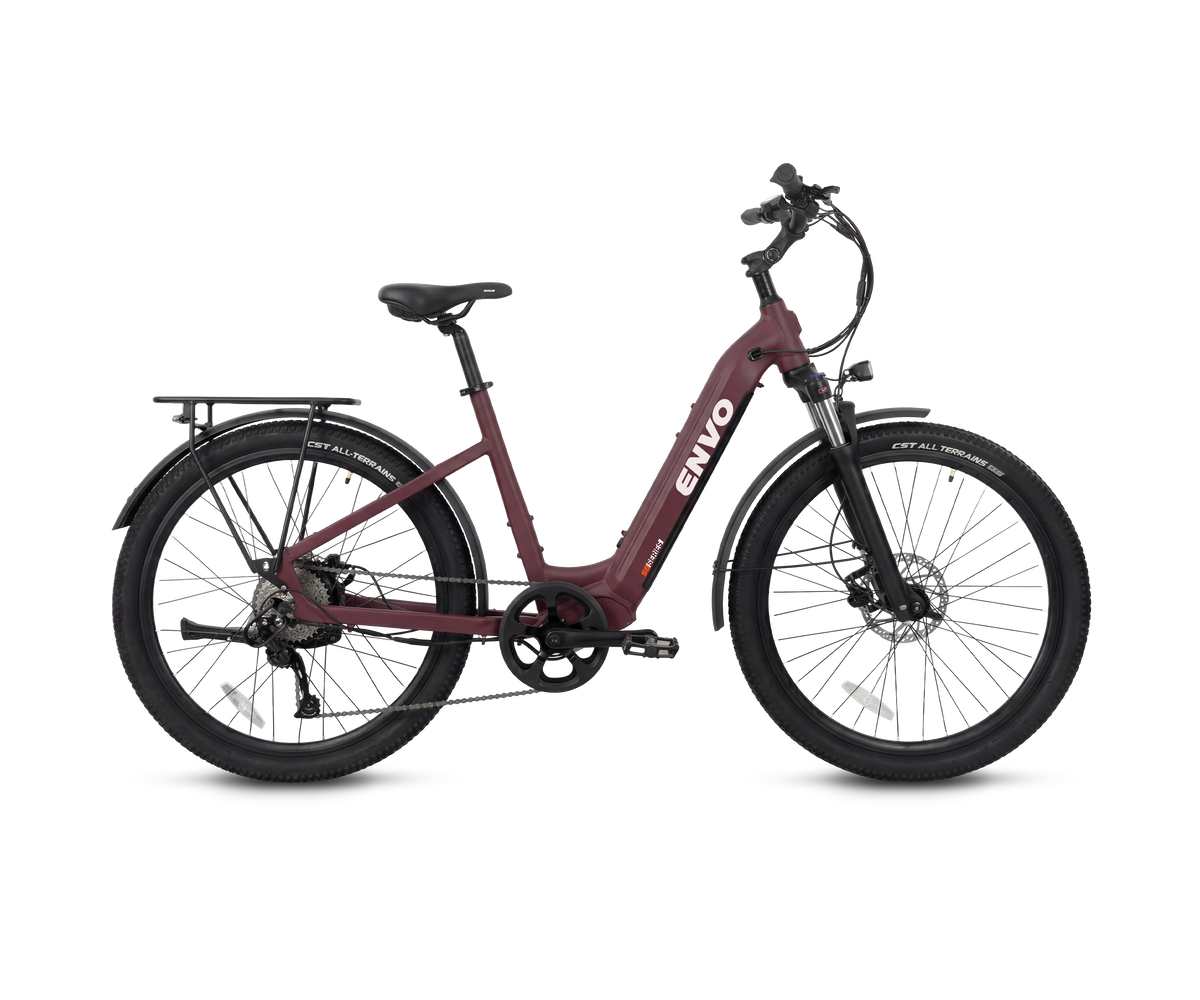
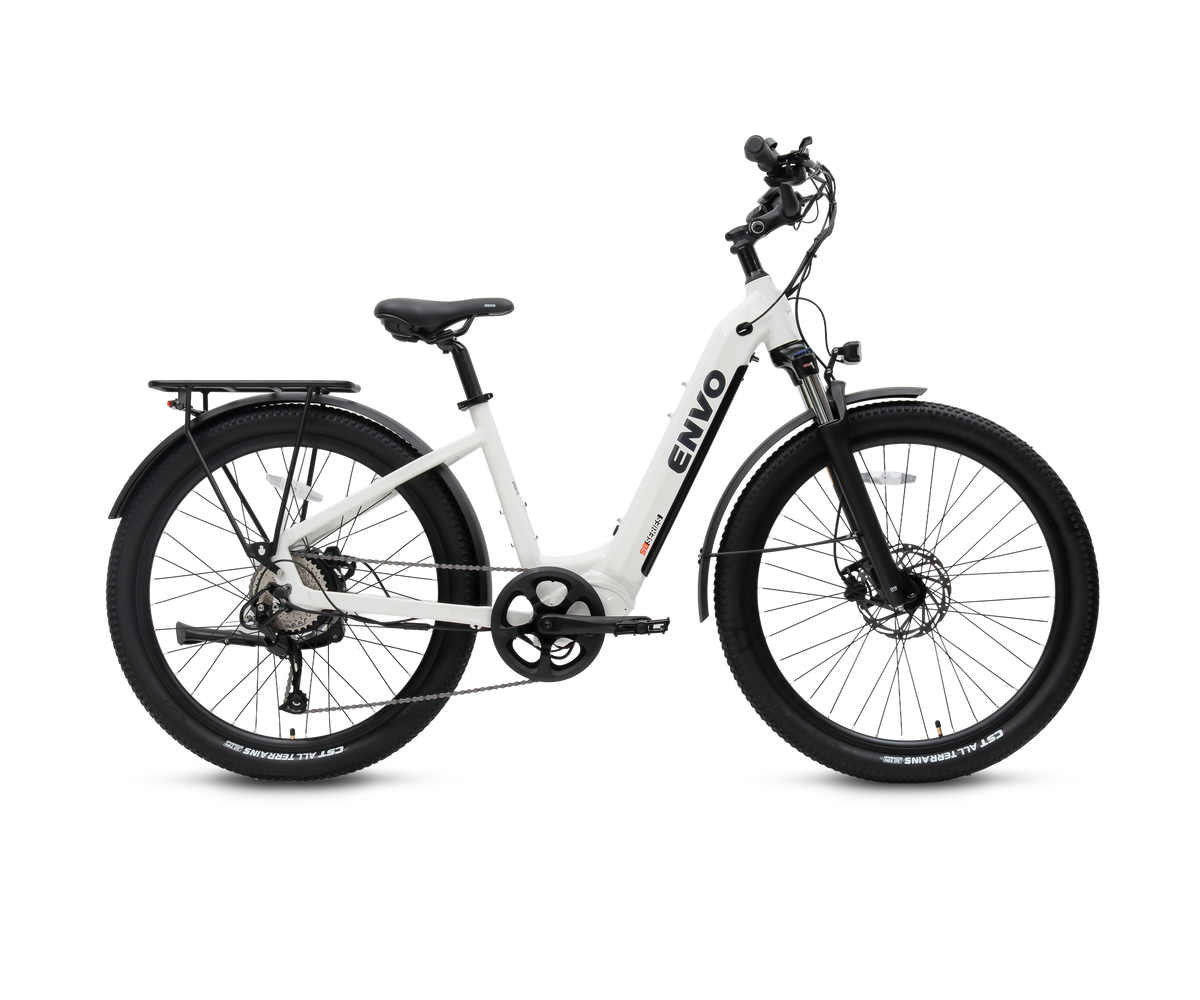
- ENVO D50 (28 kg) vs Aima Big Sur G2 (37 kg) — ENVO 9 kg lighter
- ENVO D50 (28 kg) vs Aima Big Sur Sport G2 (37 kg) — ENVO 9 kg lighter
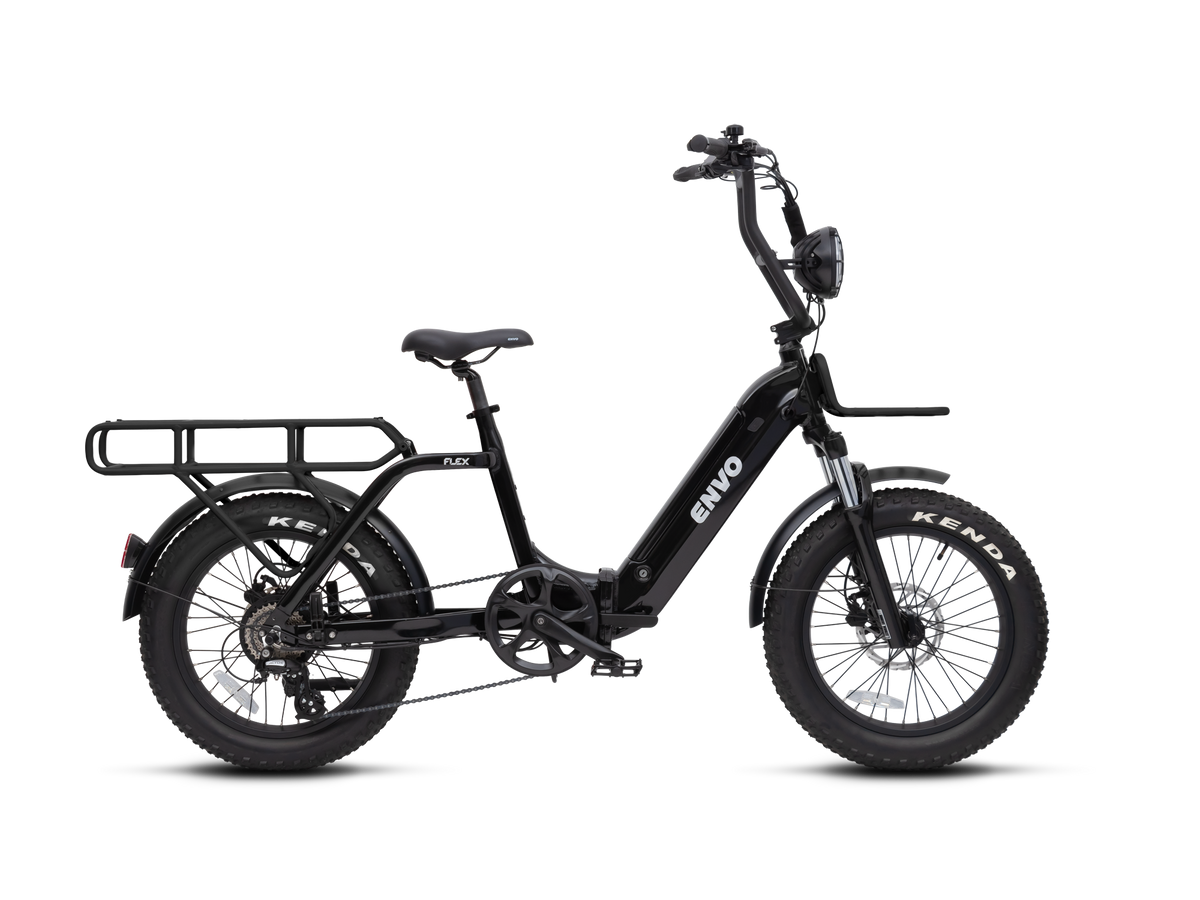
- ENVO U50 (32 kg) vs Aima Big Sur Cargo (36 kg) — ENVO 4 kg lighter
The 9-kilo Big Sur gap is the headline. On a bike that gets lifted onto racks, walked up curbs, stored in garages, and pushed without assist, that's an enormous practical difference — easier handling, less fatigue, easier rack loading, easier storage.
f) Ride quality and PAS responsiveness not tuned for Canada
Reviewers consistently mention ride quality that doesn't show up on spec sheets. ENVO's pedal-assist tuning has been refined over years of Canadian rider feedback — the assist feels natural and intuitive. Aima uses Bafang off-the-shelf tuning, which is functional but generic. This is the kind of difference test rides reveal and spec tables hide.
g) Frame geometry designed for the Chinese domestic market
Aima frames show signs of being designed for the Chinese domestic market — reach, stack, and seat-tube angles can feel slightly off to North American riders with taller average heights and longer torsos. ENVO frames are geometrically designed for North American sizing. It's a reviewer observation rather than a hard spec-sheet fact, but it's worth a test-ride comparison.
h) Aesthetics — utilitarian vs sleek
This is subjective, but worth saying: ENVO bikes carry a sleeker, more considered Canadian design language. Aima bikes — especially the Big Sur fat-tire family — look more utilitarian and bulky. That 9-kg weight delta on Big Sur G2 is partly visible in the visual proportions. Style preference varies, but the difference is noticeable.
i) No folding bike
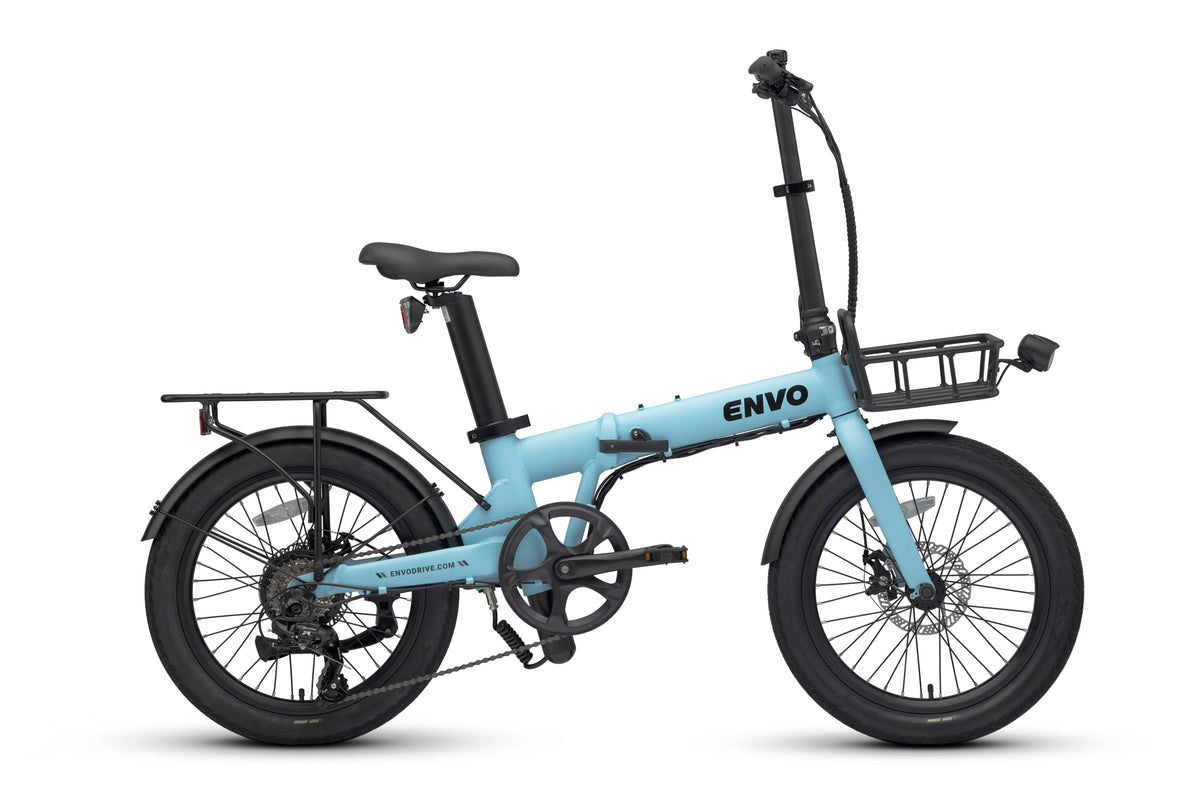
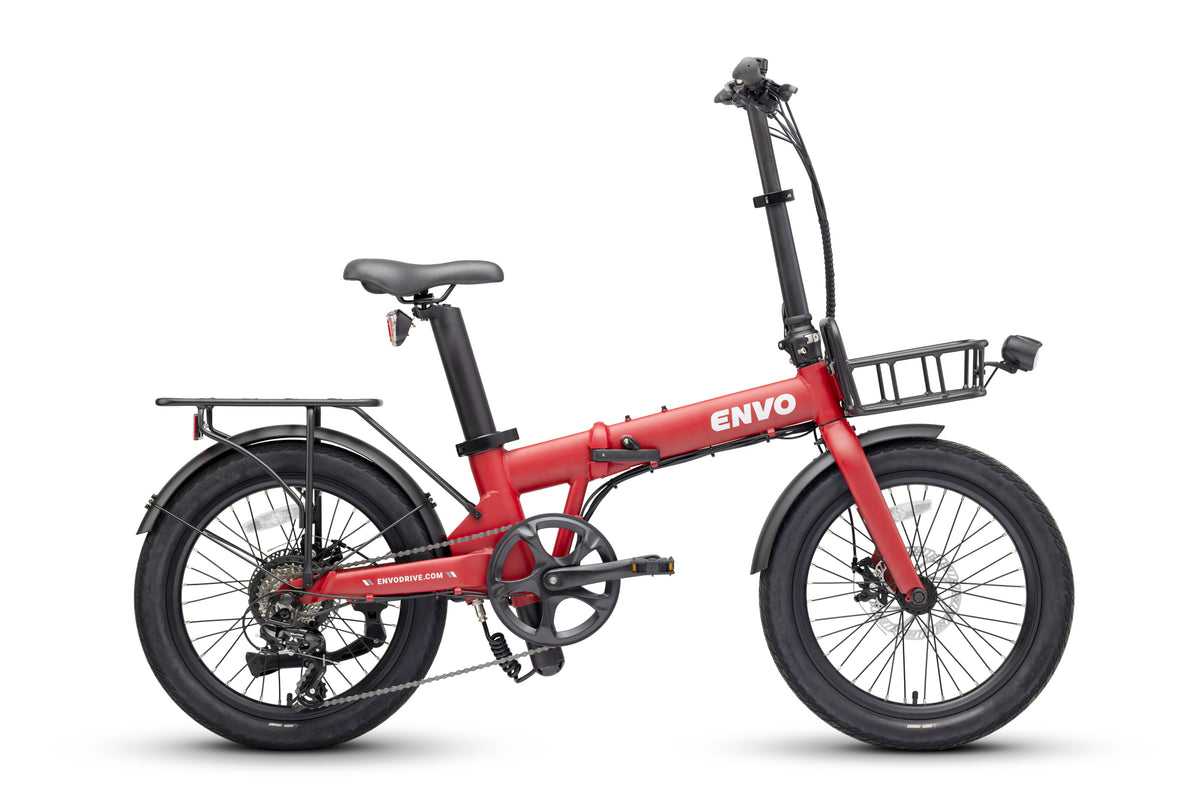
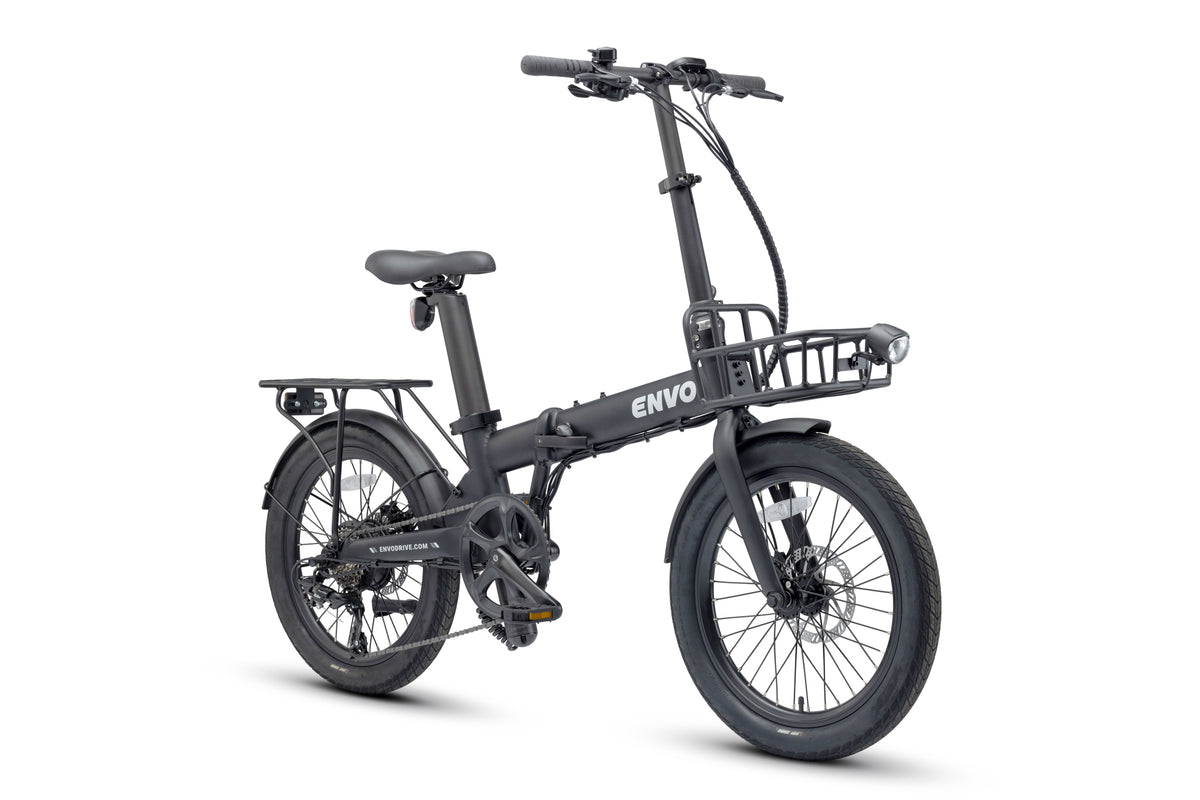
AIMA currently has no folding model in its Canadian lineup. If you live in a condo, use transit, or travel with your bike, that is a major omission. The ENVO Lynx 20 is the most direct alternative — see the broader folding e-bike collection for context.
j) No dual-battery strategy
AIMA's Canadian lineup does not present a dual-battery path in the way some competitors do.
k) No clear Class 3 positioning
If you want a bike with published Class 3 capability, AIMA is not the obvious answer in Canada.
l) Newer Canadian-market presence
Again, AIMA only launched in Canada on November 28, 2024. That is not disqualifying, but it is materially different from a brand with many more years in the market here.
m) Future support uncertainty
No Canadian Aima entity means no Canadian corporate fallback. UNIVELO is a single point of failure in the Canadian chain. If that distribution contract ends, scales back, or stops carrying parts inventory, Canadian Aima owners would be effectively stranded — California cannot legally escalate Canadian warranty disputes. That's the structural reality of a one-distributor Canadian operation, not fear-mongering.
n) Dealer-only dependence
If your nearest good AIMA retailer is far away, the dealer-only model may feel more limiting than reassuring.
7. Why Choose Canadian: The ENVO Argument
"Buying Canadian" is a phrase that gets used loosely, so it's worth being specific about what it means in this category. The strongest version of "buy Canadian" in the Canadian e-bike market today is ENVO.
ENVO — The Canadian-Grounded Alternative
- Canadian-owned private company
- Canadian-designed product line
- Canadian-engineered — including PAS tuning over years of Canadian rider feedback
- Canadian-assembled in Burnaby, BC at 1685 Ingleton Ave
- ~9 years of Canadian operating history
- Frame geometry designed for North American sizing
- Class 3 capability on D50/ST50 per the ENVO manual
- Dual-battery support on D50/ST50/U50
- Folding model (Lynx 20) AIMA doesn't offer
- Published UL 2849 certifications
- Lighter across every direct AIMA comparison — by up to 9 kg on D50 vs Big Sur G2
- Tire brand and component sourcing disclosed
Compare that to AIMA's chain in Canada: Chinese design, Chinese engineering, Chinese manufacturing, American (California) North American HQ, Quebec third-party distribution. None of that makes AIMA's bikes bad — but it does make "buying Canadian" structurally impossible with AIMA today. With ENVO it is the entire premise.
8. Best Aima Model for Each Buyer Type
Best for Commuters
Key West or Santa Monica. The Key West is the lower-priced city entry at around C$2,590 and looks like the practical value commuter of the range. The Santa Monica is the more premium-feeling urban comfort option at around C$2,990.
Best for All-Terrain
Big Sur G2 or Big Sur Sport. Choose Big Sur G2 26" for the more traditional full-size fat-bike feel. Choose Big Sur Sport 20" if you prefer a more compact utility stance.
Best for Cargo / Family
Big Sur Cargo. If you need utility capacity within the AIMA line, the Big Sur Cargo is the answer by default — especially if you want the 20Ah higher-capacity version.
Best for Long Range
20Ah variants. Within AIMA's current Canadian structure, the 20Ah Big Sur Cargo is the obvious choice for buyers prioritizing longer range.
9. Buyer Profiles Where Aima Is Not the Best Fit
AIMA is probably not your best choice if any of the following are true:
- You need Class 3 capability
- You want dual batteries
- You need a folding bike
- You prioritize Canadian assembly
- You want the broadest possible lineup for niche use cases
These are precisely the areas where competitors, especially ENVO, pull ahead. ENVO publicly supports dual battery on D50/ST50 and U50, publishes UL 2849 listings, offers the folding Lynx 20, and positions itself as a Canadian company in Burnaby with a product history going back to 2016.
10. Honest ENVO Alternatives Mapped to Each Aima Model
Here is the simplest one-to-one map.
| AIMA model | Best ENVO alternative | Why |
|---|---|---|
| Key West | ST50 or D50 | Better flexibility, more Canadian history |
| Santa Monica | ST50 | Same urban mission, plus Class 3/dual-battery upside |
| Big Sur G2 | D50 | Strongest direct all-terrain alternative |
| Big Sur Sport | D50 | Similar all-purpose rugged use case |
| Big Sur Cargo | U50 | Better family/cargo specialization |
| Any missing folding use case | Lynx 20 | AIMA has no folder |
Support for that mapping comes from ENVO's Burnaby base, 2016 operating timeline, D50/ST50 dual-battery instructions, D50/ST50 Class 3 manual language, U50 dual-battery cargo positioning, and Lynx 20 UL 2849-certified folding format.
11. The Long-Haul Question
The long-haul ownership question matters more with e-bikes than with analog bikes.
With any e-bike purchase, you are buying into batteries, chargers, displays, controllers, firmware/ecosystem logic, and model-specific mounting hardware. That means buyers should ask not just "Is this a good bike today?" but also "What happens in year 4 when I need a battery, display, or controller?"
AIMA gets credit for having Canadian parts listed through UNIVELO, which is a good sign. But because the brand is still relatively new in Canada, you should ask direct questions before purchase:
- Is the battery in stock in Canada?
- Is the display in stock in Canada?
- Who approves warranty claims?
- What is the actual turnaround if a controller fails?
- Which dealer handles diagnostics if I move provinces?
Those are not anti-AIMA questions. They are the right questions for any e-bike purchase — including the ones the ultimate electric bike buying guide walks through in detail.
FAQ
12. Final Purchase Guidance
So, should you buy an AIMA e-bike in Canada in 2026?
Yes — if you want a dealer-sold e-bike with a strong standardized component package, like AIMA's styling, and fit neatly into one of its current categories: commuter, fat-tire, or utility. AIMA's hardware story is good, its pricing is competitive, and its parent company is financially substantial.
Maybe not — if you need more than AIMA currently offers. If you want Class 3 potential, dual batteries, folding, Canadian assembly emphasis, or a broader long-term category ecosystem, ENVO is the stronger recommendation for most Canadian buyers.
Bottom Line
AIMA in Canada is credible, well-specced, and reasonably priced. It is not a throwaway import story. But it is also not yet the most flexible or most Canada-centric option for many shoppers.
If your needs match the lineup, AIMA is a sensible buy. If your needs may evolve, look hard at ENVO before you decide — start with the D50, then explore the full Canadian-assembled lineup.
Explore Canadian-Assembled ENVO
Designed and assembled in Burnaby, BC. Class 3 capability on D50/ST50, dual-battery support across the core lineup, published UL 2849 certifications, and a 9-year Canadian operating history.
Disclaimer: This guide is for informational purposes only and reflects publicly available information as of May 2026, including AIMA Mobility Canada / UNIVELO collection and product pages, Aima Technology Group's 2024 annual report (Shanghai Stock Exchange ticker 603529), ENVO's published product specifications, and manufacturer-listed UL 2849 status. CAD pricing is approximate and subject to change by retailer and region. We are not affiliated with Aima Technology Group or UNIVELO. Always verify current product configurations and warranty terms with the manufacturer or distributor before purchasing.