
Are 750W E-Bikes
Legal in Canada?
Federal limits, provincial rules, and practical workarounds—everything riders need to know before buying or riding.
Electric bikes are booming across Canada. Sales have surged as commuters, recreational riders, and outdoor enthusiasts embrace a cleaner, more efficient way to travel. Whether you’re exploring commuter e-bikes or electric mountain bikes, one question keeps coming up: are 750-watt e-bikes—the standard in the United States—legal north of the border?
The Quick Verdict
No, not in most cases. Canada’s federal law caps e-bike motors at 500 watts continuous power. A 750W e-bike does not qualify as a legal “power-assisted bicycle” and cannot be ridden on public roads without additional licensing, registration, and insurance. However, the full picture involves provincial nuances, enforcement realities, and practical workarounds.

Understanding Canada’s Federal E-Bike Regulations
At the national level, e-bikes are governed by the Motor Vehicle Safety Regulations (MVSR), administered by Transport Canada. An e-bike is formally known as a “power-assisted bicycle” (PAB). Since 2000, the MVSR has defined PABs as a separate category from motor vehicles—requiring no license, registration, or insurance to operate. If you’re new to the world of e-bikes, our guide to what to consider before buying an e-bike covers the fundamentals.
To qualify as a PAB under federal law, an electric bicycle must meet all of these criteria:
| Requirement | Specification |
|---|---|
| Maximum Motor Power | 500W continuous output or less |
| Speed Limit | Motor cannot assist beyond 32 km/h on level ground |
| Pedals | Must have operable pedals or hand cranks |
| Motor Type | Electric only — no combustion engines |
| Throttle | Permitted, within power & speed limits |
| Label | Permanent bilingual (EN/FR) compliance label from manufacturer |
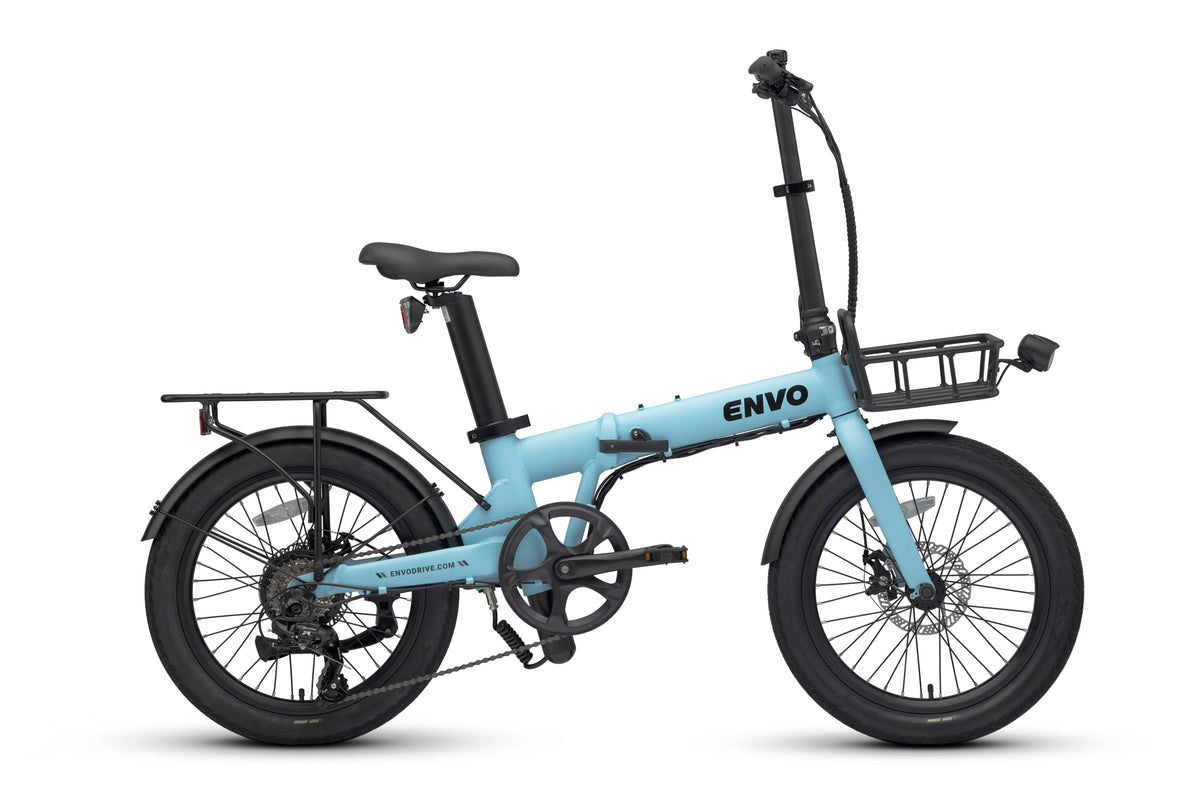
Any electric bicycle exceeding these limits—including a 750W model—does not qualify as a PAB. It may instead be classified as a motor vehicle, moped, or limited-speed motorcycle. All ENVO Drive e-bikes are engineered with Canadian compliance in mind, featuring configurable power settings that stay within legal limits.
Why Does Canada Cap Motor Power at 500W?
Many riders wonder why Canada sets its limit lower than the US, which allows 750W for Class 1 and Class 2 e-bikes. Three main factors explain it:
Road Safety. Higher-powered motors enable faster acceleration, increasing accident risk in shared spaces where pedestrians, traditional cyclists, and e-bike riders mix on bike lanes and multi-use paths.
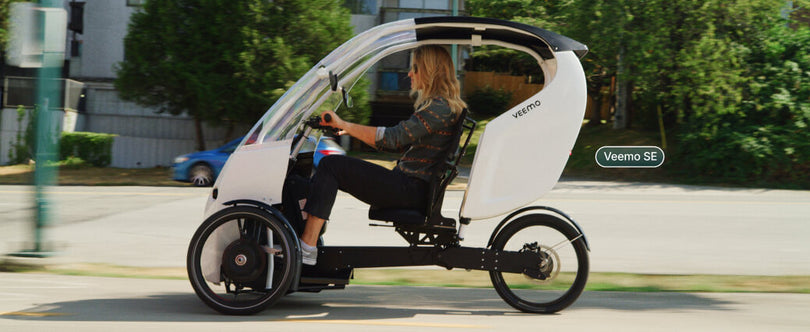
Urban Infrastructure. Canadian cities have invested heavily in cycling infrastructure designed for human-powered and modestly assisted bicycles. Vehicles like the Veemo enclosed e-trike are designed to work within these systems while offering weather protection and cargo capacity.
Efficiency Goals. Lower-powered motors are more energy-efficient and deliver greater range. As explored in our guide to maximizing e-bike range, a well-tuned 500W motor can achieve over 150 km on a single charge.
Good to Know
The real-world speed difference between 500W and 750W is minimal when both are capped at ~32 km/h. The US limit of 750W at 20 mph and Canada’s 500W at 32 km/h produce nearly identical riding experiences. The extra wattage mainly shows up as stronger acceleration and hill-climbing torque, not higher top speeds.
Canada vs. United States: Regulations at a Glance
| Feature | Canada (Federal) | United States (General) |
|---|---|---|
| Max Motor Power | 500W continuous | 750W (Class 1 & 2) |
| Max Assisted Speed | 32 km/h (20 mph) | 32 km/h (Class 1&2) / 45 km/h (Class 3) |
| Throttle Allowed | Yes (within limits) | Class 2 only |
| Pedals Required | Yes | Class 1 & 3 (pedal-assist) |
| License Required | No (for PABs) | No (varies by state) |
| Registration | No (for PABs) | No (varies by state) |
| Insurance | No (for PABs) | No (varies by state) |

Province-by-Province Breakdown
While the federal government sets the baseline, each province can adopt additional rules. Importantly, no major Canadian province currently allows 750W e-bikes as standard bicycles on public roads. For a deeper look at provincial rules, see our complete e-bike buying guide.
Ontario
The Highway Traffic Act mirrors federal standards. E-bikes max out at 120 kg with a 9-metre braking distance. A 750W bike needs motor vehicle registration.
British Columbia
The 2024 regulation created two classes: “light e-bikes” (250W, 25 km/h, no throttle, 14+) and “standard e-bikes” (500W, 32 km/h, throttle OK, 16+). 750W does not fit.
Quebec
Follows the federal 500W limit. Riders aged 14–17 need a Class 6D license (same as mopeds). Helmets mandatory. 750W not recognized as a PAB.
Alberta
E-bikes are called “power bicycles.” One of the lowest age requirements. Despite online claims, Alberta follows the federal 500W standard.
Saskatchewan
Classifies PABs into two categories but maintains the 500W cap for both. Aligns closely with the federal framework.
Manitoba
Adheres to the federal limit. Riders must be at least 14. Higher-powered e-bikes are restricted from public roads.
New Brunswick
Bikes exceeding 500W require engineer certification for highway use—a significant hurdle. Standard PAB rules apply otherwise.
Nova Scotia
Follows the federal 500W limit with additional helmet and trail access restrictions possible. Always verify local bylaws.
Watch Out for Misinformation
Several blog posts claim BC and Alberta allow 750W e-bikes. This is incorrect. The official BC Motor Assisted Cycle Regulation (BC Reg 64/2024) states a 500W continuous maximum, and Alberta follows the federal PAB definition. Always verify against official government sources.
What Happens If You Ride a 750W E-Bike Illegally?
Enforcement varies by municipality, but the potential consequences are serious:
- Fines and PenaltiesRiding an unregistered motor vehicle can result in fines ranging from hundreds to over a thousand dollars, depending on your province.
- Vehicle ConfiscationLaw enforcement can seize non-compliant e-bikes on the spot. Recovery involves storage fees and proof you won’t repeat the offence.
- No Insurance CoverageIn a collision, you may have zero coverage—leaving you personally liable for medical bills, property damage, and legal costs.
- Liability ComplicationsOperating an illegal vehicle can work against you in court, complicating any injury or liability claims.
- Trail & Park BansMany national and provincial parks prohibit high-powered e-bikes, even where standard e-bikes are welcome.

Workarounds & Legal Alternatives
If you already own a 750W e-bike or are considering one, here are your options:
Detune the Motor to 500W
Many 750W e-bikes can be electronically limited through controller or firmware settings. Some manufacturers offer a “Canadian mode.” Learn more about how controllers work in our battery and charge level guide. However, some provinces may consider the bike’s full capability rather than its current setting.
Ride on Private Property
Public road regulations don’t apply on private land. If the property owner permits it, you can ride any power level. This is also where fat tire e-bikes really shine, offering grip and stability on unpaved terrain.
Register as a Moped or LSM
In some provinces, a 750W bike can be classified as a moped or limited-speed motorcycle. This requires a driver’s license, registration, and insurance. Contact your provincial authority for details.
Choose a High-Performance 500W E-Bike
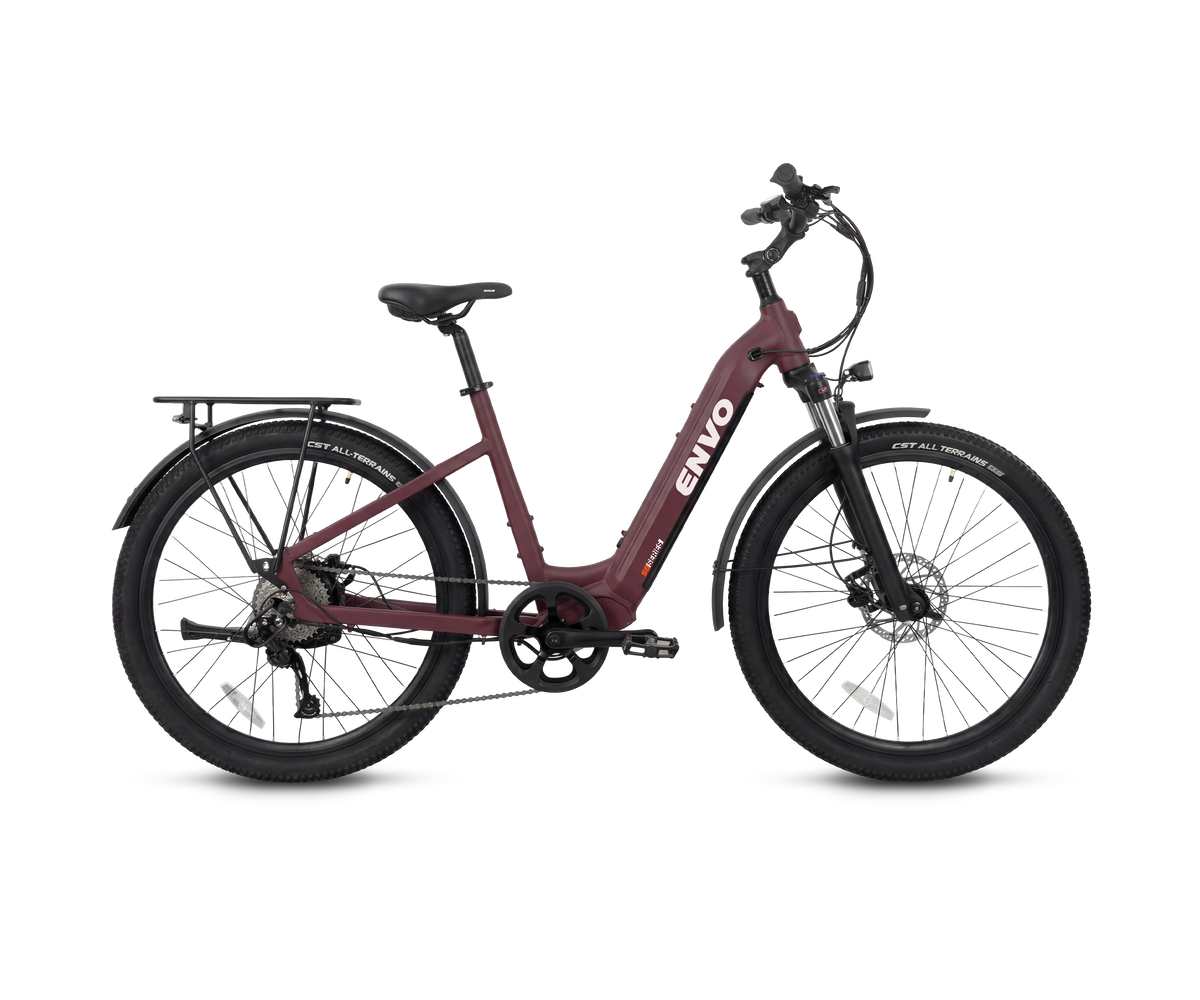
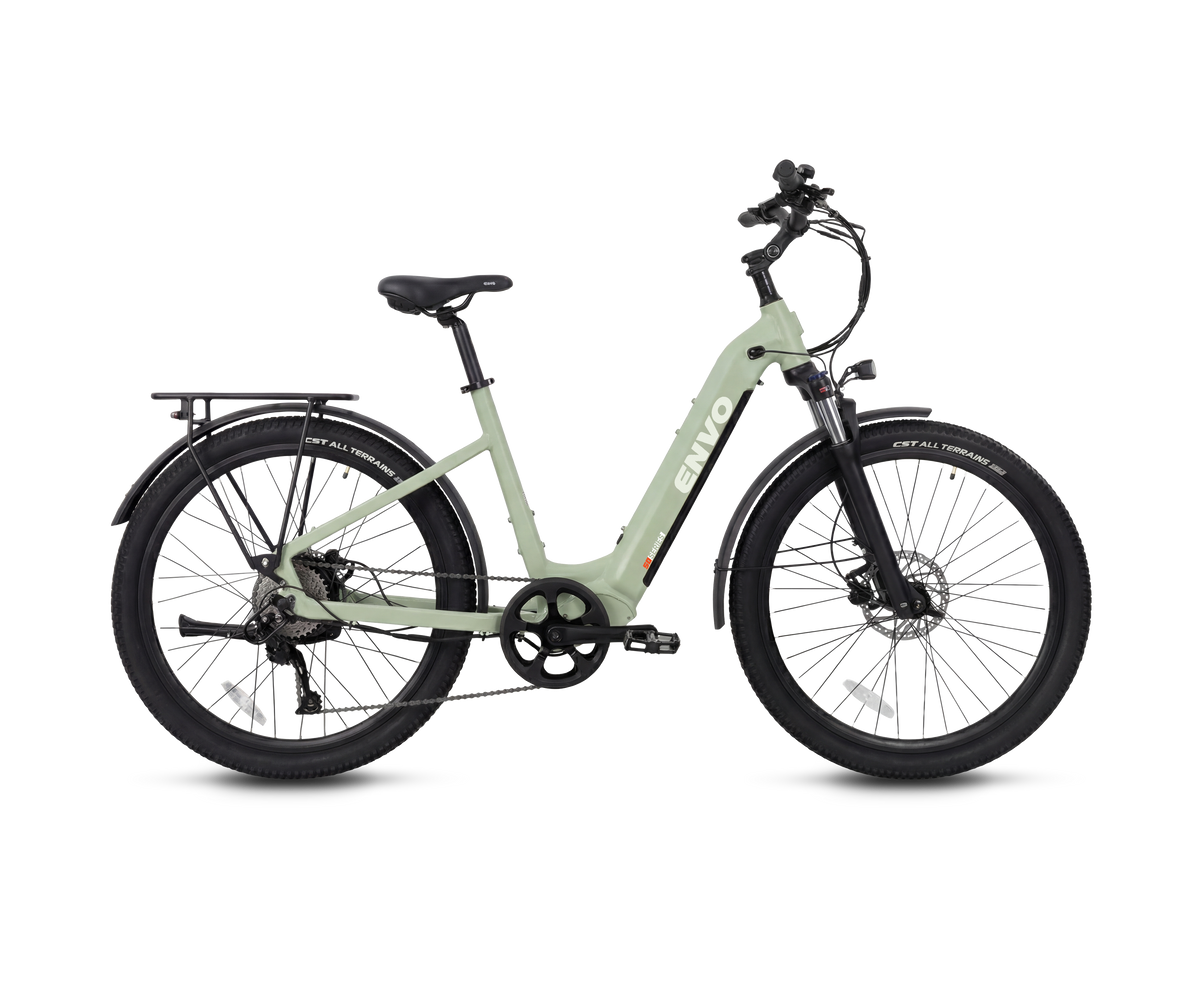
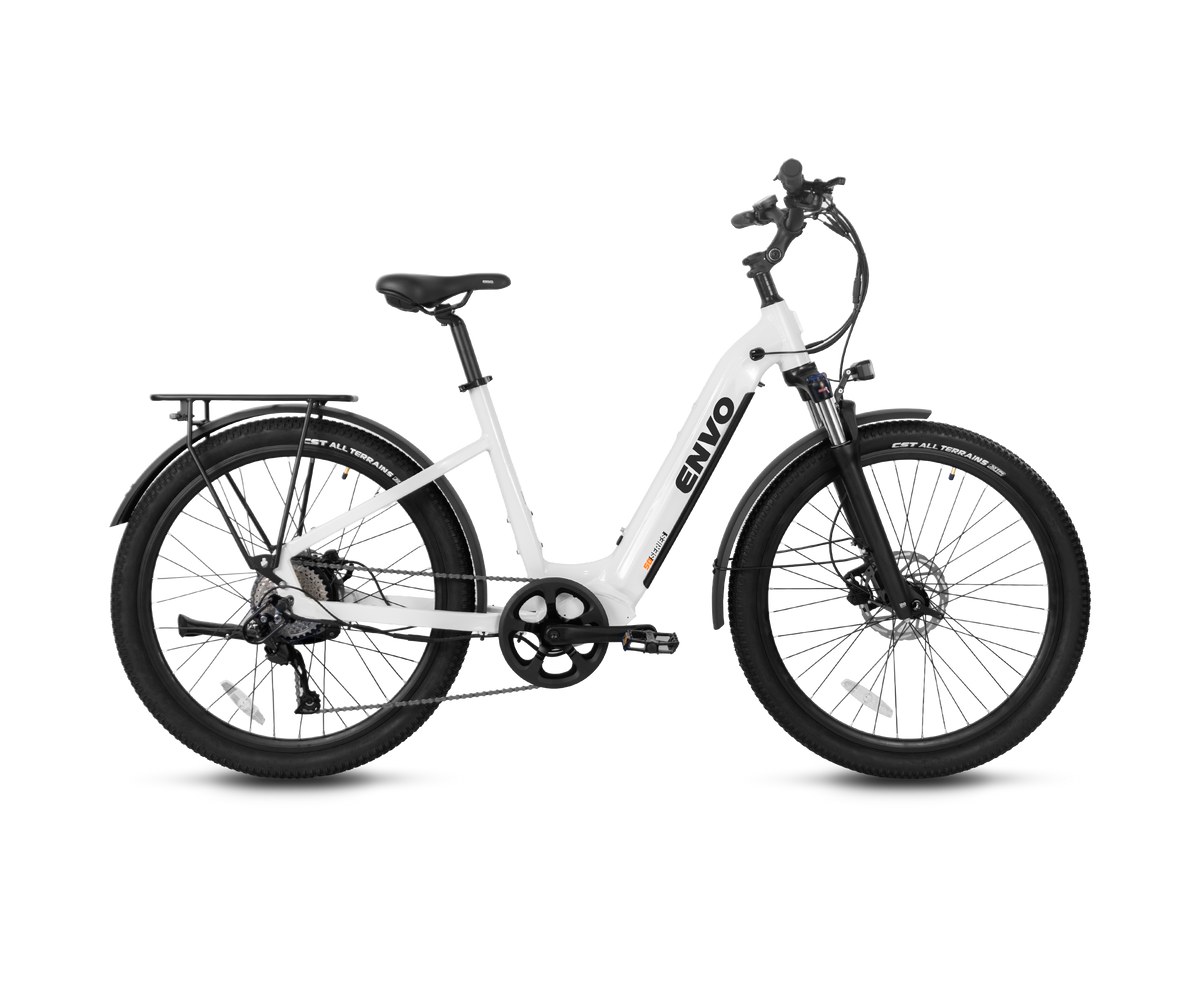
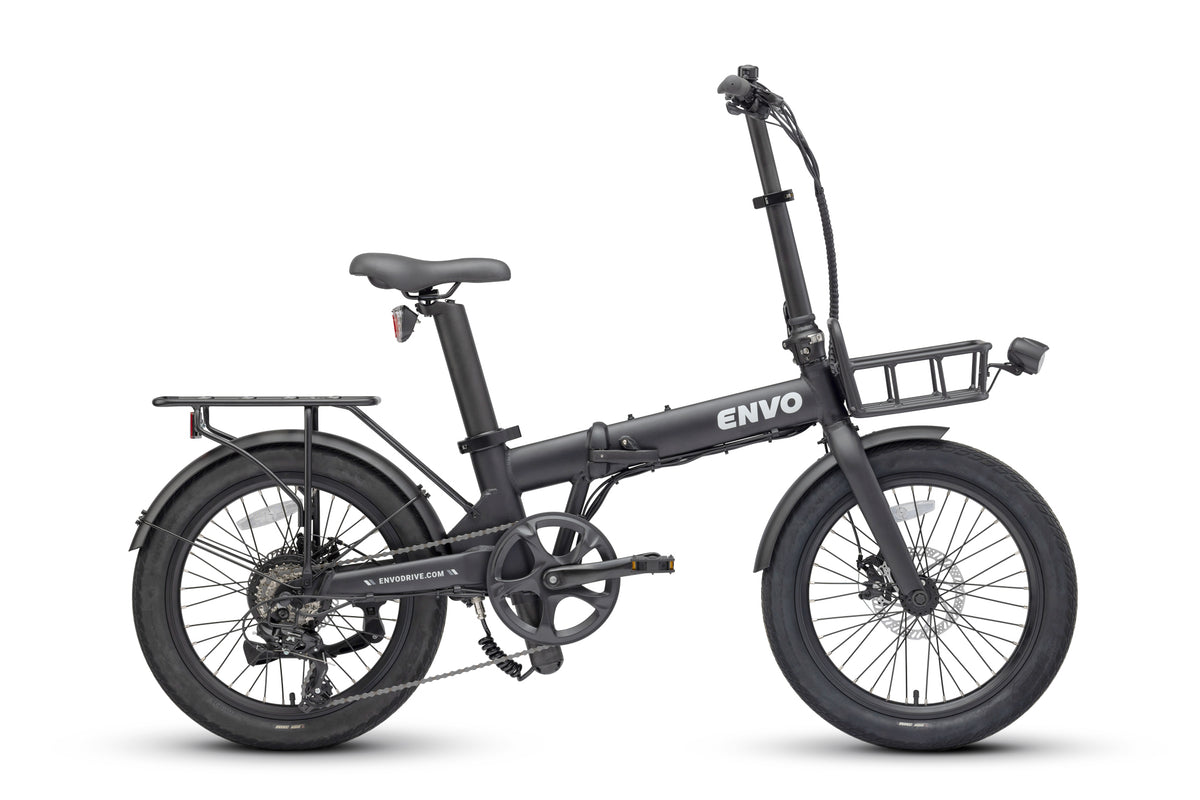
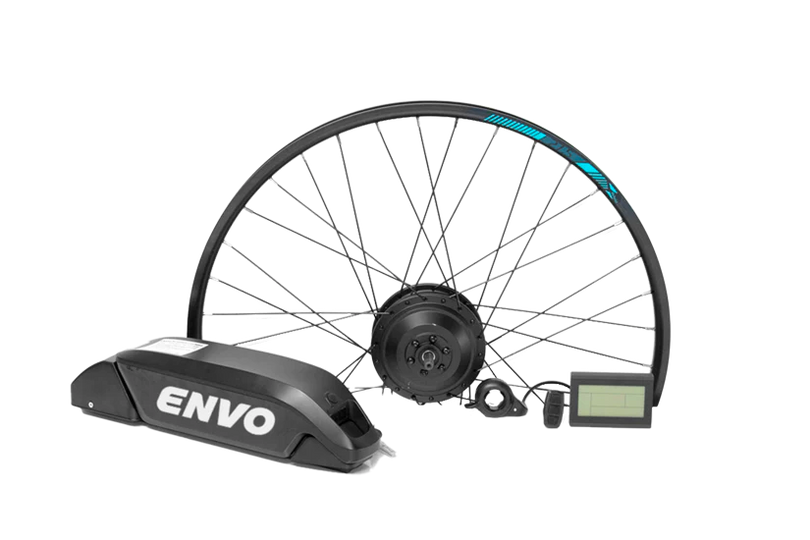
Modern 500W mid-drive motors offer excellent torque by leveraging the bike’s gears. The ENVO D50 and ENVO Stax Pro are both designed to maximize performance within Canadian legal limits. For those who want to convert an existing bike, ENVO conversion kits offer a compliant way to go electric. Browse all compliant e-bikes at EbikeBC →
Understanding Peak vs. Continuous Wattage
A major source of confusion: the difference between peak (maximum) and continuous (nominal) power. Canadian law regulates continuous power output, not peak. For a deeper technical dive, ENVO’s commuter e-bike guide explains how motor types affect real-world performance.
Continuous (Rated)
Peak (Burst)
A motor rated at 500W continuous but capable of 750W+ peak is still legal. A motor with a 750W continuous rating is not legal, even if typically operated at lower power. Always check whether an advertised figure refers to continuous or peak output.
Will Canada’s E-Bike Laws Change?
There is growing discussion about updating Canadian regulations. The US’s higher 750W limit and three-class system have influenced global e-bike design, and some advocacy groups argue that harmonizing with American standards would expand consumer choice without meaningfully increasing safety risks.
British Columbia’s 2024 introduction of a two-class system signals willingness to modernize. However, no province has moved to raise the power limit beyond 500W. Companies like ENVO Drive Systems continue to push the boundaries of what’s possible within the legal envelope—from the lightweight Stax Pro to the enclosed Veemo e-velomobile—proving that 500W can deliver remarkable performance.
For now, riders should plan around current regulations rather than anticipated changes. To stay up to date, follow the latest news and updates from ENVO and the EbikeBC blog.
Wait—Does EbikeBC Actually Sell 750W E-Bikes?
Fair question, and we want to be upfront about it. Yes, EbikeBC does carry some e-bikes with motors rated at 750W—and we think transparency here matters more than a convenient omission. So here’s the full picture.
The bikes in question are typically sold for off-road, private property, or multi-use recreational use—not classified as street-legal power-assisted bicycles. Think trailheads that allow high-powered e-bikes, private acreage, or campgrounds. They fill a real and legitimate need for riders who aren’t commuting on public roads.
There’s also the peak-versus-continuous wattage distinction covered earlier in this guide. Some bikes listed with “750W” in their product names or specs refer to peak output—while the continuous (rated) power stays at or under 500W. In that case, the bike is fully compliant with Transport Canada’s PAB definition. Always check the spec sheet, and when in doubt, ask our team—we’re happy to clarify exactly what a motor is rated for.
How EbikeBC Handles 750W Sales
When a customer is interested in a higher-powered model, we walk them through the regulatory reality honestly—what it can be used for legally, what it can’t, and whether a compliant 500W alternative might actually serve them better. We’re not here to sell you something that lands you in trouble. If you want to dig into the performance difference between motor ratings, our 350W vs 500W motor comparison is a good starting point—and our team at the Burnaby showroom can walk you through any model in person.
The short version: if you’re buying a 750W e-bike to ride on BC streets or bike lanes, that’s not a use case we can support. If you’re buying it for off-road recreation or private property riding, that’s a different conversation—and one we’re glad to have honestly.
Editor’s Take: The 500W Blanket Doesn’t Fit Every E-Bike
Opinion — EbikeBC Editorial
The following reflects the perspective of the EbikeBC editorial team, not legal advice. We’re advocates for sensible e-mobility policy—and sometimes that means saying the quiet part loud.
Canada’s 500W continuous limit has served us reasonably well for two decades. It created a clear, simple rule that allowed e-bikes to flourish without requiring riders to navigate the motor vehicle licensing system. That’s genuinely worth protecting.
But e-bike technology has evolved enormously since 2000, and the regulatory framework hasn’t kept pace. Today, we have enclosed electric trikes, cargo bikes weighing 80–120 kg fully loaded, e-bikes built for riders with mobility challenges, and purpose-built urban vehicles like the Veemo—none of which map neatly onto the original PAB definition.
The Veemo Problem (And Why It Matters)
The Veemo enclosed eTrike is a great example of where the rules start to strain. It’s a full-body weather-protected electric velomobile designed for year-round urban commuting in BC’s famously wet climate. But it’s also significantly heavier than a conventional e-bike. Physics doesn’t care about our regulations: a heavier vehicle needs more power to accelerate safely and maintain hill-climbing ability without burning out the motor.
Here’s the tension: a vehicle like the Veemo may actually be safer operating at a higher wattage but a lower top speed. More power at lower speeds means better control on grades, less motor strain, and more consistent braking performance. The current regulation conflates wattage with danger—but wattage and speed are not the same thing. A 750W motor capped at 25 km/h could be considerably safer and more appropriate for a heavy enclosed trike than a 500W motor pushed to its limits.
What a Better Framework Might Look Like
Rather than a single wattage ceiling, a more nuanced rule might regulate by vehicle class—tying power limits to vehicle weight, maximum assisted speed, and intended use. A lightweight commuter e-bike and a fully enclosed cargo trike are fundamentally different machines. Treating them identically under one 500W rule is a bit like applying the same speed limit to motorcycles and mobility scooters because both have two wheels.
British Columbia’s 2024 Motor Assisted Cycle Regulation showed some appetite for nuance by creating two classes. That’s a step in the right direction. But neither class budges on the 500W ceiling—they just differ on speed limits and throttle permissions. The power cap itself remains untouched.
Harmonization With the US Isn’t the Only Answer
Some advocates argue Canada should simply adopt the American 750W standard. We’re not sure that’s the right framing. The US three-class system has its own quirks and inconsistencies, and “what the Americans do” isn’t automatically the right benchmark for Canadian policy. What we’d like to see is a made-in-Canada modernization—one that accounts for vehicle weight, actual speed capability, and the growing diversity of e-mobility products that genuinely serve Canadian commuters, seniors, and families.
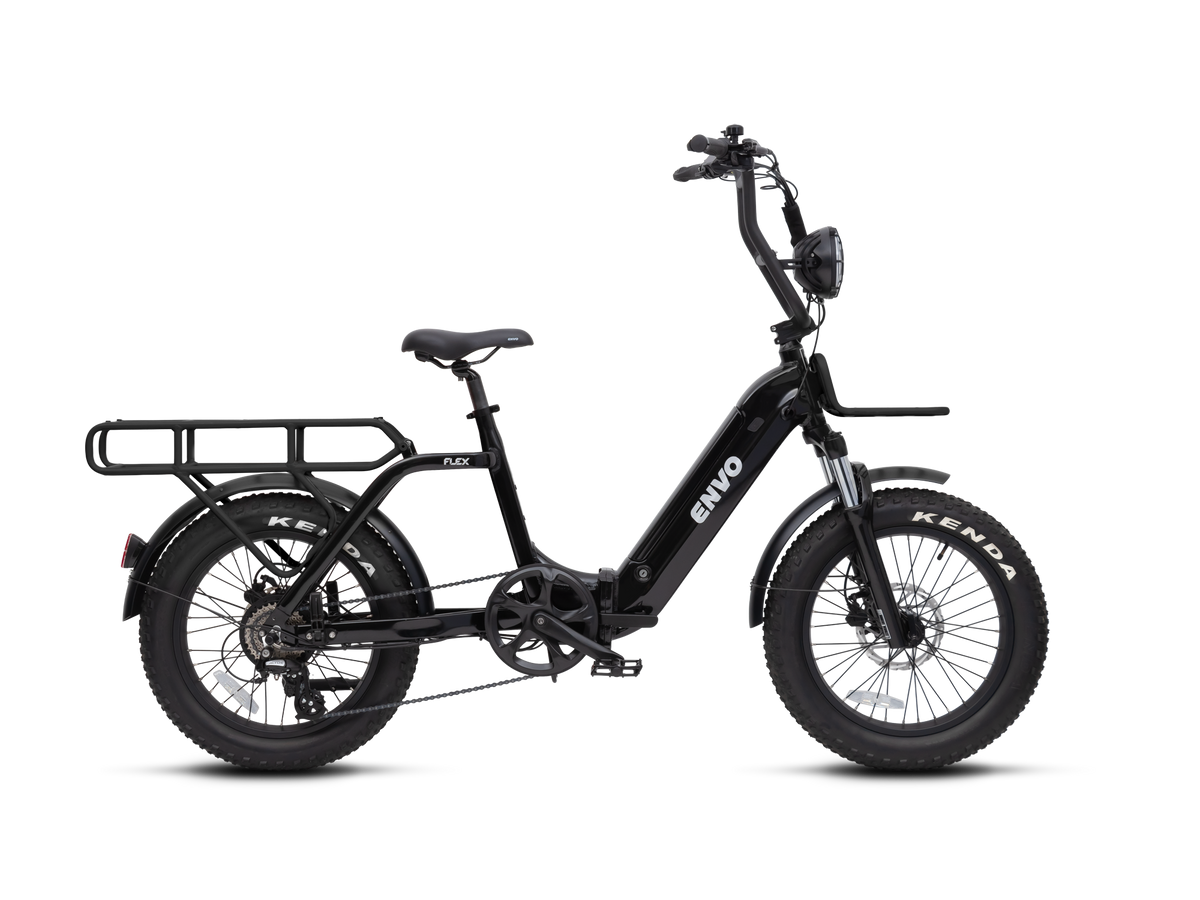
The goal of the PAB category was always to carve out a space for low-speed, human-scale electric vehicles that don’t need to be treated like cars. That goal is still worth pursuing. We just think the tools for achieving it need an update. Wattage alone is a blunt instrument—and as vehicles like the Veemo, ENVO Flex eTrike, and future cargo platforms demonstrate, the category is growing up faster than the regulations.
We’d love to see Transport Canada, provincial governments, and industry partners sit down and build something more sophisticated—a framework that encourages innovation, keeps riders safe, and doesn’t inadvertently penalize the most practical and sustainable vehicles on the road. Until then, we’ll keep working within the rules while making the case for better ones.
The Bottom Line
As of 2026, 750W e-bikes are not legal for use on public roads or bike paths in any Canadian province when classified as power-assisted bicycles. The federal 500W continuous power limit is the law of the land, and all major provinces enforce it.
If you need 750W power, your options include detuning the motor, riding on private property, or registering as a moped/LSM. For most riders, a well-chosen 500W e-bike delivers more than enough. Ready to find the right one? Explore Canada’s best e-bikes at EbikeBC, learn about e-bike maintenance, or discover the innovative Veemo enclosed e-trike for all-season urban mobility.
Key Takeaways
Federal limit: 500W continuous, 32 km/h max assisted speed.
All provinces: Follow the 500W cap—no exceptions for 750W.
750W on public roads: Requires motor vehicle classification, license, registration & insurance.
Best alternative: A high-quality 500W e-bike like the ENVO D50.
Peak vs. continuous: A 500W-rated motor with high peak power is legal; a 750W-rated motor is not.