


Executive Summary
The rapid growth of e-bike adoption has brought unprecedented convenience to urban mobility — but it has also exposed critical safety challenges. Between 2021 and 2024, lithium-ion battery fires in e-bikes increased dramatically in every major city tracked, resulting in hundreds of injuries and dozens of deaths.
This report examines the data behind e-bike battery safety, analysing incident patterns, regulatory frameworks, and certification standards. The evidence shows that the overwhelming majority of fires stem from uncertified batteries and DIY conversion systems — not from properly manufactured, UL-certified e-bikes like those sold at EbikeBC's UL 2849-certified collection.
Lithium battery fires in NYC in 2023 — up from 104 in 2021, with 18 deaths FDNY
Deaths from micromobility device fires in the US (Jan 2021–Nov 2022), across e-bikes, e-scooters & hoverboards CPSC
Of UK e-bike fires in 2023 confirmed to involve post-market conversion batteries UK OPSS
Of UK e-bike/e-scooter fires caused by battery or generator failure — the primary ignition source UK OPSS
This report provides actionable guidance for consumers, retailers, and policymakers to reduce battery fire risk through proper certification, maintenance, and regulatory enforcement.
The Scale of the Problem
1.1 Fire Incident Statistics by Jurisdiction
The surge in e-bike sales has been accompanied by a dramatic increase in battery-related fires. While e-bikes themselves are not inherently dangerous, the proliferation of uncertified batteries and chargers has created a public safety crisis. The table below reflects confirmed figures from official agency sources only — cells marked "N/A" indicate that the specific figure was not available from a verifiable primary source.
NYC and Toronto figures cover all lithium-ion battery fires (not only e-bike fires). London figures from LFB cover e-bikes and e-scooters combined. San Francisco figures cover all rechargeable battery-involved fires. Direct year-by-year comparisons across cities should be made carefully given differences in reporting scope and methodology.
| City | 2020 | 2021 | 2022 | 2023 | 2024 | Source |
|---|---|---|---|---|---|---|
|
New York City (all Li-ion battery fires) |
N/A | 104 | N/A | 268 | 277 | FDNY Safety Page; FDNY 2024 Press Release |
|
London, UK (e-bike + e-scooter fires, LFB) |
N/A | N/A | N/A | 143 (e-bikes); 179 total incl. e-scooters | N/A | LFB #ChargeSafe Page |
|
UK (National) (e-bike fires only, OPSS) |
N/A | N/A | 74 | 161 | 170 | UK GOV/OPSS 2022–23; UK GOV/OPSS 2024 |
|
San Francisco (all rechargeable battery fires) |
36 | 15–35* | 58 (record) | 41 | N/A | SF Standard (SFFD data) |
|
Toronto (all Li-ion battery fires, TFS) |
N/A | N/A | 29 | 55 | 76 | CBC / TFS Chief; City of Toronto |
The data reveals an alarming trend: fires are increasing significantly as e-bike adoption grows. Toronto saw a 90% increase from 2022 to 2023, then another 38% from 2023 to 2024. New York saw 277 fires in 2024 versus 268 in 2023. The UK saw e-bike-specific fires rise from 74 (nationally) in 2022 to 170 in 2024.
1.2 Fatalities: The Human Cost
E-bike battery fires are particularly dangerous because they occur with little warning, spread rapidly, and produce toxic gases. The data below reflects confirmed death figures from official sources only.
| Jurisdiction / Scope | Period | Deaths | Notes | Source |
|---|---|---|---|---|
| NYC — Li-ion battery fires | 2021 | 4 | NYC City Council testimony confirmed year-by-year: 4 (2021), 6 (2022), 18 (2023), 6 (2024) | NYC City Council Testimony, March 2025; FDNY 2024 Press Release |
| NYC — Li-ion battery fires | 2022 | 6 | ||
| NYC — Li-ion battery fires | 2023 | 18 | ||
| NYC — Li-ion battery fires | 2024 | 6 | ||
|
USA — All micromobility device fires (e-bikes + e-scooters + hoverboards) |
Jan 2021–Nov 2022 | 19 | Includes 5 e-scooter, 11 hoverboard, 3 e-bike fire deaths; 208 fire/overheating incidents total | CPSC Press Release 2023 |
| London (LFB) — E-bike & e-scooter fires | 2023 | 3 | ~60 injuries; average one fire every two days | LFB #ChargeSafe Page |
Brooklyn, June 2023: A fire at an e-bike repair shop killed 4 people — flames spread rapidly to residences above. In the UK, 8-year-old Luke Albiston O'Donnell died from an e-bike battery fire in 2024. NYC's deadliest year was 2023, with 18 deaths — confirmed by FDNY and NYC City Council testimony — before falling to 6 in 2024 following a major enforcement campaign.
Root Causes Analysis
2.1 Battery Source: The Primary Risk Factor
Not all e-bike fires are created equal. Multiple official sources reveal a consistent pattern: the overwhelming majority of fires originate from aftermarket or conversion batteries — not from integrated OEM systems. If you're considering a new e-bike purchase, understanding this distinction is the single most important safety decision you'll make.
| Source | Finding | Reference |
|---|---|---|
| UK OPSS — 2023 | 46% (74 of 161) of UK e-bike fires confirmed to involve post-market conversions. Converted e-bikes most likely to be on charge when fire started (66% vs. 48% overall). | UK GOV/OPSS 2022–23 Report |
| UK OPSS — 2024 | 45% (77 of 170) of UK e-bike fires confirmed to be post-market conversions. 49% of converted e-bike fires occurred while charging. | UK GOV/OPSS 2024 Report |
| LFB — General | Many of these fires are caused by incompatible chargers, modifications to e-bikes, or faulty or counterfeit products purchased online. | LFB #ChargeSafe Campaign Page |
| CPSC — 2023 | 208 micromobility fire/overheating incidents (Jan 2021–Nov 2022); 19 deaths. CPSC identified non-certified products as the primary risk. | CPSC Press Release |
| CPSC — UPP Warning | CPSC specifically warned consumers to stop using Unit Pack Power (UPP) e-bike batteries sold on Amazon, AliExpress, and eBay, citing fire and burn hazards. | CPSC Warning 2024 |
Across UK, US, and Canadian data, aftermarket batteries, post-market conversions, and incompatible chargers are consistently identified as the primary fire cause — not factory-integrated e-bike systems. The e-bike battery fire crisis is a cheap, uncertified battery problem — not an e-bike problem.
Understanding Thermal Runaway
3.1 What Is Thermal Runaway?
Thermal runaway is the primary failure mechanism behind lithium-ion battery fires. It is a self-reinforcing chain reaction where heat generation surpasses the battery's ability to dissipate heat, leading to an uncontrollable temperature rise that ultimately results in fire or explosion.
-
1Trigger Event (0 sec — ~25°C)Mechanical, electrical, or thermal stress initiates cell failure
-
2SEI Film Decomposition (0–20 sec — ~90–120°C)The solid electrolyte interface begins to break down; heat buildup accelerates
-
3Separator Melting (20–45 sec — ~130–160°C)Separator fails, creating internal short circuits
-
4Exothermic Reactions (45–60 sec — ~200–400°C)Cathode decomposition and electrolyte vaporisation; pressure builds rapidly
-
5Cell Venting & Ignition (60–90 sec — ~600–1000°C)Cells vent flammable gases that ignite, producing flames and toxic smoke
-
6Thermal Propagation (90–120 sec — 1000°C+)Heat spreads to adjacent cells, creating a cascading, unstoppable failure
FSRI experiments found that e-bike battery thermal runaway from trigger to flash ignition can occur within approximately 13 seconds once cell venting begins, with peak heat release rates measured at 1.1–1.6 MW. Room flashover can occur in under 2 minutes. FSRI Research Update
3.2 Common Trigger Mechanisms
| Trigger Type | Mechanism | Common Causes in E-bikes |
|---|---|---|
| Mechanical Abuse | Physical damage forces anode/cathode contact, internal short circuit | Crash damage, drops, crushing during storage, penetration |
| Electrical Abuse | Voltage/current exceeds safe limits, overwhelming BMS protection | Wrong charger, faulty BMS, overcharging, incompatible fast charging |
| Thermal Abuse | External heat accelerates internal reactions beyond cooling capacity | Direct sunlight, hot car, heat source proximity, poor ventilation |
| Manufacturing Defects | Internal flaw creates micro-short that propagates over time | Contaminated electrodes, defective separator, inconsistent cell quality |
| Cell Aging | SEI film thickening, dendrite growth, internal resistance increase | Deep discharge cycles, high-temperature storage, age beyond 2–3 years |
UL-certified batteries include multiple safety layers designed to prevent each trigger mechanism. Cheap batteries often lack these protections entirely. The UK OPSS found that 91–92% of all e-bike fires in 2022–2023 were caused by battery or generator failure as the ignition source. UK GOV/OPSS
Certification Standards Decoded
4.1 The Certification Landscape
When shopping the electric bike market, understanding certification labels is critical. The landscape is confusing — multiple standards, testing labs, and jurisdictional requirements create a maze of compliance options. Here's what each one actually means.
| Standard | Scope | Key Tests | Markets |
|---|---|---|---|
| UL 2849 Gold Standard | Complete e-bike electrical system (battery + charger + motor + controller + wiring) | System integration, electrical shock prevention, fire hazard prevention, functional safety (ISO 13849) | USA (required NYC), Canada, increasingly global |
| UL 2271 | Battery pack only (cells + BMS + enclosure) | Overcharge, short circuit, crush, thermal exposure, impact resistance | USA (NYC requires for standalone batteries), Canada |
| EN 15194 | Complete e-bike (mechanical + electrical) | Pedal assist function, speed limits, electrical safety (less rigorous battery testing than UL 2849) | Europe (CE marking), California accepts |
| UL 2272 | Personal e-mobility devices (hoverboards, e-scooters) | Similar to UL 2849 but for smaller devices | USA (NYC requires for e-scooters) |
UL 2849 is the gold standard for e-bikes — it tests the entire system as it will actually be used. UL 2271 alone only covers the battery in isolation, which misses the most dangerous failure modes: component incompatibility and integration flaws.
4.2 What UL 2849 Testing Actually Involves
UL 2849 certification is expensive and time-consuming because it subjects the complete e-bike electrical system to rigorous abuse testing simulating real-world failure scenarios. This is why UL 2849-certified e-bikes command a premium — the testing process ensures genuine protection.
| Test Category | What's Tested | Pass Criteria |
|---|---|---|
| Battery Overcharge | Charge to 150% of rated capacity with OEM charger and generic charger | No fire, no explosion, no rupture, temp < 150°C |
| External Short Circuit | Short circuit terminals with <100mΩ resistance for 24 hours | BMS must safely disconnect, no thermal runaway |
| Thermal Exposure | Heat to 130°C for 10 minutes while fully charged | No fire, no explosion, controlled venting acceptable |
| Mechanical Shock | Drop from 1 metre onto concrete in 6 orientations | Case integrity maintained, no thermal runaway |
| Crush Test | Apply 13kN force until 30% deformation or case rupture | No fire, no explosion (venting acceptable) |
| Vibration Endurance | 12 hours of simulated road vibration while powered | All connections remain intact, no shorts develop |
| Water Ingress (IPX4) | Spray water from all angles for 10 minutes | No water entry into electrical components |
| Functional Safety | ISO 13849 risk assessment of all failure modes | System must fail safely in all identified scenarios |
The ENVO Safety Advantage
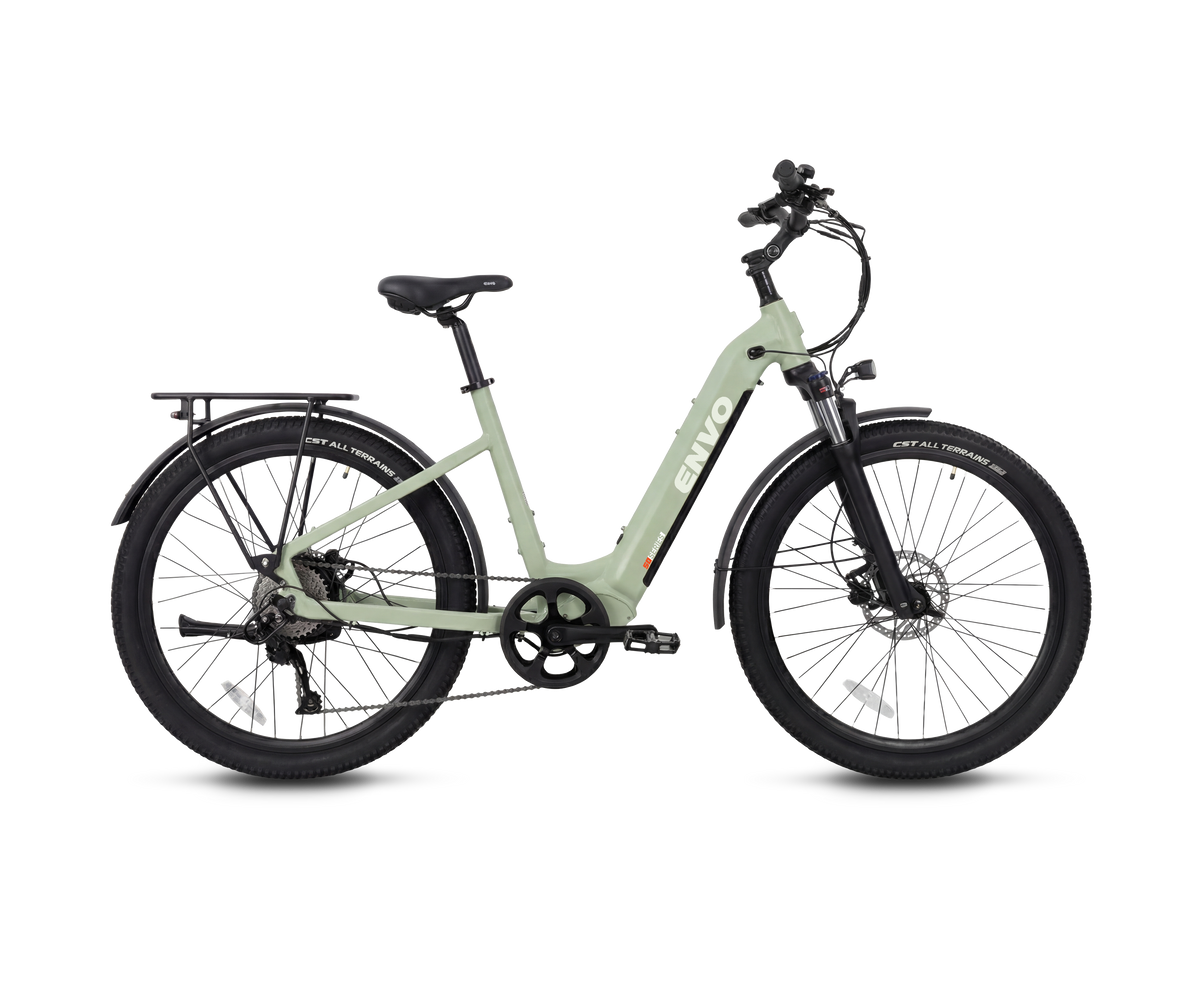
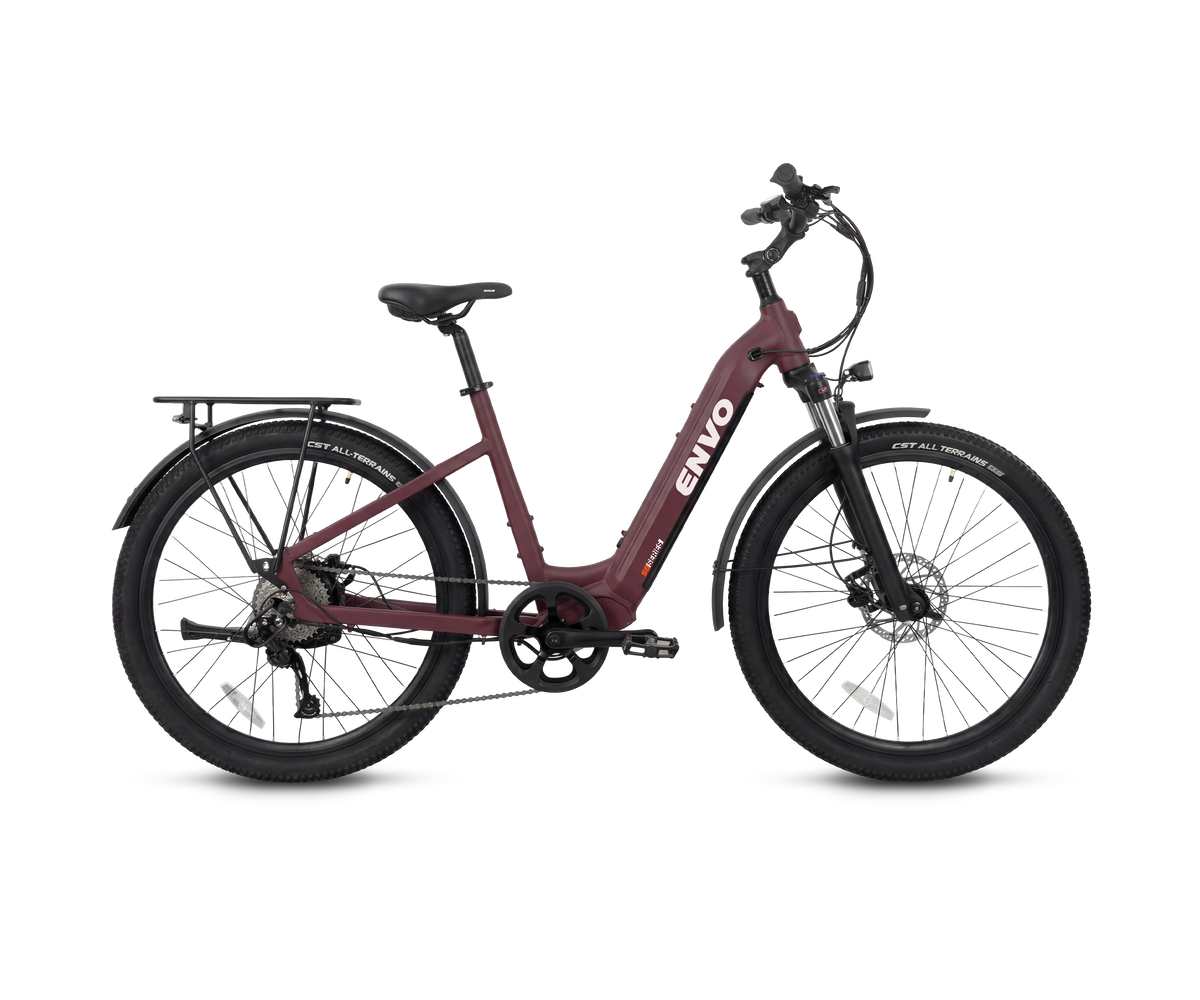
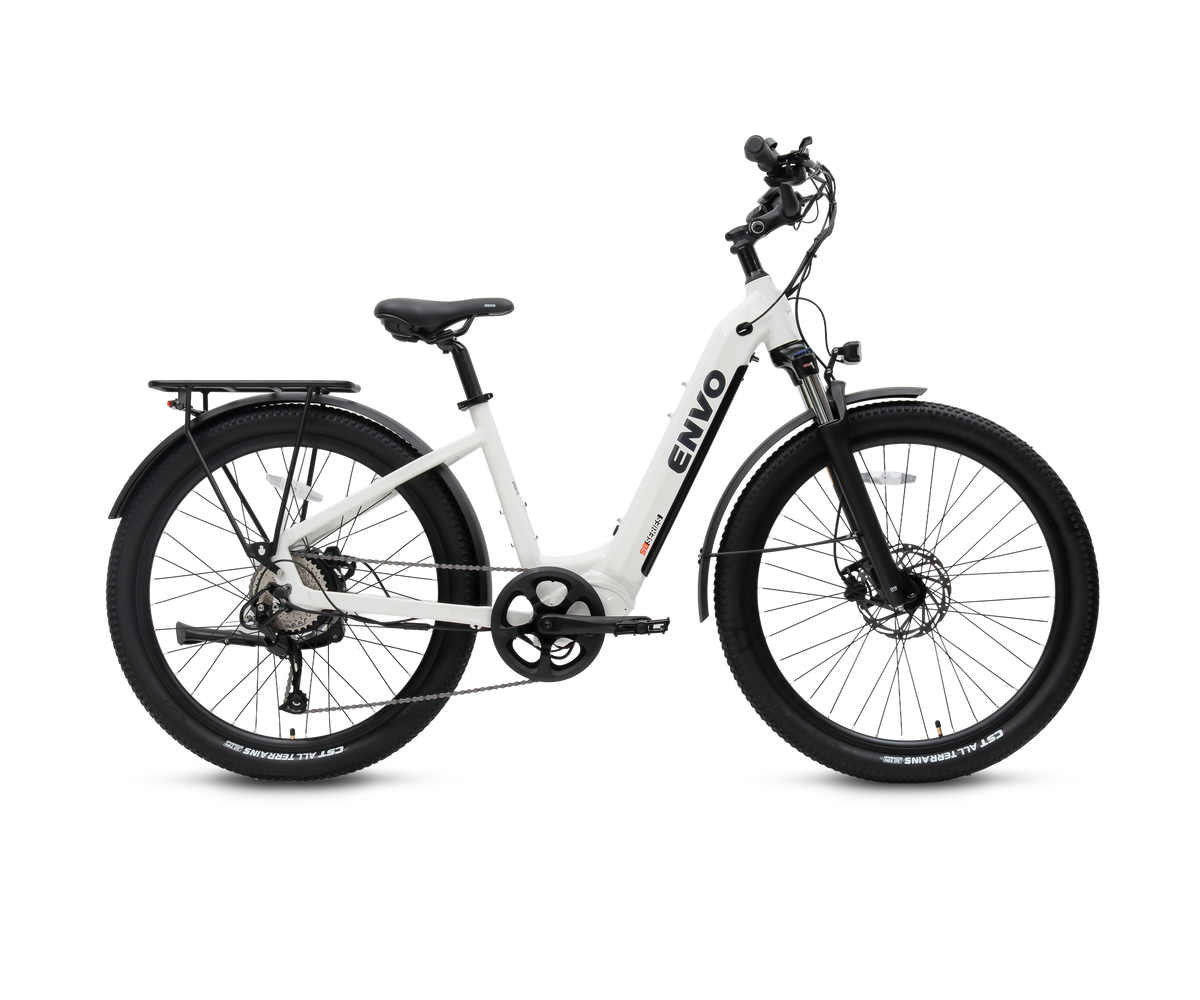
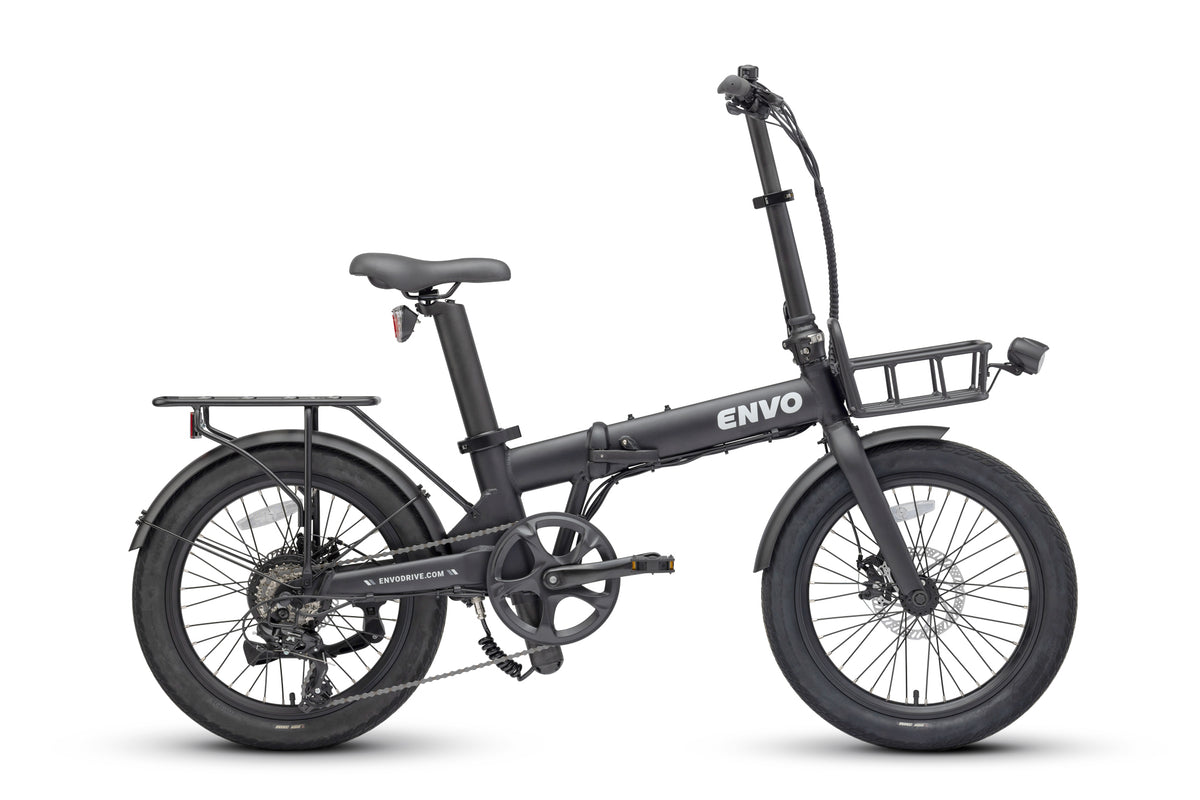
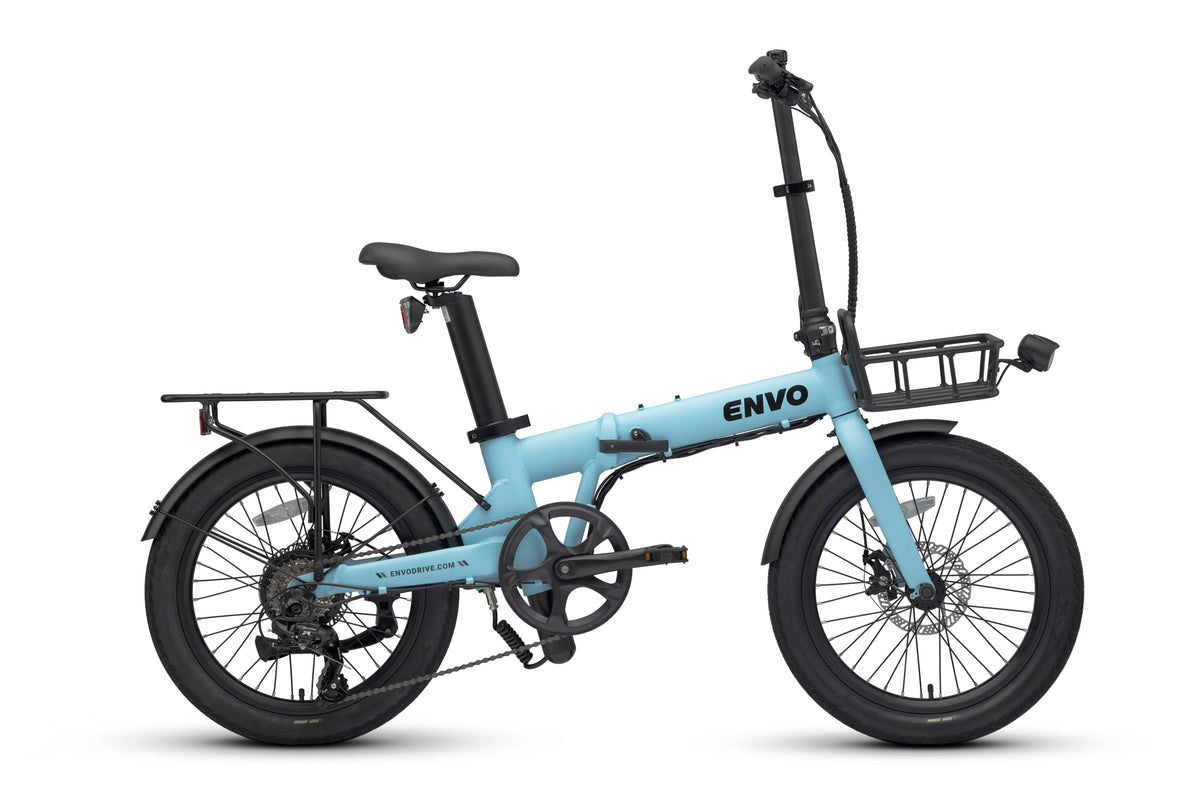
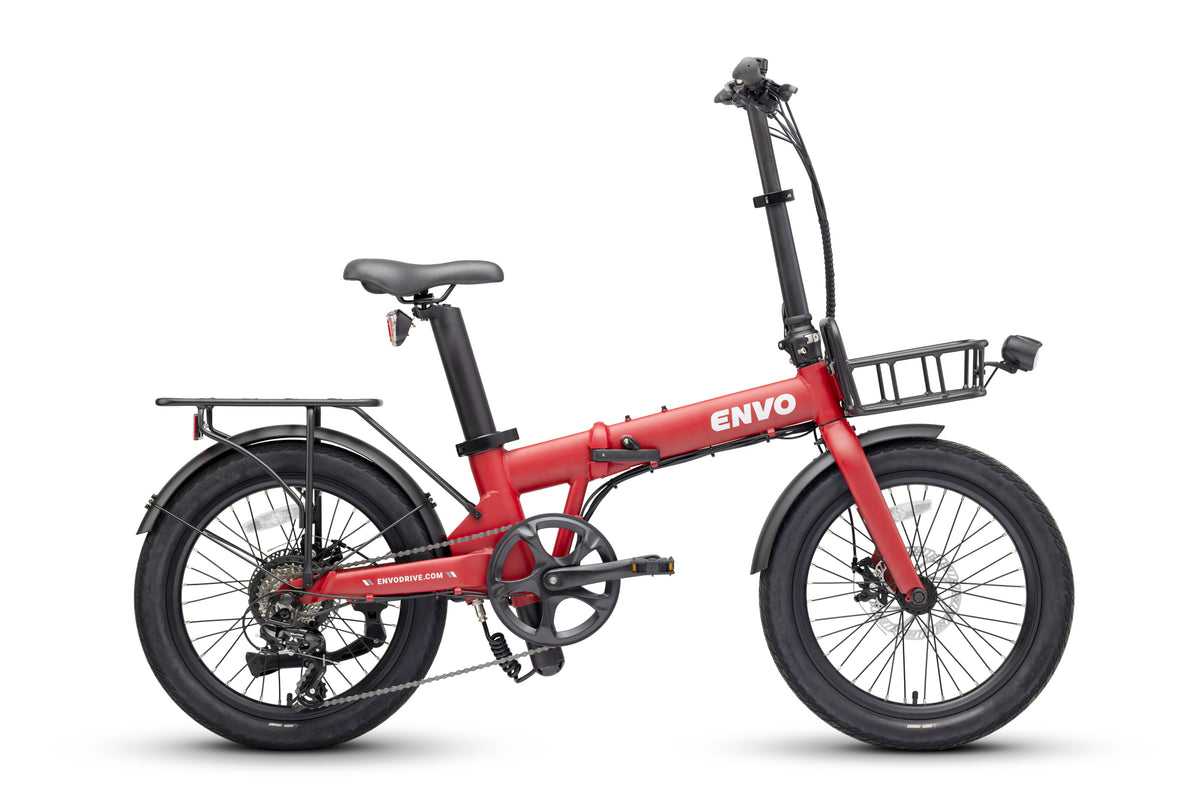
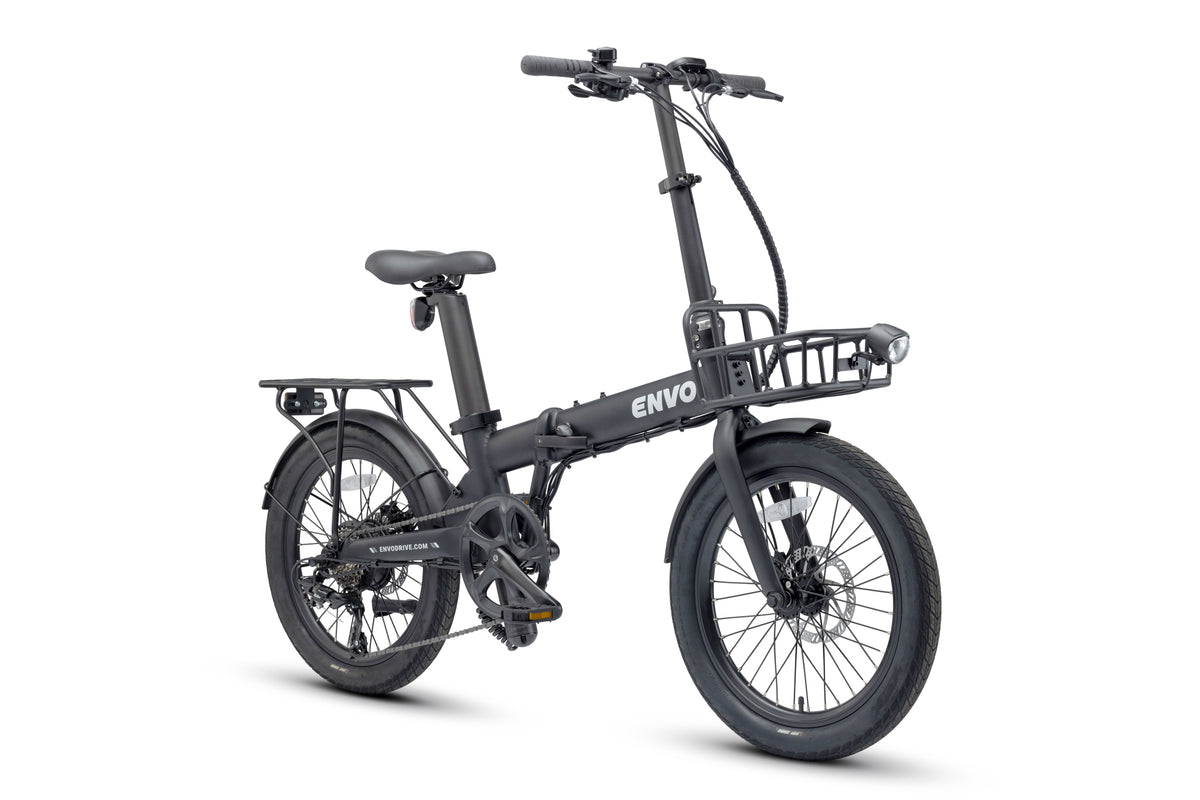
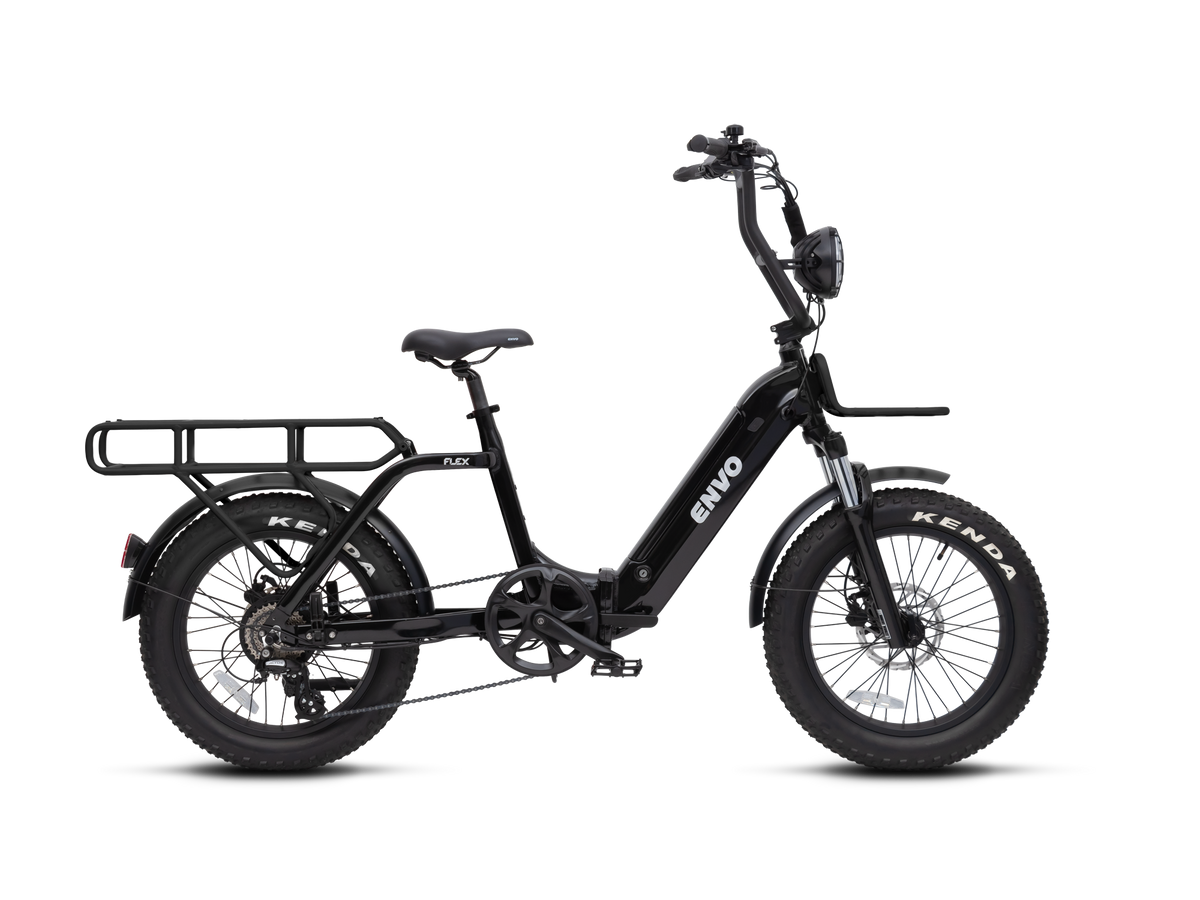
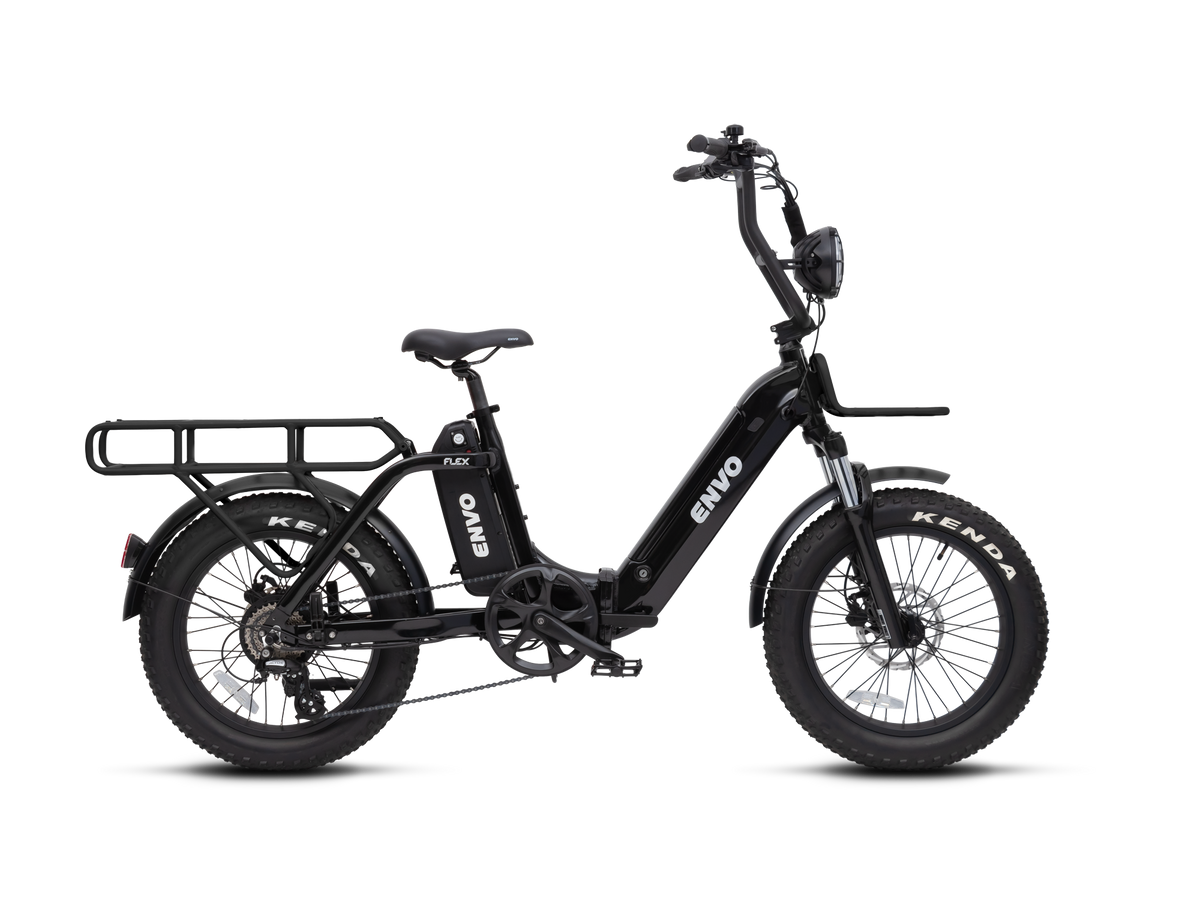
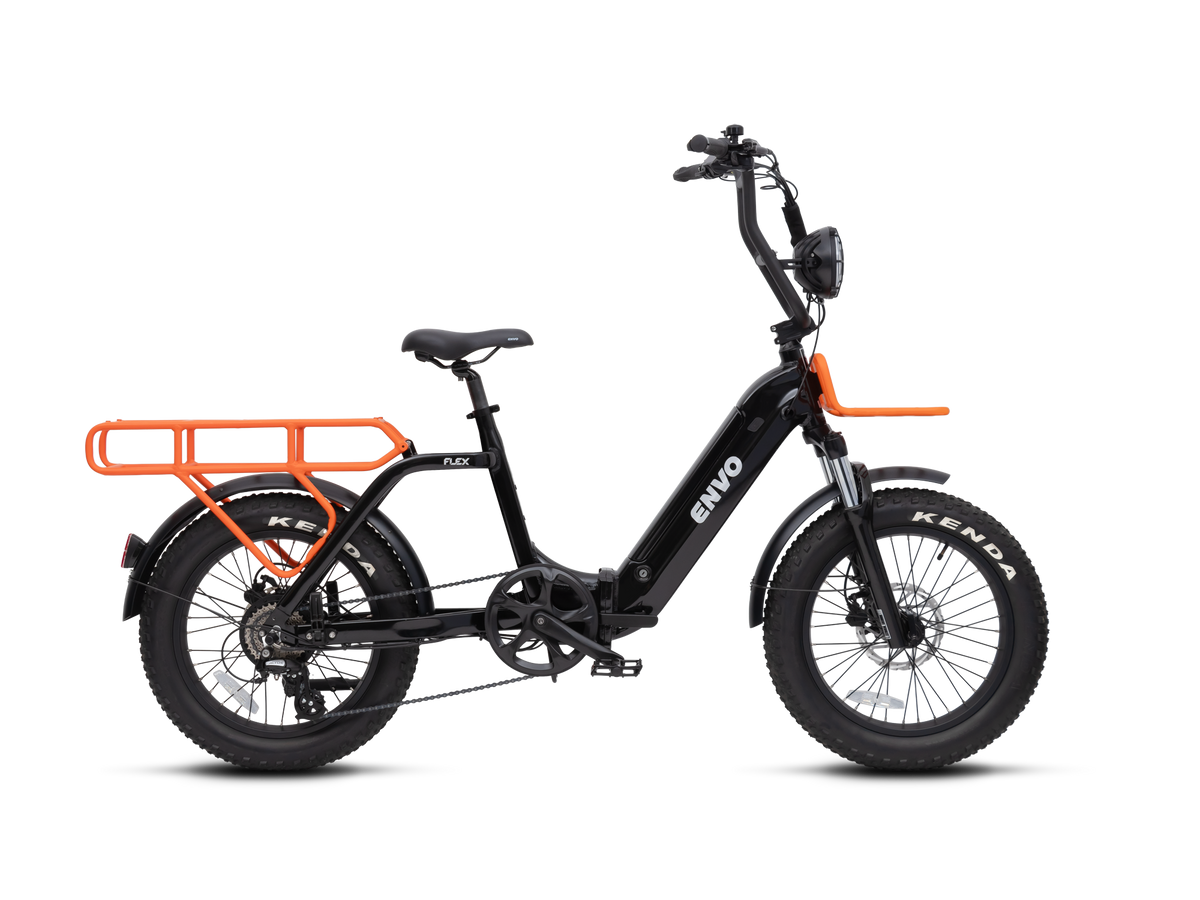
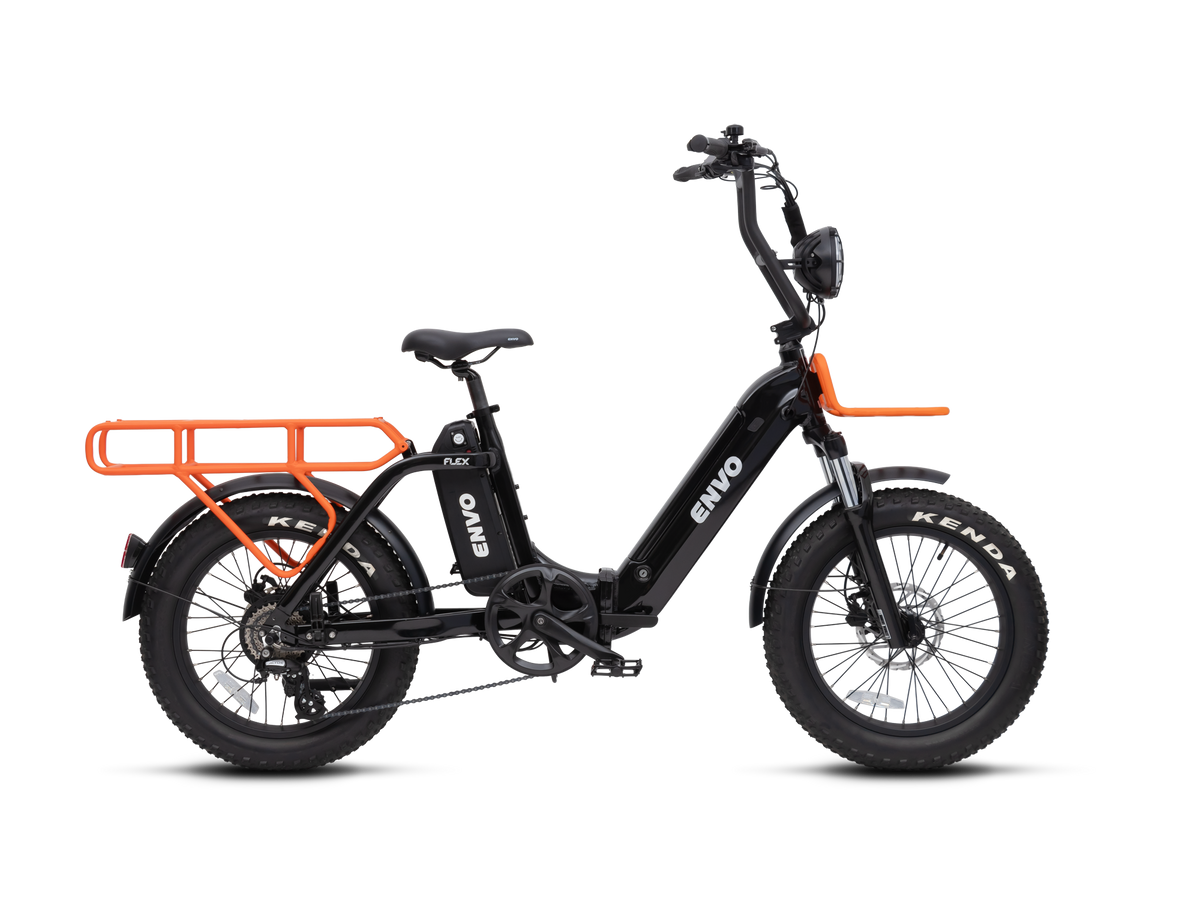
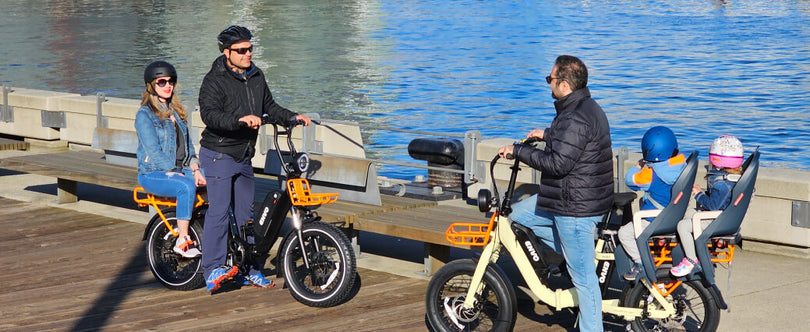
ENVO Drive — the manufacturer behind EbikeBC's most popular models — has pursued UL 2849 system-level certification across its lineup. Models like the ENVO D50, ENVO Flex Overland, and ENVO Stax Pro each hold UL 2849 certification — meaning the entire electrical system has been independently tested and verified.
5.1 The ENVO UL 2849 Lineup
| Model | Category | Certification | Key Safety Features |
|---|---|---|---|
| ENVO D50 | Urban / Commuter | UL 2849 | Integrated BMS, matched OEM charger, sealed battery enclosure, system-level thermal protection |
| ENVO Flex Overland | Fat Tire / Cargo | UL 2849 | Reinforced battery housing, cargo-rated electrical system, matched charger profile |
| ENVO Stax Pro | Folding / Urban | UL 2849 | Compact certified system, integrated controller, full ISO 13849 functional safety assessment |
5.2 Certified vs. Uncertified: What You're Actually Buying
ENVO D50 / Overland / Stax Pro — UL 2849
- Full UL 2849 system-level certification
- Advanced BMS: real-time monitoring of voltage, current, and temperature across all cells
- Thermal management and heat dissipation built in
- Sealed, weather-protected battery enclosure
- Matched OEM charger — custom profile for each model's battery chemistry
- OEM replacement batteries only — no aftermarket compatibility risk
Typical Uncertified E-bike
- No certification, or battery component only (not system-level)
- Generic BMS with limited or no cell-level protection
- No active thermal management
- Exposed or minimally protected battery
- Generic charger — high incompatibility risk
- Open system — aftermarket battery swaps common
Consumer Safety Guide
6.1 What to Look For When Buying
Protecting yourself from battery fires starts with informed purchasing decisions. Whether you're shopping for a folding e-bike, a mountain e-bike, or a commuter like the ENVO D50, use this checklist before committing.
✅ Essential Safety Checklist
- ✓ Verify UL 2849 or UL 2271 certification — ask for certificate, search the UL Certified Products Database by model number
- ✓ Buy complete systems — avoid mixing brands for battery, charger, and motor from different manufacturers
- ✓ Beware of counterfeits — fake UL marks exist; always verify with the official UL database
- ✓ Avoid 'too good to be true' pricing — quality batteries cost significantly more than cheap online alternatives
- ✓ Check brand reputation — established brands like ENVO and EbikeBC have documented safety track records
- ✓ Scrutinise marketplace sellers — CPSC specifically warned against Amazon/eBay third-party batteries (e.g. UPP batteries)
- ✓ Understand conversion kit risk — UK OPSS confirmed 45–46% of e-bike fires involve post-market conversions
🚫 Red Flags — Do Not Buy
- ✗ No certification information provided
- ✗ Claims like "tested to UL standards" without actual certification
- ✗ Unbranded batteries or chargers
- ✗ Batteries advertised as "universal" or "compatible with all e-bikes"
- ✗ No English-language documentation or safety warnings
- ✗ Seller cannot provide proof of regulatory compliance
- ✗ Used/refurbished batteries from unknown sources
6.2 Safe Usage and Maintenance
Even certified batteries require proper care to maintain safety. Follow these best practices, and consult ENVO's maintenance guide and EbikeBC's tune-up guide for seasonal checks.
🔌 Charging Safety
- Always use the manufacturer's charger — never substitute generic chargers
- Charge on hard, non-flammable surfaces away from exits
- Never charge overnight unattended — LFB data shows 48% of UK fires occur while charging
- Maintain ambient temperature 10–21°C during charging
- Consider fireproof charging bags for added protection
- Install smoke detectors near charging area
📦 Storage Best Practices
- Store at 30–70% charge for extended periods (not full or empty)
- Keep in cool, dry location (4–27°C)
- Never store in hot cars, garages in summer, or freezing environments
- Store away from flammable materials and exit routes
Swelling or bulging (gas buildup), strange odours (sweet/chemical smells = electrolyte leakage), excessive heat during normal use, rapid capacity loss (>30% range reduction), physical damage after a crash or drop, charging issues, or a battery over 3 years old. If you observe any of these signs, store the battery outdoors and contact the manufacturer for safe disposal. FDNY / LFB guidance
The Crisis Is Solvable
The e-bike battery fire crisis is solvable. The evidence overwhelmingly shows that fires stem not from e-bikes themselves, but from cheap, uncertified batteries and DIY conversion systems. The UK OPSS confirms 45–46% of fires involve post-market conversions. The CPSC has directly warned against specific uncertified aftermarket products. New York City's 67% reduction in deaths between 2023 and 2024 — from 18 to 6 — demonstrates that regulation, enforcement, and education work.
1. Buy complete, UL 2849-certified e-bikes from reputable manufacturers — such as the ENVO D50, ENVO Flex Overland, or ENVO Stax Pro, available at EbikeBC.
2. Never purchase aftermarket batteries or DIY conversion kits from unverified online sellers.
3. Follow proper charging and storage protocols from your manufacturer's documentation.
4. Replace batteries at end of life (typically 2–3 years) with OEM certified replacements only.
ENVO's commitment to UL 2849-certified, integrated electrical systems — available at EbikeBC in Canada — represents the highest safety standard available in the consumer e-bike market. By choosing certified products and following safety best practices, riders can enjoy the full benefits of e-mobility — including its positive environmental impact — without the fire risk that comes from cutting corners on battery safety.
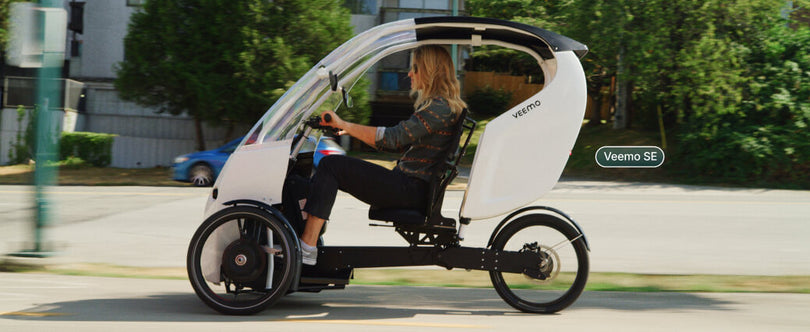
Looking for something beyond a traditional e-bike? The Veemo SE enclosed e-trike offers a unique fully-enclosed, weatherproof commuting option from the same Canadian e-mobility ecosystem.
— The EbikeBC & ENVO Team
Shop UL 2849 Certified E-bikes
The ENVO D50, Flex Overland, and Stax Pro are independently certified to the highest system-level safety standard — available at EbikeBC, Canada's leading e-bike retailer.
Shop UL 2849 E-bikes Explore the ENVO D50