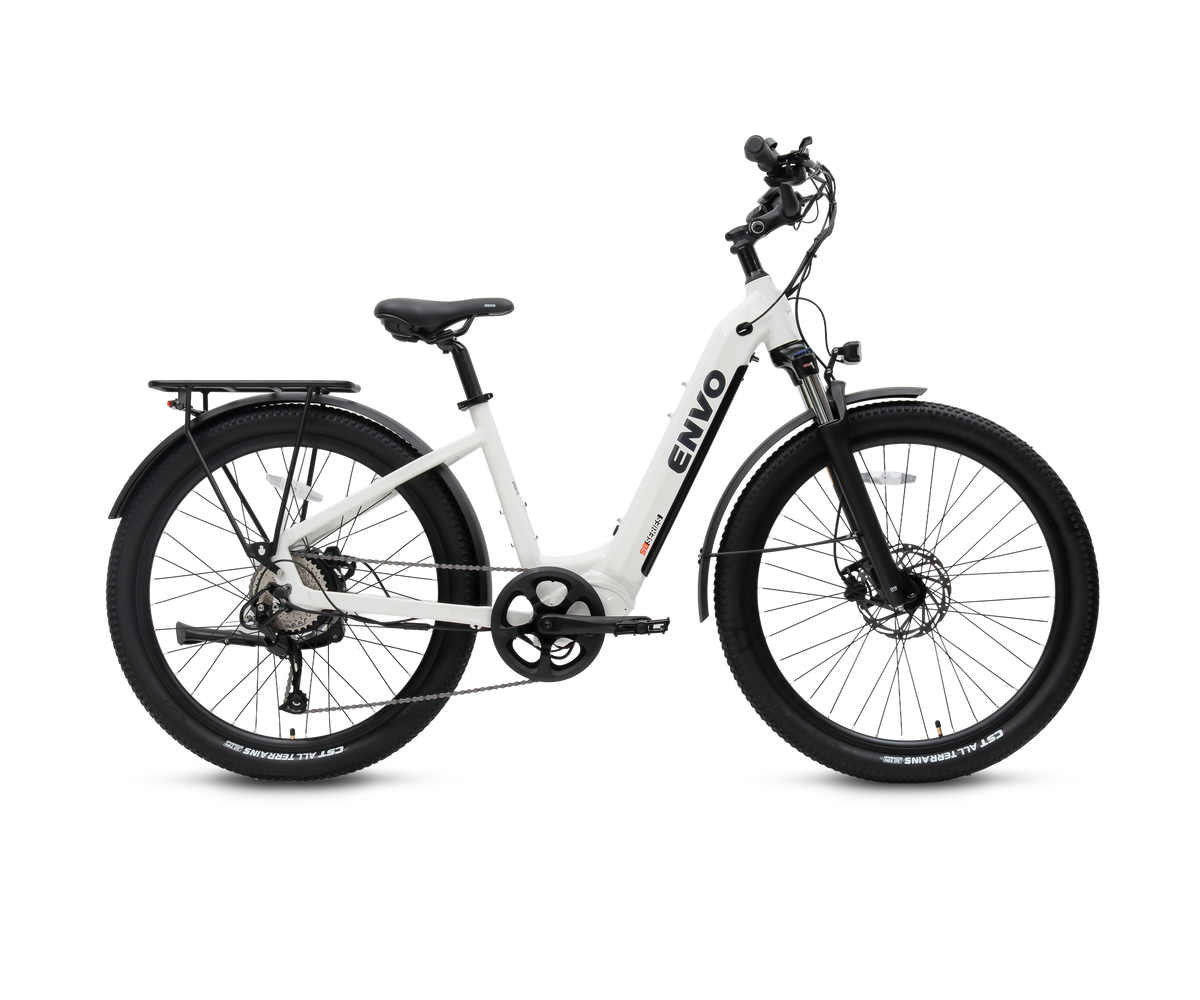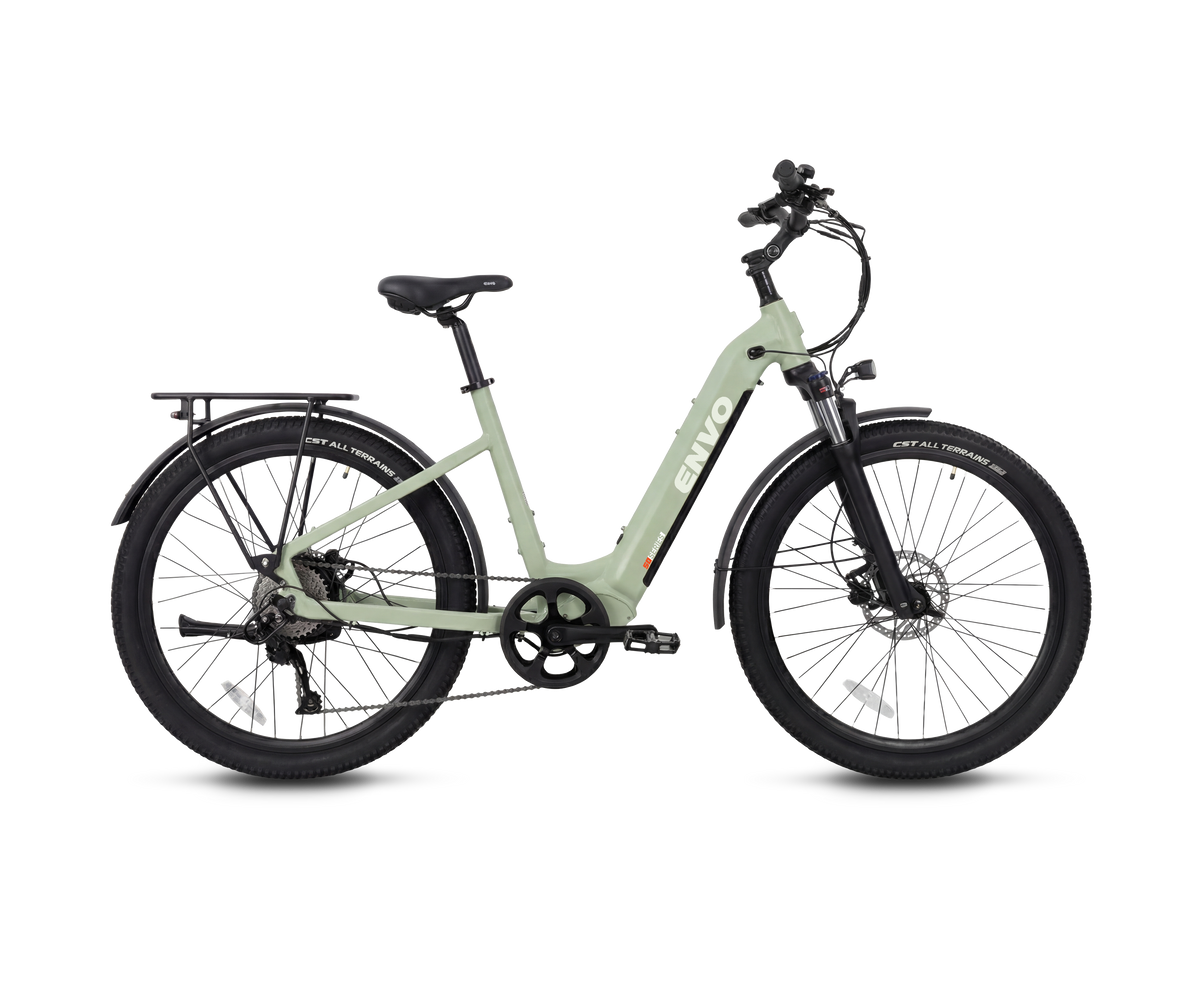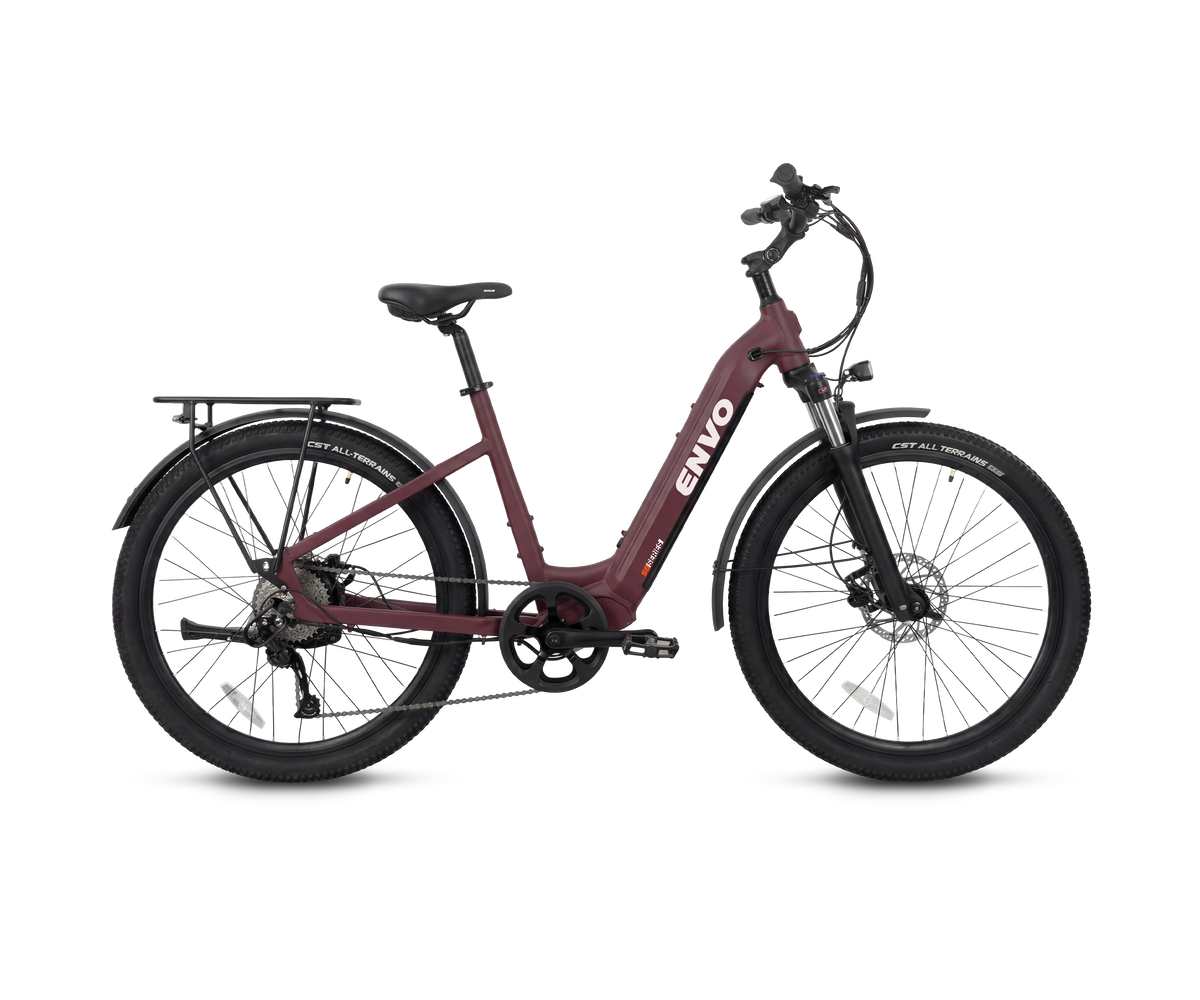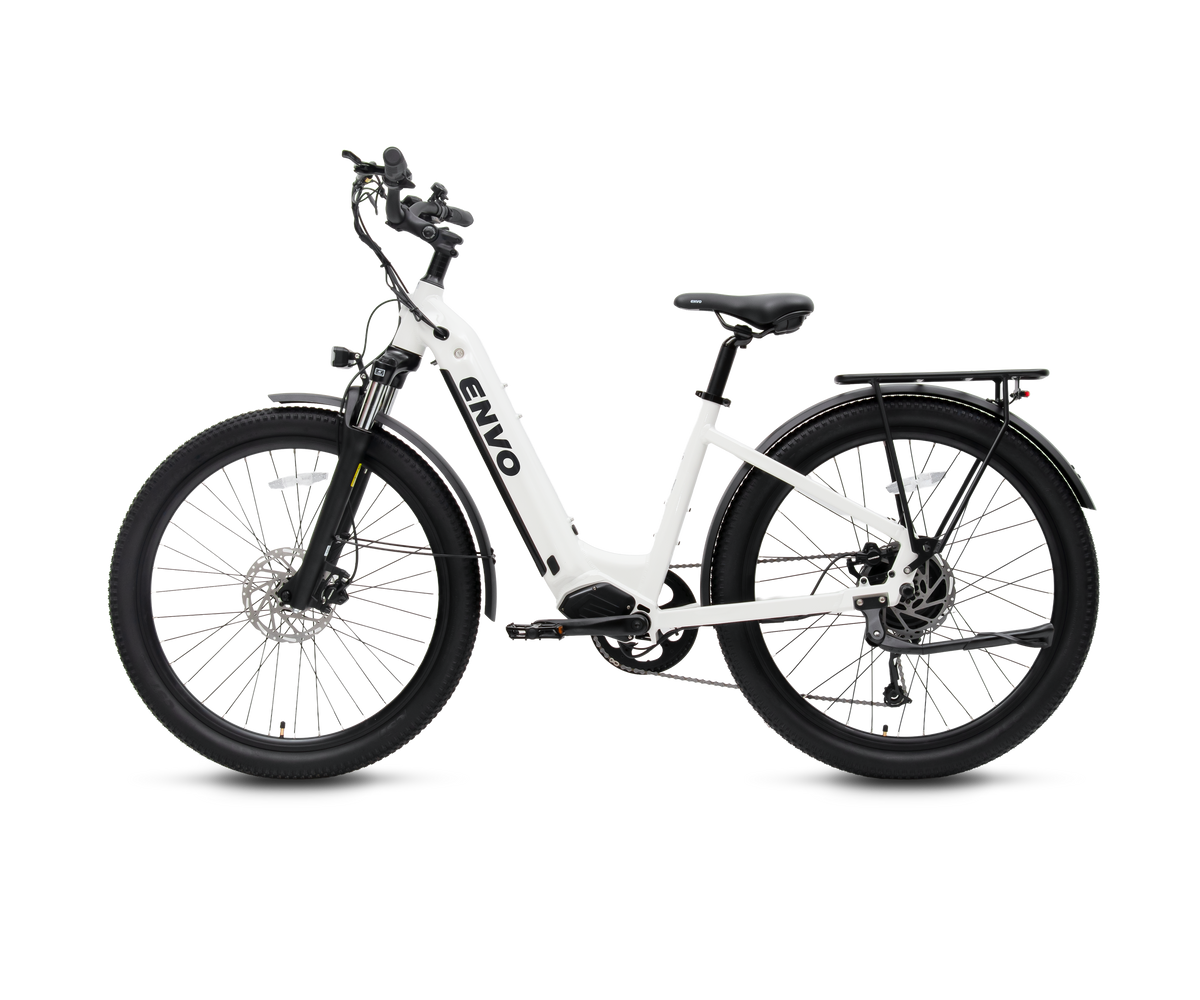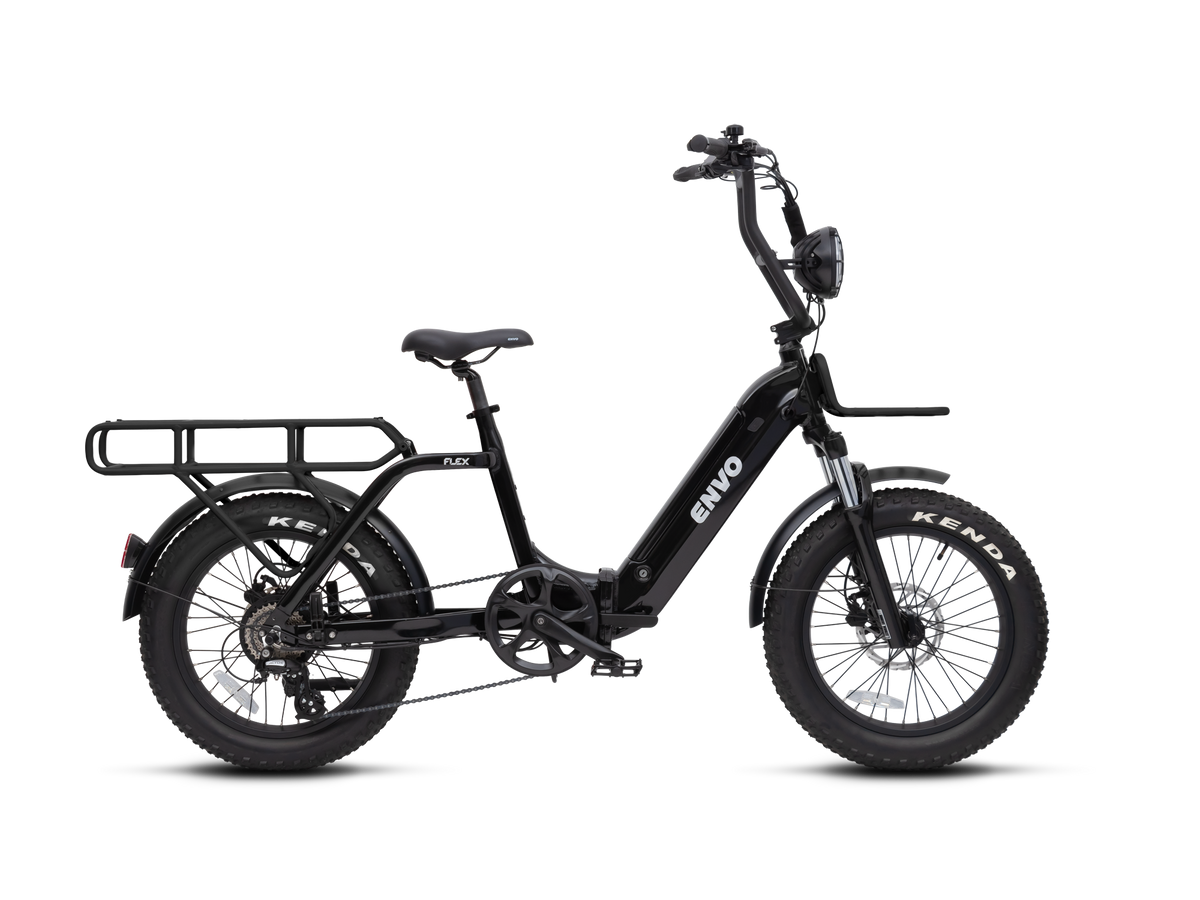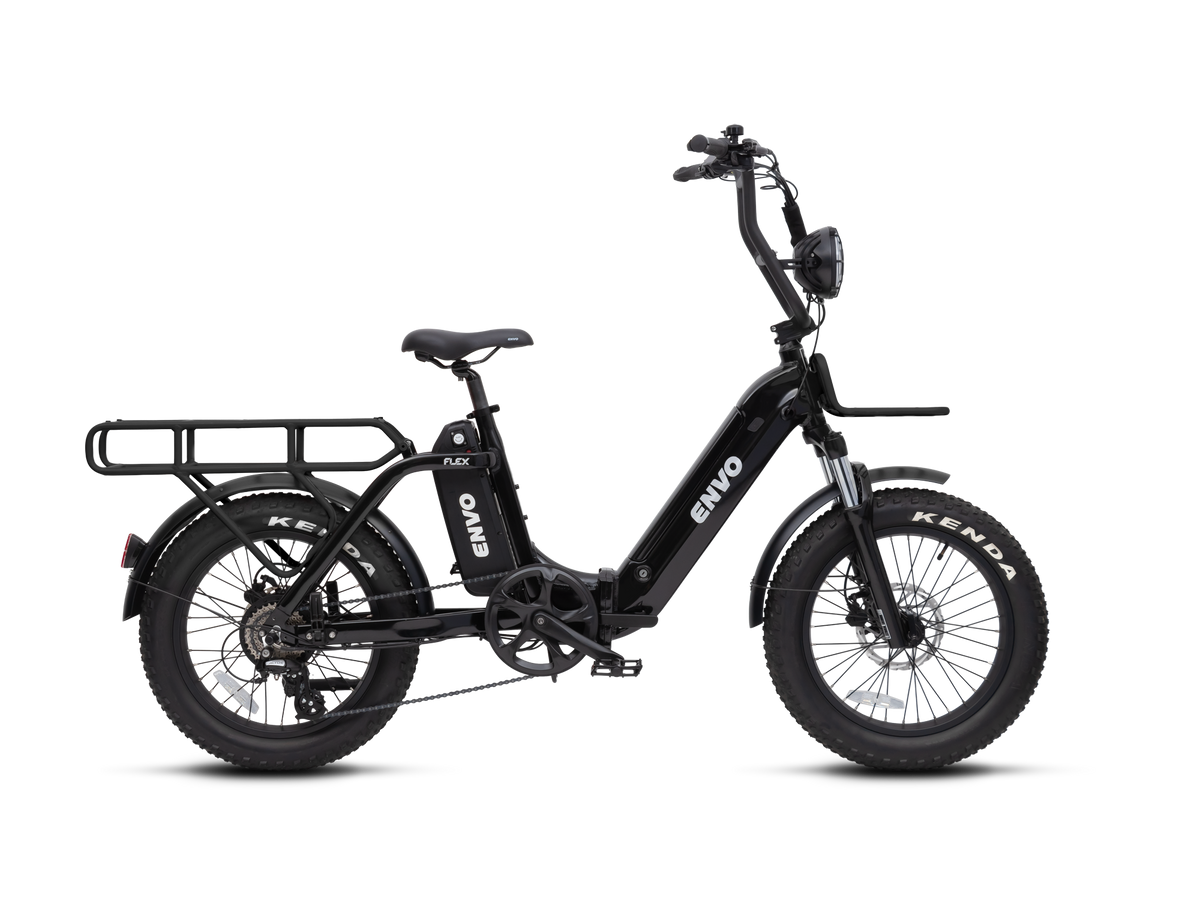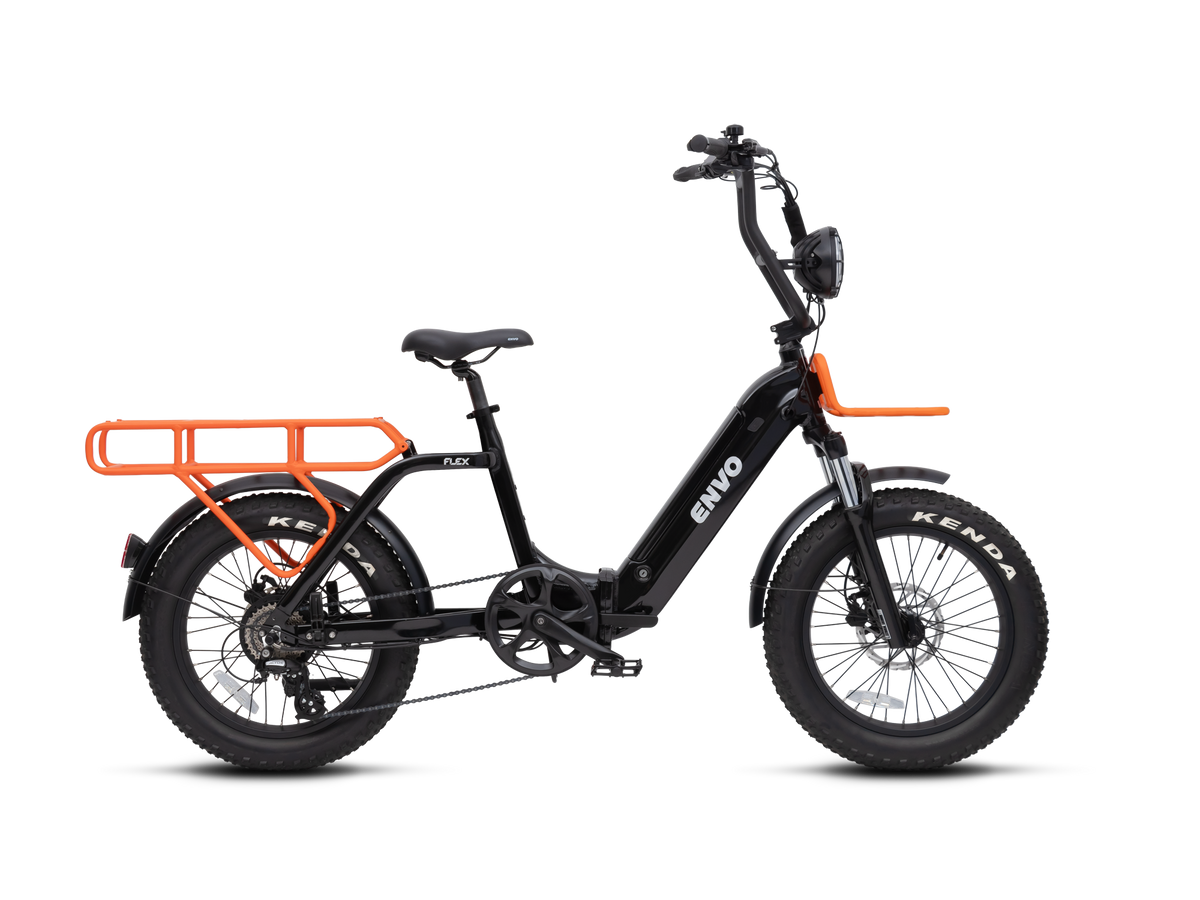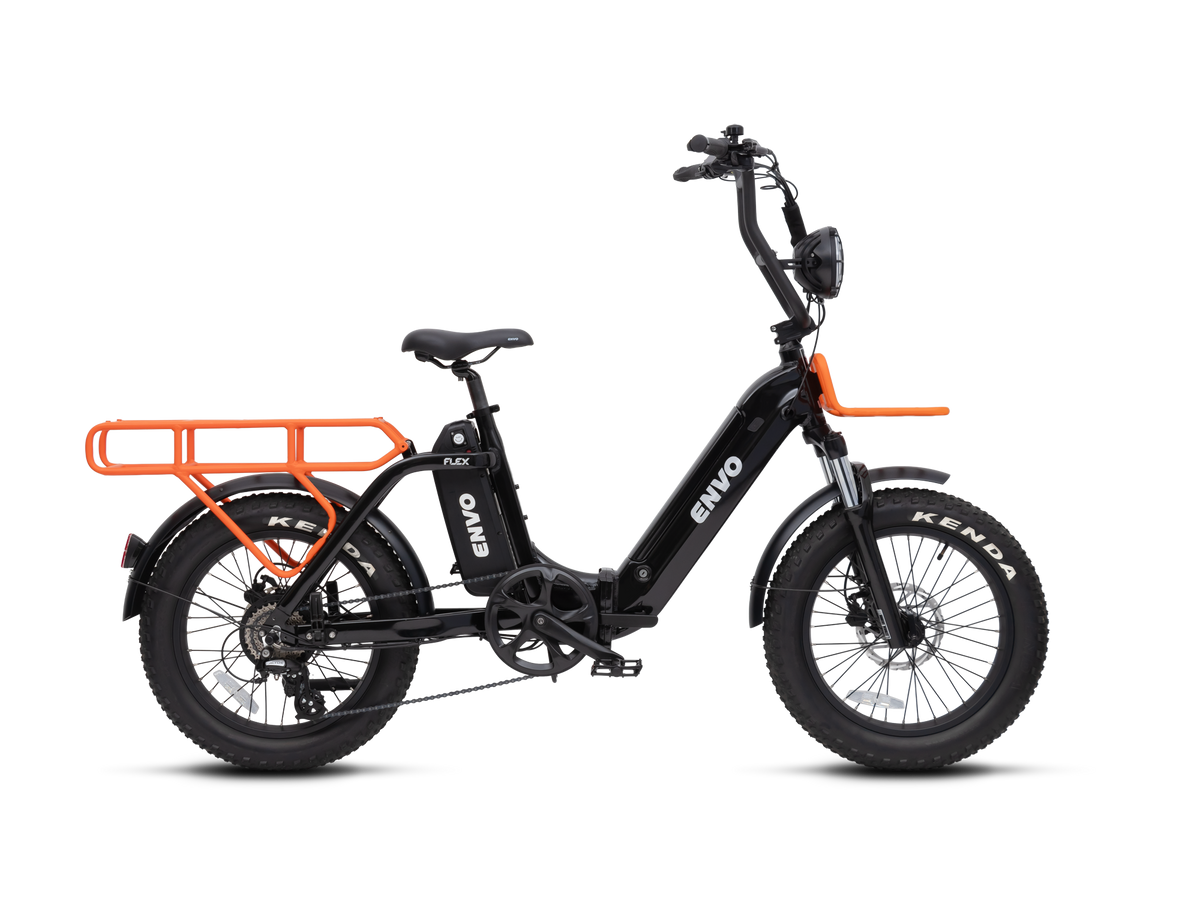

ENVO D50 vs Aima Big Sur Sport G2 15Ah
What does "sport" actually mean on an e-bike? A look at sport styling vs real sport capability — for Canadian buyers weighing the 2026 options.
Quick Verdict
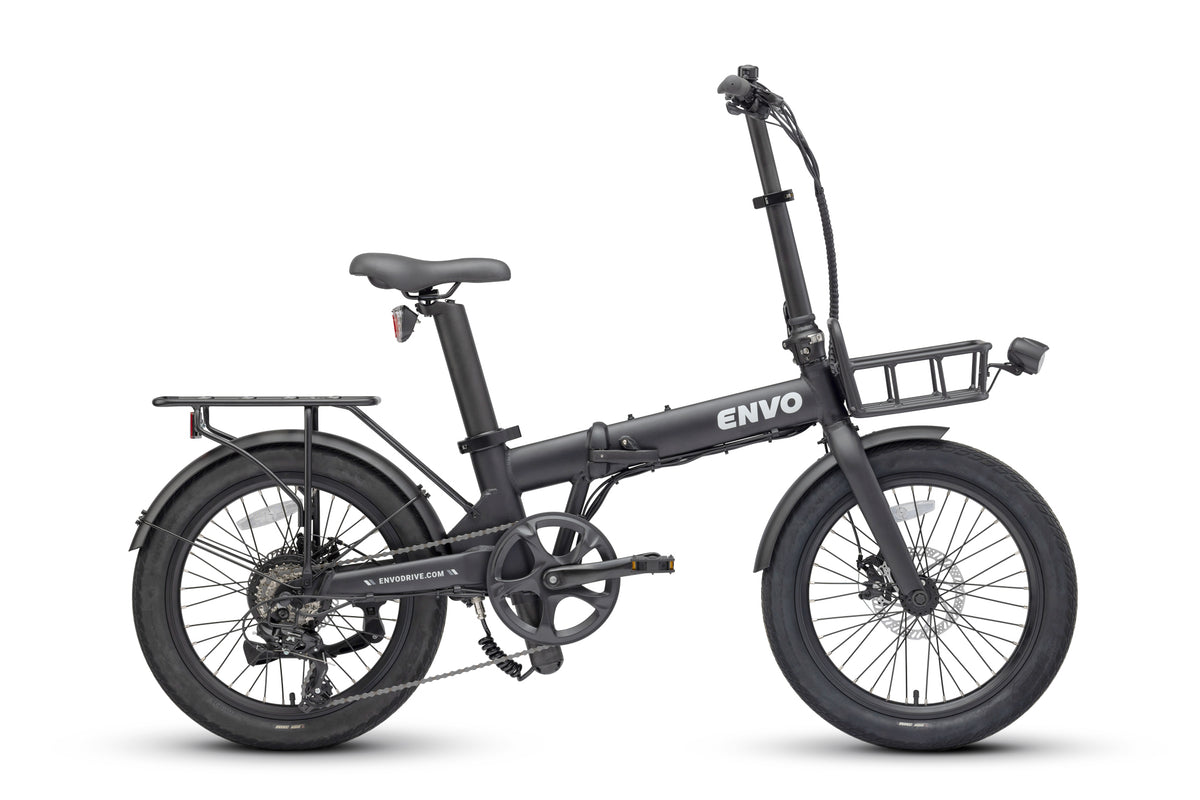
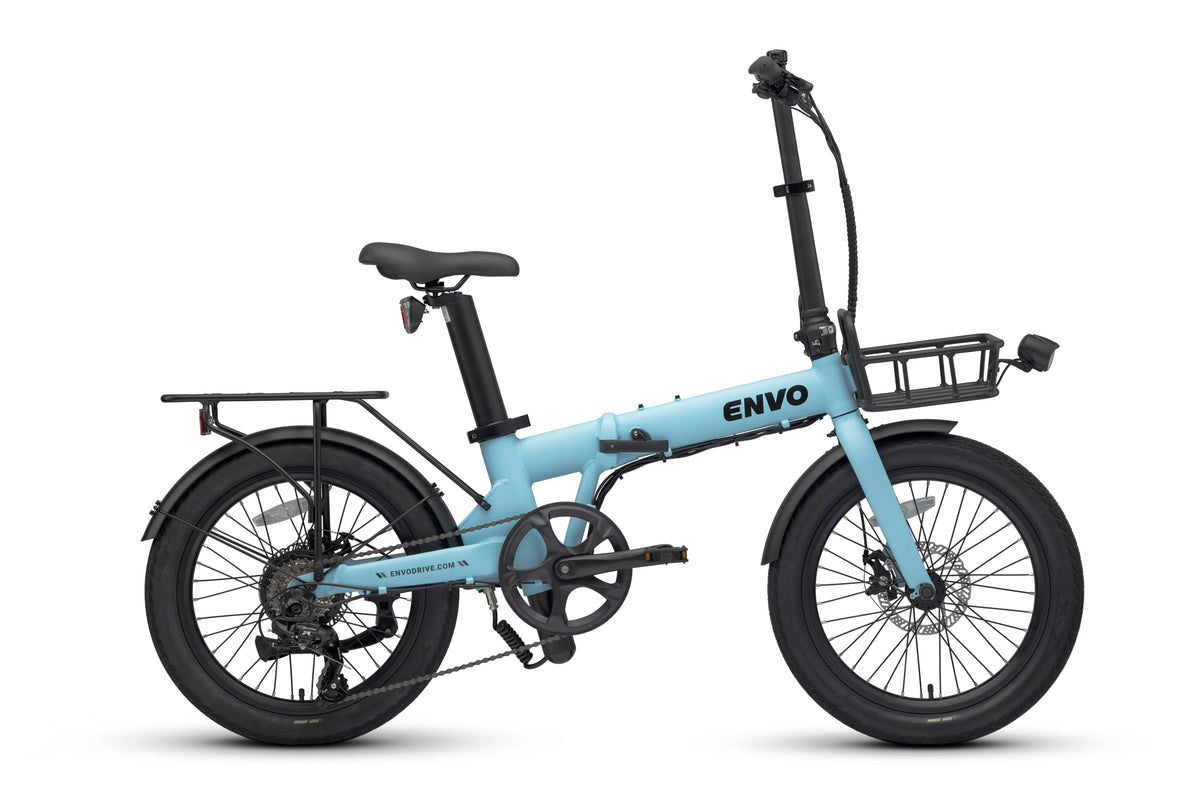
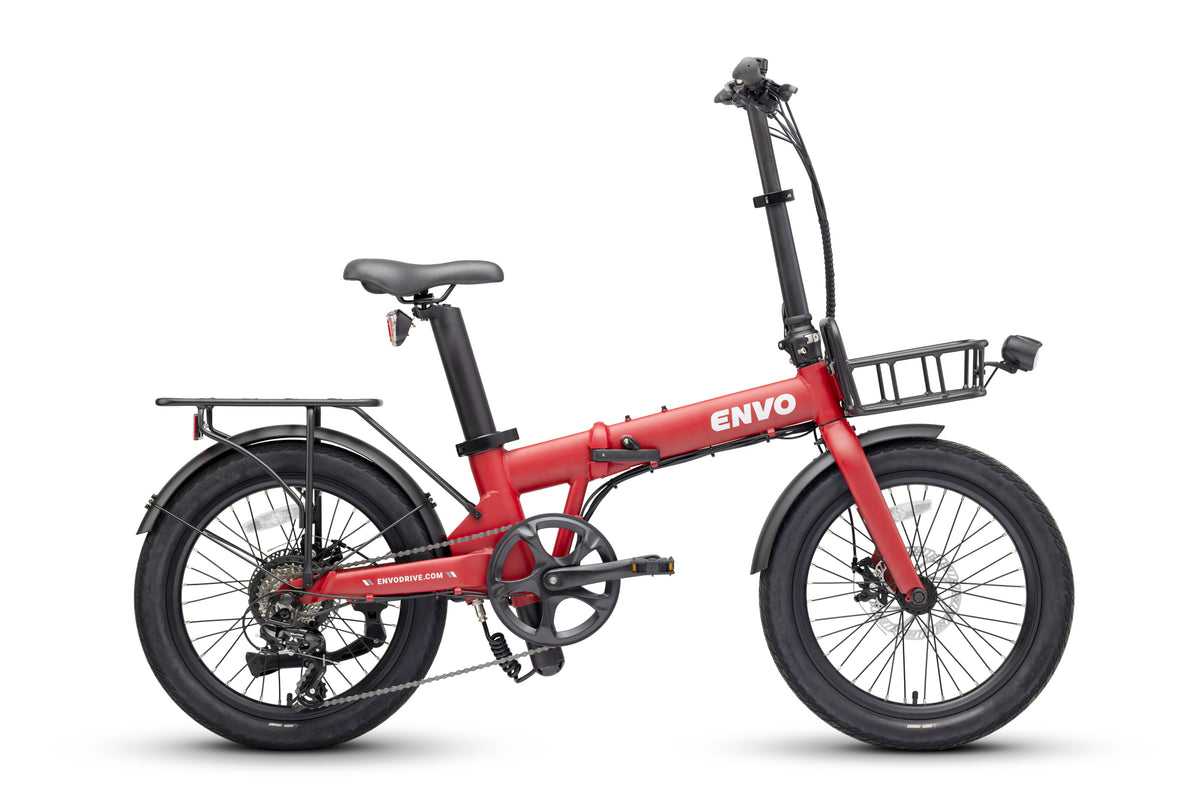
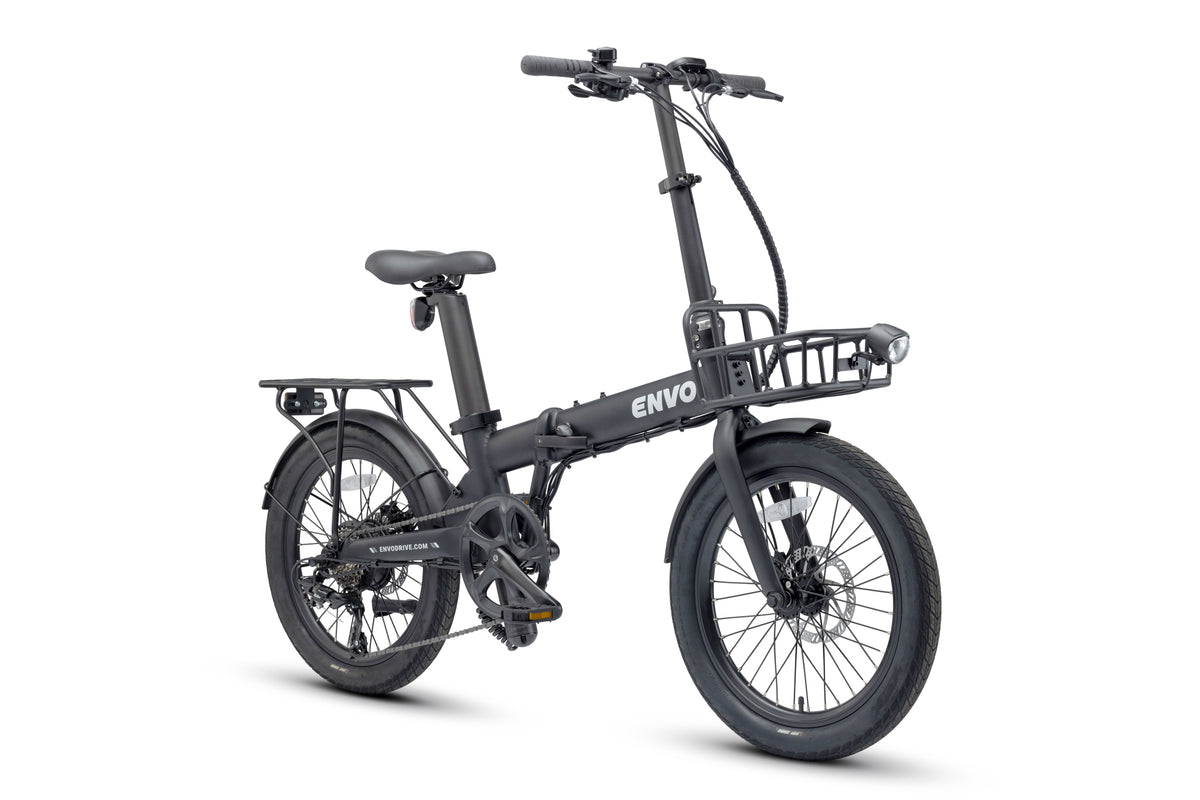
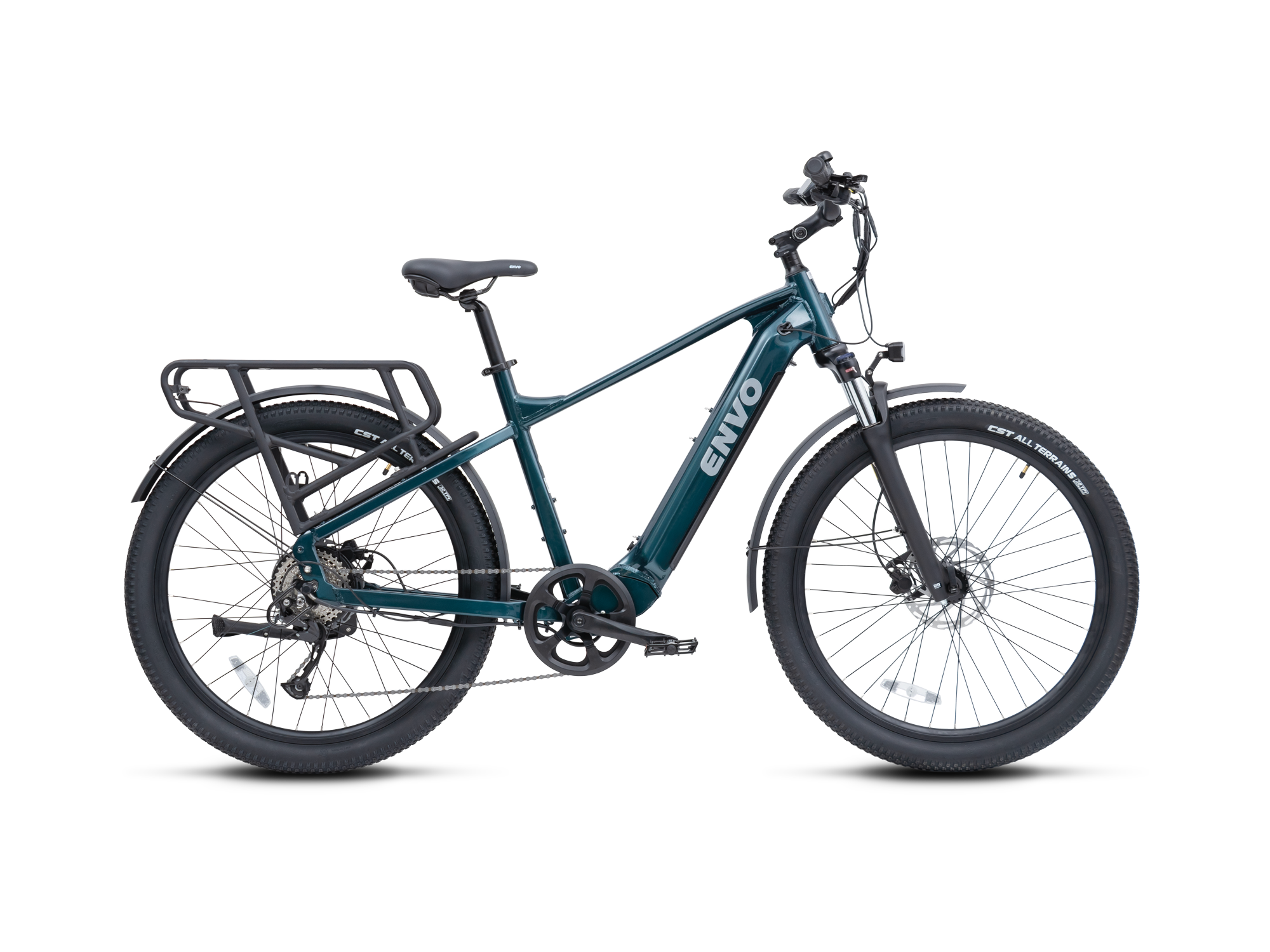
If you're shopping the ENVO D50 against the Aima Big Sur Sport G2 15Ah, the most important thing to understand up front is what the "Sport" badge actually delivers. Both bikes share a 500W rear hub, 80 Nm of torque, and a 720 Wh battery — but only one of them gives you a genuine sport-performance feature you can feel on the road.
What "Sport" Actually Means on an E-Bike
What does "sport" actually mean on an e-bike?
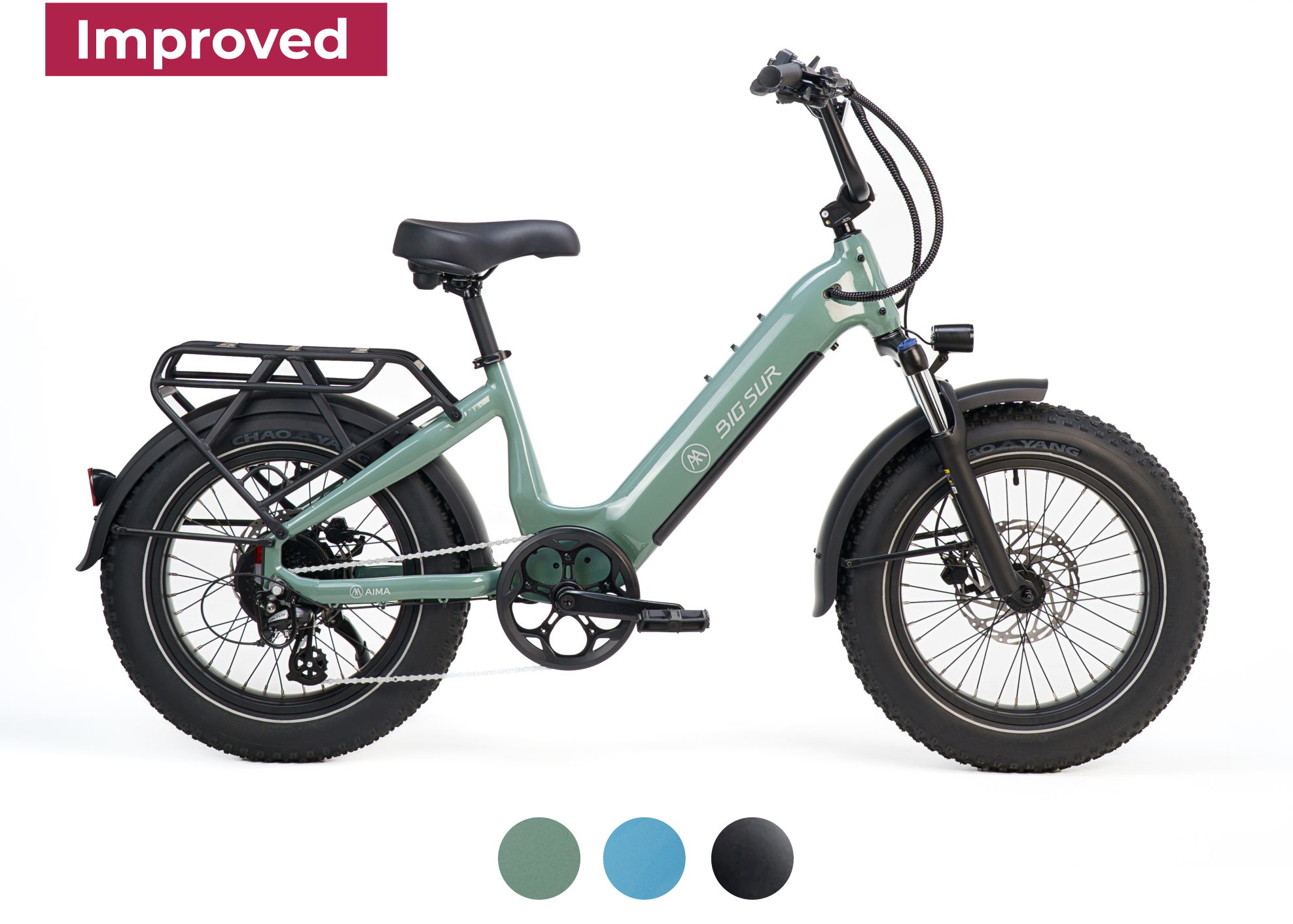
The Aima Big Sur Sport G2 15Ah looks like it should be the more performance-oriented machine. It wears the Sport badge, carries a chunky all-terrain stance, and is marketed with a more aggressive look. But once you get past the trim and branding, the real performance story becomes clearer: the Sport version appears to be primarily a styling-and-trim distinction, while the underlying hard specs remain very close to the standard Big Sur G2 platform.
That matters because if you are a Canadian buyer shopping for a sport-optioned commuter or all-terrain e-bike, the badge is not what makes a bike feel faster. What matters is motor output, torque delivery, sensor response, overall weight, geometry, and — most importantly — actual top assisted speed.
That is where the ENVO D50 creates real separation. Both bikes sit in the 500W / 80 Nm category with 720 Wh batteries, but the D50 offers something the Aima does not: Class 3 unlock capability up to 45 km/h, alongside a dual torque + cadence sensor system and a significantly lighter build. For more context on how this category is shaping up, see our roundup of the best all-terrain electric bikes in Canada.
The Sport Question: What Actually Makes an E-Bike Sport-Tuned?
If two e-bikes both wear the word "Sport," but only one of them changes how the bike actually behaves under the rider, which one earned the badge? Four things separate genuine sport-tuned hardware from sport-themed presentation:
Higher Assisted Speed
If two bikes have similar torque and battery, the one that supports a higher assisted top speed feels more performance-oriented.
Lower System Weight
A lighter bike accelerates more cleanly, changes direction more easily, and feels more eager under hard pedaling.
Responsive Sensor System
How naturally the bike responds when you pedal harder — and how flexibly assistance ramps with rider effort.
Aggressive Setup
Handlebar position, geometry, and suspension tune that prioritize active riding over upright cruising.
By that standard, the Aima Big Sur Sport G2 may look sportier, but the ENVO D50 has the more meaningful sport hardware advantage. Not branding. Not aesthetics. The fact that the D50 can be configured beyond standard Class 2 behavior into Class 3 / off-road mode up to 45 km/h, while the Aima Sport G2 remains Class 2 only.
If you want to know how the Canadian classes shape this conversation, our explainer on e-bike classes in Canada walks through what Class 2 and Class 3 unlock actually mean on the road.
Full Spec Comparison Table
| Specification | 🇨🇦 ENVO D50 | 🇨🇳 Aima Big Sur Sport G2 15Ah |
|---|---|---|
| Price (CAD) | $2,679 | $2,990 |
| Motor | 500W rear hub · 80 Nm | Bafang G062 500W rear hub · 80 Nm |
| Battery | 48V / 15Ah · 720 Wh | 48V / 15Ah · 720 Wh |
| Top Speed | 45 km/h (Class 3) · 32 km/h (Class 2) | 32 km/h (Class 2 only) |
| Weight | 28 kg — 9 kg lighter | 37 kg |
| Payload Capacity | 200 kg | 180 kg |
| Gears | 9-speed | Shimano Acera/Altus 8-speed (entry-tier) |
| Tires | Disclosed on product page | Brand not disclosed |
| Sensor System | Torque + Cadence (dual-sensor) | Bafang torque-only |
| Brakes | Tektro E3520 hydraulic disc | Tektro hydraulic disc · 203mm rotors |
| Display | Color display · Bluetooth app · CAN | Bafang DP C010 color TFT |
| Frame Style | High-step diamond (performance) | Step-thru "Sport" trim styling |
| UL 2849 Certified | Yes | Yes |
| Warranty | 1 year | 2 yr frame · 2 yr power-assist · 2 yr/300 cycle battery · 1 yr mechanical |
| Canadian Market Tenure | Since 2016 (~9 years) | Since Nov 2024 (~18 months) |
| Origin / HQ | Designed, engineered & assembled in Burnaby, BC 🇨🇦 | Designed, engineered & manufactured in China · HQ: City of Industry, CA · Canadian distributor UNIVELO |
Motor & Performance
On headline output, these bikes are essentially identical.
- ENVO D50: 500W rated / 750W max rear hub, 80 Nm torque, Class 2 (32 km/h) or Class 3 unlock (45 km/h)
- Aima Big Sur Sport G2 15Ah: Bafang G062, 500W rear hub, 80 Nm torque, Class 2 only
Both bikes start from the same place on base output. At low and medium speeds, both should feel solid and capable. But if the question is which one feels more performance-oriented once speeds rise, the D50 has the clear edge.
The ENVO can be configured to Class 3 / 45 km/h, which fundamentally changes how the bike behaves in real Canadian riding scenarios — keeping pace with traffic on suburban arterials, holding 40 km/h on a long stretch without hitting an assist cutoff, or shaving meaningful minutes off a longer commute. The Aima Big Sur Sport G2 simply cannot do that, regardless of the badge on the down tube.
If a buyer says "I want the sportier option," the most honest response is: look at the bike with the actual speed-performance option, not the bike with the sport-themed badge.
⚡ Performance Read: Both bikes share the same 500W / 80 Nm output and 720 Wh battery. The decisive sport-relevant difference is the speed envelope — ENVO unlocks to Class 3 / 45 km/h, while the Aima Sport G2 is locked to Class 2 / 32 km/h.
Frame, Weight & Handling
- ENVO D50: 28 kg
- Aima Big Sur Sport G2: 37 kg
A true sport-tuned e-bike should feel eager. Lower weight helps with acceleration feel, corner entry confidence, line changes, easier manual handling off the bike, and more natural pedaling when assistance tapers off.
A heavier bike can still be stable and comfortable, especially in fat-tire formats — but "stable" and "sporty" are not always the same thing. If your vision of sport means agility, the D50 is closer to that goal. If your vision means bulky all-terrain presence, the Aima may still appeal more visually.
The 9 kg gap also shows up everywhere outside the saddle: lifting the bike onto a hitch rack, hoisting it into a basement, hauling it up a flight of stairs. None of that gets easier with a heavier platform. For more on how this category compares across body styles, browse our step-thru e-bike collection if accessibility is the higher priority.
⚖️ Real-World Read: The 9 kg weight delta isn't just a spec line — it's the single biggest reason the D50 feels closer to a true sport-tuned ride, while the Aima Sport G2's mass keeps it firmly in the "heavy fat-tire all-terrain" category.
Sensor System & Ride Feel
- ENVO D50: Torque + Cadence dual sensors
- Aima Big Sur Sport G2: Bafang torque sensor only
The Aima's torque-only system is good. But ENVO's dual-sensor setup gives it more flexibility — a broader performance envelope, especially for riders who alternate between relaxed cruising and harder pedaling.
That is why the D50 reads as the more convincing "sport-optioned commuter." Its system is not just about speed ceiling; it is also about how naturally the bike responds when the rider becomes more aggressive. For a deeper dive on this, see our torque vs cadence sensor explainer.
Ride Quality & PAS Responsiveness
Spec sheets miss what reviewers and dealers consistently flag about ENVO: ride feel that doesn't show up in numbers. ENVO's pedal-assist behaviour has been iterated on for years — power delivery is tuned to feel natural, predictable, and well-matched to Canadian commuter and trail use. Aima is using essentially off-the-shelf Bafang tuning out of the box.
The D50's controller logic, throttle ramp, and PAS curves are tuned specifically for how Canadians actually ride. On a 37 kg "Sport" trim bike, stock Bafang tuning can feel laggy or unrefined — particularly when you ask for aggressive acceleration the badge implies.
🚴 Test ride reveals the difference: Five minutes on each bike makes the gap obvious. ENVO's assist feels engineered. Aima's feels stock.
Components
Drivetrain
ENVO runs a 9-speed drivetrain. The Aima Sport G2 runs Shimano 8-speed. ENVO has the extra gear; Aima has the more famous name on the rear cassette.
Brakes
Both bikes use the Tektro hydraulic disc family. Aima specifies 203mm rotors — a real confidence point for a 37 kg bike.
Fork
Both run 80mm-travel suspension forks. Aima's Zoom unit adds a lockout lever, useful for paved sections.
Display
ENVO offers a color display with Bluetooth app + CAN-bus. Aima counters with the Bafang DP C010 color TFT.
Dual Battery
ENVO supports dual-battery expansion to ~1,440 Wh. The Aima Sport G2 does not. See ENVO's dual-battery range guide.
Payload
ENVO carries up to 200 kg. Aima rates 180 kg. The lighter bike actually hauls more.
The Aima sounds robust and practical, especially for riders who specifically want a fat-tire all-terrain bike with recognizable Bafang and Shimano stamps. But it's worth noting clearly: the Sport G2 does not introduce a major drivetrain or battery upgrade over the standard Big Sur G2 platform. The "Sport" label is largely about visual identity and trim presentation. One note on the Shimano stamp: Aima's drivetrain is Shimano Acera/Altus — entry-tier, below Alivio and Deore in the Shimano hierarchy. The "Shimano 8-speed" headline reads better than the actual component grade.
Geometry & North American Fit
Reviewers consistently note that Aima frame geometry feels designed for the Chinese domestic market — reach, stack, and seatpost angles can feel off to riders accustomed to bikes geometry-tuned for Canadian/US sizing. ENVO frames are designed and engineered in Burnaby, BC specifically with North American riders in mind: taller average heights, longer torsos, different riding postures. It's the kind of detail that becomes obvious in the first 5 minutes of a test ride.
Tires & Aesthetics
Tires: Aima's Canadian product pages do not disclose the tire manufacturer — just generic "e-bike rated casing" language. ENVO discloses tire choices on product pages. Tire brand matters for replacement, ride feel, and puncture protection.
Aesthetics: Style is subjective, but the design language differs noticeably. ENVO leans sleek and considered — Canadian engineering aesthetics. The Big Sur Sport G2 leans more utilitarian and, despite the "Sport" label, carries 9 kg more mass than the D50 — which translates visually to a bulkier silhouette. Worth a look in person before you decide.
For a broader checklist on reading spec sheets, see our e-bike buying guide.
Safety & UL 2849
Both bikes are presented as UL 2849-certified systems. ENVO's product page lists UL 2849 certification for the D50, and Aima's Canadian launch announcement positioned the entire lineup as meeting UL 2849 standards.
That's a meaningful tie. In 2026, UL 2849 increasingly matters for insurance coverage and condo board approval — many Canadian buildings now require system-level certification before allowing an e-bike inside. You can browse our wider list of UL 2849-certified e-bikes for additional context.
The more subtle difference is not the certification claim itself, but the market history behind it. ENVO has multi-year Canadian operating visibility; Aima's Canadian rollout is much newer, roughly 18 months in market as of May 2026.
Warranty Comparison
This is the column where Aima plainly wins on paper.
🇨🇳 Aima Big Sur Sport G2 Warranty
- ✅ 2 years frame
- ✅ 2 years power-assist
- ✅ 2 years or 300 cycles battery
- ✅ 1 year mechanical
🇨🇦 ENVO D50 Warranty
- ✅ 1 year coverage
- ✅ Canadian-based warranty administration
- ✅ Burnaby, BC operations centre
- ✅ ~9 years of in-market support history
If the contest were only about written warranty terms, the Big Sur Sport G2 would win. But warranty value depends on the strength of the Canadian support network standing behind it. A multi-year warranty is only as useful as the company's ability to administer parts, approve claims, and keep service channels alive into year three, four, and five.
ENVO Drive Systems's support story is easier to verify: deep Canadian roots, a Burnaby, BC operating base, and an established parts and service flow. For ongoing care suggestions, see ENVO's e-bike maintenance tips.
The Long-Haul Question
⚠️ Aima's product is not the problem. The long-haul Canadian support picture is the question.
Aima Technology Group is a Tianjin-based manufacturer, listed on the Shanghai Stock Exchange under ticker 603529, founded in 1999. The bikes are designed in China, engineered in China, AND manufactured in China — the full trifecta. It is not a fly-by-night brand. It entered Canada on November 28, 2024 via UNIVELO as its exclusive Canadian distributor — putting it at roughly 18 months in the Canadian market as of May 2026. The launch was structured around the distributor and its partner retailer network rather than Aima-owned Canadian retail or service infrastructure.
Critically, Aima's North American HQ is in City of Industry, California — there is no Aima legal entity in Canada. Service in Canada runs entirely through UNIVELO (a third-party distributor) and partner dealers. If UNIVELO loses the contract, there is no fallback — even Aima USA cannot directly service Canadian customers.
The other context worth knowing: Aima's 2024 overseas revenue was approximately RMB 234.7 million out of RMB 21.61 billion total — roughly 1.1%. That's a real number, but it shows international markets remain a very small share of the parent company's business.
That isn't "Aima is unsafe." It is that long-term ownership depends on long-term support depth. Who handles warranty in Canada? Where do replacement parts ship from? Will the same dealer still represent the brand in year three or four?
🇨🇦 Buy Canadian = buy ENVO. ENVO is designed in Burnaby, engineered in Burnaby, assembled in Burnaby — Canadian-owned. Aima is the opposite: Chinese trifecta + California HQ + Canadian distributor middleman.
ENVO, by contrast, was incorporated in 2016, operates from Burnaby, BC, and has built production and distribution capacity there. If you plan to keep this bike until 2030 or beyond, which support network are you more confident will still feel easy, local, and responsive in Canada?
For many Canadian buyers, ENVO's nearly-decade-long operating presence is going to be the more reassuring answer. Browse the wider EbikeBC catalogue for more Canadian-supported options or our roundup of the best electric bikes for 2025.
Who Should Buy What
🇨🇦 Buy the ENVO D50 — the sport-optioned commuter
- ✅ The more performance-credible bike
- ✅ Actual Class 3 capability (45 km/h)
- ✅ Lighter handling (28 kg)
- ✅ Better agility in urban riding
- ✅ More natural response under hard pedaling
- ✅ Local Canadian brand presence and support
🇨🇳 Buy the Aima Big Sur Sport G2 — the style-led fat-tire
- ✅ The chunkier, heavier all-terrain look
- ✅ A style-forward Sport trim treatment
- ✅ A longer warranty package on paper
- ✅ Recognizable Bafang and Shimano components
- ✅ Comfort with distributor-led Canadian support
If your reason for shopping the Aima is specifically the word "Sport," recognize what that term appears to mean here: sport-themed presentation and trim, not a major jump in hard performance over the standard G2.
Category Scores (Out of 100)
The Verdict
The central question isn't whether the Aima Big Sur Sport G2 15Ah is a bad bike. It isn't. The real question is whether it is meaningfully more performance-oriented than the standard Big Sur G2 in a way that justifies the "Sport" framing — and how that stacks up against a genuinely sport-capable alternative.
The feature that actually changes performance is the one that earns the badge
The D50 isn't sport-branded — it is sport-capable. Class 3 unlock to 45 km/h, 9 kg lighter, dual torque + cadence sensors, and dual-battery expansion to ~1,440 Wh. At $2,679 CAD, it's also $311 less than the Aima Sport G2.
Best for: performance-minded riders, longer commutes, suburban arterials, and buyers who want a bike that actually feels sportier — not just one that looks the part.
If you like the look, this is the version that delivers that identity
The Sport G2 brings the more aggressive look and trim presentation, recognizable Bafang and Shimano components, and the longer written warranty. Just go in with eyes open: based on verified specs, the Sport variant is a styling-and-trim distinction, with largely familiar core hardware compared to the standard Big Sur G2.
Best for: riders who want chunky all-terrain styling, a step-thru Sport trim, and a longer warranty card — and who are comfortable with distributor-led Canadian support.
Final Take
Based on the verified facts, the most defensible answer to "is the Aima Sport G2 meaningfully more performance-oriented?" is not really, in the ways that matter most. The Sport variant is a styling-and-trim distinction. The hard performance hardware is largely familiar from the standard platform.
The ENVO D50, by contrast, has the one feature that actually earns a sport-oriented recommendation: Class 3 unlock capability up to 45 km/h. Add in the lighter 28 kg weight, the dual-sensor setup, and ENVO's Canadian assembly and support footprint, and it becomes the more convincing choice for riders who want a bike that feels genuinely more athletic.
If you're drawn to "sport" branding, the ENVO D50 is the more performance-credible buy for Canadian riders in 2026.
Shop the ENVO D50 at EbikeBC
Test ride the D50, browse our full electric bike line-up, or talk to our team about which Canadian-supported sport-capable e-bike fits your ride.
Shop the ENVO D50 → Electric bikes