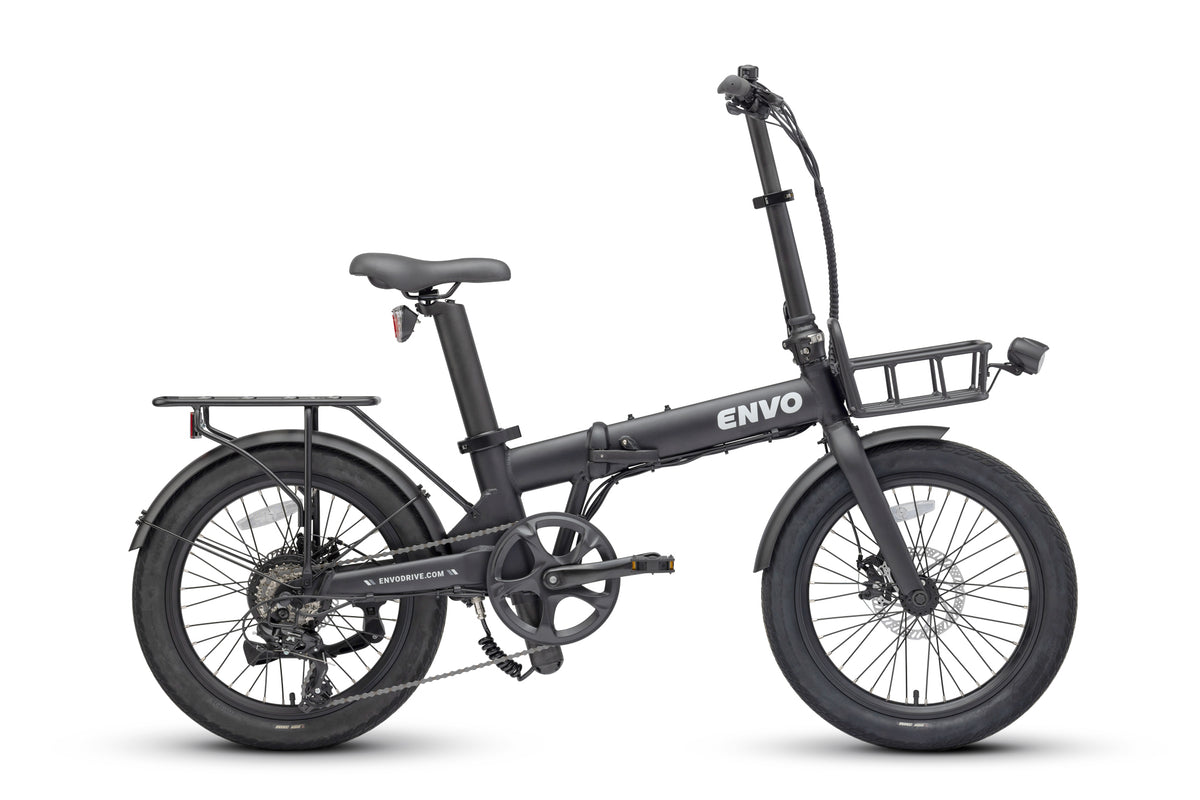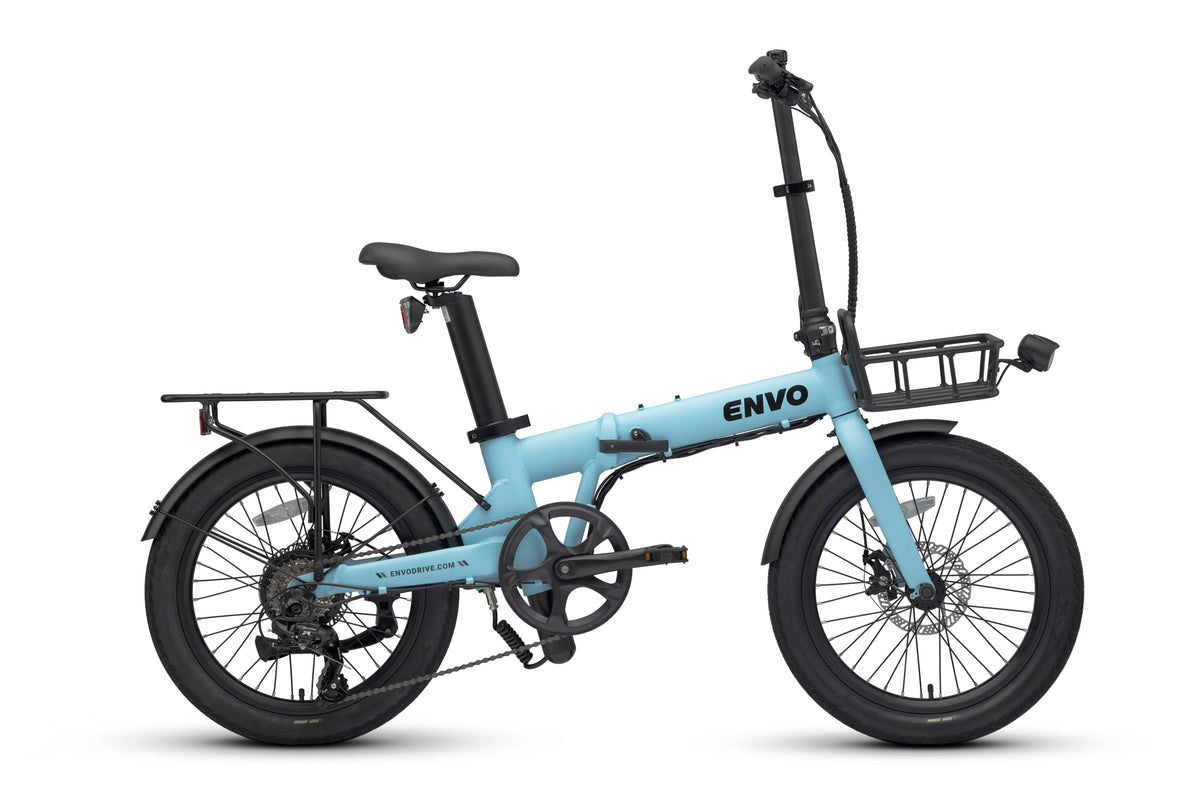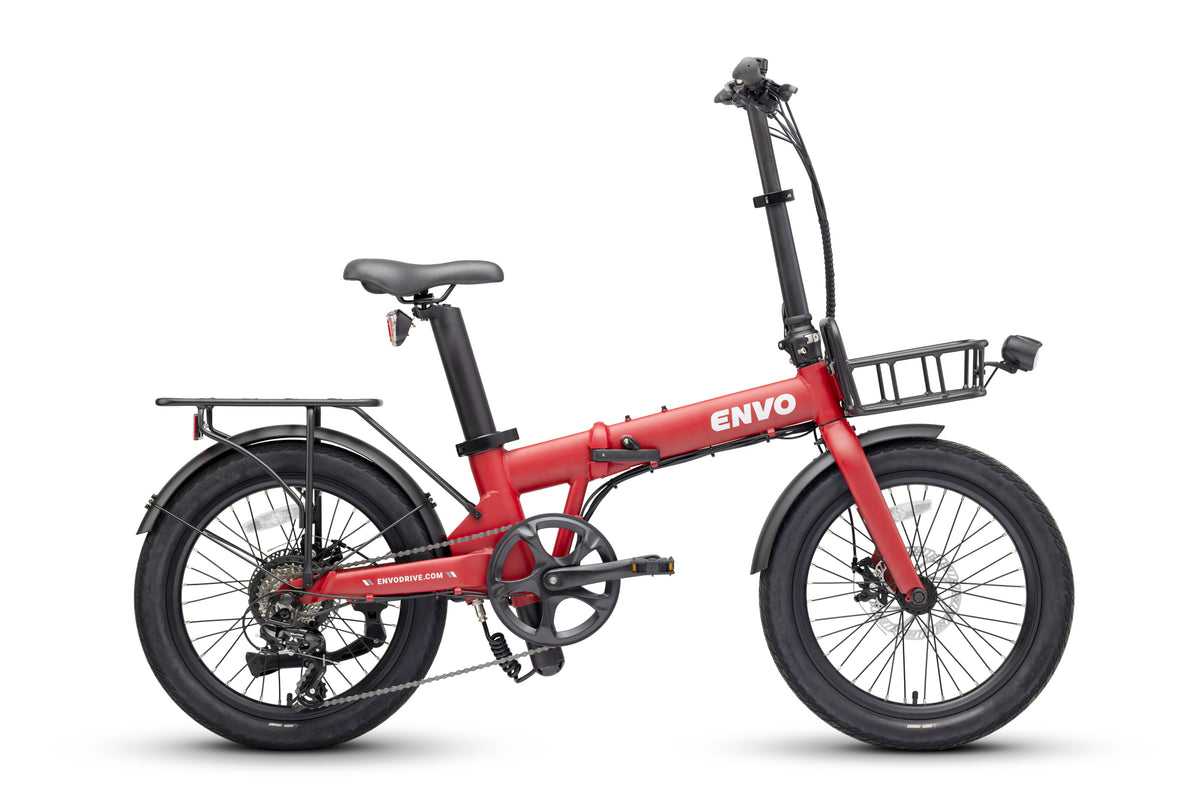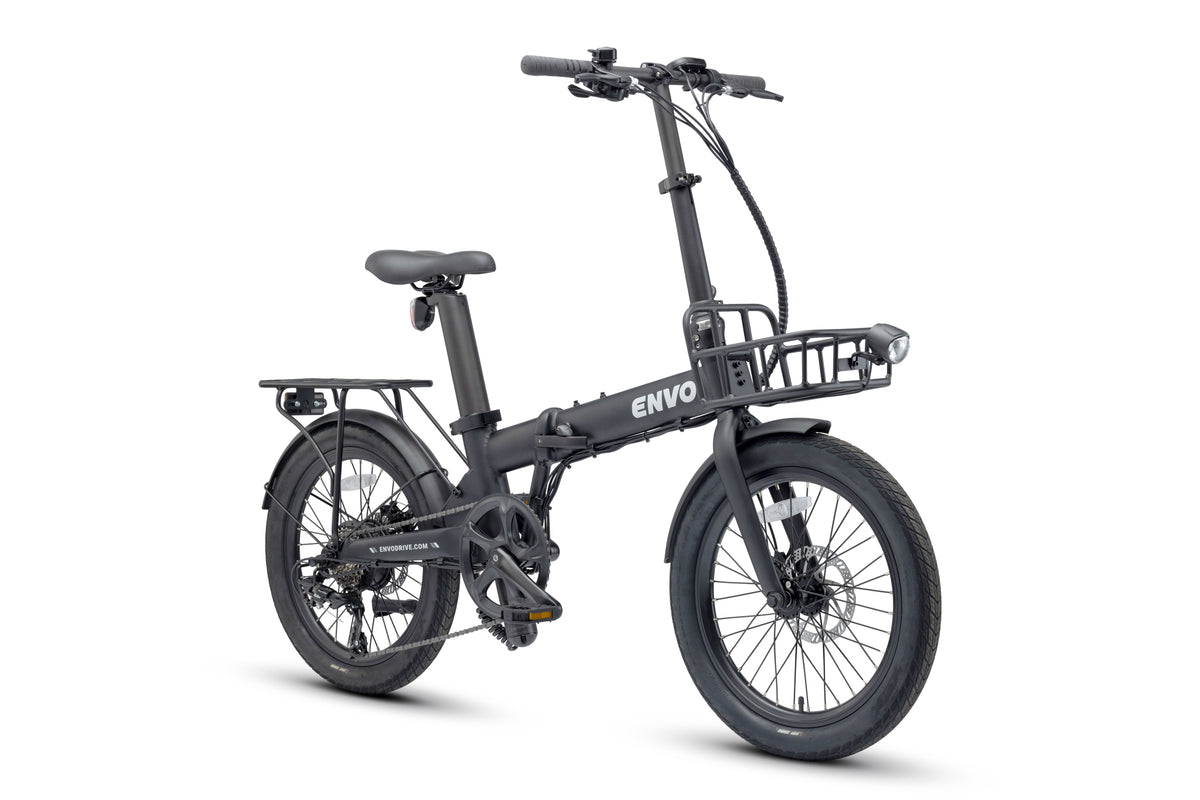





ENVO Lynx 20 vs Lectric XP4
Which Folding E-Bike Is Better for Canada?
Two folding e-bikes, two very different approaches. One is Canadian-designed and assembled in BC. The other is America's bestselling budget folder. Which one is right for Canadian buyers?

Quick Verdict
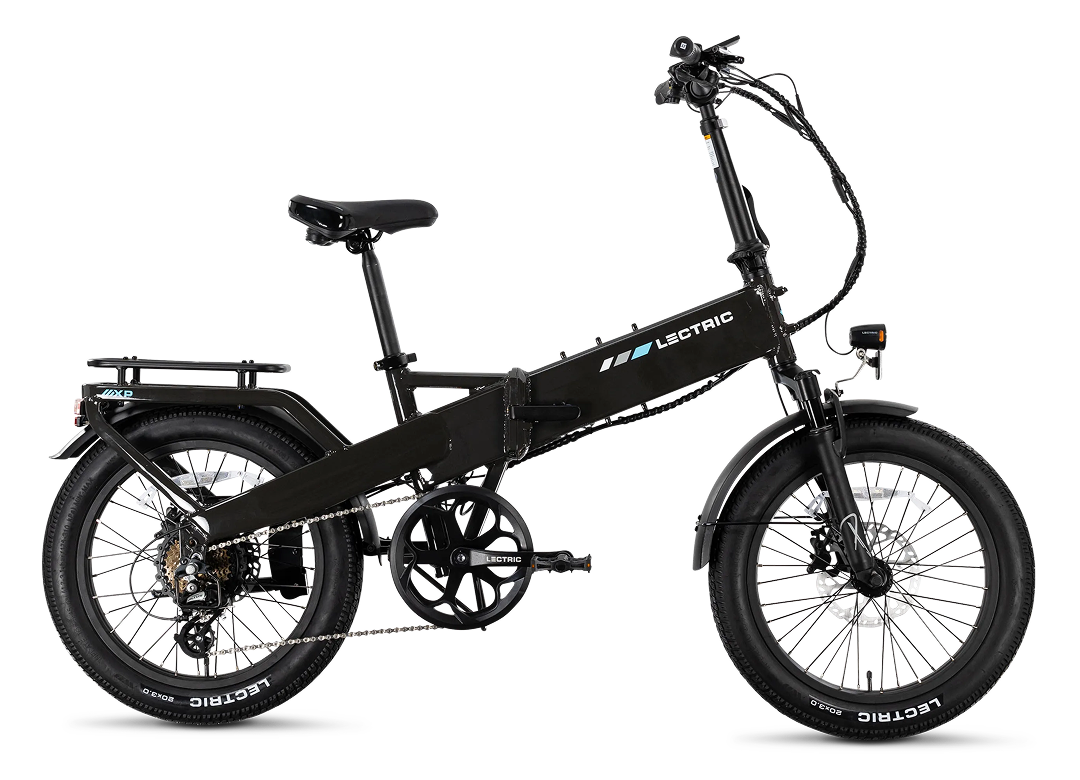
The ENVO Lynx 20 and the Lectric XP4 750 are both 20-inch folding electric bikes targeting urban commuters who need a compact, portable ride. They share a category, but they come from fundamentally different design philosophies. The Lynx 20 is lighter, uses a torque sensor for a natural pedalling feel, and is backed by a Canadian dealer network headquartered in Burnaby, BC. The XP4 brings raw power — 750W rated, 1,310W peak, and a massive 840 Wh battery that dwarfs most competitors at its price point.
For Canadian buyers, the decision comes down to priorities. If you want a refined, lightweight folder that feels like a real bicycle and comes with domestic service infrastructure, the Lynx 20 deserves serious consideration. If you want maximum motor power and battery capacity on a budget, the XP4 is hard to beat on paper — but you will be managing cross-border warranty and support from Phoenix, Arizona.
Canadian Advantage: The ENVO Lynx 20 is designed and assembled in Burnaby, BC. Parts ship from Canadian inventory with no border delays, duties, or currency conversion. Lectric operates exclusively from Phoenix, AZ — all service, warranty claims, and parts orders for Canadian owners involve cross-border logistics.
Full Spec Comparison Table
| Specification | ENVO Lynx 20 | Lectric XP4 750 |
|---|---|---|
| Price (CAD) | ~$1,499 CAD | ~$1,799 CAD (converted) |
| Motor Power | 500W rear hub, 60 Nm | 750W rear hub, 85 Nm, 1,310W peak |
| Battery | 36V 12.8Ah, ~461 Wh, LG cells | 48V 17.5Ah, 840 Wh |
| Sensor Type | Torque sensor | Not clearly stated |
| Brakes | 160mm disc | Hydraulic 180mm disc |
| Tires | 20 x 2.35" | 20 x 3.0" fat |
| Gears | 7-speed Shimano | 8-speed |
| Suspension | Rigid | Not confirmed |
| Frame | Folding aluminum | Folding 6000-series aluminum |
| Weight | 22.5 kg / 49.6 lb | 28.1 kg / 62 lb (without battery) |
| Range (claimed) | Up to 100 km | Up to 137 km (85 mi) |
| UL 2849 | Yes | Yes |
| Brand Origin | Canada — Burnaby, BC | USA — Phoenix, AZ (made in China) |
| Warranty | Canadian warranty | 1 year, AZ arbitration |
Motor & Performance
On raw numbers, the Lectric XP4 wins this category decisively. Its 750W rated motor with 85 Nm of torque and a 1,310W peak output is substantially more powerful than the Lynx 20's 500W motor with 60 Nm. For riders who climb steep hills regularly, haul heavy cargo, or simply want aggressive acceleration from a standing start, the XP4 delivers more grunt. That peak wattage figure means the XP4 can sustain effort through extended climbs where the Lynx 20 may ask more from your legs.
But motor performance is not just about peak numbers. The ENVO Lynx 20 uses a torque sensor — a critical distinction that fundamentally changes how the motor responds to your pedalling. A torque sensor measures how hard you are pushing the pedals and delivers power proportionally. The result is a ride that feels natural, intuitive, and bicycle-like. You push harder, you get more assist. You ease off, the motor backs down smoothly. This is the same sensor technology used in premium European e-bikes from Bosch, Shimano Steps, and Specialized.
The Lectric XP4's sensor type is not clearly specified in its marketing materials. Many budget folding e-bikes in this category use cadence sensors, which detect only whether you are pedalling (not how hard) and deliver assist in fixed increments. The difference in ride feel is dramatic: cadence-sensor bikes tend to surge forward abruptly when you start pedalling and feel unnatural during slow-speed manoeuvring. If the XP4 uses a cadence sensor, the Lynx 20's riding experience will feel significantly more refined despite less raw power.
ENVO Lynx 20 — Motor
500W rear hub · 60 Nm torque · Torque sensor for natural, proportional power delivery · Smooth, bicycle-like ride feel
Lectric XP4 — Motor
750W rear hub · 85 Nm · 1,310W peak · Maximum power for hills and heavy loads · Sensor type not clearly stated
Battery & Range
The Lectric XP4 carries a significantly larger battery: 48V 17.5Ah (840 Wh) compared to the Lynx 20's 36V 12.8Ah (~461 Wh). That is nearly double the capacity, and it translates directly into range. Lectric claims up to 137 km (85 miles) per charge, while ENVO rates the Lynx 20 at up to 100 km. In real-world conditions — hills, wind, rider weight, higher assist levels — both figures will be lower, but the XP4's advantage in raw battery capacity is undeniable.
However, capacity is only part of the battery story. The ENVO Lynx 20 specifies LG cells — a name-brand cell manufacturer known for consistent quality, proven cycle life, and reliable cold-weather performance. Canadian riders operating from October through April in sub-zero temperatures will appreciate cells that maintain capacity in the cold. The Lectric XP4 does not publicly specify its cell manufacturer, which is standard practice at its price tier but means buyers cannot independently verify cell quality or cold-weather specifications.
The Lynx 20's torque sensor also plays a role in real-world range. Torque sensors are inherently more efficient than cadence sensors because they modulate power delivery to match actual effort rather than running the motor at fixed output whenever pedalling is detected. A torque-sensor bike with a smaller battery can sometimes match the practical range of a cadence-sensor bike with a larger battery, because less energy is wasted on unnecessary full-power assist during easy flat riding.
Range Reality: The XP4's 840 Wh battery gives it a clear capacity advantage. But the Lynx 20's torque sensor and LG cells deliver efficient power management and reliable cold-weather performance — factors that narrow the real-world gap for Canadian commuters who ride year-round.
Components & Build
Both bikes are folding aluminum frames with rear hub motors and standard e-bike componentry. The differences are in the details — and in this matchup, neither bike sweeps every category. Each has clear component advantages over the other.
Brakes
The XP4 runs hydraulic 180mm disc brakes — a genuine premium spec at this price. The Lynx 20 uses 160mm disc brakes (type not confirmed as hydraulic). Larger rotors and hydraulic actuation provide stronger, more consistent stopping power with less hand effort. The XP4 wins on braking.
Tires
The XP4's 20 x 3.0" fat tires provide a larger contact patch, more cushioning over rough surfaces, and better traction on loose ground. The Lynx 20's 20 x 2.35" tires are narrower and lighter, rolling more efficiently on pavement but offering less comfort and grip on trails or gravel paths.
Gears
The XP4 offers 8-speed gearing versus the Lynx 20's 7-speed Shimano. Both are adequate for urban riding, but the XP4's extra gear provides slightly wider range for hill climbing under motor assist. The Lynx 20's Shimano drivetrain is serviceable at any bike shop worldwide.
Weight
The Lynx 20 weighs 22.5 kg (49.6 lb) — a full 5.6 kg lighter than the XP4's 28.1 kg (62 lb, without battery). For a folding e-bike that gets carried up stairs, loaded into cars, or taken on transit, that weight difference is felt every single day. The Lynx 20 wins on portability by a wide margin.
Sensor
The Lynx 20's torque sensor is the component most responsible for its refined ride quality. This single spec elevates the Lynx 20 above most folding e-bikes in its price range. Torque sensors are typically found on e-bikes costing $2,000+ and are rare at the Lynx 20's price point.
Frame
Both use folding aluminum frames. The XP4 specifies 6000-series aluminum — an industry-standard alloy used across mid-range and premium bikes for its strength-to-weight balance. Both fold compactly for storage and transport, though the Lynx 20's lighter weight makes the fold-and-carry process easier.
Safety & Certifications
Both the ENVO Lynx 20 and the Lectric XP4 carry UL 2849 certification — the electrical safety standard for e-bikes that covers the battery, motor, charger, controller, and wiring as an integrated system. This is the standard that Canadian condo boards, building managers, and insurers increasingly require before permitting indoor e-bike charging and storage. Both bikes clear this bar, and both are suitable for buildings with UL 2849 requirements.
UL 2849 certification is not a trivial achievement. It requires independent third-party testing of the entire electrical system for fire safety, shock hazard, and thermal management. The fact that both bikes carry this certification means Canadian buyers can charge either bike indoors with confidence that the electrical system has been validated to prevent the battery fires that have become a serious concern with uncertified e-bikes across North America.
For riders in jurisdictions that specify UL Listed (versus UL Recognized or other sub-designations), it is worth confirming the exact certification type of each bike with the manufacturer before purchase. Both carry UL 2849, but the specific listing type may matter for certain buildings or insurance policies.
Safety Parity: Both bikes are UL 2849 certified. Both are safe for indoor charging in buildings that require the standard. This is a genuine area of parity — and a meaningful bar that both bikes clear, placing them above the many uncertified budget e-bikes on the market.
Warranty & Service
This is the category where the two bikes diverge most sharply for Canadian buyers — not because of what is written on the warranty card, but because of the practical reality of exercising that warranty from Canada.
ENVO Lynx 20 — Canadian Warranty & Support
ENVO operates from Burnaby, BC, with a dedicated spare parts store, a national dealer network spanning every major Canadian city, and support staff who understand Canadian shipping, taxes, and regulations. If a battery fails, a display malfunctions, or a controller needs replacement, parts ship from Canadian inventory — no customs duties, no currency conversion, no weeks-long cross-border delays. The Lynx 20 uses a Shimano 7-speed drivetrain, meaning any local Canadian bike shop can service the non-electric components with standard off-the-shelf parts.
Lectric XP4 — US-Based Support
Lectric is a direct-to-consumer brand based in Phoenix, Arizona. In the US market, Lectric has built a strong reputation for responsive customer service and community engagement. For Canadian buyers, the logistics are different: all warranty claims, parts orders, and service inquiries involve cross-border shipping with potential customs duties, USD-to-CAD currency conversion, and longer delivery lead times. The XP4 carries a 1-year warranty with Arizona arbitration — meaning any warranty disputes are resolved under Arizona law, not Canadian consumer protection rules. There are no Canadian Lectric dealers for test rides or in-person support.
ENVO Lynx 20 — Parts & Support
- Canadian-stocked parts store (envodrive.com)
- National dealer network — every major Canadian city
- Test rides available coast to coast
- Shimano drivetrain — any local bike shop can service
- No border delays or customs duties on parts
- Canadian warranty and consumer protection
- English + French documentation
Lectric XP4 — Parts & Support
- 1-year warranty with AZ arbitration
- US-based support team with strong US reputation
- UL 2849 certified
- No Canadian dealer network — DTC only
- All warranty service cross-border from Phoenix, AZ
- USD currency conversion on all parts purchases
- No in-person test rides in Canada
Value for Money
At ~$1,499 CAD, the ENVO Lynx 20 is actually the less expensive bike in this comparison. The Lectric XP4 converts to approximately $1,799 CAD after currency conversion — and that does not include potential import duties, shipping surcharges, or the fact that any future parts orders will also be priced in USD with cross-border shipping. The Lynx 20 costs less upfront and costs less to maintain over time for Canadian owners.
The XP4 does carry more raw hardware in some categories: more motor power, a larger battery, wider tires, and hydraulic brakes. If those specifications are your primary buying criteria, the XP4 packs significant hardware on paper. But price-per-watt and price-per-watt-hour are not the same as value for a vehicle you will own for years — and on the measures that actually determine cost of ownership, the lower-priced Lynx 20 comes out ahead. Counted in Canadian dollars, the XP4's converted ~$1,799 also carries USD exchange-rate exposure and potential import duties that a CAD-priced bike does not.
The Lynx 20's value proposition is different: a torque sensor (typically a $200+ component upgrade), LG-cell battery, lighter weight for genuine portability, and a complete Canadian support ecosystem — all for $300 less than the XP4's converted price. Over a 3-to-5-year ownership period, the absence of cross-border friction on parts, the ability to get warranty service without international shipping, and the confidence of riding a bike serviced by local Canadian shops represent real monetary value that does not appear in a side-by-side spec table.
Value Verdict: The Lynx 20 costs less, weighs less, rides more naturally (torque sensor), and comes with domestic support. The XP4 offers more power and battery for riders who prioritize raw performance over ride refinement and service convenience. For Canadian buyers, the Lynx 20 is the stronger total-cost-of-ownership proposition.
Category Scores (Out of 10)
Who Should Buy Which
This comparison does not have a single winner — it has a clear answer depending on what you value most. The Lynx 20 is the better all-round folding e-bike for Canadian buyers who prioritize ride quality, weight, and domestic support. The XP4 is the better choice for riders who want maximum power and range and are comfortable sourcing support from the US.
Buy This If...
- You want a torque sensor for a natural, bicycle-like ride feel
- Portability matters — 22.5 kg vs 28+ kg for stairs, transit, car trunks
- Canadian warranty and local dealer support are important to you
- You want LG cells proven for Canadian cold-weather performance
- You prefer paying in CAD with no cross-border friction
- You value a lighter, more agile bike over raw motor power
- UL 2849 certification for condo or building compliance
- You want to test ride before buying at a Canadian dealer
Buy This If...
- Maximum motor power (750W / 1,310W peak) is your top priority
- You need the largest possible battery (840 Wh) for long-range riding
- Fat tires (20 x 3") for comfort and off-road traction matter to you
- Hydraulic 180mm brakes are a non-negotiable for your riding conditions
- You are comfortable with US-based DTC support from Phoenix, AZ
- Cross-border shipping and USD pricing are acceptable trade-offs
- Weight is not a major concern for your daily carrying routine
Build Quality & Design: The Cost of Low Prices
When a company sells hundreds of thousands of e-bikes at prices significantly below the industry average, the savings have to come from somewhere. Across Reddit, BBB, and owner forums, Lectric buyers consistently report issues that point to aggressive cost-cutting in materials and manufacturing.
- Controller failures: Multiple owners report error codes E010 and E007, sudden loss of power, and bikes that work for "4–5 minutes then quit pulling." Some owners received replacement controllers that were also defective. One Reddit user noted: "It affects my confidence in the product to have a major part fail after only a few months."
- Brake quality: Beyond the 45,000-unit CPSC recall for defective brake calipers, owners report persistent squealing, rubbing, and warped rotors. One XPedition owner described brakes so loud that "people from 1–2 blocks around turn to look every time we brake." Users attribute the noise to cheap metal pads and low-grade rotors.
- Motor noise: Owners report harsh buzzing and grinding under load — one described it as sounding like "dragging a shovel." While some noise may be fender contact, the pattern of complaints suggests inconsistent motor assembly quality.
- Paint and finish: Reports of paint chipping within weeks of purchase, particularly where the battery contacts the frame tube. As one commenter noted, this is what happens with "budget range" bikes.
The weld quality on Lectric frames has also drawn scrutiny. Reddit posts with photos of visibly rough, inconsistent welds have generated debate among owners — some defend them as adequate, others call them "shoddy." While cosmetic welds don't necessarily indicate structural failure, they do reveal the level of manufacturing attention that goes into each frame.
Lectric's frames and components share DNA with generic Chinese OEM catalog designs — a common approach for brands competing on price. Forums like r/ebikes frequently note that Lectric frames appear identical to unbranded Chinese factory bikes available on Alibaba for a fraction of the retail price. When you buy a Lectric, you're paying for the brand, marketing, and US-based customer support layer on top of a mass-produced Chinese product.
ENVO e-bikes are designed and assembled in Burnaby, BC with rigorous quality control. Each frame is inspected before assembly, welds are clean and consistent, and the paint finish is industrial-grade powder coat. ENVO uses name-brand components (Shimano drivetrains, hydraulic disc brakes) and UL 2849-certified battery systems with disclosed LG/Samsung cells. The difference is visible the moment you compare the two bikes side by side.
Final Verdict
The ENVO Lynx 20 scores 7.8 overall versus the Lectric XP4's 7.2 — and the gap reflects a bike that wins on the factors Canadian buyers feel every day: ride quality, portability, and the confidence of domestic support. The XP4 is a genuinely impressive budget powerhouse that packs more motor and battery into its frame than almost anything else at its price. But for Canadian riders, it comes with real friction — cross-border warranty, USD pricing, no test rides, no local service, and a heavier frame that makes the "folding" part of "folding e-bike" more aspirational than practical.
The Lynx 20 costs $300 less, weighs 5.6 kg less, rides more naturally with its torque sensor, and comes with a Canadian support network that will still be there three years from now when you need a replacement battery or a brake adjustment. For the majority of Canadian urban commuters shopping for a folding e-bike in 2026, the ENVO Lynx 20 is the smarter buy. Browse the ENVO Lynx 20 at EbikeBC or explore our full folding e-bike collection.
Buy the ENVO Lynx 20 at EbikeBC
Test ride the ENVO Lynx 20 in person at a Canadian dealer, or explore our full range of UL 2849-certified folding e-bikes with free shipping across Canada.
Shop the ENVO Lynx 20 All Folding E-Bikes