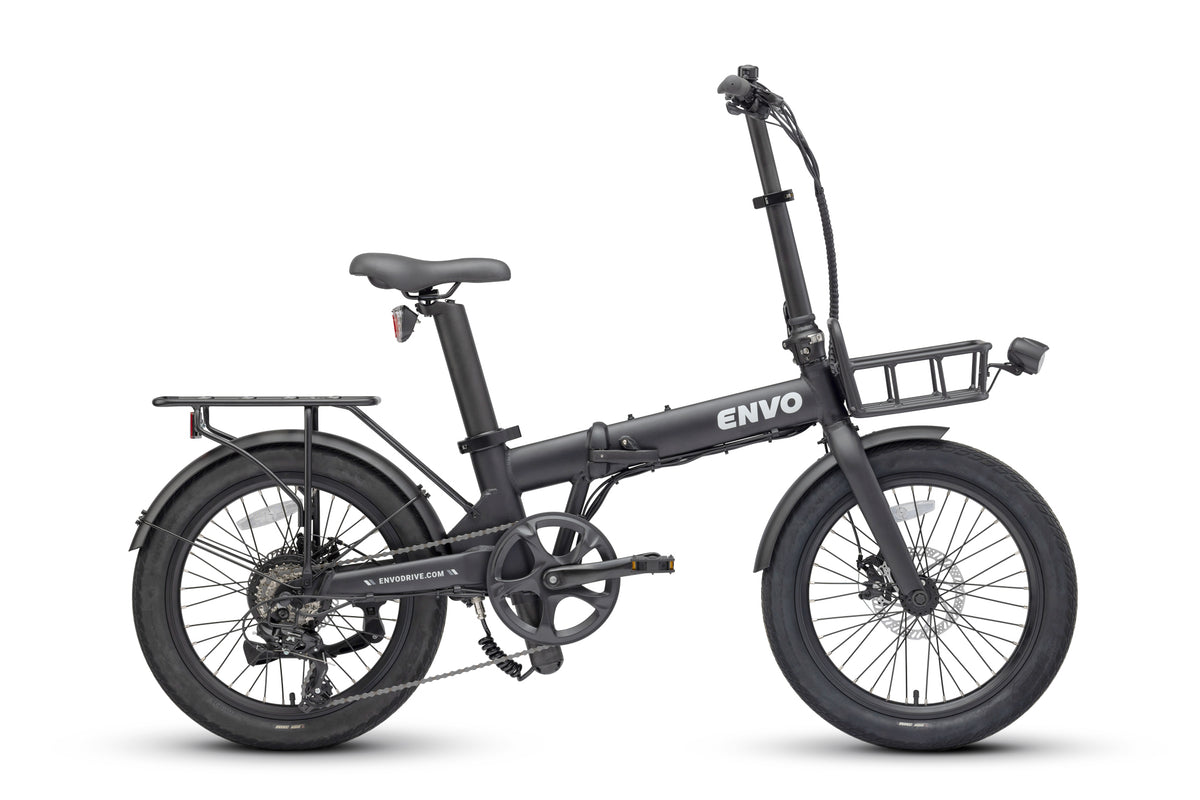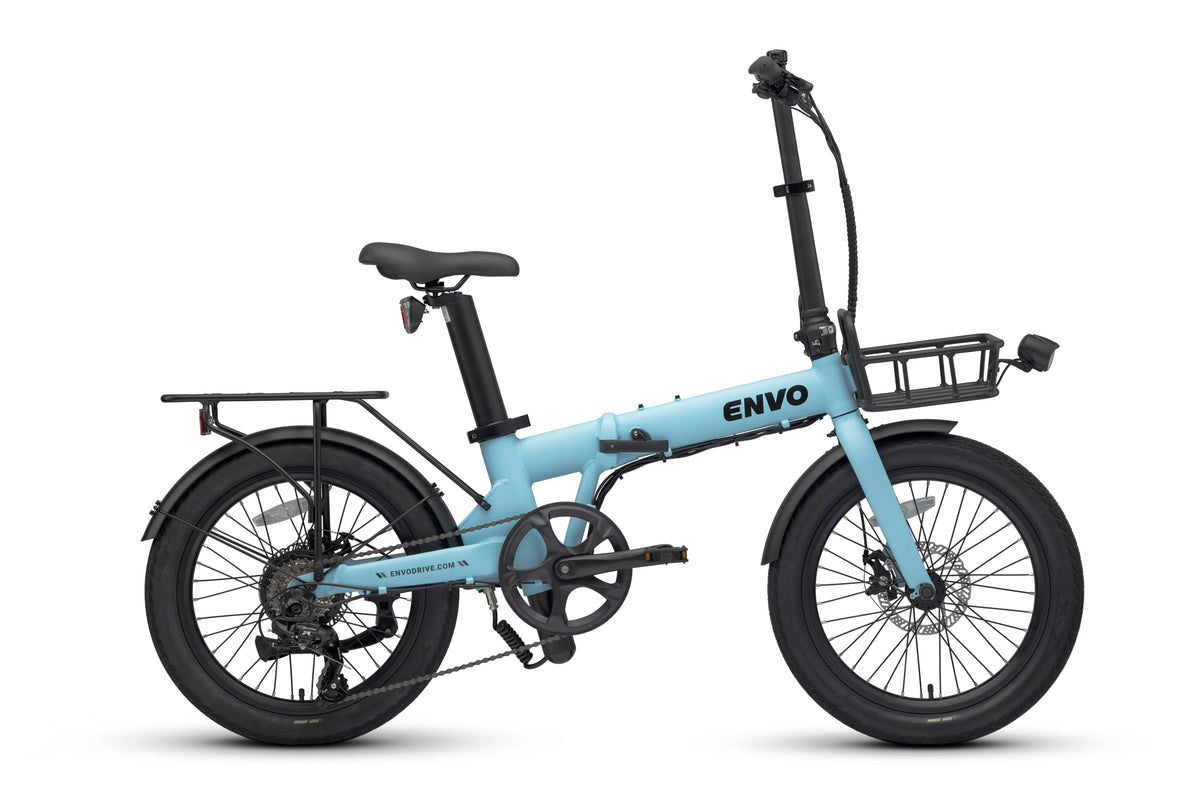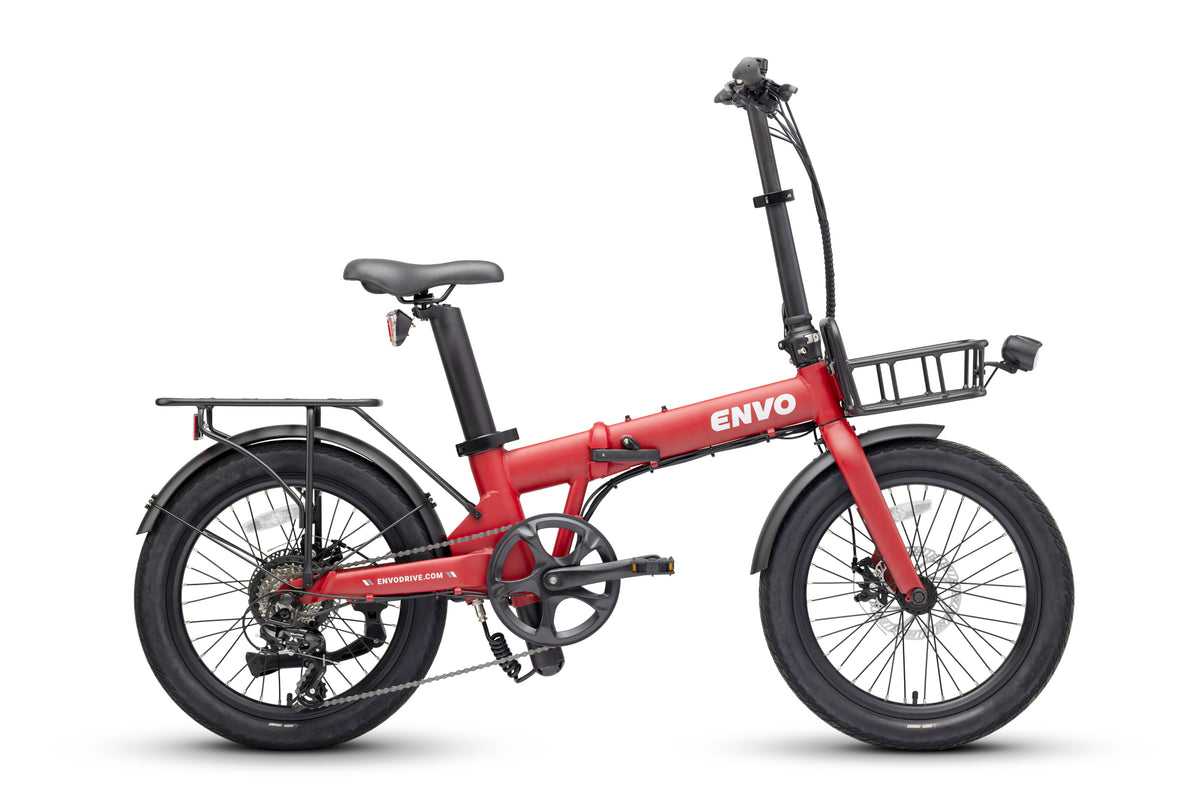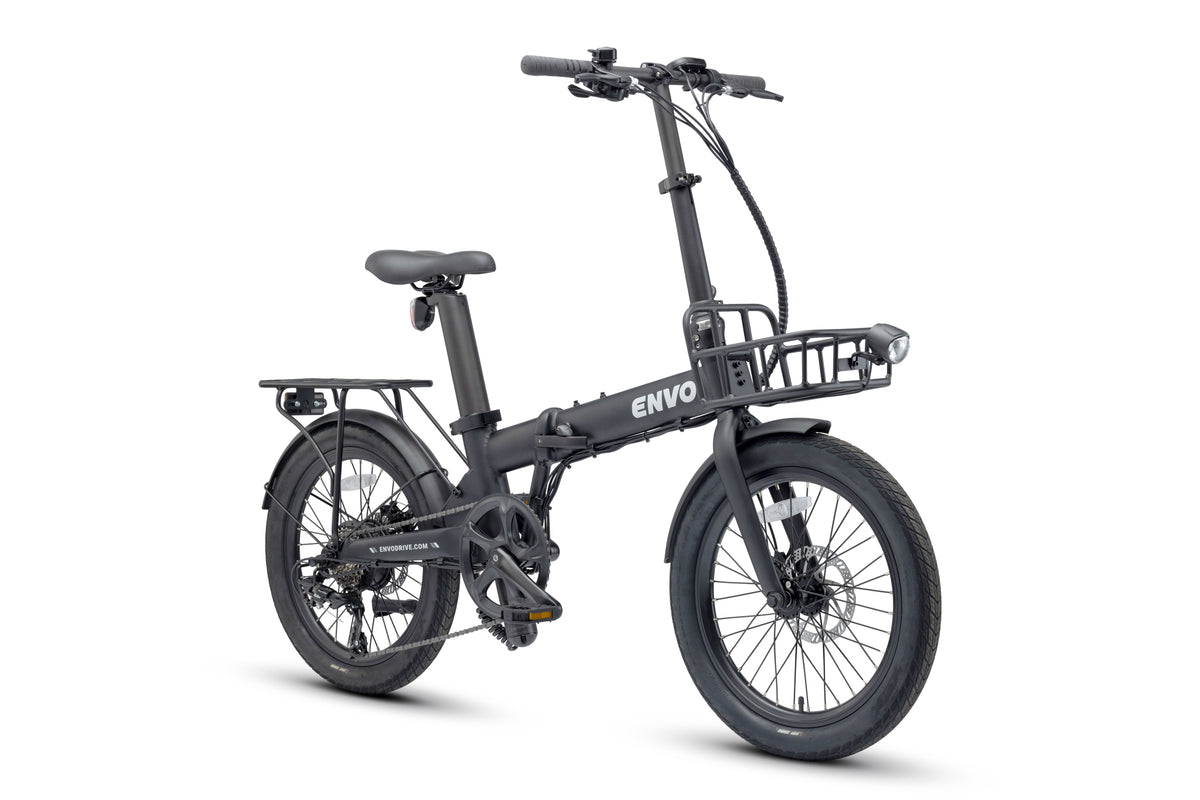




ENVO D50 vs Rize MD
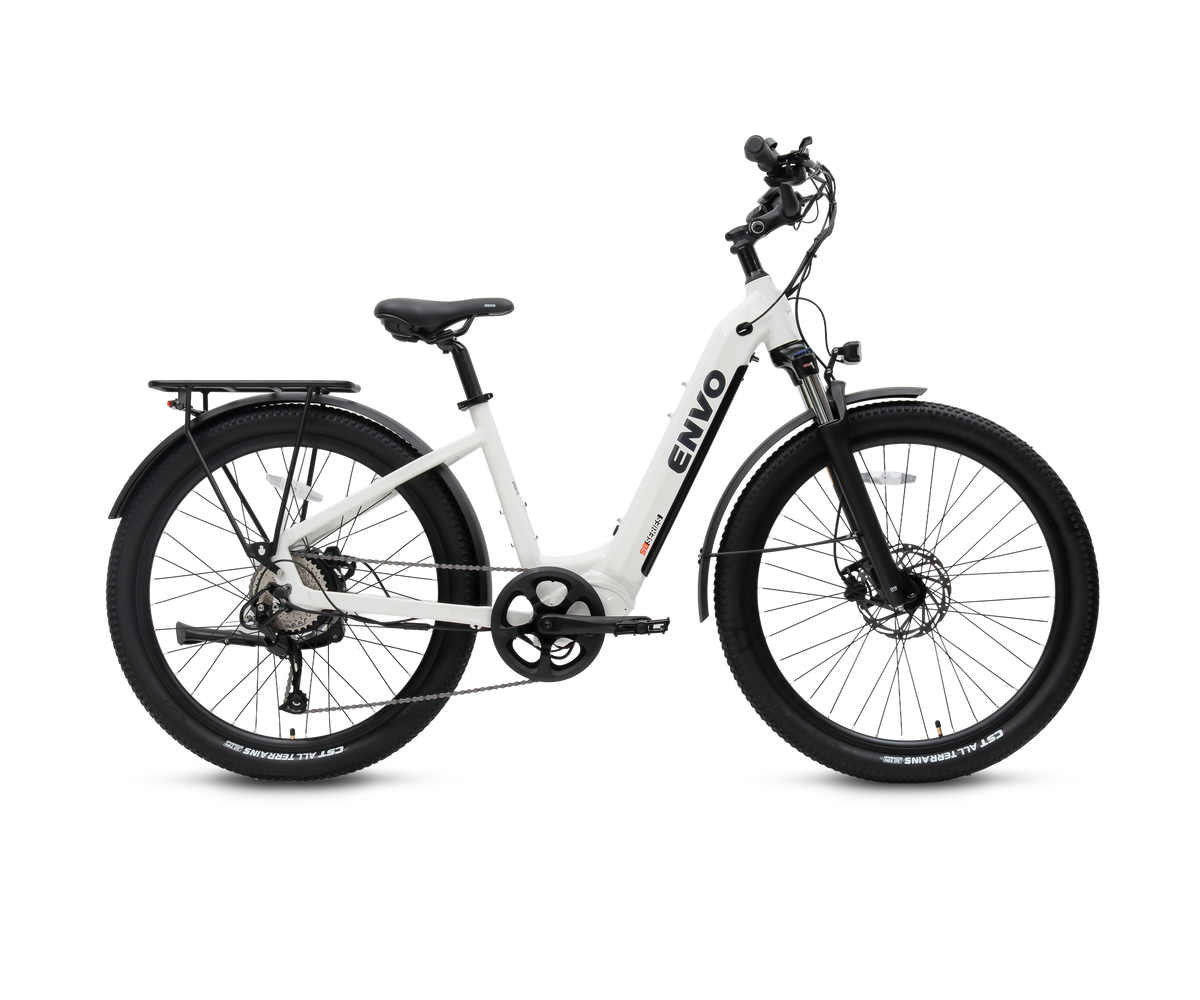
The Rize MD costs more and uses a Bafang mid-drive motor with 120 Nm of torque. The ENVO D50 costs less with a proprietary 750W hub-drive, double the range, and full UL 2849 certification. We break down which actually wins — and why the answer may surprise you.
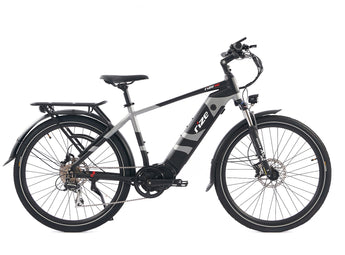
Overview: The Mid-Drive Premium Question
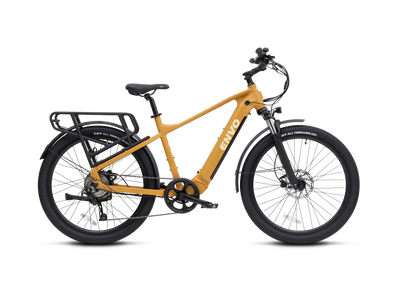
At first glance, this comparison looks like a straightforward mid-drive vs hub-drive debate. The Rize MD runs a Bafang BBS02 mid-drive motor with 120 Nm of torque — a figure that sounds very impressive and commands a premium price of $2,899 CAD. The ENVO D50 uses a proprietary 750W hub-drive motor at $2,679 CAD — $220 less.
But dig into the full spec sheet and a surprising picture emerges. Despite costing more, the Rize MD uses a cadence sensor (not torque), a 7-speed drivetrain, delivers only 70 km of range per charge, and carries no UL 2849 system certification. The ENVO D50 counters with a torque sensor, Shimano Alivio 9-speed, up to 150 km range, full UL 2849 system certification, 85 kg rear rack capacity, and Class 3 capability — all for $220 less. The Rize MD's singular advantage is its mid-drive architecture and that headline 120 Nm torque figure, which is genuinely meaningful in specific riding contexts. But the question is whether that one advantage justifies the higher price and the trade-offs elsewhere.
💡 The Core Question: Is 120 Nm of mid-drive torque worth $220 more, a cadence sensor instead of torque sensor, nearly half the range, a lower-tier drivetrain, and no UL 2849 certification? For most Canadian riders, the answer is no — but there's a specific use case where the Rize MD makes sense. Read on.
Hub-Drive vs Mid-Drive — What Actually Matters
The mid-drive vs hub-drive debate is one of the most common in e-bikes — and one of the most frequently misunderstood. Here's what the difference actually means for real-world riding.
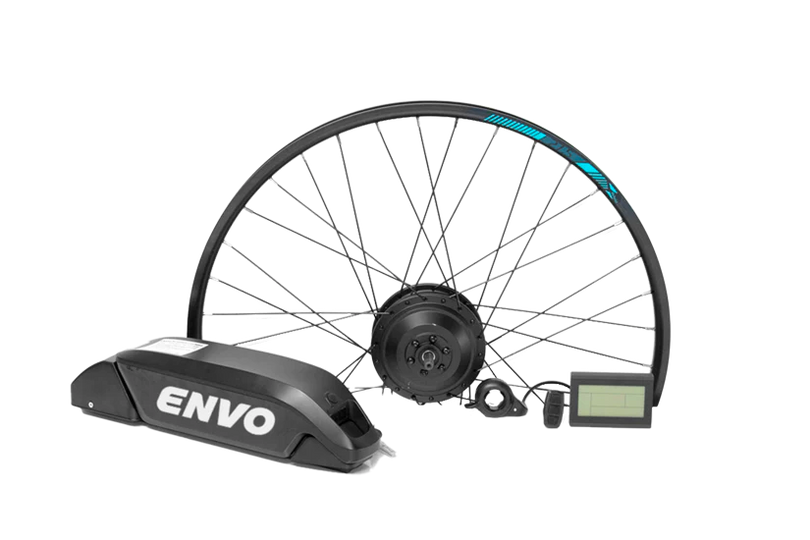
ENVO D50 — Geared Hub-Drive (750W / 80 Nm)
- ✅ Motor in rear wheel hub — simple, sealed, weatherproof
- ✅ Independent of drivetrain — gears last longer
- ✅ Torque sensor — natural, proportional power delivery
- ✅ Lower maintenance — no chain wear from motor load
- ✅ Lighter motor unit — better weight distribution options
- ✅ 20,000+ km rated motor lifespan (ENVO claim)
- ⚠️ Torque advantage goes to mid-drive on very steep hills
Rize MD — Bafang BBS02 Mid-Drive (500W / 120 Nm)
- ✅ Motor at bottom bracket — better weight centralization
- ✅ 120 Nm torque — exceptional hill-climbing leverage
- ✅ Uses bike's own gears — efficient across terrain types
- ✅ Gearshift sensor protects drivetrain during shifts
- ⚠️ Cadence sensor only — less natural feel than torque sensor
- ⚠️ More drivetrain wear — motor load goes through chain/gears
- ⚠️ More complex servicing — motor at bottom bracket
- ⚠️ Only 70 km range — mid-drives consume more battery per km
The mid-drive architecture is genuinely advantageous in two specific contexts: sustained steep climbing (think mountain passes or long technical grades), and off-road trail riding where the motor-through-gears efficiency matters. For typical Canadian urban commuting, mixed-terrain cycling, and even hilly city riding, a well-tuned geared hub-drive with a proper torque sensor (like the D50's) is just as effective — and in many ways more practical, with lower maintenance overhead and significantly better range. Understanding this distinction is key to reading the rest of this comparison honestly. For a deeper dive, see our e-bike buying guide on motor types.
⚠️ Important: The Rize MD uses a cadence (speed) sensor, not a torque sensor — despite being the more expensive bike. This means the motor delivers a fixed power output based on whether you're pedalling, rather than adjusting proportionally to how hard you push. The ENVO D50's torque sensor provides a more natural, responsive, and energy-efficient ride. This is a significant real-world difference that the spec sheet alone doesn't convey.
Full Spec Comparison Table
| Specification | 🇨🇦 ENVO D50 | 🇨🇦 Rize MD |
|---|---|---|
| Price (MSRP CAD) | $2,679 | $2,899 |
| Motor Type | Geared Hub-Drive | Mid-Drive (Bafang BBS02) |
| Motor Power (rated) | 750W | 500W |
| Torque | 80 Nm | 120 Nm |
| Pedal Assist Sensor | Torque sensor | Cadence (speed) sensor |
| Top Speed | 32 km/h (Class 3: 45 km/h) | 32 km/h (unlockable to 50 km/h) |
| PAS Levels | 5 levels | 5 levels |
| Gearshift Sensor | — | Yes — protects drivetrain |
| Battery (primary) | 48V / 15Ah (720 Wh) | 48V / 15Ah (720 Wh) |
| Battery Cells | LG / Panasonic | Samsung 21700 50E |
| Range (single battery) | Up to 150 km | Up to 70 km |
| Dual Battery Option | Yes — up to 200 km | Yes — up to 140 km (30Ah) |
| UL 2849 System Cert | Yes | Not confirmed |
| Gears | Shimano Alivio 9-speed | Shimano Acera 7-speed |
| Brakes | Tektro hydraulic disc | Dual piston hydraulic disc 180mm |
| Fork | SR Suntour XCM 80mm | SR Suntour with lockout |
| Tires | 27.5" x 2.1" Kenda | 27.5" x 2.10" Kenda K-Shield |
| Frame | Hydroformed 6061 alloy | 6061 alloy |
| Bike Weight | 28 kg (62 lbs) | ~29.5 kg (65 lbs) |
| Load Capacity | 180 kg (400 lbs) | 125 kg (275 lbs) |
| Rear Rack (included) | Yes — 85 kg capacity | Yes — included |
| Saddle | Selle Royal GEL | Selle Royal GEL |
| Adjustable Stem | Yes | Yes — adjustable high-rise |
| Front Light | 100 LUX / 300 lumen | 120 LUX (5 km visibility) |
| Display | Colour + Bluetooth CANBUS app | Bafang LCD (USB-C charging port) |
| USB Charging Port | — | Yes — on Bafang LCD |
| Warranty | 1 year | 2 years |
| Canadian HQ | Burnaby, BC | Vancouver, BC |
Performance & Real-World Power
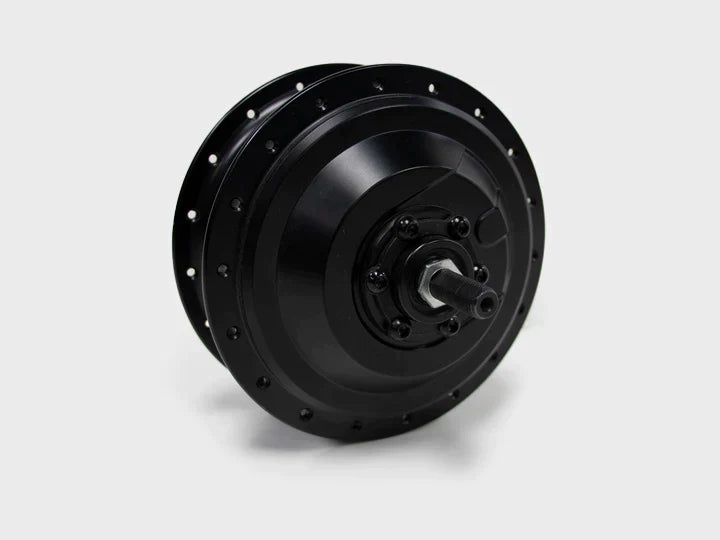
On paper, the Rize MD's 120 Nm torque figure dominates — and on a long, sustained climb, that advantage is real. Mid-drive motors leverage the bike's gears to multiply torque at the wheel, which is why they're the preferred choice for e-MTBs and serious mountain terrain. If you're commuting up a steep hill every day for several kilometres, the Rize MD's BBS02 motor will feel noticeably more capable than any hub-drive at equivalent power ratings.
However, the full picture is more nuanced. The Rize MD pairs this impressive torque with a cadence sensor — meaning the motor responds to whether you're pedalling, not how hard. This produces a less natural ride feel than the D50's torque sensor, which proportionally matches motor output to your pedalling force in real time. On flat terrain and moderate grades, most riders actually prefer the torque-sensor feel of the D50 over the on/off cadence assist of the Rize MD. The D50 is also Class 3 capable, unlockable to 45 km/h — the Rize MD unlocks to 50 km/h but this is outside legal Canadian limits for road use and should only be used in appropriate off-road contexts.
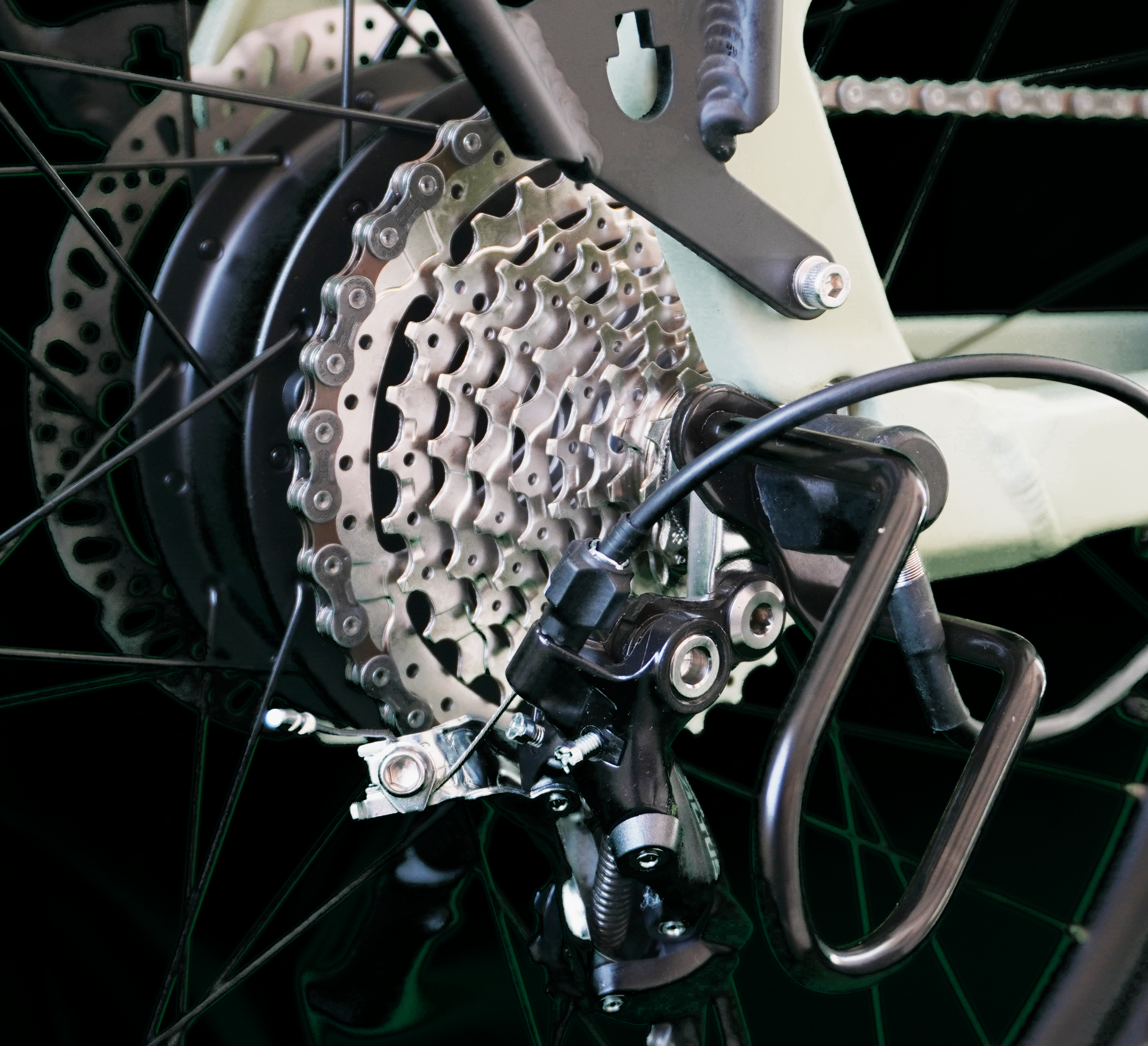
There's another performance consideration that often gets overlooked: drivetrain wear. Mid-drive motors push all their power through your chain and gears, accelerating wear significantly — especially under heavy motor assist. The D50's hub-drive motor is completely isolated from the drivetrain. Combined with the D50's superior Shimano Alivio 9-speed vs the Rize MD's Acera 7-speed, the D50's long-term drivetrain costs will be considerably lower. For daily commuters who put high kilometres on their bikes, this matters. See ENVO's maintenance guide and our e-bike tune-up guide for practical servicing context.
ENVO D50 — Motor
750W rated / 1,000W+ peak
80 Nm torque · Torque sensor
Class 3 (45 km/h) capable
20,000+ km motor life
Zero drivetrain wear
Rize MD — Motor
500W rated
120 Nm torque · Cadence sensor
Bafang BBS02 mid-drive
Gearshift sensor included
Drivetrain wear applies
Range & Battery
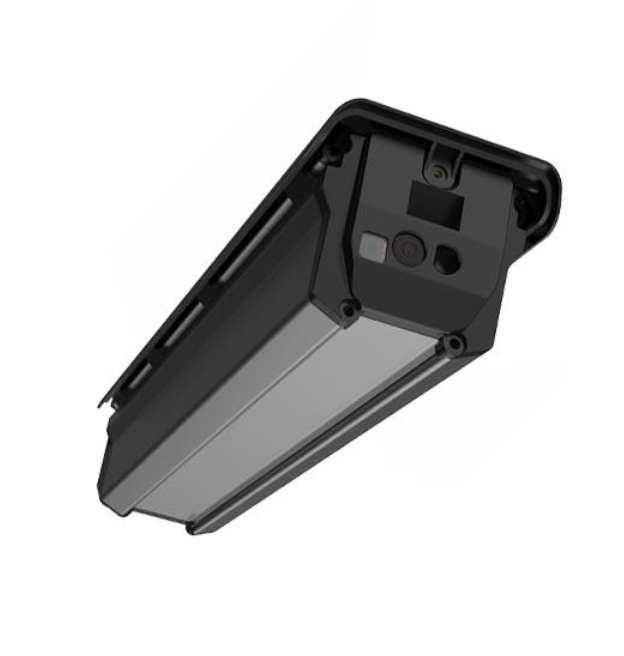
This is one of the most decisive categories in this comparison. Both bikes use identical primary battery packs on paper — 48V / 15Ah / 720 Wh — yet the ENVO D50 achieves up to 150 km per charge while the Rize MD delivers only 70 km. That's more than double the range from the same battery capacity. Why? Mid-drive motors are efficient at climbing because they leverage gears, but they are inherently less efficient on flat terrain and generate more heat at sustained speeds — consuming the battery significantly faster than a well-tuned geared hub-drive running with a torque sensor.
For a rider commuting 40 km round-trip daily, the D50 can go nearly four days between charges while the Rize MD needs charging every 1–2 days. Over a year of riding, this is a significant convenience difference. Both bikes offer an optional dual-battery upgrade: the D50 reaches up to 200 km with a second pack, while the Rize MD reaches up to 140 km with its 30Ah dual-battery option. Learn more about optimising range in ENVO's range guide and their battery management guide.
🔋 Range Reality Check: Same 720 Wh battery. ENVO D50 = 150 km. Rize MD = 70 km. The D50 delivers more than twice the range from identical battery capacity — a direct result of its efficient geared hub-drive paired with a torque sensor. For daily commuters, this is arguably the single most important number in this comparison.
Safety Certifications

The ENVO D50 carries full UL 2849 system certification — the gold standard for e-bike electrical safety in North America, certifying the battery, motor, controller, charger, and wiring harness as a complete integrated system. This is increasingly required by Canadian condo boards, building managers, and insurers for in-suite or parkade charging, and is the certification standard we require for all bikes sold through EbikeBC.
The Rize MD does not list UL 2849 system certification on its product page. It likely carries UL 2271 battery-level certification — standard for reputable brands — but the comprehensive system certification that validates all electrical components working safely together is not confirmed for the Rize MD. For the premium pricing of this bike, this is a notable gap. Riders who charge in shared buildings should confirm certification status directly with Rize before purchase.
Components & Build Quality
Drivetrain
D50 wins: Shimano Alivio 9-speed vs Acera 7-speed. Alivio is a full tier above in shift quality. And crucially — the D50's hub-drive puts zero motor load through the chain, extending component life significantly vs the Rize MD's mid-drive wear pattern.
Display & App
D50 wins: CANBUS Bluetooth app enables real-time battery cell monitoring, motor temp, diagnostics, and ride data. The Rize MD's Bafang LCD is functional with a useful USB-C charging port, but has no app connectivity for advanced diagnostics.
Brakes
The Rize MD edges ahead here with dual-piston hydraulic disc brakes vs the D50's single-piston Tektro hydraulic discs — both 180mm. Dual-piston provides more consistent stopping power under heavy load, a meaningful advantage for cargo or hilly commuting.
Tires
Rize MD wins: Kenda K-Shield puncture-resistant tires reduce flat risk for daily commuters. The D50 uses standard Kenda tires. Both are 27.5" × 2.10".
Lighting
D50 leads with 100 LUX / 300 lumen front light. Rize MD's 120 LUX headlight claims 5 km visibility — a slight edge on LUX but the D50 wins on raw lumens. Both include battery-powered taillights.
Saddle & Stem
A tie: both bikes include a Selle Royal GEL saddle and an adjustable stem. Comfort setup is equivalent straight out of the box on either bike.
One genuine Rize MD advantage worth calling out: the gearshift sensor. This pauses motor power momentarily during gear changes, protecting the drivetrain and enabling smoother shifts under load — a feature usually found on premium mid-drive bikes and genuinely useful. The D50's Bafang display also includes a USB-C charging port on the Rize MD — handy for charging a phone on the go. These are real-world features that add value, but neither outweighs the D50's overall component and system advantages at a lower price point.
Cargo & Versatility

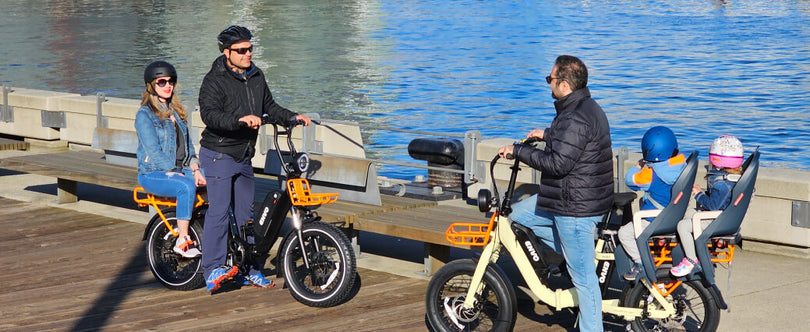
Both bikes include a rear rack and mudguards as standard — a solid baseline. But the cargo difference is substantial: the D50 supports a total payload of 180 kg (400 lbs) and an 85 kg rear rack, while the Rize MD is rated at 125 kg (275 lbs) with a standard-capacity rack. For riders who carry groceries, work tools, panniers, or a child seat, the D50's cargo advantage is significant. The D50 can also be configured with optional front carriers and foot pegs for a second passenger — versatility the Rize MD doesn't offer. Browse our electric cargo bikes for broader context on the category.
On versatility, the D50 also has the edge: swap in wider tires and remove the rack for capable hardtail trail riding, or lean into the cargo configuration for heavy urban loads. The Rize MD is a focused commuter with mid-drive hill-climbing strength. For riders whose priority is specifically conquering long sustained climbs, the MD's motor architecture wins — for everything else, the D50 is more adaptable. See our full range of urban commuter e-bikes for alternatives in this category.
Canadian Support & Parts
🇨🇦 ENVO D50 — Support
- ✅ Canadian-stocked parts store (envodrive.com)
- ✅ National dealer network — every major city
- ✅ Shimano Alivio — serviceable at any bike shop
- ✅ CANBUS Bluetooth diagnostics — self-serviceable
- ✅ English + French documentation
- ✅ Test rides coast to coast
- ✅ 1-year warranty
🇨🇦 Rize MD — Support
- ✅ Parts store at rizebikes.ca
- ✅ Bafang BBS02 — widely serviced globally
- ✅ 2-year warranty — best in comparison
- ✅ 7-day customer support
- ✅ Service centres (BC-focused)
- ⚠️ Mid-drive service more complex than hub-drive
- ⚠️ Fewer service locations outside BC
One genuine support advantage for the Rize MD: the Bafang BBS02 is one of the most widely serviced mid-drive motors in the world. Any shop that works on e-bikes is likely familiar with it, and parts are globally available. However, mid-drive service is inherently more involved than hub-drive service — the motor sits at the bottom bracket and affects drivetrain access. The D50's hub-drive is simpler to service, and ENVO's national dealer network (spanning every major Canadian city) means professional support is accessible regardless of where you live. See all ENVO models and resources at envodrive.com.
Price & Value
This is where the comparison becomes most striking. The Rize MD costs $220 more than the ENVO D50 ($2,899 vs $2,679). For that premium, you get 120 Nm of mid-drive torque and a gearshift sensor. In return, you give up: a torque sensor, Shimano Alivio 9-speed (vs Acera 7-speed), 80 km of additional range (150 vs 70 km), full UL 2849 system certification, an 85 kg cargo rack vs a standard rack, a 180 kg vs 125 kg total payload, CANBUS app diagnostics, Class 3 speed capability, and a lower MSRP.
ENVO D50 — $2,679 CAD
$220 less and you get: Torque sensor · Alivio 9-speed · 150 km range · UL 2849 certified · 85 kg rack · 180 kg payload · CANBUS app · Class 3 capable · National dealer network
Rize MD — $2,899 CAD
$220 more and you get: 120 Nm mid-drive torque · Gearshift sensor · USB-C port · Dual-piston brakes · K-Shield tires · 2-year warranty · Bafang BBS02 global serviceability
For the vast majority of Canadian riders — urban commuters, mixed-terrain cyclists, cargo haulers, and long-distance riders — the D50 offers objectively more value at a lower price. The Rize MD's value case rests almost entirely on the mid-drive torque advantage for sustained hill climbing. If that is your primary, defining use case, the Rize MD earns consideration. For everything else, the D50's value case is very difficult to argue against. Check our best e-bikes for 2025 and buying guide for further guidance. If all-weather year-round commuting is your goal regardless of terrain, the Veemo SE enclosed e-trike is also worth considering.
💡 Value Verdict: The ENVO D50 is $220 cheaper than the Rize MD and wins on range, sensor type, drivetrain tier, certification, cargo capacity, payload, diagnostics, and national support. The Rize MD wins on torque and mid-drive architecture. Unless hill-climbing torque is your defining priority, the D50 is the stronger overall value.
Category Scores (Out of 10)
The Verdict
This is one of the rare cases where the more expensive bike is the weaker overall value. The Rize MD costs $220 more than the ENVO D50 — and in almost every category except mid-drive hill-climbing torque, the D50 wins. Better sensor (torque vs cadence), better range (150 vs 70 km), better drivetrain tier (Alivio 9 vs Acera 7), full UL 2849 certification, more cargo capacity, higher total payload, CANBUS diagnostics app, Class 3 speed capability, and a broader national service network — all for less money.
The Rize MD makes sense for exactly one type of rider: someone who lives on steep terrain and does sustained climbing daily, where mid-drive torque through gears is a genuine, daily-use advantage that outweighs everything else. For that rider — particularly in Metro Vancouver's hillier neighbourhoods, Victoria's steeper routes, or commuters in cities with long sustained grades — the BBS02's 120 Nm is a real-world difference worth paying for.
For everyone else — flat-to-moderate commuters, cargo haulers, mixed-terrain riders, long-distance cyclists, and anyone who values range, ride feel, or certification — the ENVO D50 is the clear recommendation. Also consider the ENVO M50 electric mountain bike if off-road trail performance is your primary goal. And if you're commuting year-round in Canadian weather, the Veemo enclosed e-trike platform offers full all-weather protection that neither open e-bike can match.
Most Canadian Riders
- Daily commuting on flat to moderate terrain
- Long-distance rides requiring 80+ km per charge
- Cargo, groceries, or panniers — 85 kg rack
- UL 2849 certification for condo/building charging
- Riders who prefer natural torque-sensor feel
- Long-term ownership with low maintenance overhead
- Class 3 speed (45 km/h) for faster arterials
- National dealer access for test rides and service
- Best overall value at $220 less
Steep Daily Climbs Are Your Priority
- You climb sustained, steep grades every single day
- Mid-drive torque is your primary performance need
- You ride mostly within 50 km and charge frequently
- You prefer Bafang BBS02 ecosystem and global parts
- 2-year warranty is important to your purchase decision
- You're near a Rize service centre in BC
- USB-C on-bike phone charging matters to your ride
Shop the ENVO D50 at EbikeBC
750W motor, 150–200 km range, UL 2849 certified, Shimano Alivio 9-speed, torque sensor — and $220 less than the Rize MD. Test ride at a dealer near you.
Shop the ENVO D50 → All E-Bikes at EbikeBC