
ENVO U50 vs Aima Big Sur Cargo 15Ah
Two paths to family cargo capability — Aima saves $410 upfront, but ENVO offers dual battery, dual sensors, and decade-long Canadian roots.

Quick Verdict
Cargo e-bikes are different.
When you're buying a commuter e-bike, a weak support experience is annoying. When you're buying a family cargo bike for school runs, grocery hauls, daycare pickups, and year-round utility use in Canada, a weak support experience becomes a real ownership problem.
That's what makes the ENVO U50 and Aima Big Sur Cargo 15Ah an interesting comparison. On paper they overlap more than you'd expect: both 500W, both claim 80 Nm torque, both capped at 32 km/h, both carry a rated 180 kg payload, both target practical utility riders.
But the wedge here is not the usual one. In this matchup, Aima is actually cheaper. The Big Sur Cargo 15Ah lists at $3,090 CAD while the ENVO U50 sits at $3,500 CAD. That deserves to be acknowledged honestly. The deeper question is whether that $410 savings outweighs what ENVO brings to a bike that may become your household's daily workhorse.
The Price Question — Aima's Lower Sticker
Let's address the headline finding directly: Aima has the lower sticker price here. At $3,090 CAD, the Big Sur Cargo 15Ah undercuts the ENVO U50's $3,500 CAD price. If your single goal is the lowest upfront spend on a cargo-capable family e-bike, Aima saves you money on day one. But a lower upfront price is not the same as better value — and on a bike meant to serve a household for years, value is measured over the whole ownership period, not just the day of purchase.
And it's not winning on price because of obvious spec compromises. The Big Sur Cargo still gives you 500W/80 Nm Bafang power, a 720 Wh battery, hydraulic brakes with 203mm rotors, a torque sensor, a color TFT display with navigation, 180 kg payload capacity, a cargo-specific aluminum frame, and a notably stronger written warranty package.
So what does the extra $410 buy you on the ENVO side? Mostly things that matter more the longer and harder you use the bike: dual-battery expansion, Canadian design and assembly in Burnaby BC, family-longtail platform with modular accessories, a support story rooted in Canada, and a ride setup aimed at loaded utility use over time.
That's the real frame for this comparison. It is not "premium vs cheap import." It's "$410 saved today vs years of household utility ownership." For more on how to think about a cargo purchase, see our electric cargo bike collection and our broader e-bike buying guide.
Full Spec Comparison Table
| Specification | 🇨🇦 ENVO U50 | 🇨🇳 Aima Big Sur Cargo 15Ah |
|---|---|---|
| Price (CAD) | $3,500 | $3,090 |
| Motor | 500W rear hub · 80 Nm | Bafang G062 500W rear hub · 80 Nm |
| Battery (Single) | 48V / 15Ah · 720 Wh | 48V / 15Ah · 720 Wh |
| Max Battery (Dual) | ~1,440 Wh with optional second battery | Not supported (720 Wh only) |
| Claimed Range | Up to 100 km (single) · doubled with dual | 45–80 km |
| Top Speed | 32 km/h (Class 2) | 32 km/h (Class 2) |
| Weight | ~32 kg — 4 kg lighter | ~36 kg |
| Payload Capacity | 180 kg | 180 kg |
| Frame Style | Longtail family cargo step-thru | Hydroformed aluminum cargo step-thru |
| Gears | Multi-speed derailleur | Shimano Acera/Altus 7-speed (entry-tier) |
| Tires | Disclosed on product page | Brand not disclosed |
| Sensor System | Torque + Cadence (dual-sensor) | Bafang torque-only |
| Brakes | Tektro hydraulic disc | Tektro hydraulic disc · 203mm rotors |
| Fork | Suspension fork | Zoom 80mm suspension |
| Display | Color display with Bluetooth app | Bafang DP C010 color TFT · integrated navigation |
| Dual Battery | Supported (up to ~1,440 Wh) | Not supported |
| UL 2849 Certified | Yes | Yes |
| Warranty | 1 year | 2 yr frame · 2 yr power-assist · 2 yr/300 cycle battery · 1 yr mechanical |
| Canadian Market Tenure | ~9 years (ENVO since 2016) | ~18 months (Aima since Nov 2024) |
| Origin / HQ | Designed, engineered & assembled in Burnaby, BC 🇨🇦 | Designed, engineered & manufactured in China · HQ: City of Industry, CA · Canadian distributor UNIVELO |
Cargo Capability & Frame Design
On rated payload, this section starts as a tie. Both bikes are rated for 180 kg total payload. That's enough for an adult rider plus a child plus typical cargo, plus groceries, plus the rack and accessory hardware itself.
What separates them is the personality of the platform.
ENVO U50 — Longtail Family Cargo Step-Thru
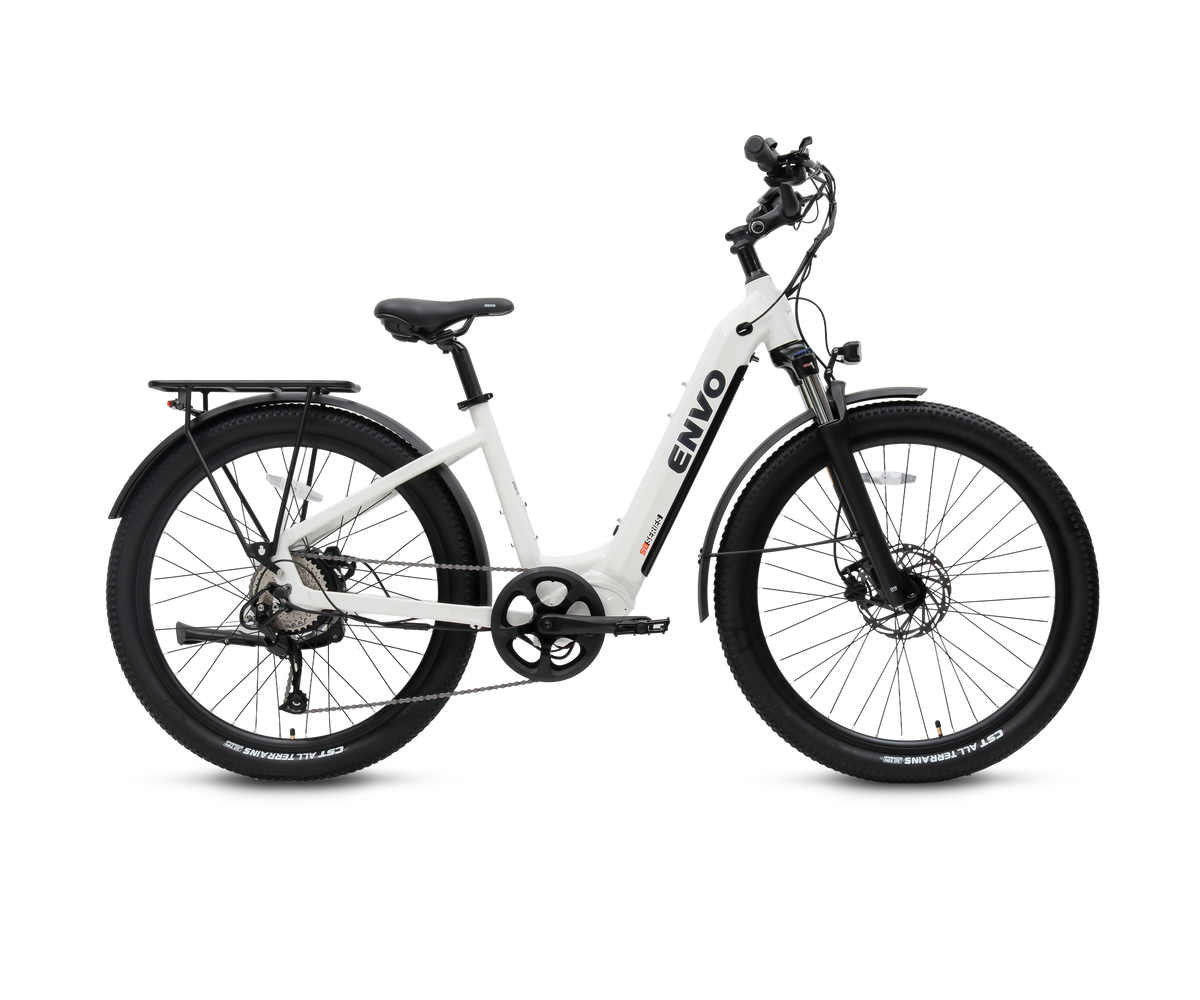
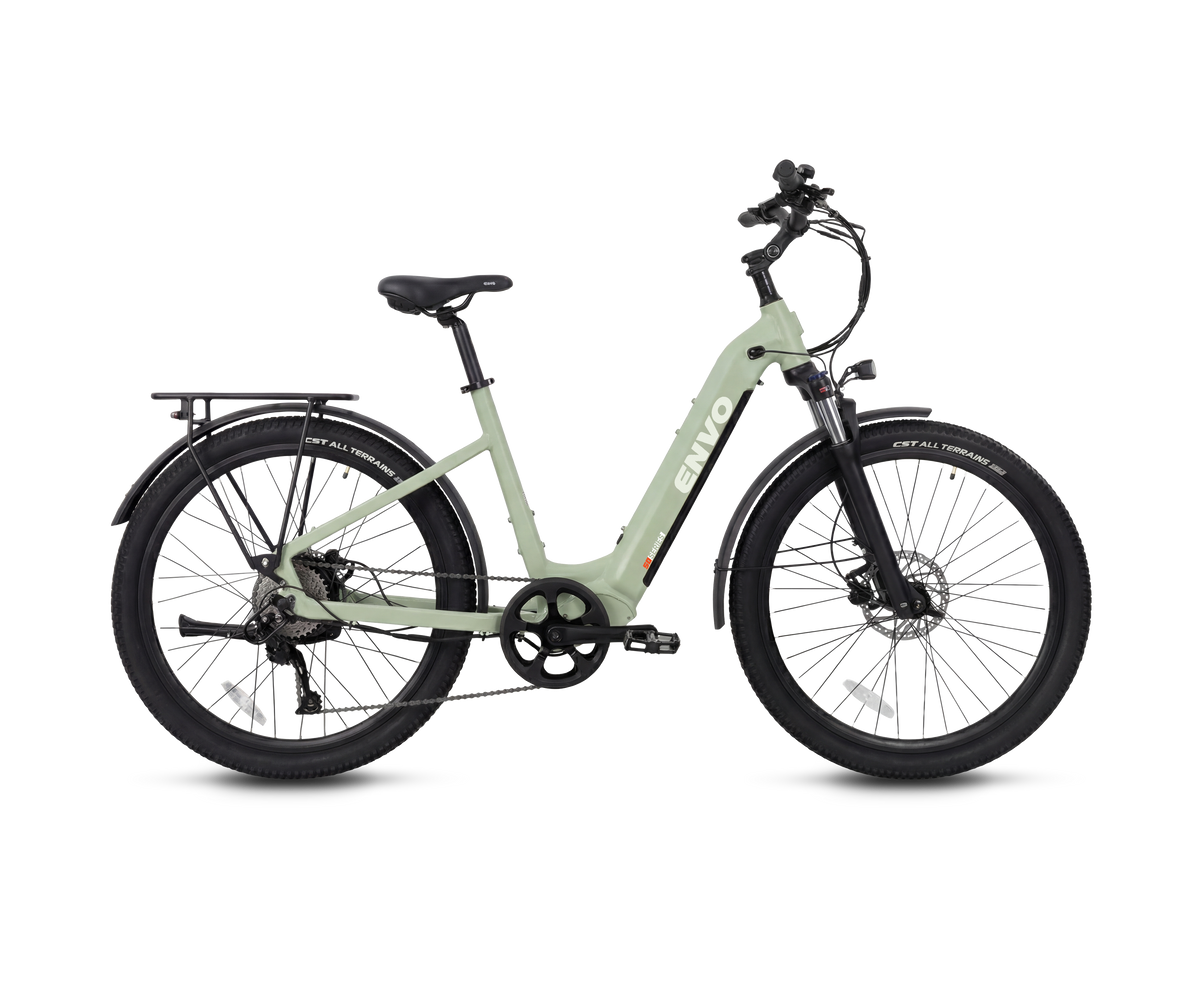
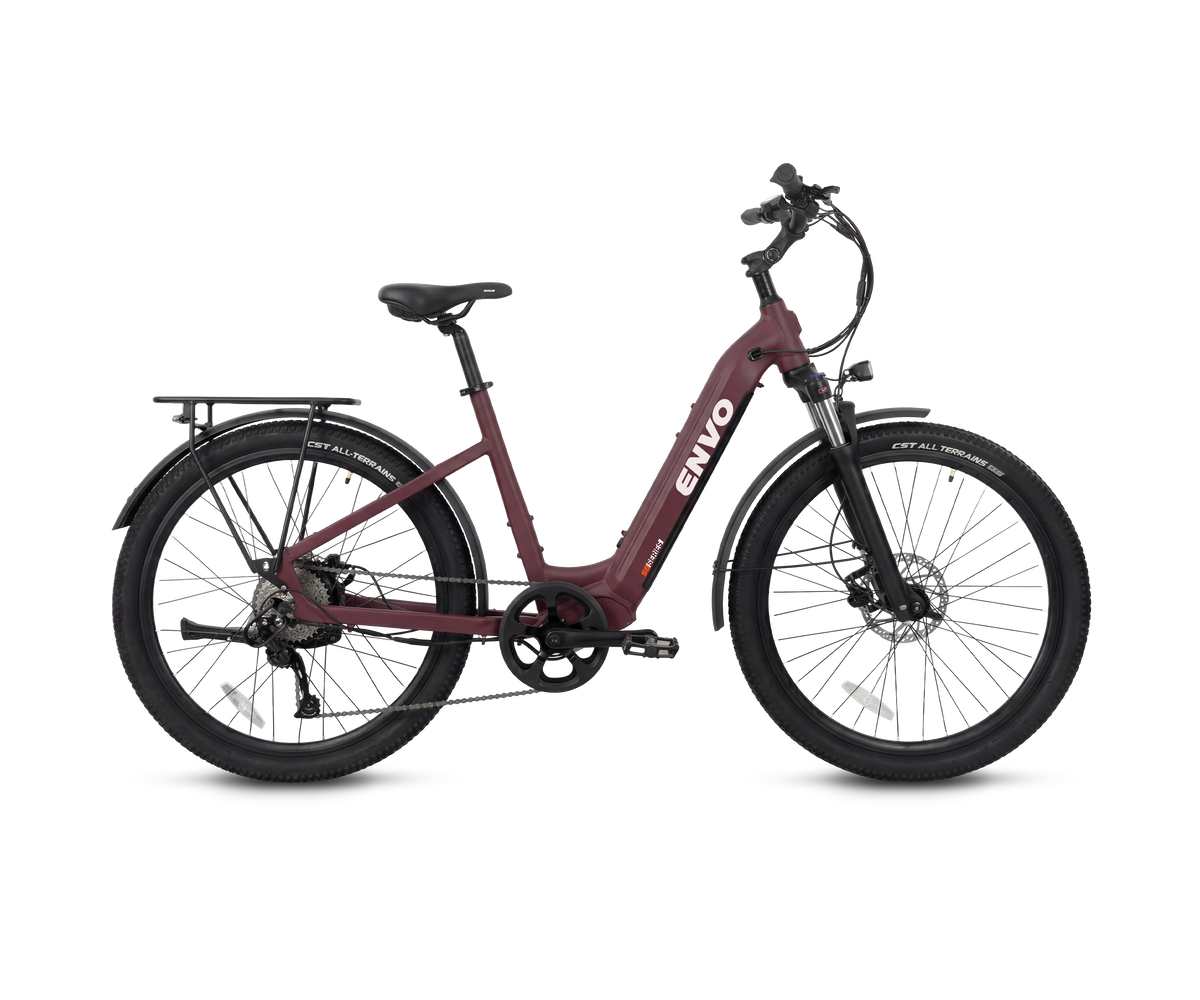
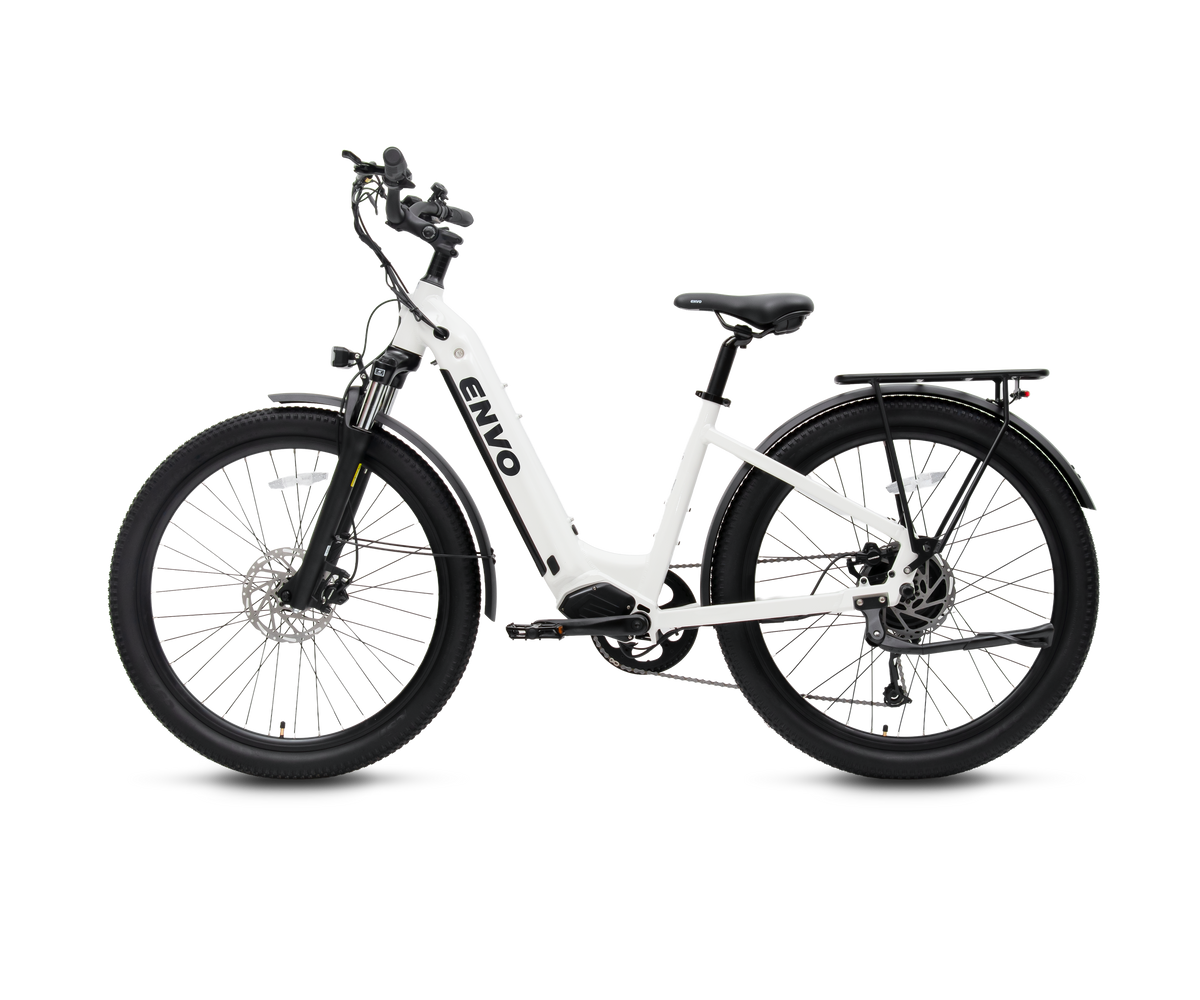
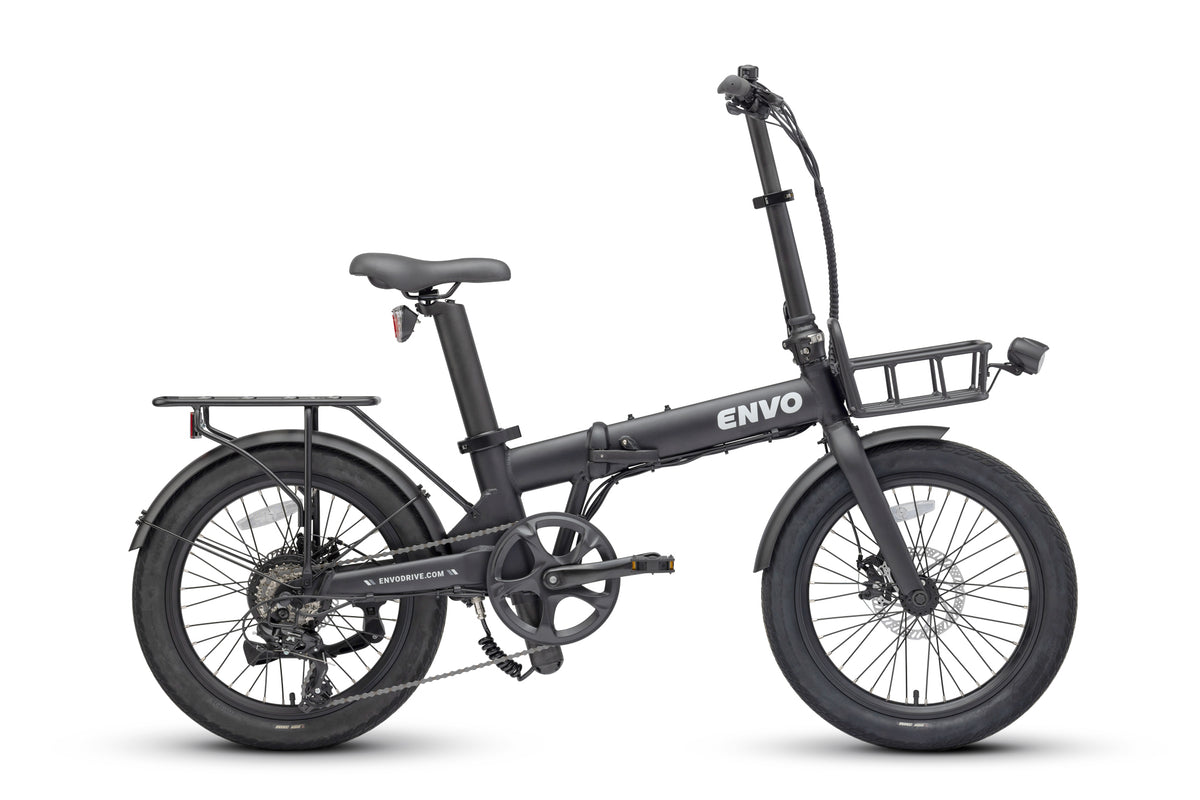
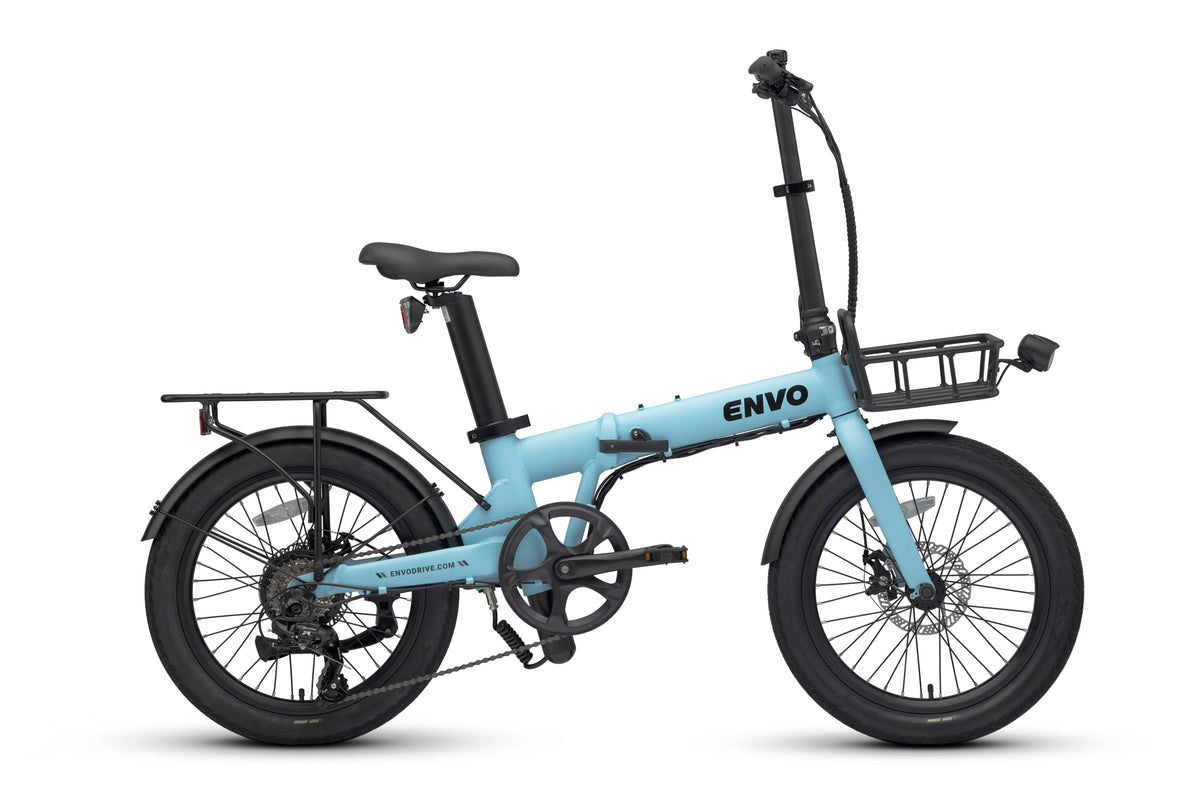
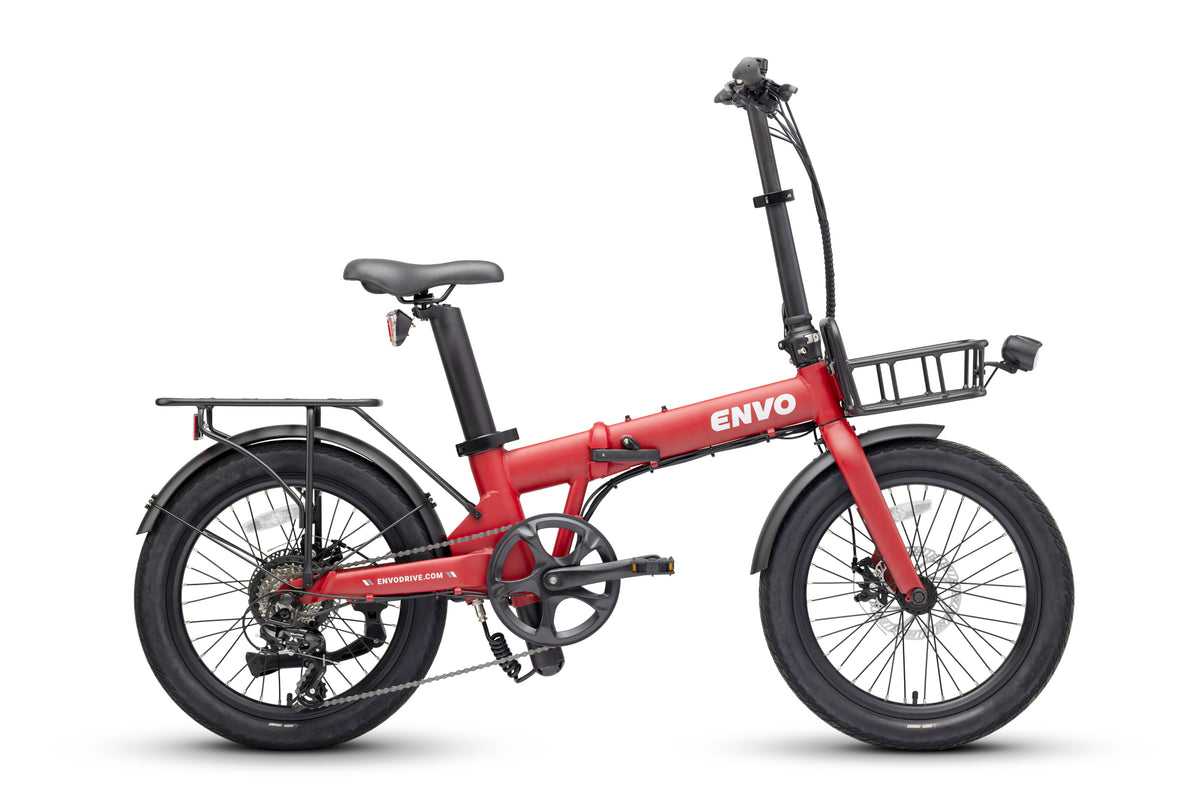
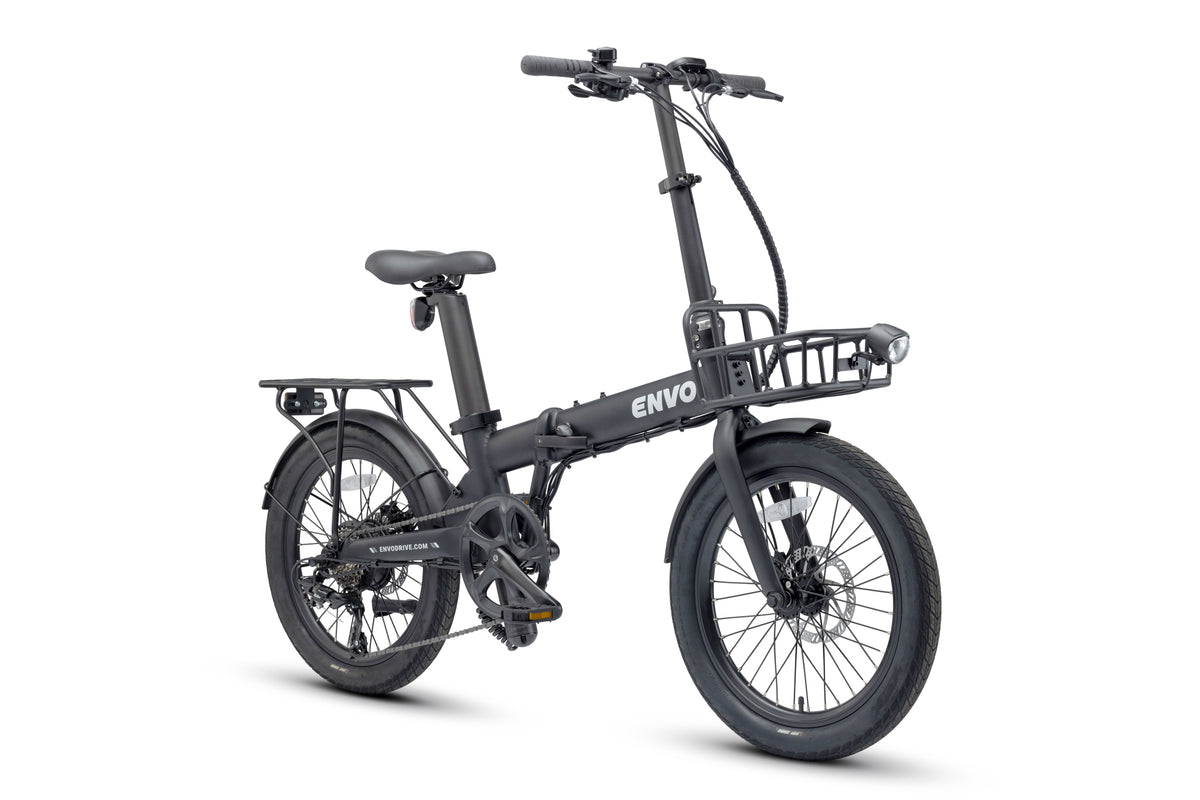
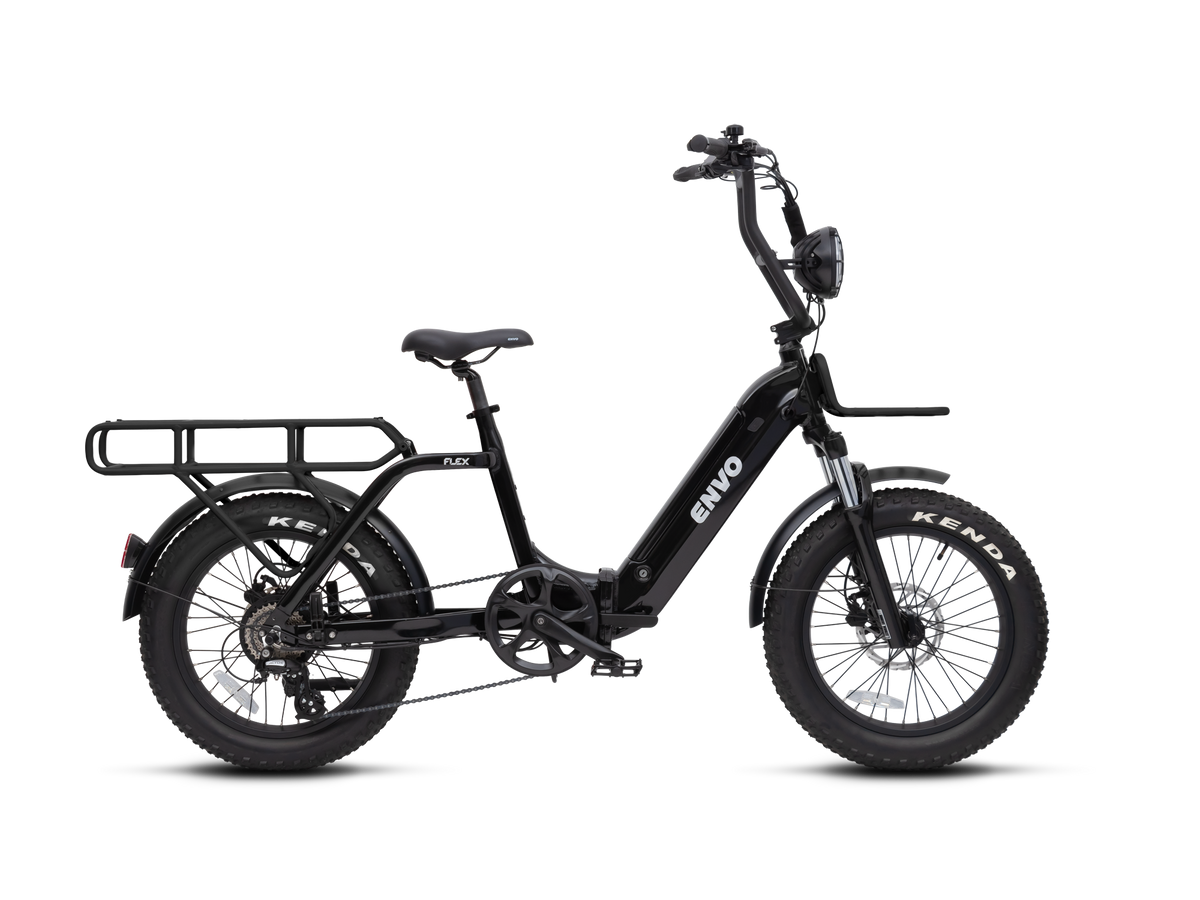
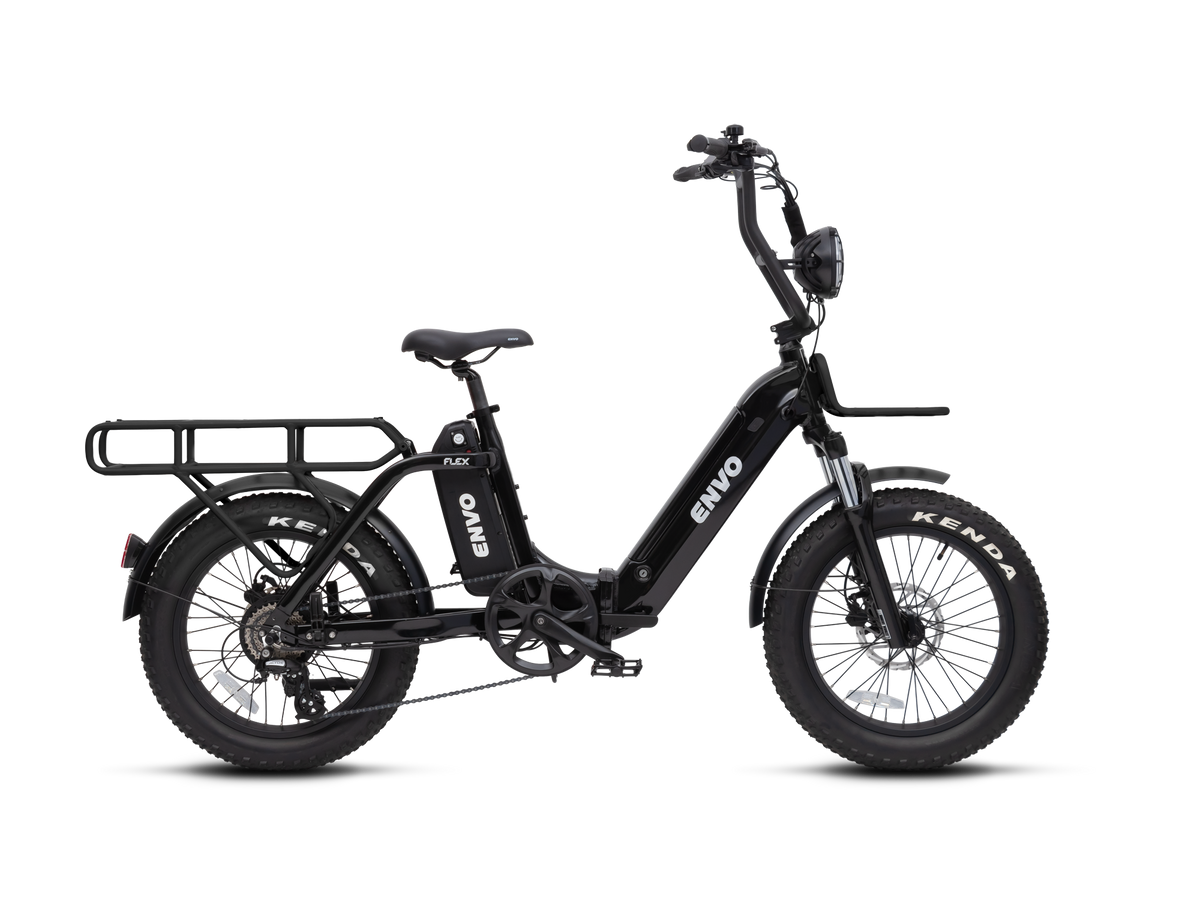
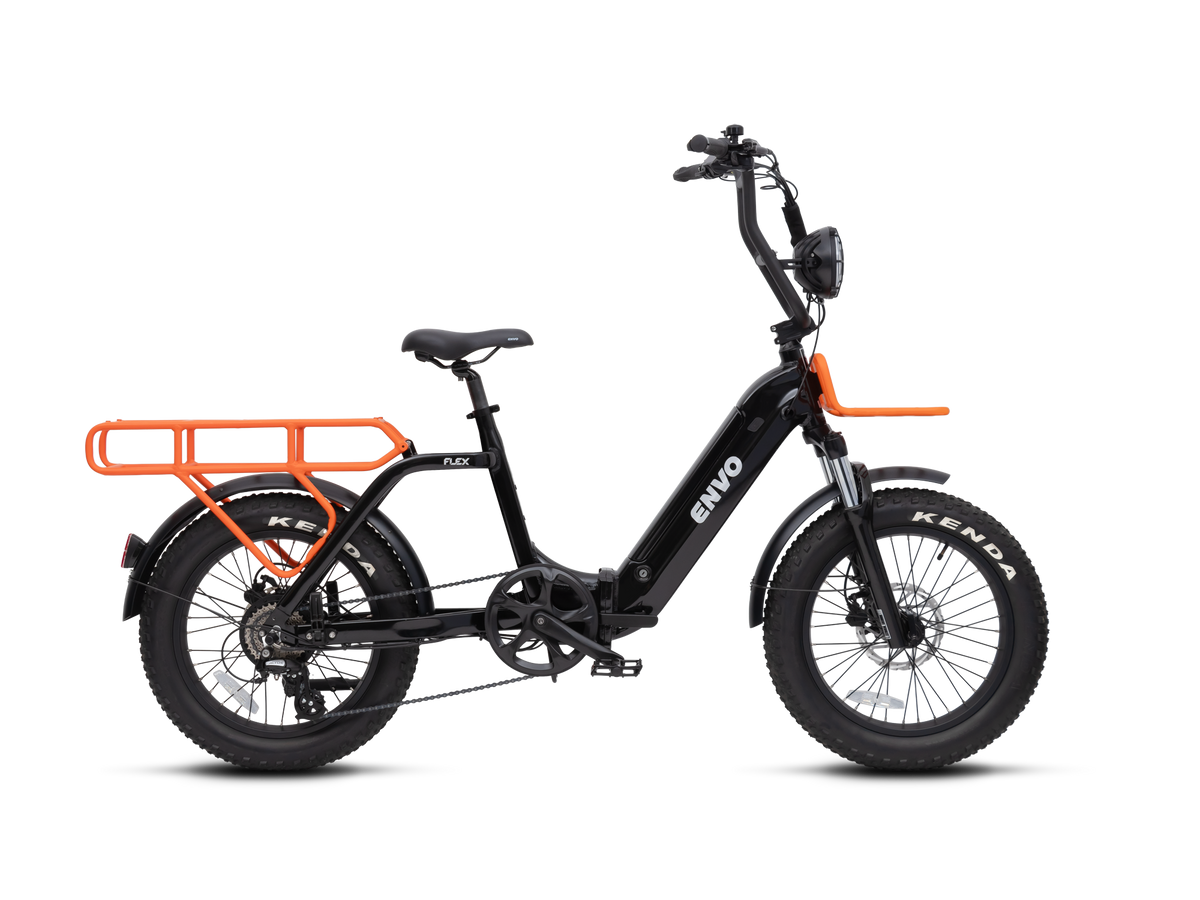
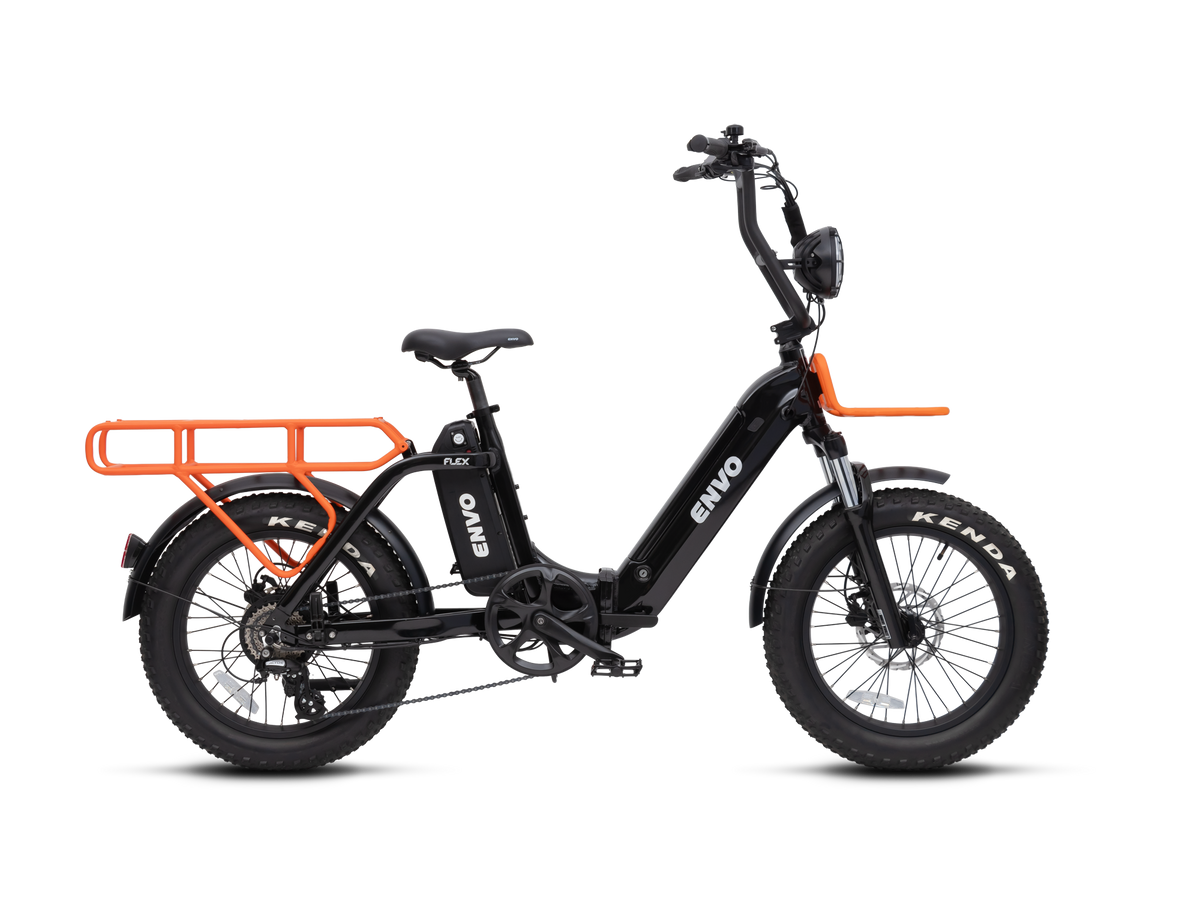
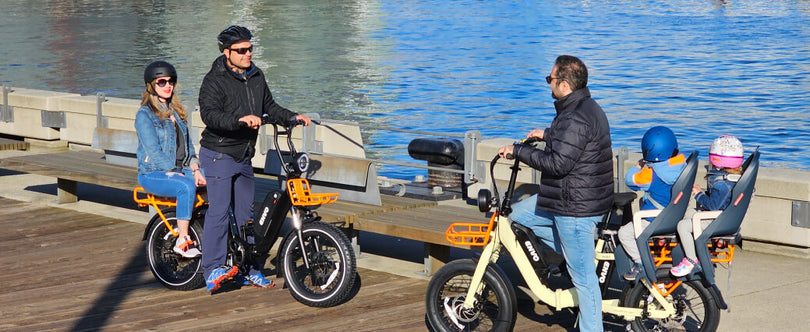
The U50 is built as a longtail family cargo bike. The rear carrier and footrests come standard, and the platform supports a wide modular accessory ecosystem: front basket, rear cushions, grab handles, and monkey-bar style child-carry accessories. It's positioned less as "a commuter with a rack bolted on" and more as a deliberate family-hauling tool.
That's an important distinction. A real longtail cargo bike is engineered around the assumption that the back end will be loaded with children, gear, or both — not just an occasional pannier. The U50's geometry, accessory ecosystem, and step-thru frame all line up with that use case. Browse more options in our electric cargo bike collection.
Aima Big Sur Cargo — Hydroformed Aluminum Cargo Frame
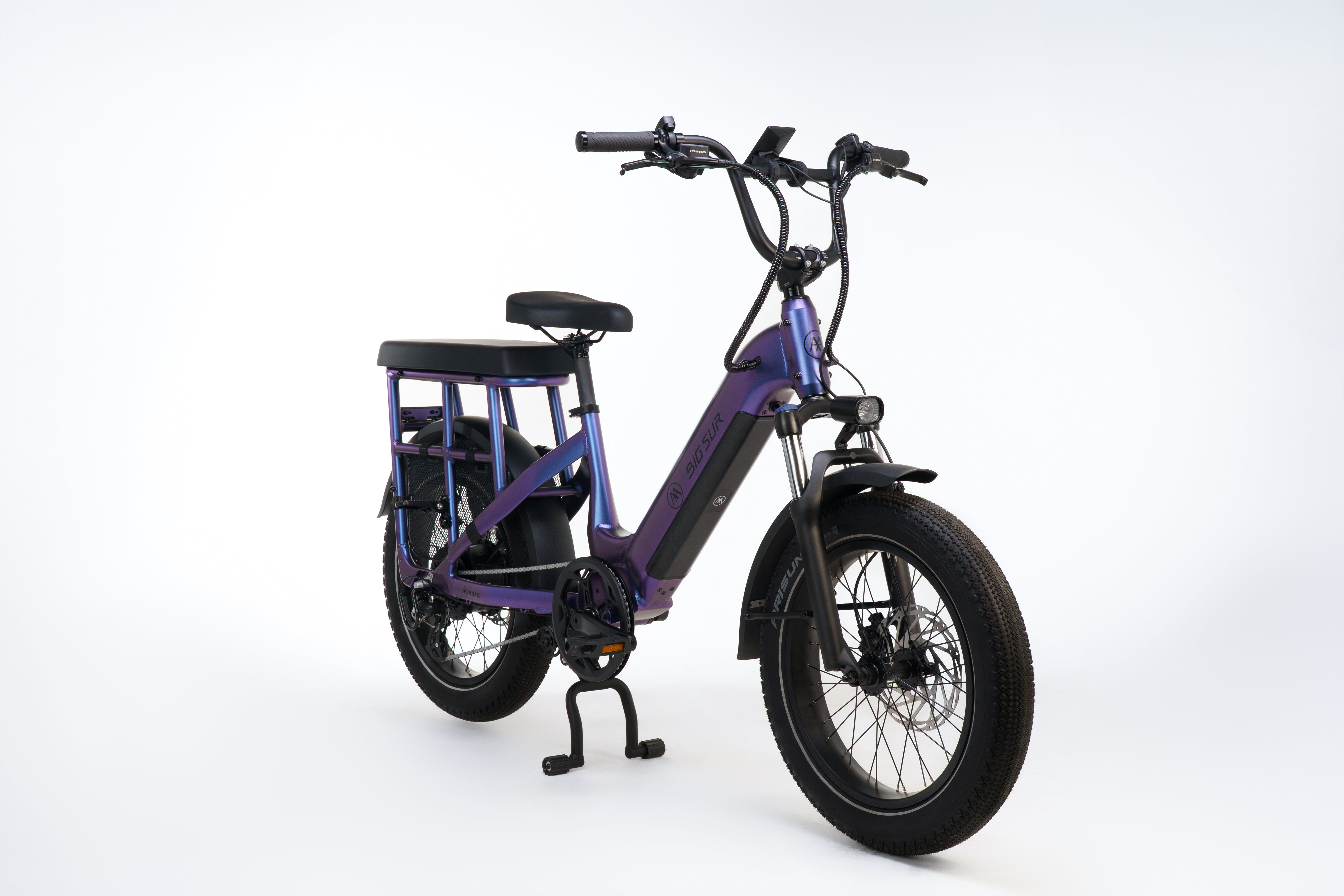
The Aima Big Sur Cargo is no slouch on cargo hardware either. It uses a hydroformed aluminum cargo frame, and the optional accessory list includes a front support, cargo rails, assist handles, bamboo footrests, a rear support, and a backrest. It also includes a double kickstand — a genuinely useful cargo feature for stable loading and unloading.
That's real cargo equipment. Aima isn't pretending to be something it isn't. But the U50 is more directly positioned for family-hauling duty, especially in Canadian urban use, where you're routinely loading and unloading kids on a step-thru frame and pivoting between school, daycare, errands, and home in a single trip.
🚲 Cargo Read: Both rate 180 kg payload — a clean tie. The U50 is built as a deliberate family-longtail platform with a modular accessory ecosystem. The Big Sur Cargo is a credible cargo frame with strong accessory hardware plus a double kickstand. Same payload number, slightly different intent.
Motor & Performance
On headline output, this is another tie.
The ENVO U50 uses a 500W rear hub with 80 Nm of torque. The Aima Big Sur Cargo 15Ah uses a Bafang G062 500W rear hub, also rated at 80 Nm of torque. Both are capped at 32 km/h, Class 2.
In cargo use, however, the question isn't peak output — it's behavior under repeated starts, rolling acceleration with passengers, and steady low-speed control. A family cargo bike is not judged by how fast it'll go on an empty bike lane. It's judged by how confidently it pulls away from a four-way stop with a kid on the back, or how smoothly it crawls through a school parking lot at walking pace with groceries.
ENVO's setup appears more intentionally tuned around utility riding under load. The torque-plus-cadence dual-sensor controller has a wider tuning window for low-speed cargo behavior, and the optional dual-battery supports the sustained heavy-use ownership pattern cargo buyers drift into over time.
The Aima's Bafang G062 is a perfectly competent motor — it's used across a number of credible mid-range e-bikes — and 80 Nm is plenty for the rated 180 kg payload. Neither bike is under-motored. The U50 is just more obviously engineered around cargo behavior specifically, while the Big Sur Cargo benefits from a more recognizable component name.
⚡ Performance Read: Both bikes share 500W output, 80 Nm torque, and 32 km/h top speed. The decisive difference is system tuning and reserve capacity — ENVO's dual-sensor controller and dual-battery option give it more headroom for sustained, loaded cargo use.
Range — The Cargo Reality Check
Cargo bikes are where range marketing collides with daily reality.
Real-world cargo use cuts range significantly — child seat, passenger weight, winter clothing, groceries, hills, stop-and-go intersections, cold temperatures, lower tire pressure for grip. Whatever number a manufacturer prints on a spec card, expect a heavily loaded family cargo bike in January Canadian conditions to deliver materially less.
Single-Battery Comparison
- ENVO U50: 720 Wh, claimed up to 100 km
- Aima Big Sur Cargo 15Ah: 720 Wh, claimed 45–80 km
Same battery on paper. Different efficiency claims. ENVO's higher number reflects platform efficiency (lighter frame, better-tuned controller) and a slightly more optimistic test methodology. Even discounting for marketing optimism, the U50 is positioned as the more range-efficient platform of the two.
Dual-Battery — Only ENVO Offers It
This is the spec line that genuinely changes the category. ENVO supports a dual-battery setup, taking total available energy to around 1,440 Wh. The Aima Big Sur Cargo does not offer that option.
For a cargo bike, that doubling of capacity is more meaningful than it sounds. Canadian families need that flexibility for very ordinary reasons: winter efficiency drops, inconsistent cargo loads, messy family logistics, forgetting to charge after a long day. A second battery turns "we might run out before the school pickup" into "we have all day plus a margin for error."
For more on this kind of expandability, see ENVO's dual-battery range guide.
Aima — 720 Wh, Single Battery Only
720 Wh · 45–80 km claimed · Heavier frame and cargo orientation reduce real-world efficiency. No dual-battery option.
ENVO U50 — Dual-Battery Family Platform
720 Wh single · ~1,440 Wh dual · Up to 100 km claimed range per battery. Critical insurance for year-round Canadian cargo use.
Sensor & Ride Feel
A cargo bike doesn't just need power — it needs predictable delivery.
Starting from a stop with a child on the back. Climbing gently away from an intersection on a loaded bike. Threading through a parking lot at low speed with groceries onboard. Abrupt or inconsistent assist is tiring in a commuter context and genuinely unnerving in a cargo context.
- ENVO U50: torque + cadence (dual-sensor)
- Aima Big Sur Cargo 15Ah: Bafang torque sensor only
Aima's setup is fine. A torque sensor scales power based on how hard you push the pedals, which is the more natural feel for many riders. But ENVO's flexibility gives the U50 a better chance of feeling smooth both when you want a natural torque-led ride and when you need easy, consistent support under awkward load conditions. A dual-sensor controller can be tuned in ways a torque-only controller cannot.
For a family cargo bike — the kind of bike where the rider's effort and load change wildly from trip to trip — that additional tuning headroom is worth more than it would be on a casual commuter. See our torque vs cadence sensor explainer for more detail.
Ride Quality & PAS Responsiveness
Spec sheets miss what reviewers and dealers consistently flag about ENVO: ride feel that doesn't show up in numbers. ENVO's pedal-assist behaviour has been iterated on for years — power delivery is tuned to feel natural, predictable, and well-matched to Canadian commuter and trail use. Aima is using essentially off-the-shelf Bafang tuning out of the box.
On a cargo bike with a child or groceries on the back, this matters more than on any other category. The U50's controller logic, throttle ramp, and PAS curves are tuned specifically for how Canadians actually ride loaded — including the difference between an empty parking lot and a stoplight pull-away with 30 kg of kid behind you. Stock Bafang tuning on a 36 kg cargo frame can feel jerky or laggy in exactly those moments.
🚴 Test ride reveals the difference: Five minutes on each bike — ideally with a real load — makes the gap obvious. ENVO's assist feels engineered. Aima's feels stock.
Components — Aima Fights Back Well
If we judge purely on component bragging rights per dollar, this is where Aima makes its strongest case.
Brakes
Both bikes use Tektro hydraulic discs. Aima specifies 203mm rotors — a real confidence point on a loaded cargo bike.
Drivetrain
ENVO runs a multi-speed derailleur. Aima specifies Shimano 7-speed — a recognizable brand name on the spec card.
Sensors
ENVO uses torque + cadence dual-sensor. Aima uses Bafang torque-only. ENVO is more versatile under load.
Display
Aima ships the Bafang DP C010 color TFT with integrated navigation. ENVO uses a color display with Bluetooth app — capable, but less flashy.
Fork
Both run budget suspension forks. Aima's Zoom 80mm unit is a known quantity in this segment.
Battery Expansion
ENVO supports dual battery to ~1,440 Wh. Aima does not. The single biggest cargo-specific spec advantage on the ENVO side.
Aima looks stronger in component branding clarity and gadget appeal: Bafang motor, Bafang display, integrated navigation, Shimano drivetrain, 203mm rotors. That's a real comfort signal for buyers shopping a spec sheet, and at $3,090 it's a strong feature list per dollar.
ENVO U50 also uses hydraulic brakes, integrated lights, wide tires, and a cargo-focused build — but the headline component story is less flashy. ENVO emphasizes utility, safety, and family usability over gadget appeal. The integrated dual-battery support, the dual-sensor controller, and the longtail family platform are the real wins on the U50 side.
If you're comparing pure component bragging rights per dollar, Aima comes out ahead here. If you're comparing what the bike actually does as a family cargo platform, the difference narrows considerably. One note on the Shimano stamp: Aima's drivetrain is Shimano Acera/Altus — entry-tier, below Alivio and Deore in the Shimano hierarchy. The "Shimano 7-speed" headline reads better than the actual component grade.
Geometry & North American Fit
Reviewers consistently note that Aima frame geometry feels designed for the Chinese domestic market — reach, stack, and seatpost angles can feel off to riders accustomed to bikes geometry-tuned for Canadian/US sizing. ENVO frames are designed and engineered in Burnaby, BC specifically with North American riders in mind: taller average heights, longer torsos, different riding postures. For a cargo bike that the same rider may use daily for years, fit becomes a serious comfort issue — it's the kind of detail that becomes obvious in the first 5 minutes of a test ride.
Tires & Aesthetics
Tires: Aima's Canadian product pages do not disclose the tire manufacturer — just generic "e-bike rated casing" language. ENVO discloses tire choices on product pages. Tire brand matters even more on a cargo bike: replacement frequency, ride feel under load, and puncture protection all depend on it.
Aesthetics: Style is subjective, but the design language differs noticeably. ENVO leans sleek and considered — Canadian engineering aesthetics. The Big Sur Cargo leans more utilitarian and, with 4 kg more mass than the U50, looks visibly bulkier. Worth a look in person before you decide.
Safety & UL 2849
Safety-minded buyers should notice that both bikes are presented as UL 2849-certified systems.
That's an important baseline for a cargo bike, because cargo bikes are routinely charged in garages, mudrooms, basements, and other spaces close to living areas. UL 2849 system-level certification matters more than it does for a casual recreational bike, and it increasingly matters for insurance coverage and condo board policies. Many Canadian buildings now require UL 2849 certification before allowing an e-bike inside. You can browse other UL 2849-certified e-bikes here for context.
The more subtle difference is not the certification claim itself, but the market history behind it. ENVO has the benefit of being a longer-established Canadian operator with multi-year safety record visibility. Aima's Canadian rollout is much newer — about 18 months in the market as of May 2026.
That does not mean Aima is unsafe. It just means the Canadian ownership safety record is shorter, and there's less independent in-market data to look at.
Warranty Comparison
This is one place where Aima plainly wins on paper.
🇨🇳 Aima Big Sur Cargo 15Ah Warranty
- ✅ 2 years frame
- ✅ 2 years power-assist
- ✅ 2 years or 300 cycles battery
- ✅ 1 year mechanical
🇨🇦 ENVO U50 Warranty
- ✅ 1 year coverage
- ✅ Canadian-based warranty administration
- ✅ Burnaby, BC operations centre
- ✅ Near-decade of in-market support history
That is a substantial difference, and it should be acknowledged clearly. If you are only comparing written warranty terms, the Big Sur Cargo 15Ah is more generous.
But warranty value is not just the number of months printed in a chart — especially on a cargo bike.
A longer warranty is only as useful as the company's ability to administer parts, approve claims, and keep service channels alive over multiple years. ENVO Drive Systems's support case is easier to understand because the brand has deeper Canadian roots, a Burnaby, BC operating base, and an established parts and service flow.
Aima's Canadian support currently runs through UNIVELO, the exclusive Canadian distributor announced on November 28, 2024, plus its dealer network. That arrangement can absolutely work — plenty of brands operate through distributors. But on a bike that may carry your child to school five days a week, "the distributor can usually source a part" feels different than "the manufacturer assembles it here." For ongoing care, see ENVO's e-bike maintenance tips.
So yes, Aima wins the warranty chart. But ENVO may still win the warranty confidence test for a buyer thinking several years out on a family utility bike.
The Long-Haul Question
⚠️ A cargo e-bike is closer to a household utility appliance than a casual toy purchase. The category that matters most is whoever will still be supporting the bike in year three, four, and five — not whoever has the prettier spec card today.
This is the category that matters most if the bike will carry kids or replace regular car trips.
ENVO is designed and assembled in Canada, with the U50 specifically supported out of Burnaby, BC. ENVO's broader messaging around the U50 references real Canadian riding conditions — rain, January use, year-round commuting. That's not marketing fluff for a cargo bike; it's the actual use case.
Aima is a much larger global manufacturer — established 1999, registered in Tianjin, A-shares trading on the Shanghai Stock Exchange under ticker 603529. The bikes are designed in China, engineered in China, AND manufactured in China — the full trifecta. It is unquestionably real scale.
But Aima's Canadian launch is recent. UNIVELO announced exclusive Canadian distribution on November 28, 2024 — about 18 months in the Canadian market as of May 2026. UNIVELO described itself at launch as a newly established Canadian distribution company. The launch was through a distributor relationship, not through Aima-owned Canadian retail or service infrastructure.
As of May 2026:
- Aima's North American HQ is in City of Industry, California — there is no Aima legal entity in Canada
- Aima has been in Canada for only about 18 months via UNIVELO (a third-party distributor)
- There are no Aima-owned Canadian retail or service locations — and even Aima USA cannot directly service Canadian customers
- If UNIVELO loses the contract, there is no fallback
- Aima's 2024 overseas revenue was approximately RMB 234.7 million out of RMB 21.61 billion total — roughly 1.1% — meaning international markets remain a very small share of the parent business
🇨🇦 Buy Canadian = buy ENVO. ENVO is designed in Burnaby, engineered in Burnaby, assembled in Burnaby — Canadian-owned. Aima is the opposite: Chinese trifecta + California HQ + Canadian distributor middleman.
For a casual recreational e-bike, maybe that's fine. For a daily-use family cargo bike, it matters a lot. If something breaks in November and this is the bike that gets your kid to school, the quality of support, parts flow, and accountability becomes part of the bike's real value.
ENVO, by contrast, was incorporated in 2016, operates from Burnaby, BC, and has built production and distribution capacity there. If you plan to keep this bike until 2030 or beyond and use it as transportation, which support network are you more confident will still feel easy, local, and responsive in Canada?
That is the question the $410 price gap is actually asking. Browse the wider EbikeBC catalogue for more Canadian-supported options, or read our roundup of the best electric bikes for 2025.
Who Should Buy What
🇨🇳 Buy the Aima Big Sur Cargo 15Ah if…
- ✅ Your first priority is lower upfront cost
- ✅ You still want a real cargo frame, not a rack-equipped commuter
- ✅ You value stronger written warranty coverage
- ✅ You like Aima's component package (TFT display, integrated nav, 203mm brakes)
- ✅ You appreciate recognizable Bafang and Shimano component names
- ✅ Your local dealer situation is strong enough to be comfortable with a younger Canadian distribution model
🇨🇦 Buy the ENVO U50 if…
- ✅ You are buying primarily for family cargo duty
- ✅ You expect regular passenger carrying (kids, partner, gear)
- ✅ You want the option of dual batteries to ~1,440 Wh
- ✅ You care more about long-term Canadian support than saving $410 upfront
- ✅ You ride year-round and want a bike built around Canadian daily-use reality
- ✅ You want the more convincing "second car replacement" platform
Category Scores (Out of 100)
The Verdict
This is the one Aima vs ENVO comparison where Aima legitimately wins on price. The Big Sur Cargo 15Ah is $410 cheaper than the ENVO U50, and that savings is not produced by obvious spec compromises — Aima built a credible cargo bike at a credible price. That should be said clearly.
But cargo bikes are not judged well by spec sheets alone. For Canadian families, the bike that wins is often the one that keeps working, keeps getting supported, and keeps fitting real life after the honeymoon period ends.
Recommended for budget-first cargo buyers
If budget is tight and you want a cargo-specific e-bike with a strong features list, the Big Sur Cargo 15Ah makes a credible case. Cheaper by $410, better written warranty on paper, surprisingly competitive in hardware: Bafang motor, color TFT display with navigation, 203mm rotors, double kickstand, Shimano 7-speed, and a proper hydroformed aluminum cargo frame.
Best for: buyers prioritizing upfront cost, riders comfortable with a younger Canadian distribution model, budget-shoppers who want a real cargo frame at the lowest price.
Recommended for daily family cargo duty in Canada
If this bike will work hard for years, carry precious cargo, and serve as a serious mobility tool in Canada, the U50 is the more convincing long-term package. Dual-battery expansion to ~1,440 Wh, dual-sensor controller, dedicated longtail family platform with modular accessories, and a Canadian design-and-assembly story out of Burnaby, BC.
You pay $410 more upfront. In exchange you get a bike that is engineered around the assumption that it will become household transportation, not a weekend ride. For families seriously considering replacing a second car, that engineering intent matters.
Best for: families with regular passenger duty, year-round Canadian commuters, riders who want long-term local support, anyone looking at a cargo bike as a household utility appliance rather than a toy.
Final Take
The Aima Big Sur Cargo 15Ah is not the easy loser in this comparison. It's actually one of the more reasonable Aima options on the Canadian market — it undercuts ENVO on price by $410, while offering a respectable cargo frame, 720 Wh battery, hydraulic brakes with 203mm rotors, a torque sensor, and a better formal warranty.
But cargo bikes are different. They're closer to a household utility appliance than a casual recreational purchase. For Canadian families, the bike that wins long-term is usually the one that keeps working, keeps getting supported, and keeps fitting real life after the honeymoon period ends.
That's where the ENVO U50 pulls ahead. Longtail family orientation, a modular cargo accessory ecosystem, the optional 1,440 Wh dual-battery setup, dual-sensor controller, and a Canadian design-and-assembly story make it the more confidence-inspiring choice for riders who want a cargo bike to become part of household transportation.
Choose Aima if lower upfront cost is your top priority. Choose ENVO if you want the stronger all-around family cargo package for the long haul in Canada.
Shop the ENVO U50 at EbikeBC
Test ride the U50, browse our full electric cargo bike collection, or talk to our team about which Canadian-supported family cargo e-bike is right for your household.
Shop the ENVO U50 → Electric cargo bikes