

Is Aima eBikes Worth It in Canada? An Honest 2026 Assessment
Aima offers legitimate product quality and competitive pricing. Here's an honest assessment of whether it's the right buy for your Canadian use case.
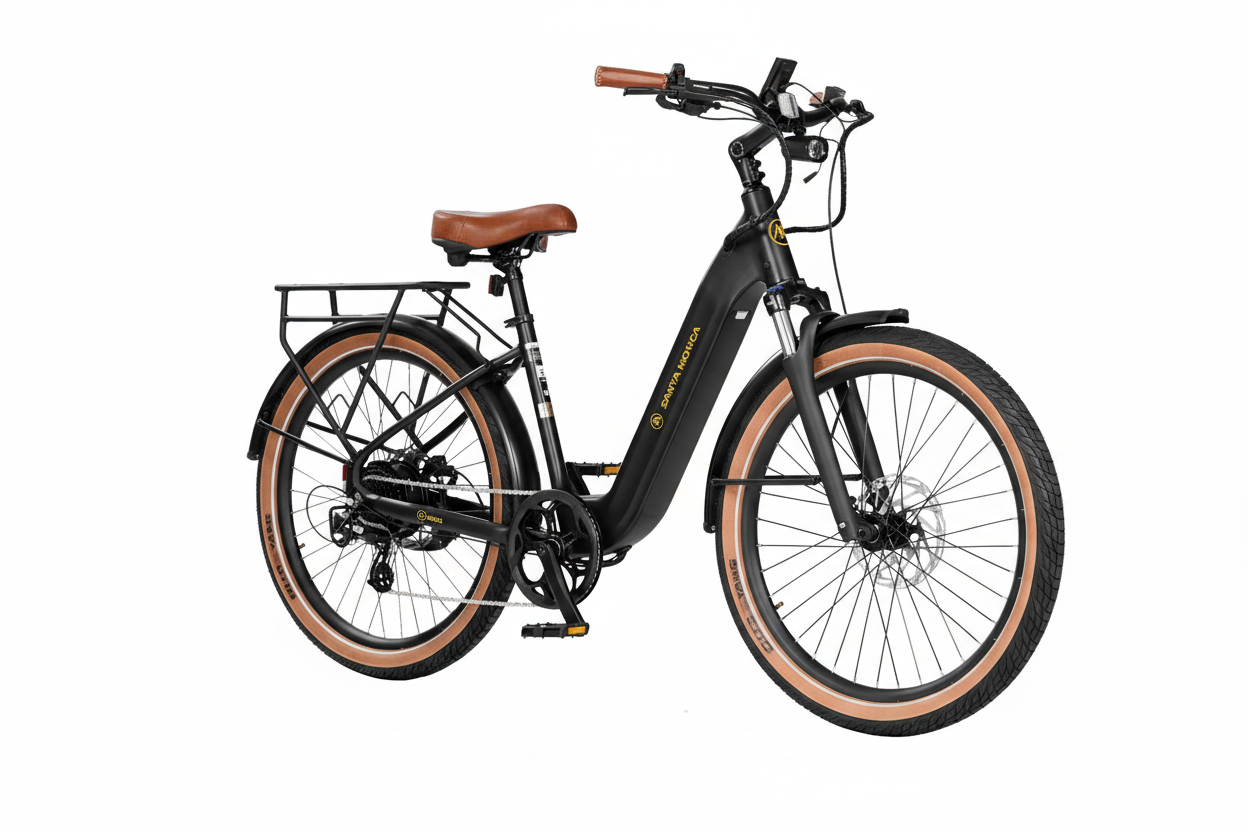
Table of Contents
Is Aima Worth It in Canada in 2026?
Yes — for the right buyer. Aima can be worth it.
But that answer needs a qualifier, because Aima is not one of those brands you should buy purely off a pretty spec sheet and assume the rest will sort itself out. The bikes themselves look credible. The components are better than many budget buyers expect at these prices. The warranty terms are respectable. The UL 2849 safety claim across the pedal-assist lineup is a serious plus. But the Canadian operation is still young, and after-sales support is routed through an exclusive distributor and dealer network rather than a long-established Aima-owned Canadian service footprint.
The shortest honest version: Aima looks legitimate and potentially good value, but you should buy it with eyes open about long-term Canadian support dependence on the dealer/distributor chain. If that trade-off sounds workable, Aima deserves a place on your shortlist. If you'd rather not depend on that chain, the EbikeBC Canadian-assembled lineup is the natural alternative starting point.
The Verdict at a Glance
Aima Canada — Quick Scorecard
- Product credibility: Good
- Spec value for money: Good to very good
- Safety credential headline: Strong — Aima publicly claims UL 2849 across the pedal-assist lineup
- Warranty on paper: Solid for this price tier (2-year frame, 2-year electrical, 2-year / 300-cycle battery)
- Canadian operating maturity: Still limited — exclusive Canadian distribution dates to November 28, 2024
- Long-haul service certainty: The main question mark
This is a realistic mixed review, not a takedown. Most of the boxes get ticked. The one box that doesn't — long-haul Canadian service certainty — is the box you should think hardest about for a 5+ year ownership horizon. Our companion pieces dig deeper on Aima's Canadian corporate status, on the UL 2849 certification picture, and on the battery cell disclosure story.
What Aima Does Well
Canadian Lineup Pricing
Aima Canada Lineup — Verified Pricing (May 2026)
- Key West: $2,590
- Santa Monica: $2,990
- Big Sur G2 15Ah: $2,990
- Big Sur G2 20Ah: $3,190
- Big Sur Sport G2 15Ah: $2,990
- Big Sur Sport G2 20Ah: $3,190
- Big Sur Cargo 15Ah: $3,090
- Big Sur Cargo 20Ah: $3,290
That's a tight $2,590–$3,290 band — squarely in the value/mid-tier segment, and competitive with most Canadian-available brands in the same use cases.
Component Pedigree
Across the lineup, Aima leans on names buyers can actually recognize: 500W Bafang motors, Bafang torque sensors, Shimano drivetrains, and Tektro hydraulic brakes with 203mm rotors. That's a respectable component stack — not a no-name parts grab. It's also a stack that real bike shops know how to service, which matters more than enthusiasts often acknowledge.
Safety
Aima Canada publicly states that every pedal-assist e-bike is fully compliant with UL 2849 and equipped with a unique unfalsifiable UL-certified label. Individual bike pages — Key West, Santa Monica, Big Sur G2, Big Sur Sport G2, Big Sur Cargo — all list UL 2849. For Canadian buyers in condos or stricter buildings, that's a serious advantage and a real differentiator against the uncertified long tail. We unpack the certification picture in depth in our UL 2849 explainer.
Warranty
Better than many cheap e-bike buyers expect at this price tier:
Aima Canada Warranty Terms
- 2 years on the frame
- 2 years on the power-assist system
- 2 years OR 300 charge cycles on the battery
- 1 year on mechanical components
- No arbitration clause on the Canadian warranty page
Where Aima Has Gaps
Canadian operating history is still relatively new. The exclusive distribution partnership with UNIVELO was announced on November 28, 2024. As of May 2026, that's roughly 18 months of Canadian operating history — not a decade-old domestic support network with a long public track record to point to.
There is no Aima legal entity in Canada. Aima's North American headquarters is located in City of Industry, California, USA (subsidiary: AIMA EBIKE, aimatech.us; info@aimausa.com; (213) 315-0602). There is no Aima-owned office, warehouse, or service centre in Canada. The closest Aima-corporate touchpoint to a Canadian buyer is a California subsidiary that, due to cross-border consumer-law and warranty-administration issues, cannot directly support Canadian customers. The entire Canadian operation runs through UNIVELO, a third-party Quebec distributor. For buyers who care about "buying Canadian," that is a meaningful structural fact.
Aima is designed, engineered, AND manufactured in China. It's worth being specific. This is not a case where a brand designs in one country and contract-manufactures in another — Aima's product design, engineering, and production all happen in China. The North American sales arm is in California. The Canadian distribution is in Quebec via UNIVELO. The Canadian buyer is multiple layers removed from any Canadian-grounded entity. Many solid bikes come from China and that isn't a strike against the product — but it does matter if your buying priority is Canadian assembly, Canadian engineering, or a domestic service identity. For more on that distinction, see our "Is Aima a Canadian company?" investigation.
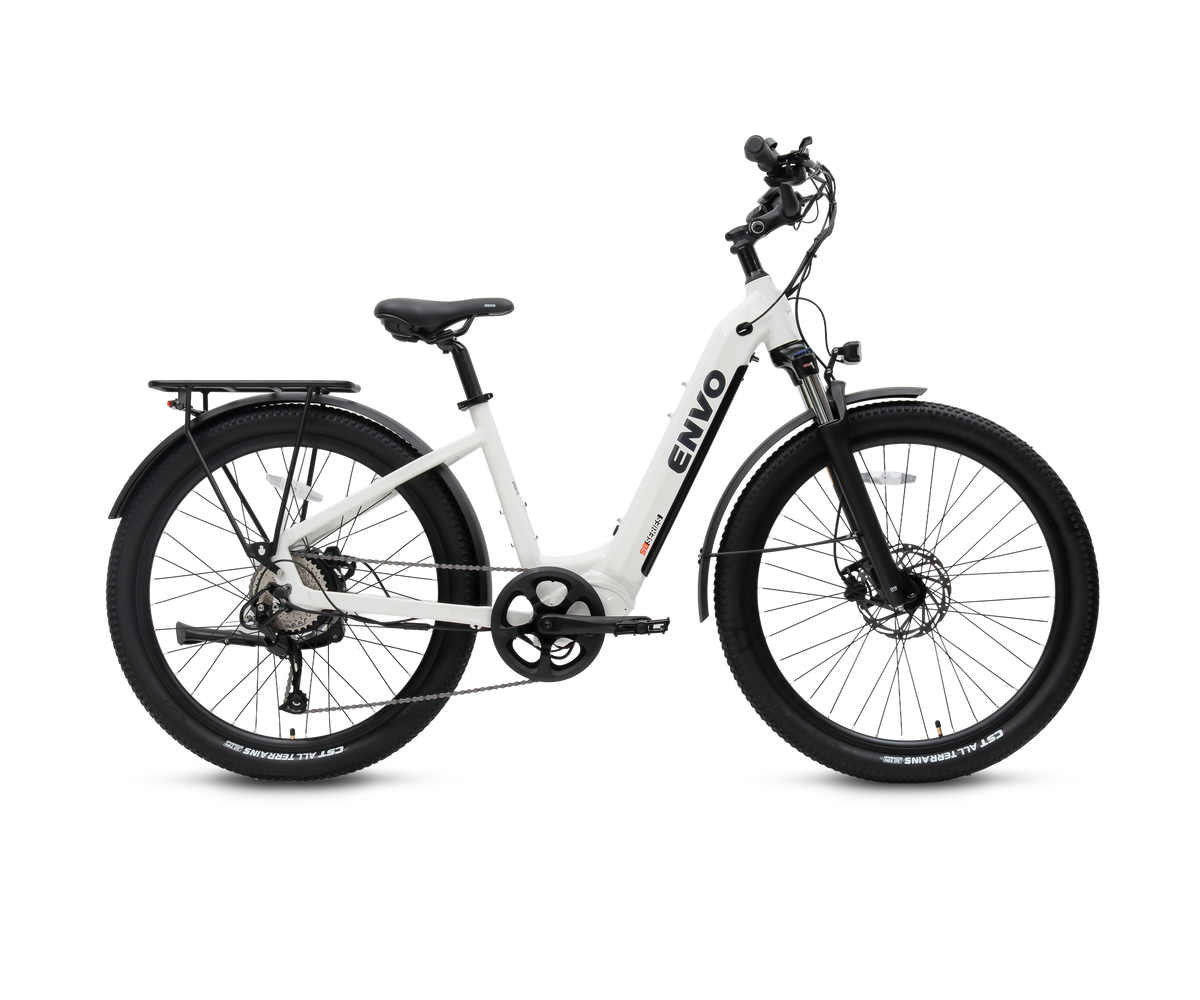
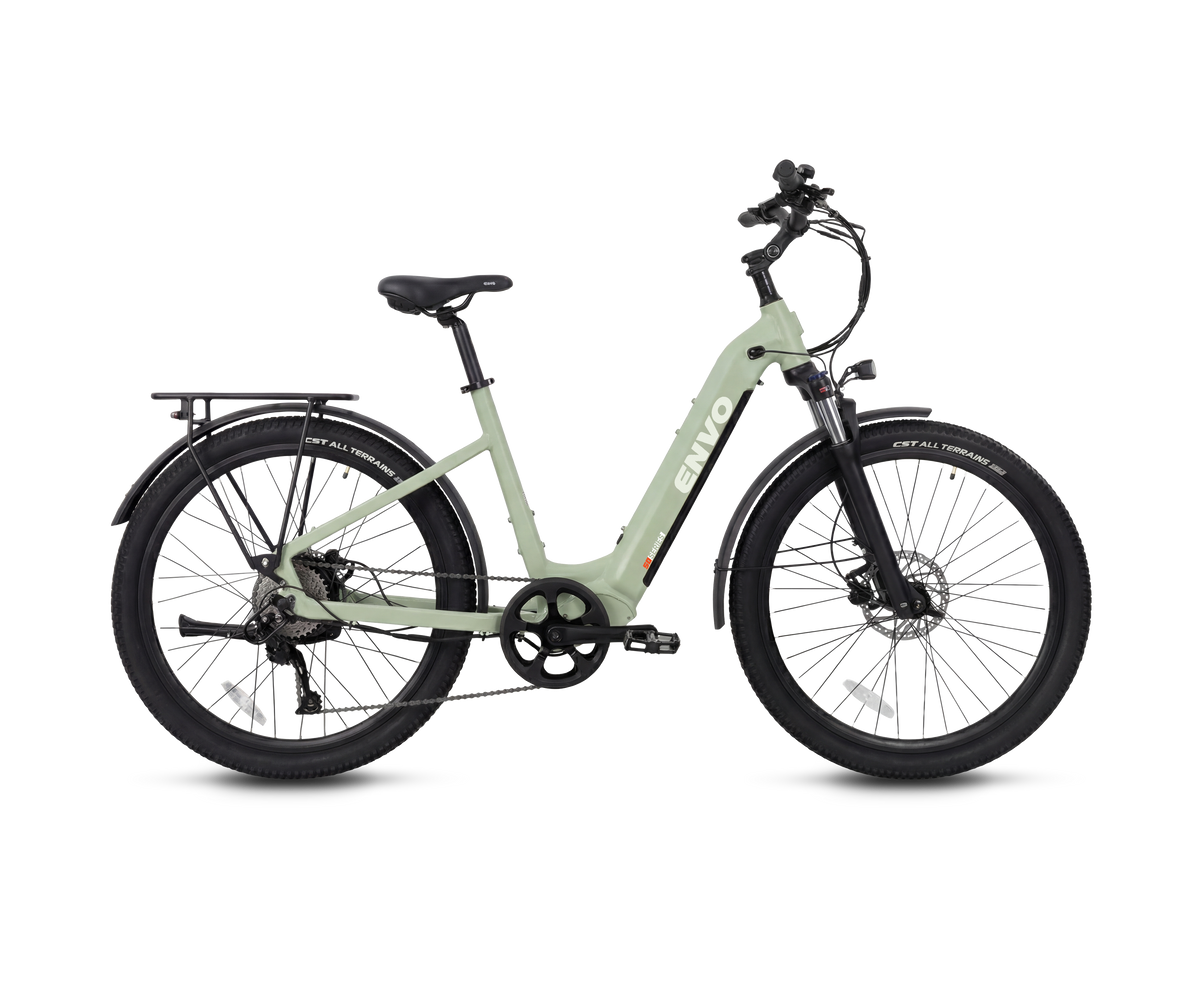
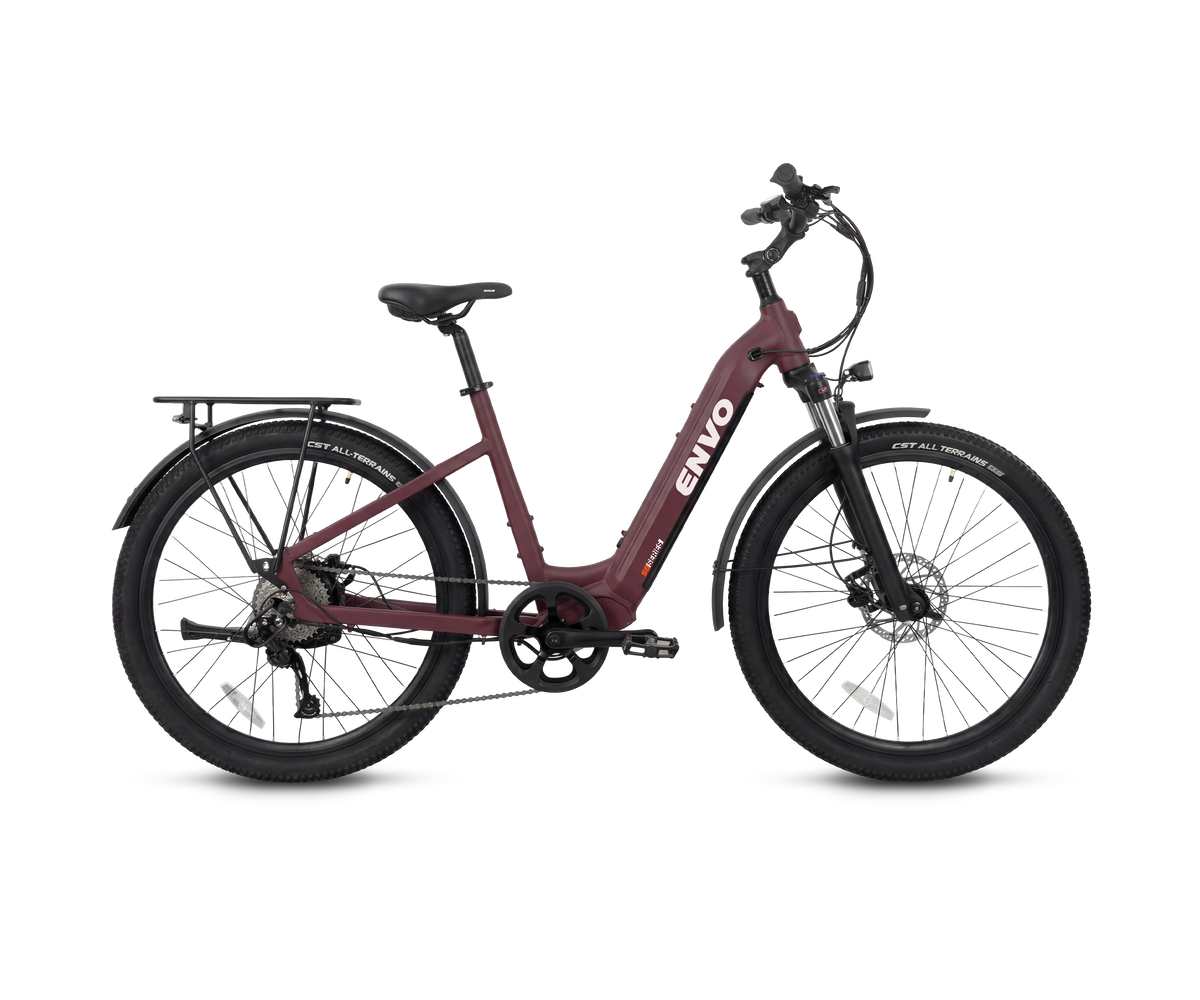
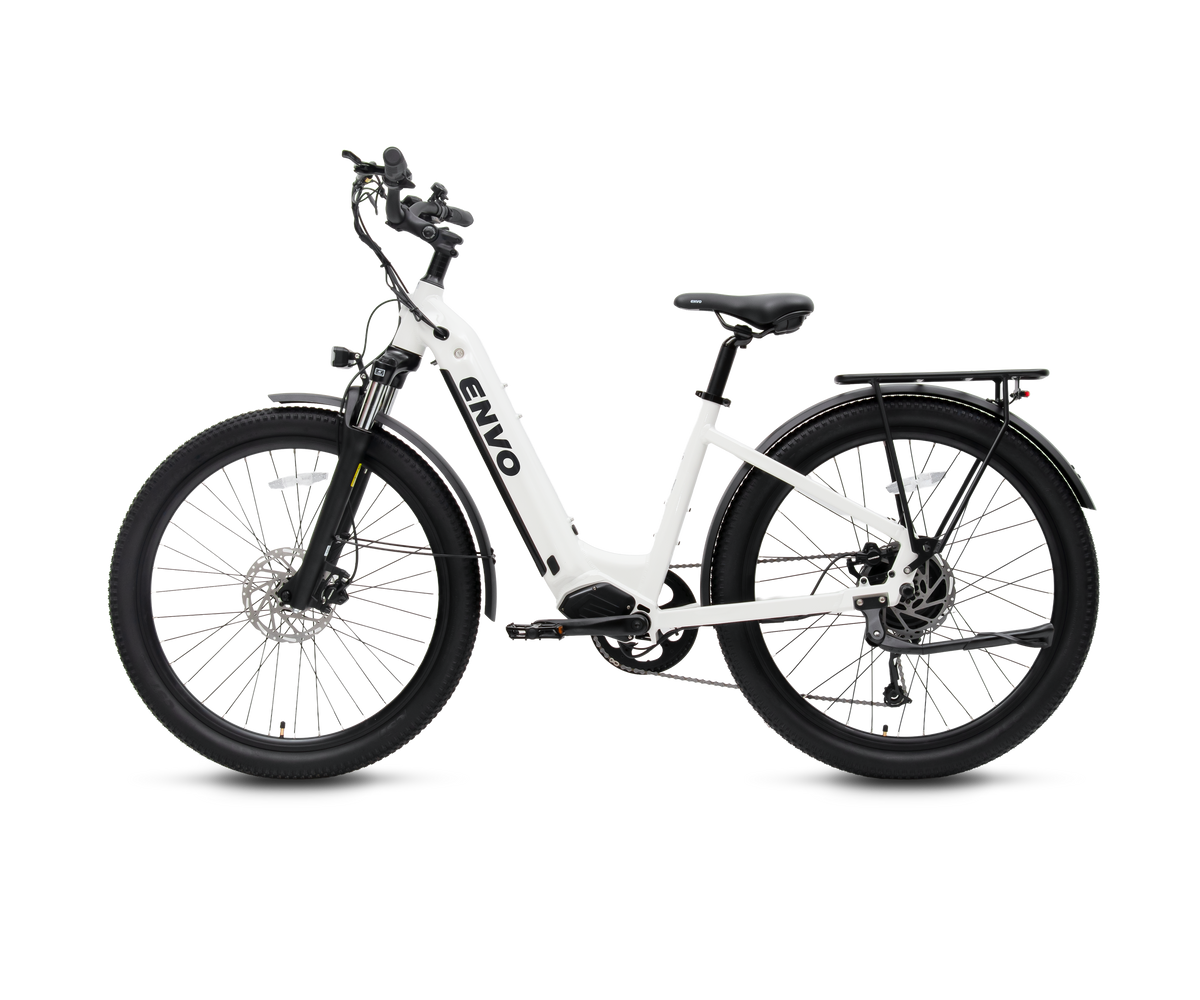
Drivetrain tier is entry-level Shimano. The Key West and Big Sur G2 use Shimano Acera ST-M315 Rapidfire shifters paired with the Shimano Altus RD-M310 derailleur. Acera/Altus is Shimano's entry tier — below Alivio, well below Deore. When a spec sheet says "Shimano 8-speed," it's worth knowing which Shimano. By comparison, ENVO's ST50 and D50 run 9-speed setups with a wider gear range, which most riders feel on hills and headwinds.
Tire brand is undisclosed. Aima's Canadian product pages list things like "27.5 × 2.1″ reflective sidewall" — but no tire manufacturer. Aima discloses Bafang motors and LG cells transparently, yet leaves the tire brand unstated, which is consistent with an unbranded Chinese-source e-bike tire. It's selective transparency, and tires are one of the components that wear out and need replacing within the first ownership cycle.
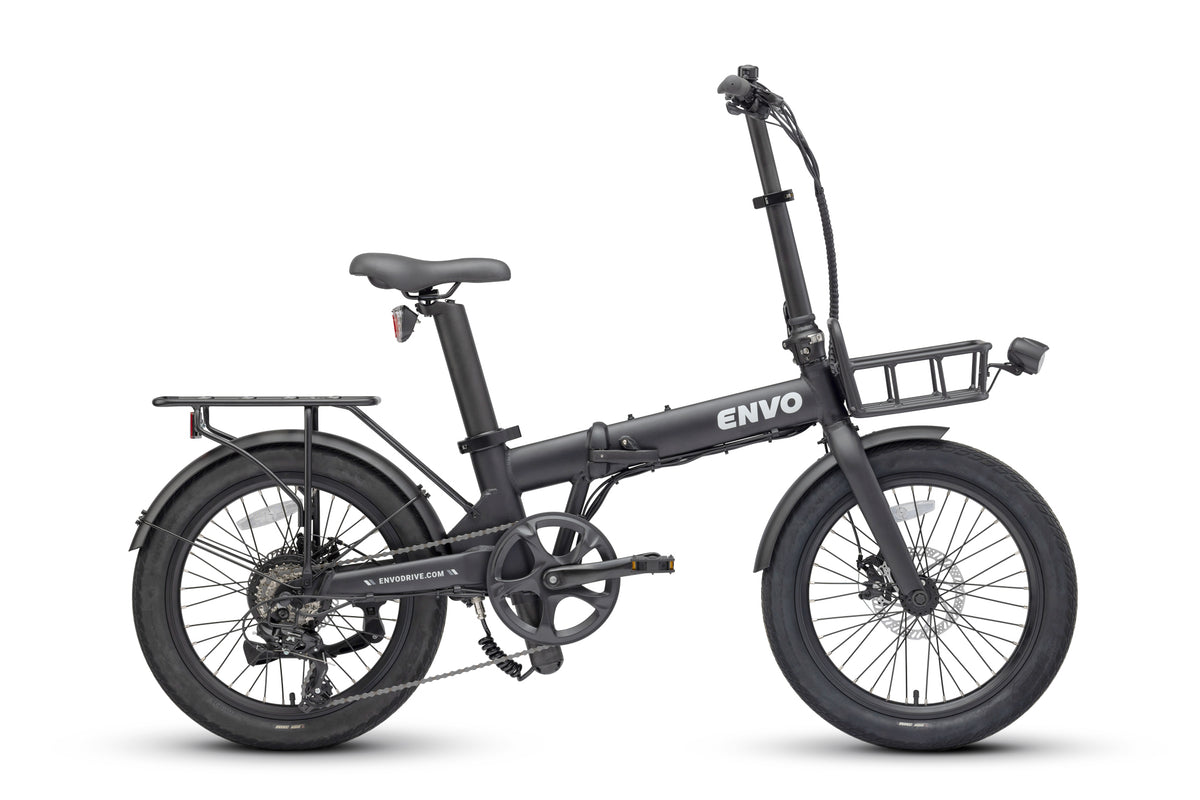
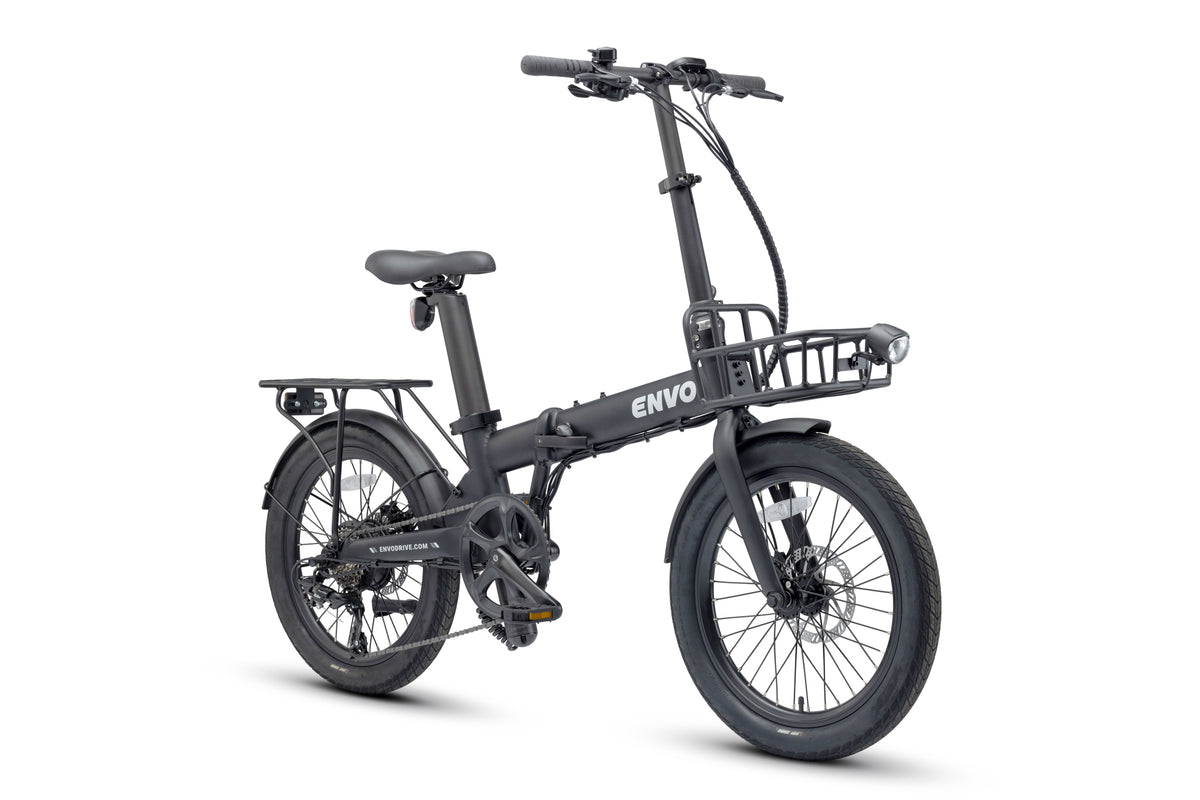
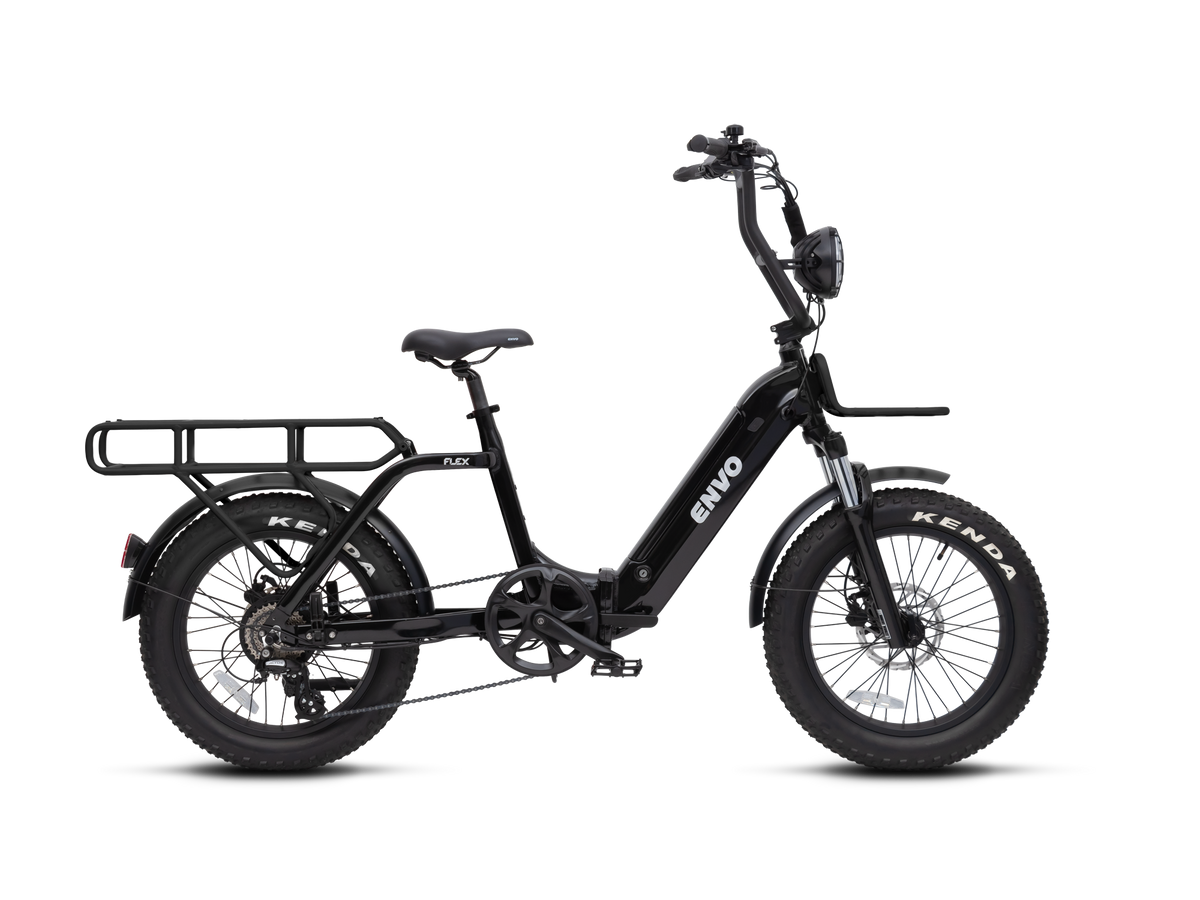
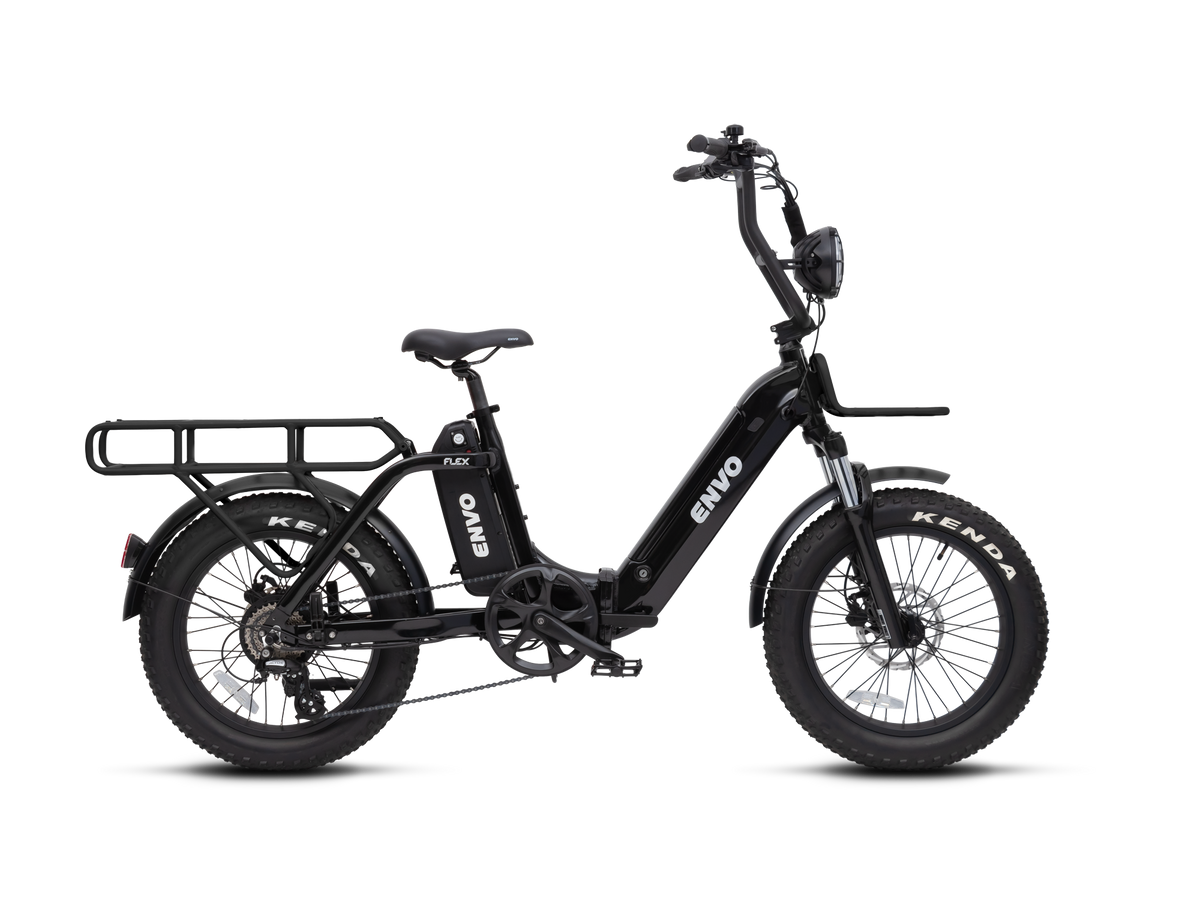
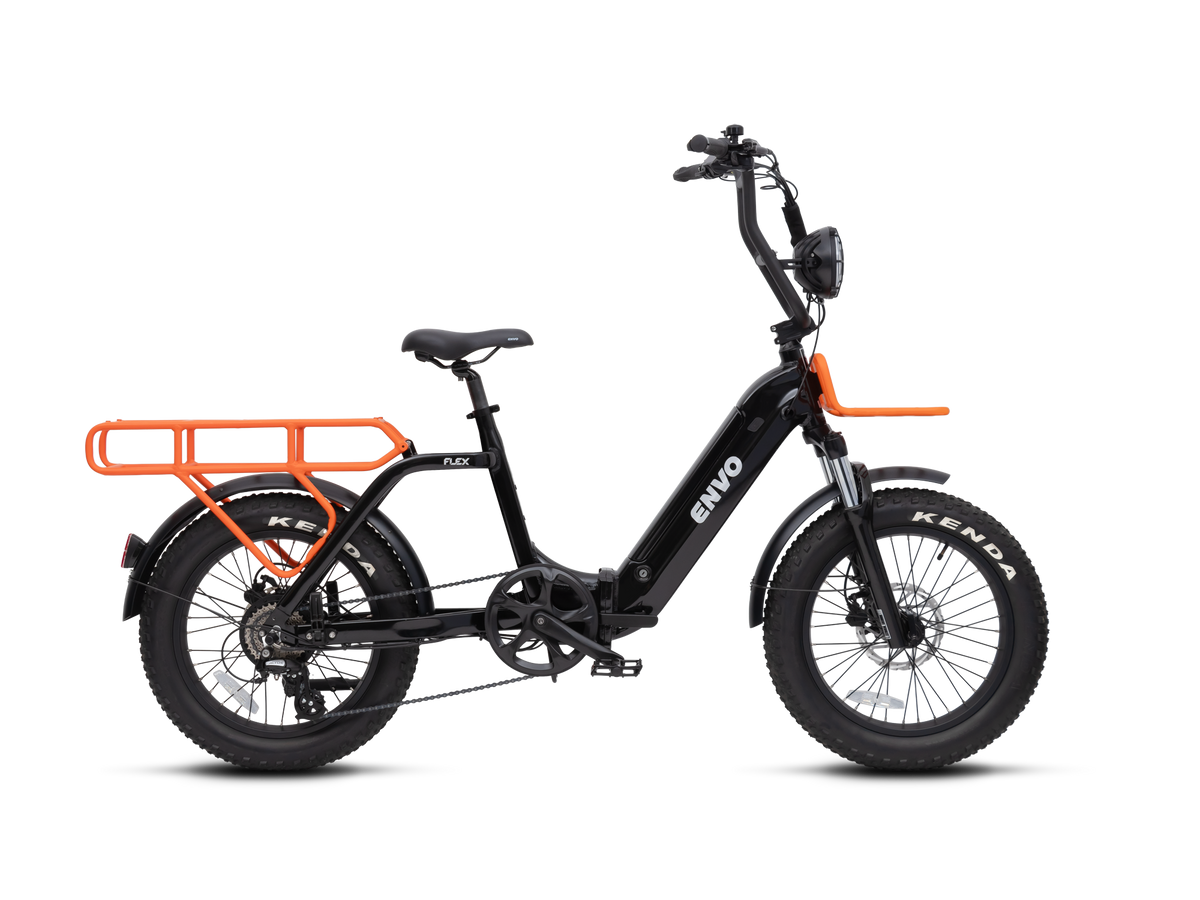
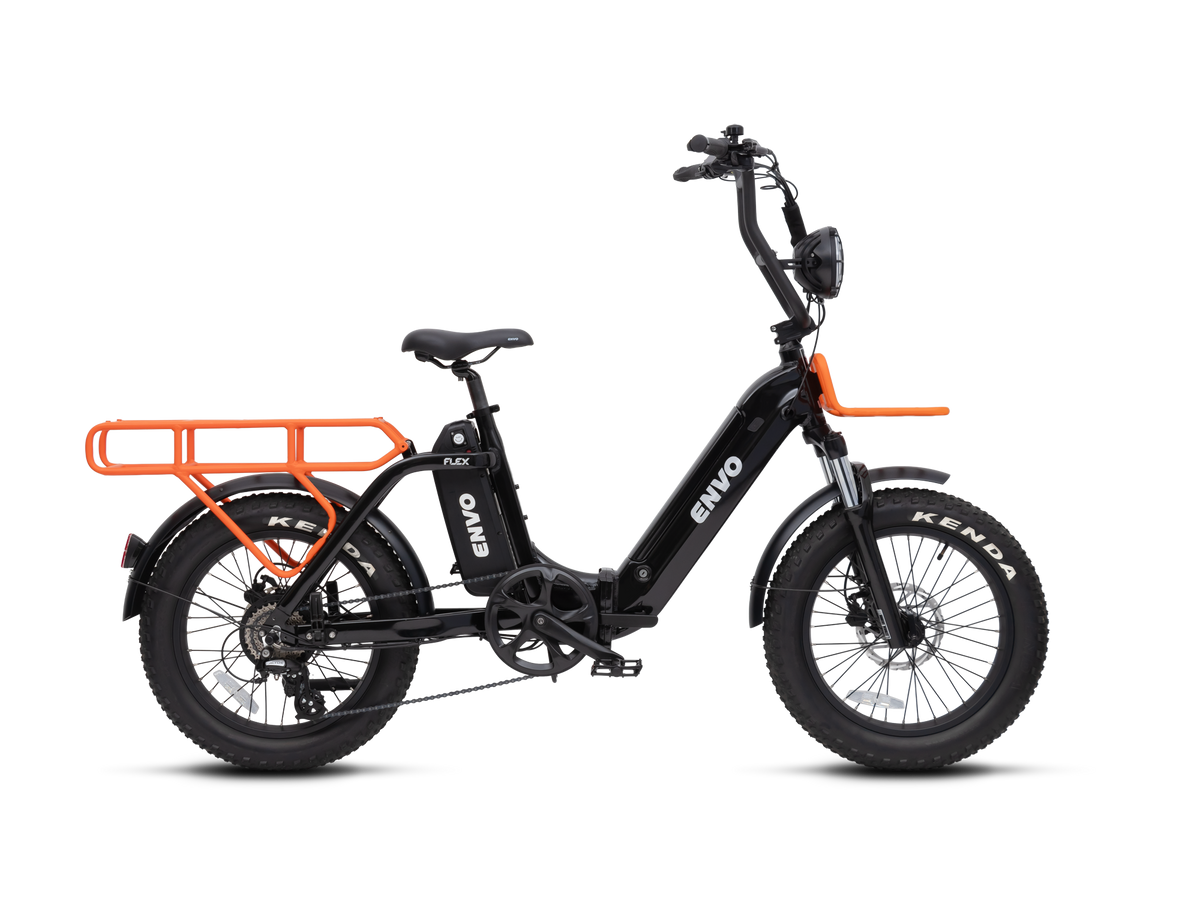
Weight is consistently higher than the closest ENVO equivalent. Across the lineup the verified weight gap goes one direction: ENVO Lynx 20 (22.5 kg) vs Key West (25 kg) — 2.5 kg lighter; ENVO ST50 (28 kg) vs Santa Monica (29 kg) — 1 kg lighter; ENVO D50 (28 kg) vs Big Sur G2 (37 kg) — 9 kg lighter; ENVO U50 (32 kg) vs Big Sur Cargo (36 kg) — 4 kg lighter. The Big Sur 9-kilo gap is the headline. That's a real-world difference in handling, rack loading, and storage.
Ride quality and PAS tuning don't show up on the spec sheet. ENVO's pedal-assist responsiveness has been tuned across years of Canadian use — reviewers consistently note the natural, intuitive feel of the assist. Aima uses Bafang off-the-shelf tuning, which is fine but generic. The difference is most obvious on test rides. Spec sheets won't capture it.
Geometry is designed for the Chinese domestic market. Aima's frame reach, stack, and seat-tube angles can feel slightly off to North American riders — taller average heights, longer torsos, and different riding postures than the geometry's apparent design centre. ENVO is geometrically designed for North American sizing. That's a reviewer-perspective observation rather than a hard fact, but it's worth a test-ride comparison.
Support uncertainty over a 5+ year horizon. No Canadian Aima entity means no Canadian corporate fallback. UNIVELO is a single point of failure in the Canadian chain — if that distribution contract ends, scales back, or stops carrying parts inventory, Canadian Aima owners would be effectively stranded. California cannot legally escalate Canadian warranty disputes. That isn't fear-mongering — it's the structural reality of a one-distributor Canadian operation.
Overseas operations remain a small portion of total business. Aima's 2024 annual report shows overseas assets at approximately 1.16% of total assets. That doesn't prove Canada is unimportant to the company — but it suggests overseas operations are still a relatively small part of the company's balance-sheet footprint. That has implications for how strategic Canadian operations feel to a Tianjin head office.
Where Aima Makes Sense (and Doesn't)
Most "is it worth it" reviews try to give a single yes-or-no answer to a question that genuinely depends on the buyer. Aima is a clean example of why that framing fails. For some buyers it's a smart choice. For others it isn't. Splitting it cleanly is the most useful thing this article can do.
Where Aima Makes Sense
- You have a strong local dealer relationship. The biggest one. A trustworthy Aima dealer nearby — one that assembles well, answers the phone, stocks common service parts, and knows the product — changes the math entirely.
- You need a step-thru fat-tire all-terrain bike with good warranty terms. Aima clearly targets this buyer. The Big Sur family makes sense for riders who want approachable step-thru usability, high payload, fat tires, and utility features without pushing into premium-brand pricing.
- You're comfortable buying through dealer channels. Aima isn't trying to be a direct-to-consumer box-drop brand. For some buyers, that's actively a plus — assembly, fit, and first service are handled by a human.
- You prioritize component pedigree over Canadian roots. Bafang motor, Shimano drivetrain, Tektro hydraulics, UL 2849 claim, LG cells on disclosed 720Wh packs — that's a respectable parts list for the money.
Where Aima Doesn't Make Sense
- You want to "buy Canadian." There is no Aima legal entity in Canada. The North American HQ is in City of Industry, California. The Canadian operation is a third-party Quebec distributor (UNIVELO). ENVO is the structurally Canadian alternative.
- You need confidence in Canadian service for years. Aima's Canadian setup is still young, the support chain runs through a single exclusive distributor, and California cannot directly escalate Canadian warranty issues. UNIVELO is a single point of failure.
- You want Canadian-assembled. Aima is designed, engineered, AND made in China. For "assembled in Canada," look at the ENVO D50 assembled in Burnaby, BC.
- You want better than entry-tier components. Aima's Shimano shifters are Acera and the derailleurs are Altus — Shimano's entry line. ENVO ST50/D50 use 9-speed with broader gear range.
- You want a lighter bike. ENVO is lighter across the lineup — most dramatically on the D50 vs Big Sur G2 (28 kg vs 37 kg, a 9-kilo gap).
- You want Class 3 capability or dual-battery. Aima's Canadian lineup is Class 2 only (32 km/h max) with no dual-battery options. If you need Class 3 (45 km/h) or expandable range, the ENVO D50 / ST50 are better fits.
- You want a folding bike. The visible Canadian Aima lineup does not include a folding model. The ENVO Lynx 20 is the Canadian alternative.
The Long-Haul Commitment Question. Aima's real yellow flag in Canada.
Products may be good. Specs may be good. The UL 2849 safety claim may be good. But none of that fully answers the long-haul ownership question that matters most: Five years from now, how smooth will parts supply, battery replacement, and warranty-era support actually feel in Canada?
Aima says spare parts are readily available for quick repairs. But because the Canadian consumer experience is still routed through partner stores and a relatively new distribution structure, the practical answer will vary by dealer and by region. The single best mitigation is this: if you buy Aima, buy the dealer as much as the bike.
Aima Legitimacy and Product Quality. To be fair, there is enough evidence here to say Aima is not some sketchy fly-by-night listing with inflated specs and no real product story.
- Large established manufacturer (founded 1999, listed on Shanghai SE 603529)
- Canadian pages are detailed and consistent
- Component stack is credible: 500W Bafang motor, Bafang torque sensor, Shimano drivetrain, Tektro hydraulic brakes
- Warranty is real, published, and written — not vague
- UL 2849 claim is explicit across the pedal-assist lineup, with per-unit unfalsifiable labels
- Bikes sold through Canadian specialty-store channels rather than random marketplace pages
The honest concern with Aima in Canada isn't "Is Aima fake?" — it clearly isn't. The honest concern is "How much confidence do you want in the Canadian support layer over the long haul?" Those are very different questions, and Aima passes the first cleanly.
Honest Comparison to ENVO
If you're cross-shopping Aima against the most natural Canadian alternative, ENVO is where the comparison lands. Some of this comparison is a genuine tie. Some of it isn't. Both deserve to be said out loud.
ENVO Stronger On
Aima Stronger On
- Lower entry sticker price in the dealer-sold, utility-oriented fat-tire / step-thru segment
- 2-year warranty length (vs ENVO's 1-year on many models)
- Specific cargo features — 203mm rotors, double kickstand, navigation display
- Up-front Canadian pricing in the $2,590–$3,290 band (though ENVO's Canadian assembly, dual-battery range, lighter weight, and domestic support argue for stronger long-term value even at a higher price)
On a few key dimensions, the two brands genuinely tie. Both publicly claim UL 2849 across their lineups. Both disclose LG cells in at least some models. Both put a respectable, named-component parts list onto their bikes. Pretending otherwise would be inventing separation where none exists. For the full battery comparison, see our battery cell investigation.
The split is reasonably clean once you frame it that way:
- Choose ENVO if Canadian-rooted support identity, broader format coverage (Class 3, folding, dual-battery), and long-term domestic confidence matter most.
- Choose Aima if the specific bike fits your use case, the local dealer is strong, and you want solid components plus a UL 2849 claim at an appealing price.
Frequently Asked Questions
The Bottom Line
Yes, potentially. But not as a blind buy.
Aima's Canadian lineup offers credible specs, good value, recognized component brands, strong on-paper warranty terms, and a meaningful UL 2849 safety claim across the pedal-assist range. That's enough to take the brand seriously and put it on a genuine shortlist alongside Canadian-rooted alternatives.
The reason to stay cautious is not fake product quality. It's Canadian support maturity. The current Canadian distributor setup dates to November 28, 2024, and your ownership experience still depends heavily on the retailer/distributor chain. That can be a great experience with the right dealer, and a frustrating one with the wrong one.
Final verdict: Aima is worth considering if you have a strong local dealer, the bike's format fits your use case, and you care about UL 2849 plus decent component pedigree at an appealing price. It's not the safest choice for buyers who want maximum confidence in long-term Canadian service infrastructure — that's where a brand like ENVO, with its Burnaby HQ and direct manufacturer support, has the structural advantage.
Either way: buy with your eyes open. Browse the EbikeBC electric bike collection if you want the Canadian-brand alternative lineup, or the UL 2849 certified e-bike collection if certification is your first filter.
Explore Canadian-Available E-Bike Options
Compare Aima against Canadian-rooted alternatives — including the Burnaby-assembled ENVO D50 — so you can buy the bike that actually fits your Canadian use case.
Disclaimer: This article is for informational purposes only and reflects publicly available information as of May 2026, including Aima Canada's product pages, warranty terms, safety pages, and the company's published annual report disclosures. Prices, warranty terms, distribution arrangements, and business operations may change. We are not affiliated with Aima Technology Group, Aima Mobility Canada, or UNIVELO. Always verify current terms directly with the manufacturer, distributor, or dealer before purchasing. This article does not constitute legal, financial, or investment advice.