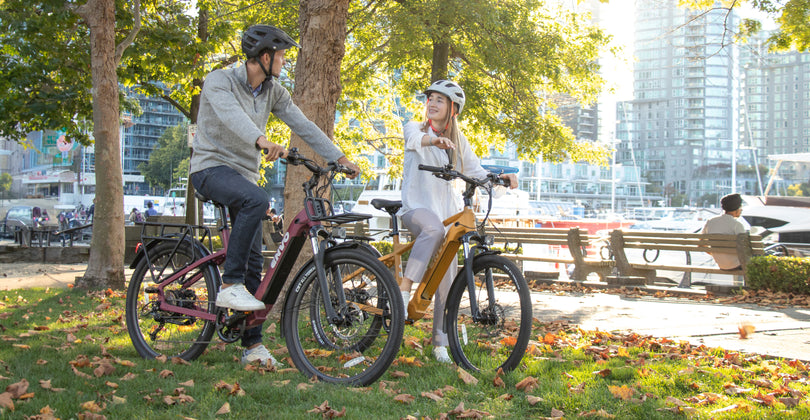


Vancouver has one of the most e-bike-friendly commuting environments in Canada. Over 400km of bike lanes and protected routes, mild year-round weather, flat terrain across much of the city, and a transit system that actively accommodates cyclists. E-bikes already account for 25% of all bike trips in Vancouver — and that number is growing every year.
If you've been thinking about switching from car or transit to an e-bike commute, this guide covers everything you need to know: the best routes, what bike to choose, how much you'll save, and the practicalities of riding year-round in Vancouver's climate.
Why Vancouver Is Ideal for E-Bike Commuting
- Flat terrain in most areas: Vancouver, Richmond, Burnaby, Surrey, and the Fraser Valley are largely flat — perfectly suited to e-bike commuting without motor assist feeling like a necessity on every block
- 400+ km of cycling infrastructure: Protected bike lanes, separated greenways, and multi-use paths connect most of Metro Vancouver's major employment centres
- Mild winters: Vancouver rarely drops below 0°C in the city. Most e-bike commuters ride 11–12 months per year
- Transit integration: Folding e-bikes are allowed on SkyTrain and buses; full-size bikes on SeaBus and some routes
- PST exemption: E-bikes are permanently exempt from BC's 7% Provincial Sales Tax — saving $140–$300 on purchase price
Best E-Bike Commuting Routes in Vancouver
Commuting from Burnaby or New Westminster → Vancouver
The Central Valley Greenway (25km, fully separated, flat) is the main corridor. Multiple SkyTrain stations along the route give you flexibility — ride the whole way, or ride part and transit the rest depending on weather or schedule. The BC Parkway is an alternative running parallel to the Expo Line.
Commuting on the North Shore → Vancouver
The Spirit Trail connects the North Shore's residential areas, with the Lions Gate Bridge as the main crossing into Vancouver. The climb up from the bridge into downtown is the steepest part of any Vancouver commute — exactly where e-bike assist earns its price. Second Narrows (Iron Workers Memorial Bridge) also has a dedicated cycling lane for East Vancouver commuters.

Commuting within Vancouver
The city's protected bike lane network covers the major east-west and north-south corridors:
- Hornby/Dunsmuir — downtown protected lanes, connects to False Creek and Seaside Greenway
- Laurel/Cypress — Kitsilano to downtown, quiet residential routes
- Ontario Street — Main Street corridor to Cambie, connects to Arbutus Greenway
- 10th Avenue — East Vancouver to UBC, the main east-west corridor
- Point Grey Road — Kitsilano waterfront, largely car-restricted
Commuting from Surrey or Richmond → Vancouver
The Canada Line bike path and the Shell Road Trail connect Richmond to South Vancouver. From Surrey, the King George Boulevard cycling lane and connections to Green Timbers trails link the South Fraser suburbs to the city. These routes are where e-bike assist matters most — 30–40km round trips that would be exhausting on a regular bike become routine on an e-bike.
How Much Does E-Bike Commuting Save?
| Cost | Car | TransLink (Monthly) | E-Bike |
|---|---|---|---|
| Monthly fuel / pass | $150–$250 | $109–$174 | ~$3–$5 electricity |
| Parking (downtown) | $150–$400/mo | $0 | $0 |
| Insurance | $150–$250/mo | $0 | $10–$20/mo (optional) |
| Annual maintenance | $1,000–$2,000 | $0 | $100–$200 |
| Annual total | $6,600–$11,400 | $1,300–$2,100 | $250–$450 |
A quality commuter e-bike (ENVO D50 or ST50) costs $2,200–$3,500 — which is recovered in under 12 months compared to a car commute, and in 2–3 years compared to a transit pass.
Choosing the Right Commuter E-Bike for Vancouver
Not all e-bikes are equal for commuting. Here's what matters for Vancouver specifically:
Motor & Power
BC law allows up to 500W motors for street-legal e-bikes. For flat Vancouver commuting, 250W–350W is usually sufficient. If your route includes the North Shore or any significant hills, 500W gives you noticeably more assist.
Battery Range
For a 15–20km daily round trip, virtually any e-bike battery (250Wh+) is adequate on a single charge. For longer commutes (25–40km round trip), aim for 500Wh or larger. Vancouver's mild climate means less battery drain than colder cities — you won't lose 20% capacity to cold weather like Toronto or Calgary commuters do.
Frame Style
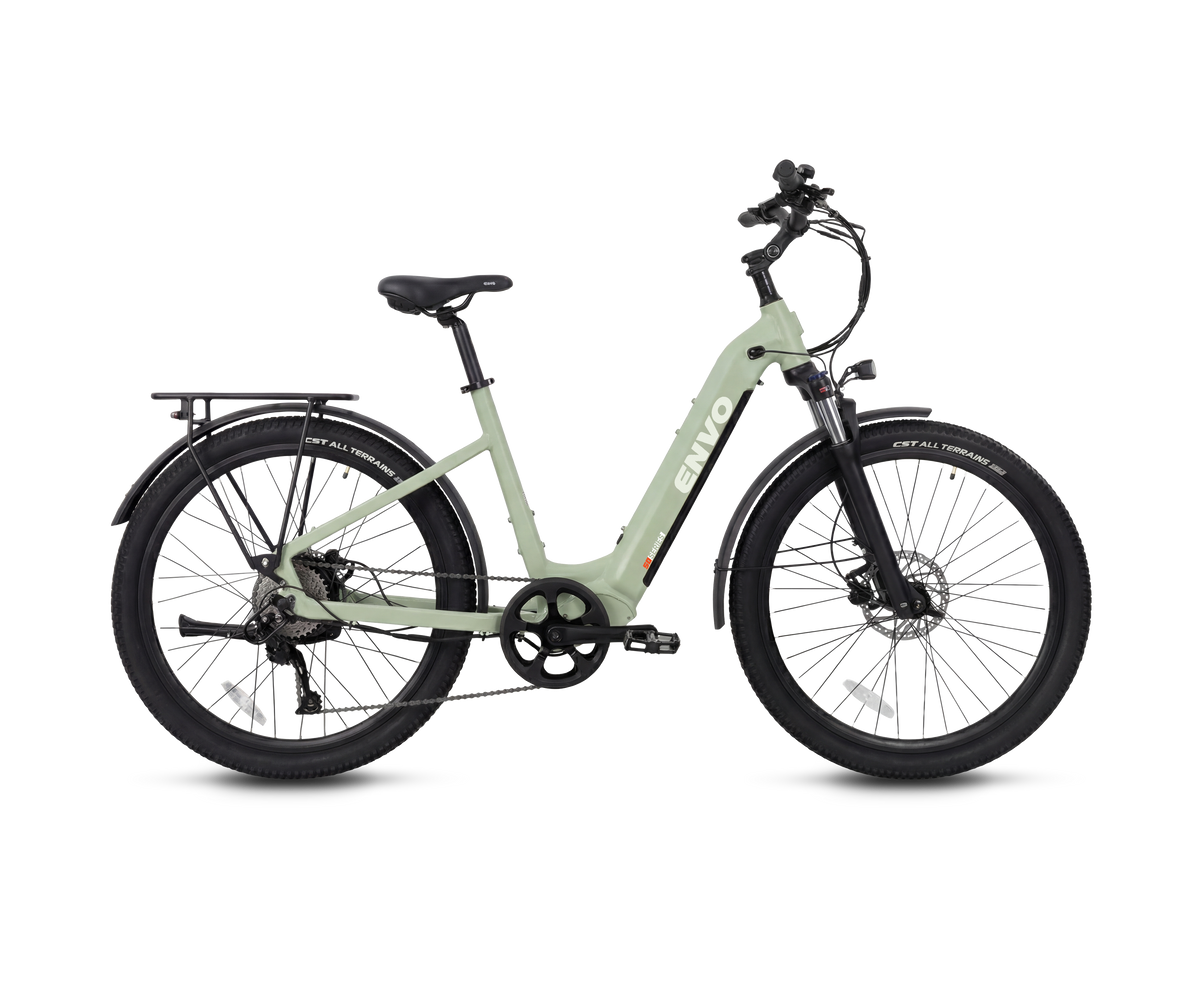
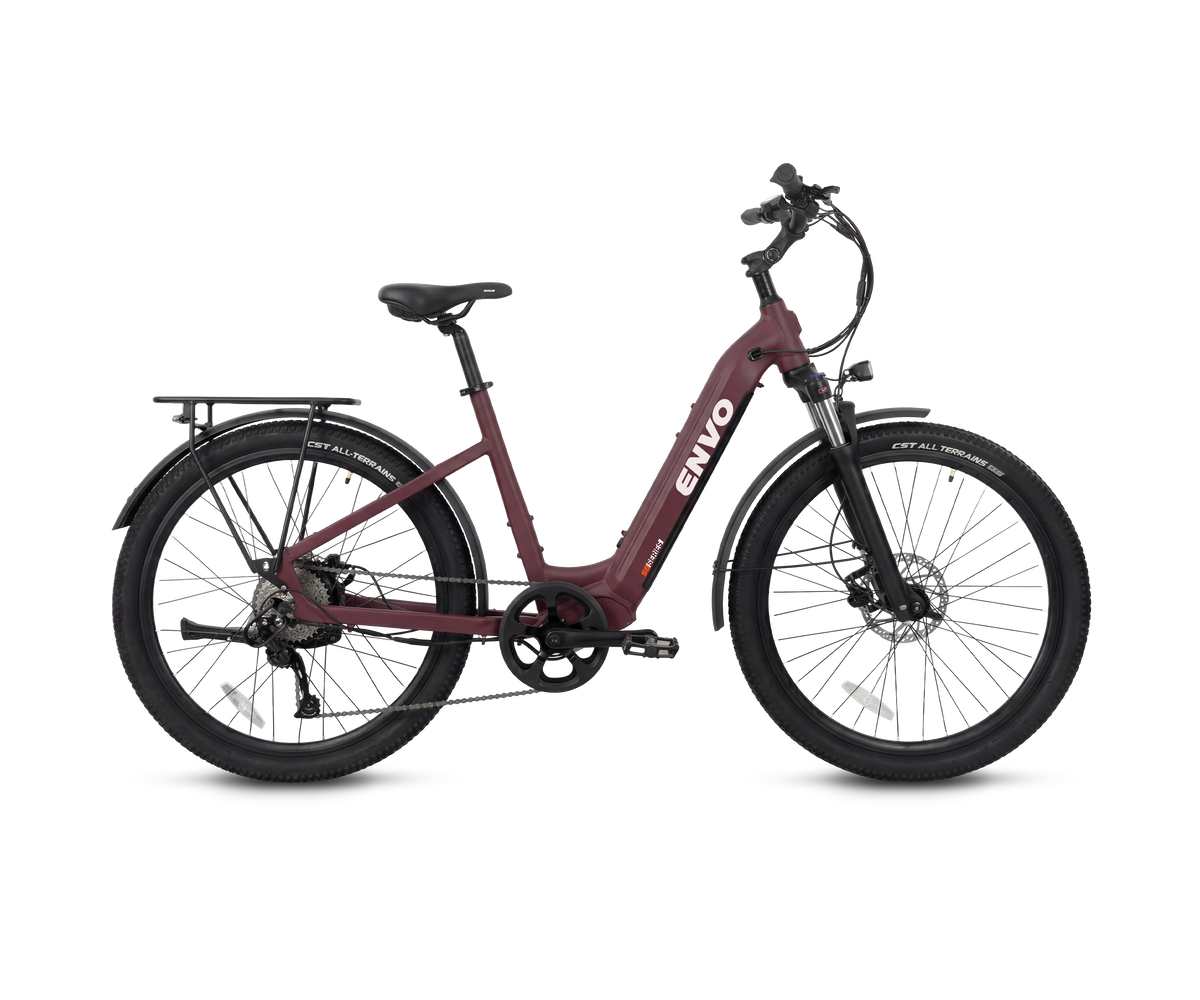
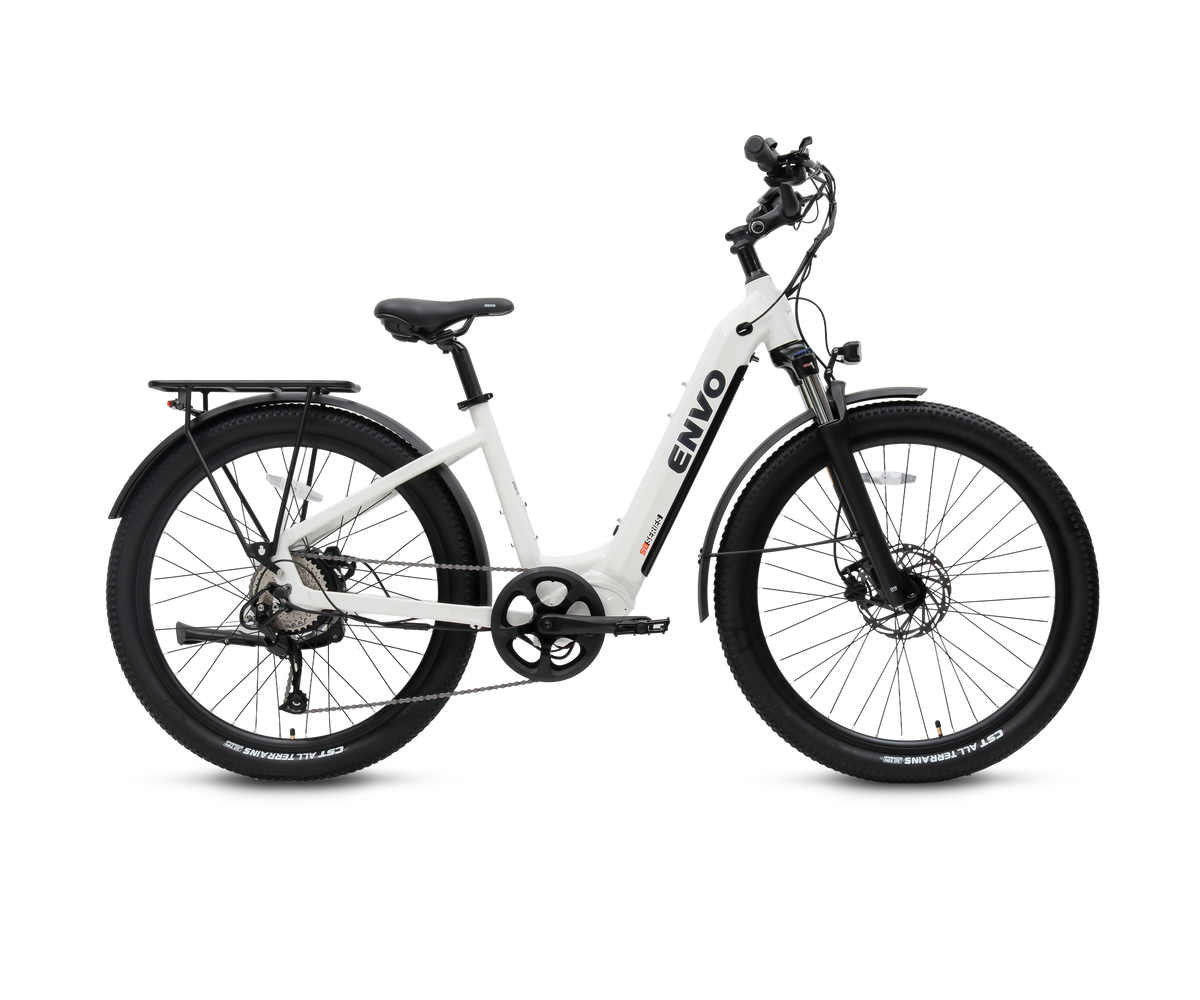
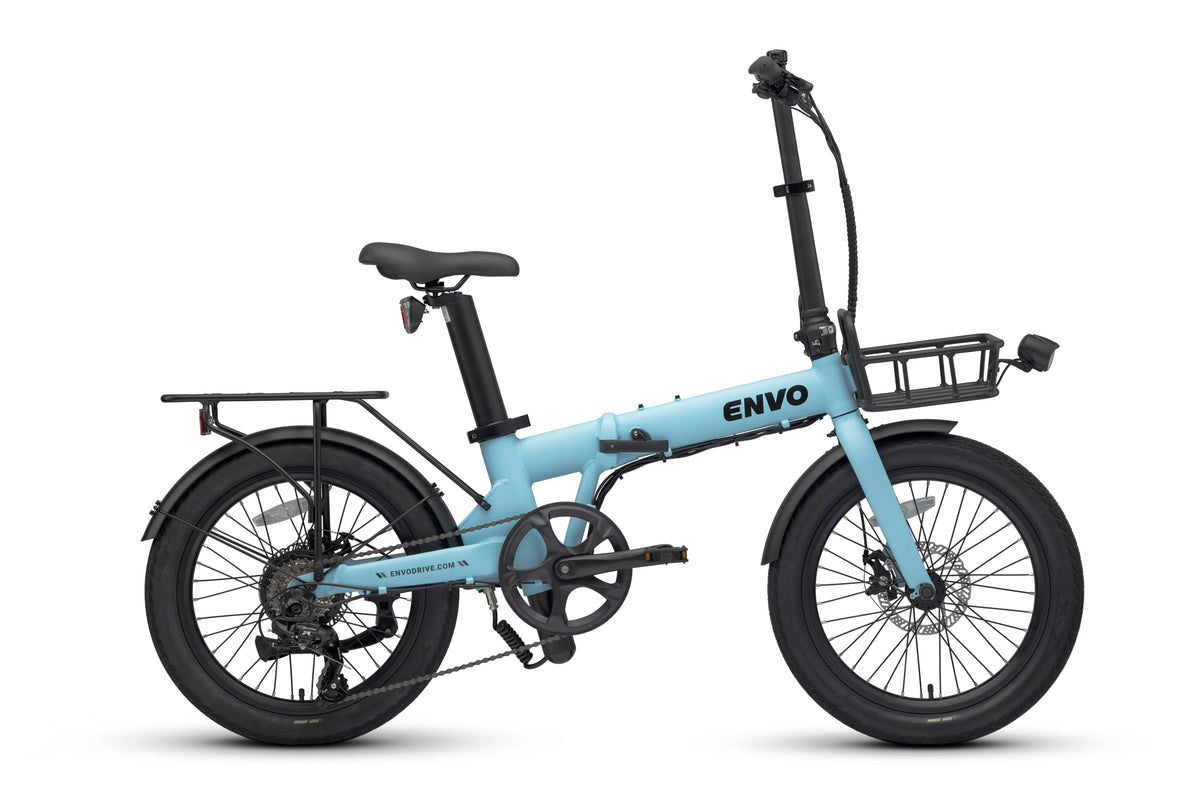
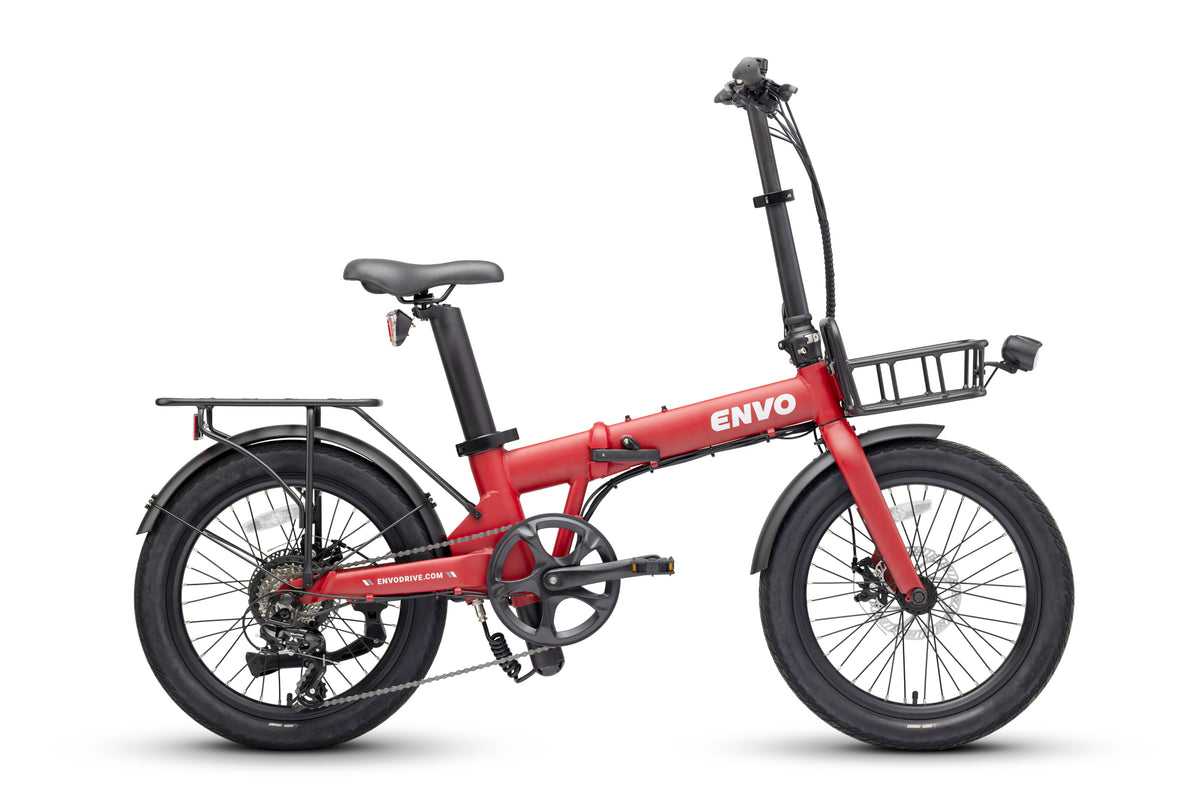
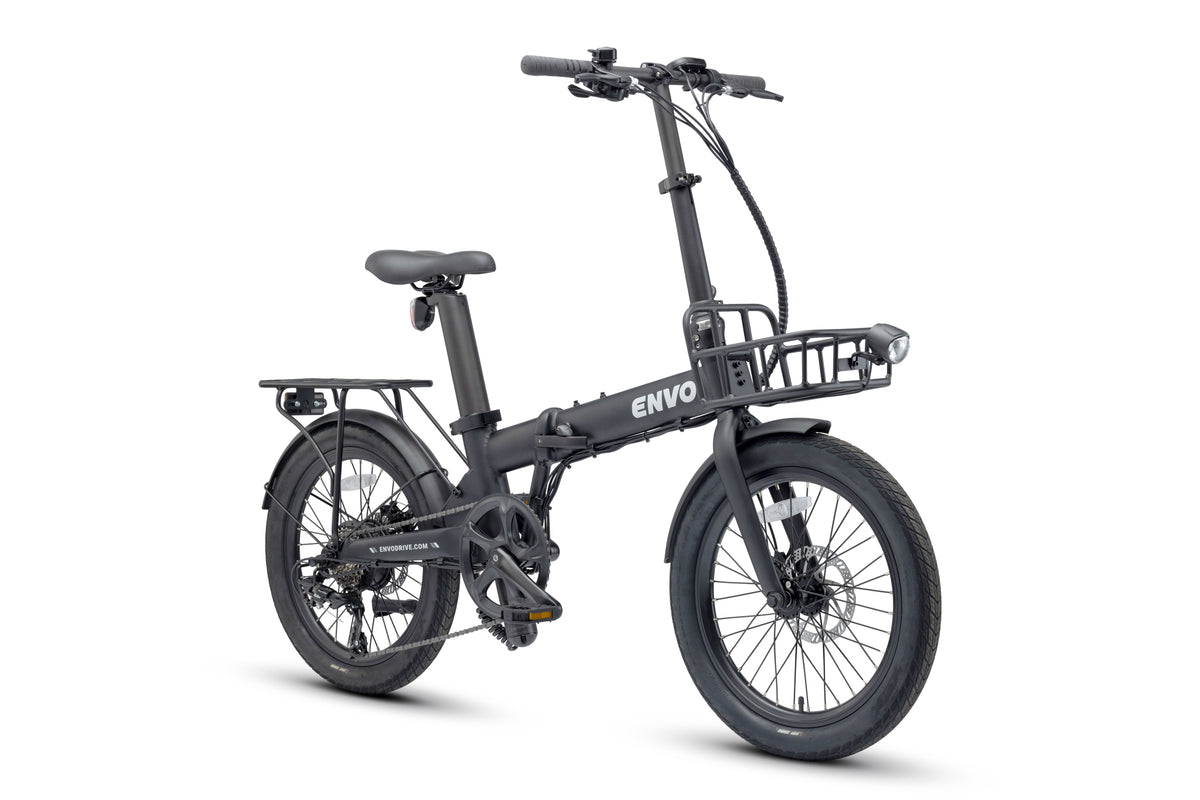
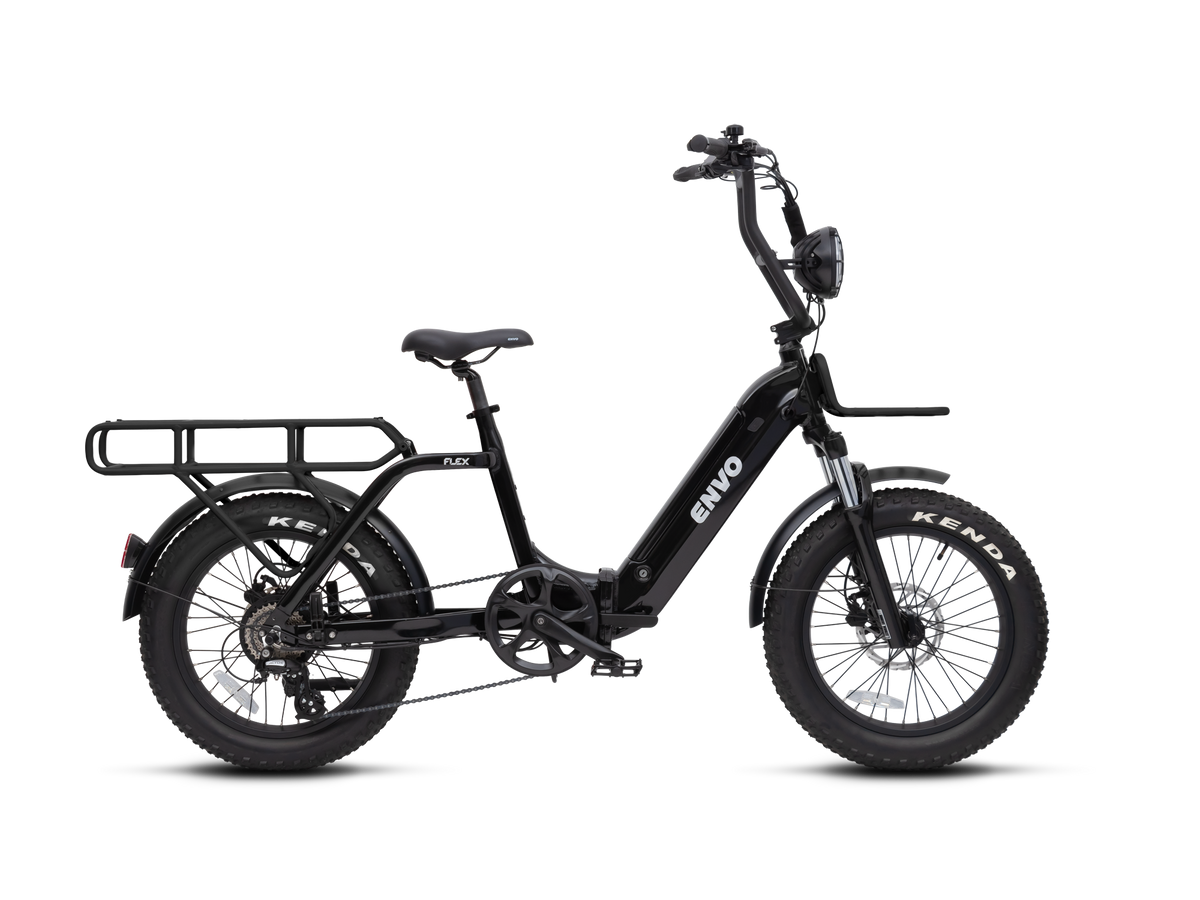
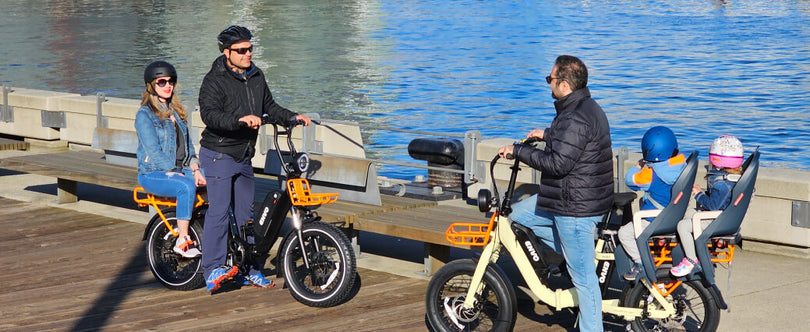
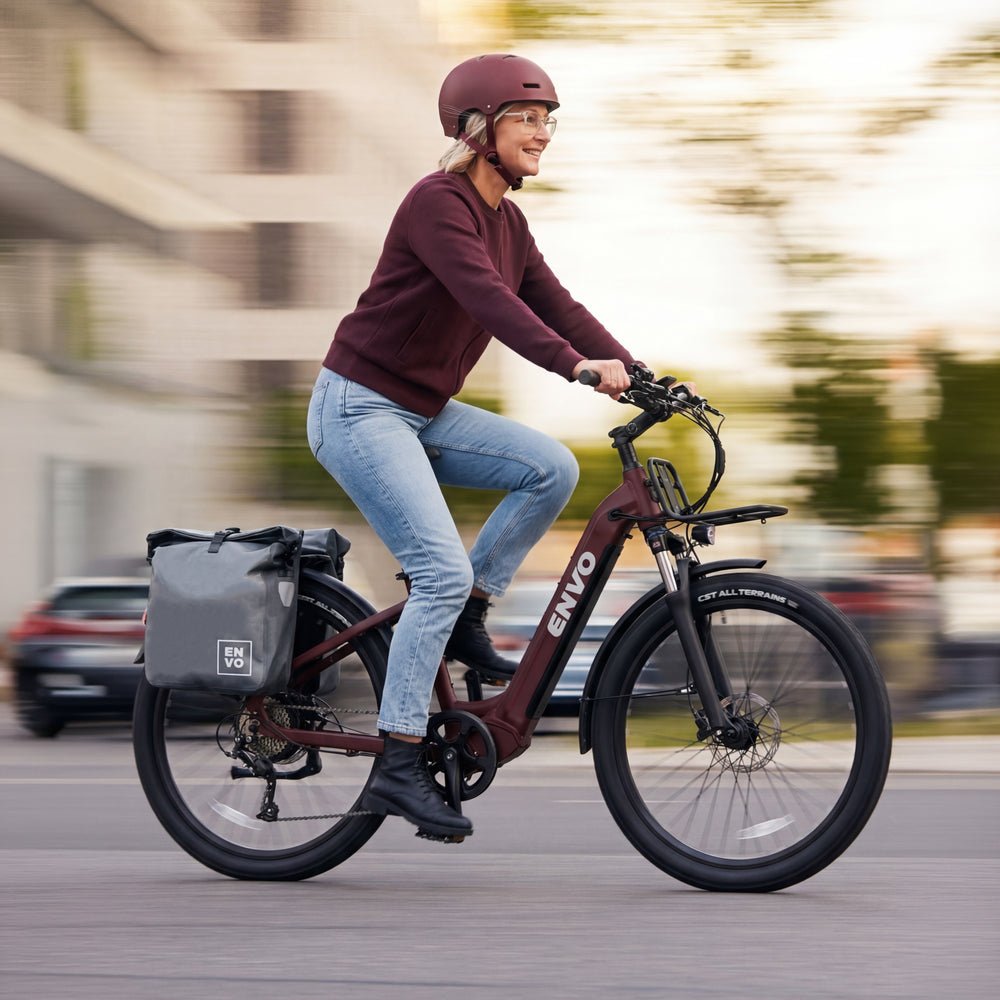
- Step-through frame: Best for business clothing, skirts, or riders who value easy mounting. The ENVO ST50 is designed specifically for commuters.
- Diamond/step-over frame: More traditional, slightly more rigid, better for riders who want a sporty feel. The ENVO D50 is the benchmark Canadian commuter e-bike.
Cargo Capacity
If you carry a laptop, groceries, or work gear, look for a model with a rear rack (many include one) and pannier compatibility. Panniers are far more stable than backpacks for daily commuting — they keep weight lower and your back sweat-free.
E-Bikes on Vancouver Transit: The Rules
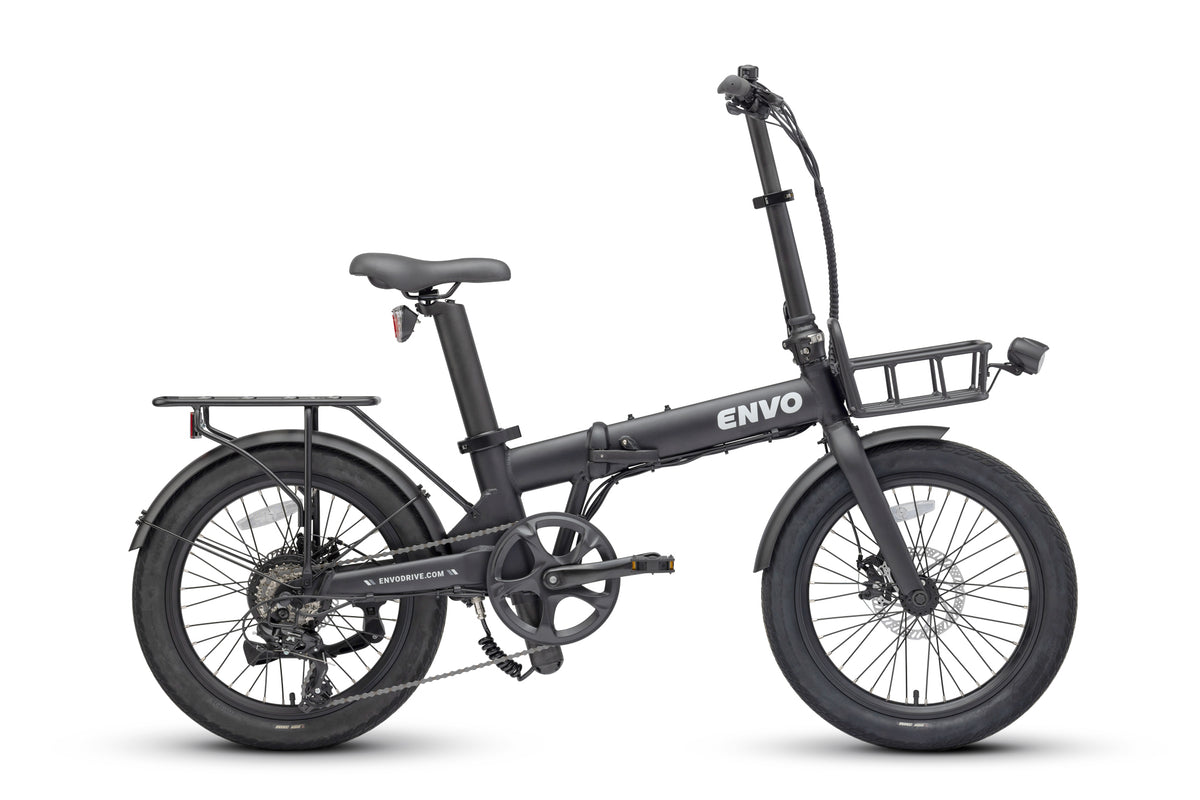
- Folding e-bikes: Allowed on SkyTrain, buses, and SeaBus at all times (folded and reasonably compact)
- Full-size e-bikes: Allowed on SeaBus and some less busy bus routes — check TransLink's current bike policy as rules are subject to change
- West Coast Express: Full-size bikes allowed in designated areas during off-peak hours
- Bike lockers: Available at many SkyTrain stations — useful for multi-modal commuters who ride to the station and transit the rest
Year-Round Commuting in Vancouver: Tips
Rain (Oct–Apr): Vancouver averages 160 rain days per year. A good rain jacket, fenders on your e-bike, and waterproof panniers make wet-weather commuting completely manageable. ENVO e-bikes are built to IP65 standard — the motor and battery are sealed for rain riding.
Darkness (Nov–Feb): BC law requires a white front light and red rear light for cycling after dark. Most quality e-bikes include integrated lights — check that yours are legal before riding in winter.
Storage at work: Bike storage in Vancouver office buildings is increasingly common and required by the BC Building Code for new developments. Ask your building manager — secure indoor parking is better than a street lock for an e-bike.
Helmet: Mandatory for all cyclists in BC, including e-bike riders. No exceptions.
Frequently Asked Questions
What is the best e-bike for commuting in Vancouver?
The ENVO D50 (step-over) and ENVO ST50 (step-through) are the top choices for Vancouver commuters. Both are Canadian-designed, carry 500W motors, and include rear racks. Designed for exactly this use case.
Do I need insurance for an e-bike in BC?
Not legally required — BC does not mandate insurance for e-bikes that meet the legal definition (500W, 32 km/h max, pedal assist). Optional personal liability coverage is available and worth considering for commuters.
How long does a battery charge last for commuting?
A 500Wh battery on moderate assist covers 60–90km in normal conditions. For a 20km round trip commute, you'd charge roughly every 3–4 days. Charging takes 4–6 hours on a standard outlet.
Is it safe to commute by e-bike in Vancouver?
Yes — Vancouver's protected bike lane network makes it significantly safer than in many cities. Stick to marked cycling infrastructure, make yourself visible with lights and bright clothing, and follow BC cycling laws.
Ready to Start Your E-Bike Commute?
Vancouver's infrastructure is ready. The savings are real. The ride is better than the bus. Our BC team can help you pick the right commuter e-bike for your specific route and budget.
Shop Commuter E-Bikes →Written by Haseeb Javed
Haseeb is part of the EBikeBC team based in British Columbia. An avid cyclist and e-bike enthusiast, he rides the routes he writes about and is passionate about helping Canadians find the right e-bike for their lifestyle.
Last updated: April 2026