
Will Aima eBikes Still Be in Canada in 5 Years?
A balanced look at whether Aima's Canadian operation is a long-term commitment or an early-stage market test — and what it means for a 5-year ownership horizon.
Table of Contents
- The Real Question Behind the Question
- Why This Matters More in E-Bikes Than Regular Bikes
- Bull Case vs. Bear Case at a Glance
- The Bull Case for Aima Canada
- The Bear Case for Aima Canada
- Warning Signs Buyers Should Monitor
- How to Evaluate Distributor-Dependent Brands
- The Contrast: Brands With Deeper Canadian Roots
- How Likely Is Aima Still in Canada in 2031?
- What Buyers Can Do to Mitigate Risk
- FAQ
- The Bottom Line
The Real Question Behind the Question
When someone buys an e-bike, they aren't just buying a frame, motor, and battery. They're buying into a support system that may need to exist for years: warranty claims, charger replacements, controller swaps, battery diagnostics, firmware issues, and parts availability.
So the real question serious buyers ask is blunt:
Will this company still be here when I need warranty service in 2031?
That's the right question to ask about Aima in Canada in 2026.
The honest answer is not a dramatic yes or no. It's this: Aima looks more serious than a fly-by-night importer, but Canada is still early-stage, distributor-led, and not yet deeply rooted. There are legitimate reasons for optimism, and legitimate reasons for caution. Buyers should think probabilistically, not emotionally — and weigh Aima fairly against more established Canadian options like the ENVO D50 or the wider EbikeBC Canadian-assembled lineup.
Why This Matters More in E-Bikes Than Regular Bikes
A conventional bicycle can survive a weak brand relationship. A good local shop can usually keep it running with generic parts.
An e-bike is different.
The high-value failure points are often brand-specific or system-specific: battery housings, motor controllers, displays, wiring harnesses, firmware behaviour, charger specs, mounting interfaces, and warranty authorization. Even when the motor supplier is well known, the whole-bike support chain still matters. If the brand, distributor, or importer disappears, owners can end up chasing compatibility issues across multiple vendors.
That makes long-term market commitment especially important for Canadian buyers, where geography and lower dealer density already make service more fragile than in the US market. With e-bikes, distribution structure is part of the product.
If you're new to thinking this way, our ultimate e-bike buying guide walks through the whole purchase decision including support, and how to choose the right commuter e-bike covers the durability questions specifically.
Bull Case vs. Bear Case at a Glance
Before going deep, here's the balanced summary. Both sides are real. The buyer's job is to decide which weighs more for their situation.
Bull Case
Large public Chinese parent (Shanghai SE 603529), RMB 21.6B in 2024 revenue, and an actively expanding international platform — Singapore, Indonesia, Vietnam.
Formal US subsidiary in California, CES 2025 product reveal, seven groundbreaking products aimed at North America, and serious investment in dealer relationships.
UNIVELO offers an authorized Quebec service centre with Bafang training and spare parts — not a paper importer.
Bear Case
Overseas business is ~1.1% of total revenue. Canada is a slice of that slice, with no Aima-owned Canadian subsidiary.
Canada has only ~18 months of operating history through one newly established exclusive distributor.
Distributor-dependent models can unwind quickly when the relationship breaks — even when the brand continues elsewhere.
The Bull Case for Aima Canada
There are real reasons to believe Aima isn't treating North America as a casual side project.
Aima is a large company, not a startup improvising overseas.
Aima Technology Group was founded in 1999 and trades on the Shanghai Stock Exchange under ticker 603529. The 2024 annual report shows RMB 21.606 billion in revenue and RMB 1.988 billion in net profit attributable to shareholders. That's the profile of a large established manufacturer with real capital, real production capacity, and real staying power — exactly the kind of parent that can support a long international play if it chooses to.
Real international infrastructure already exists.
AIMA Technology Singapore Pte. Ltd. exists. The Indonesia production base is operating. The Vietnam base is under construction. The 2024 annual report describes Aima as advancing localized operations in key overseas markets rather than relying only on exports. That language matters, because it implies long-horizon thinking rather than opportunistic shipping.
The US business is more than a loose reseller arrangement.
In December 2024, Aima referenced AIMA EBIKE and specifically named Angela Zheng as CEO of Aima's US subsidiary during a headquarters visit by top US dealers. The US subsidiary — AIMA EBIKE, INC. — is headquartered in City of Industry, California (verified at aimatech.us, info@aimausa.com, (213) 315-0602), and now serves as Aima's North American HQ. That's consistent with a more formal overseas commitment structure than a pure distributor test. For Canadian buyers, this matters because Canada rarely exists in isolation: if Aima maintains and deepens a North American platform through the US, the odds that Canada remains supported in some form go up too.
But here's the structural caveat that adds weight to the commitment concern: Aima's North American HQ is in California, not Canada. There is no Aima legal entity in Canada to fall back on if the UNIVELO arrangement changes. California-based AIMA EBIKE, INC. cannot legally process Canadian consumer warranty claims under Canadian consumer-protection law without a Canadian entity (or a contractual Canadian representative). The closest Aima-owned fallback would be the California office — geographically close, legally distant.
If UNIVELO winds down, scales back, or loses the distribution contract, Aima would need to either (a) stand up a Canadian subsidiary from scratch, (b) sign a new Canadian distributor, or (c) attempt to service Canada from California — which is operationally awkward and legally limited. None of those are impossible, but none of them are quick, and there is no existing Canadian entity to absorb the transition.
Products and messaging tailored to North America.
At CES 2025, Aima showcased a lineup aimed squarely at North American expansion, targeting 600+ independent bicycle dealer locations in the US and launching seven groundbreaking products in 2025. That's not how companies talk when they're merely clearing inventory through opportunistic distribution.
Dealer-channel investment, not just retail listings.
In December 2024, Aima flew five top US IBD dealers to its Tianjin headquarters with sales, marketing, and customer service teams involved. Dealer-first brands generally have better odds of long-run service continuity than brands that treat after-sale support as an afterthought. UNIVELO itself isn't all bad either — Quebec City-based, focused on bicycle dealers, Bafang-trained, and running an authorized service centre with spare parts.
Taken together, the bullish case is real: big parent, expanding global footprint, active North American dealer push, product localization, and at least some Canadian service infrastructure on the ground.
The Bear Case for Aima Canada
Now the caution side — and these aren't theoretical concerns.
Overseas business is still tiny relative to Aima's total.
This may be the single most important risk indicator. In 2024, overseas assets were only about 1.16% of total assets, and overseas revenue was approximately RMB 234.7 million out of RMB 21.61 billion — roughly 1.1% of total revenue.
Whether measured by revenue mix or by assets, the conclusion is similar: international business is still very small relative to the domestic core. That doesn't mean Aima will leave Canada. It does mean Canada sits inside a very small strategic slice of the company today. If that slice stays small, management could decide certain overseas experiments deserve less capital, fewer dedicated staff, or a revised channel strategy.
Canada isn't run through an Aima-owned operating company.
This is the biggest structural caution. Aima entered Canada through UNIVELO as exclusive distributor — not through a clearly branded Aima Canada subsidiary with its own service network, owned warehouse footprint, or company-run retail/service stores.
The chain runs: Aima parent/manufacturer → Canadian distributor → local dealer → customer. Every layer can work fine. But every added layer is another point of potential failure.
UNIVELO is still too new to count as proven.
The launch release explicitly called UNIVELO "newly established." Aima's Canadian operation is only about 18 months old as of May 2026 — not enough history to demonstrate durability through multiple seasons, recalls, weak retail cycles, currency swings, or leadership turnover. A new distributor can absolutely become excellent. But "promising" is not "proven."
No Aima-owned Canadian retail or service footprint.
The visible Canadian model is distributor-plus-dealers, not a deeper owned presence. There are no Aima-operated flagship stores in Canada and no Aima-owned service centres across provinces. Compared to a brand running its own Canadian operation — EbikeBC in Burnaby, BC for example — the structural depth is just different.
Distributor dependence can unwind quickly.
In 2023, Dutch adaptive bike brand Van Raam and its North American distributor Spinov8 split — and Spinov8, essentially a single-brand distributor, ceased operations after losing the relationship. Distributor economics can break even when the underlying brand continues elsewhere.
And even strong premium brands sometimes retrench regionally. In April 2026, Riese & Müller announced it would leave the US market, citing volatile conditions, while continuing support for existing customers and leaving Canada unaffected. If a premium European brand can narrow focus, a young distributor-led Canadian rollout from a company whose overseas revenue remains tiny shouldn't be treated as guaranteed permanence.
Warning Signs Buyers Should Monitor
If you're considering Aima — or already own one — these are the signals worth tracking over the next few years. None of them are guaranteed to fire. But if several do, the long-haul picture changes.
Six things to watch:
- Dealer network quality, not just dealer count. A long dealer list means little if shops are inactive, undertrained, or unwilling to do warranty work.
- Spare parts visibility. If batteries, displays, chargers, derailleur hangers, brake sensors, and wiring parts are already hard to source in 2026, that's a red flag for 2030 support.
- Canadian technical support responsiveness. Ask how warranty approvals happen, who pays labour, where replacement parts ship from, and what turnaround times look like.
- Evidence of deeper Canadian investment. Watch for Aima adding Canadian warehousing, dedicated service staff, a formal Canadian entity, or direct support programs over time.
- Distributor stability. If UNIVELO expands its brand mix, service operations, and staffing, risk falls. If communications thin out or dealer momentum fades, risk rises.
- North American strategy continuity. Aima's Canadian future may depend partly on whether its broader US / North American plan keeps growing or stalls.
How to Evaluate Distributor-Dependent Brands
The right framework isn't "distributor bad, subsidiary good." It's more nuanced. These are the questions to ask about any distributor-led brand — not just Aima.
1. Does the distributor have real technical capability? A sales-only importer is risky. A distributor with trained technicians, parts stock, and a working warranty process is better. UNIVELO's Bafang service claims are a positive datapoint on this axis.
2. Is the distributor multi-brand or single-brand? A single-brand distributor can be fragile if the relationship breaks. The Van Raam / Spinov8 case is the cautionary template.
3. Who actually controls the customer outcome? If your local dealer can diagnose issues, order parts quickly, and advocate for you, the broader distribution model matters less in practice.
4. Can the bike be kept running with semi-standard parts? Common drivetrains, brakes, tires, and a mainstream e-system reduce lock-in risk. Proprietary battery fitments increase it. Aima's use of Bafang motors and LG-cell batteries is a positive on this measure.
5. Is there evidence the brand could replace the distributor if needed? A strong US base or broader North American structure can soften the risk of a Canadian distributor change. The existence of an Aima US subsidiary is a quiet positive here.
The Contrast: Brands With Deeper Canadian Roots
The safest long-haul support profile usually belongs to brands with one or more of:
Markers of Deeper Canadian Roots
- Long-established Canadian dealer networks
- Canadian-owned operations or Canadian warehousing
- Brand-owned service infrastructure (not just dealer-only)
- Years of published Canadian warranty handling history
- A track record of keeping older parts flowing for previous-generation bikes
That doesn't automatically make them better bikes. It makes them lower support-risk bikes — and those are two different qualities.
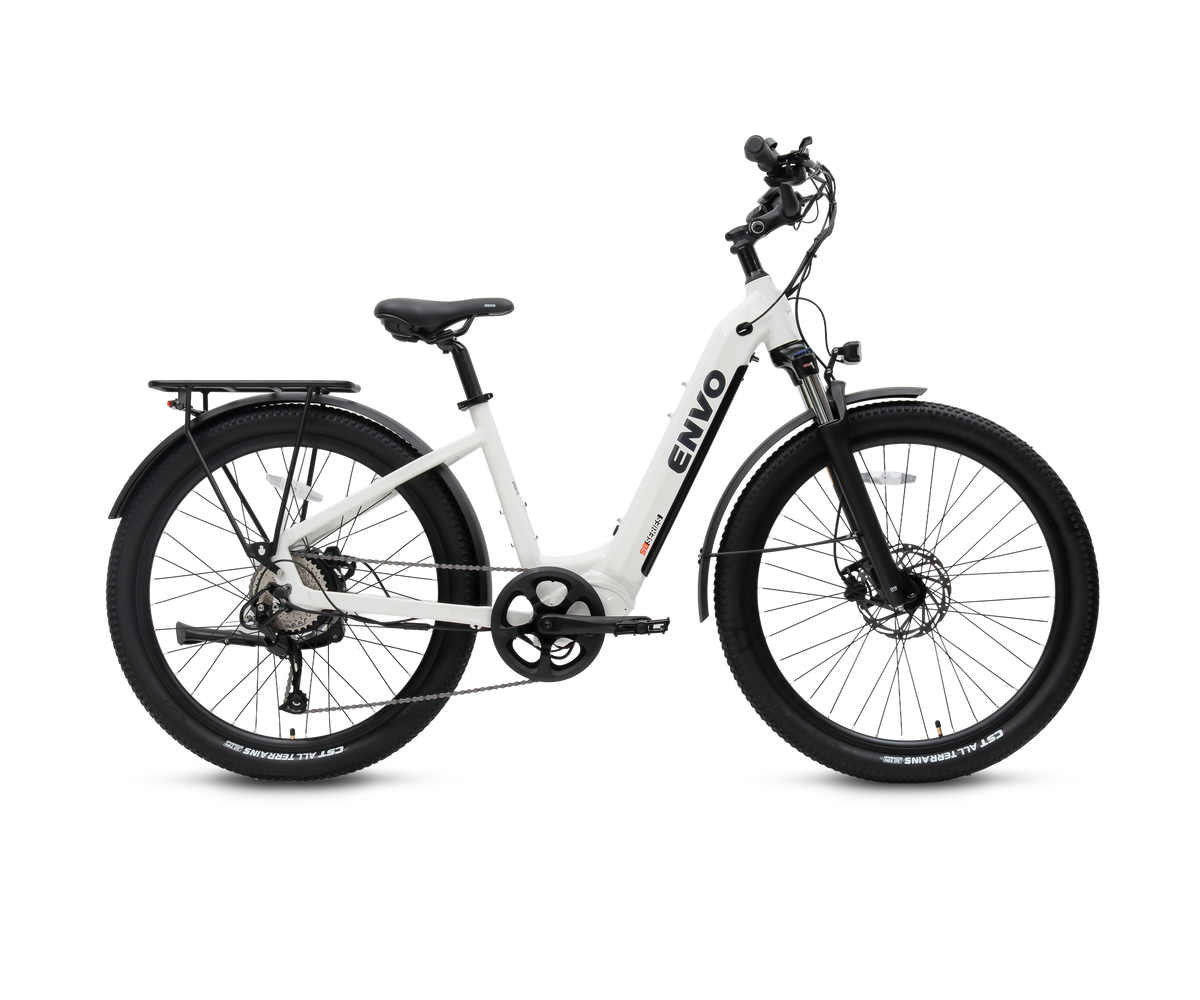
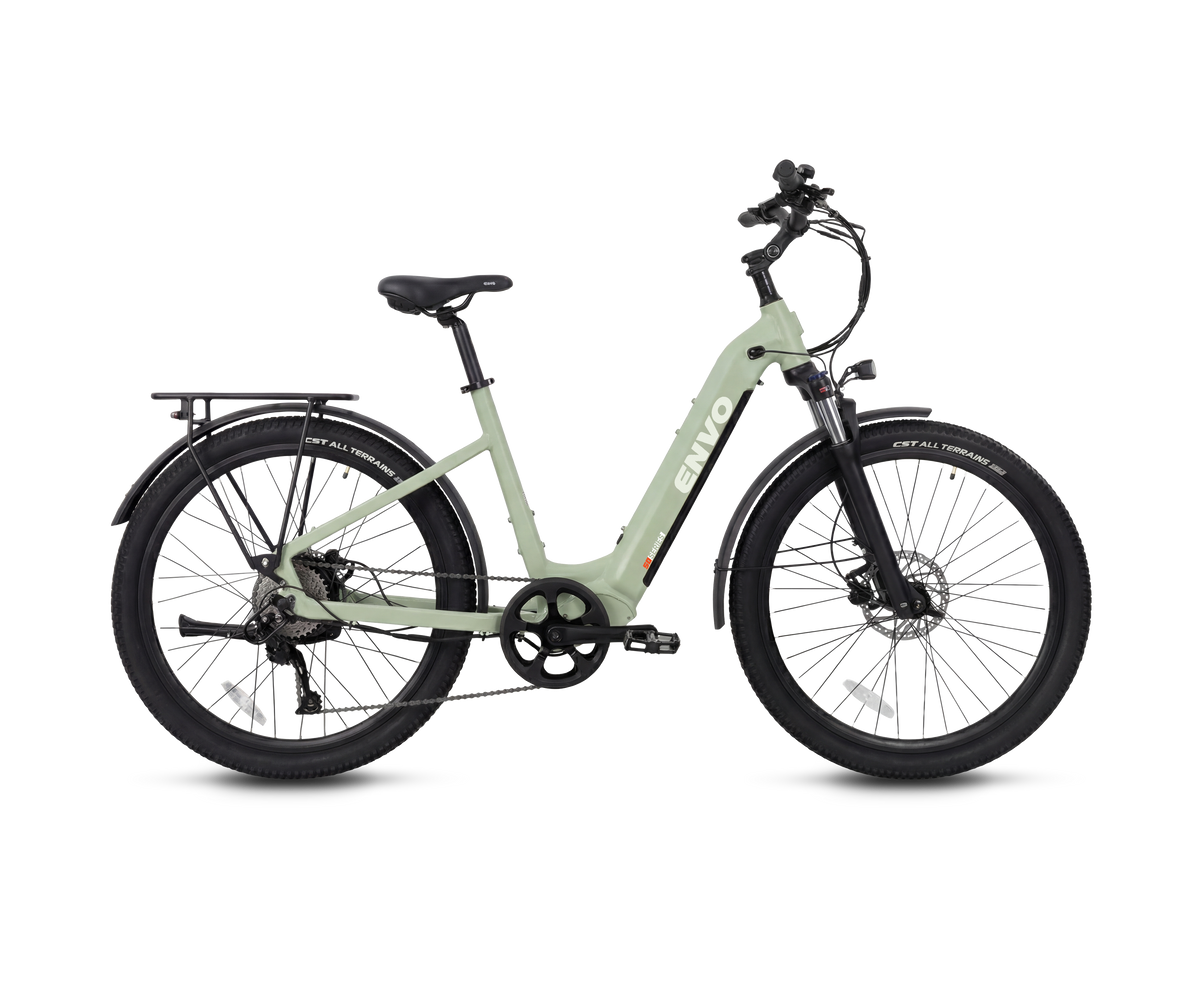
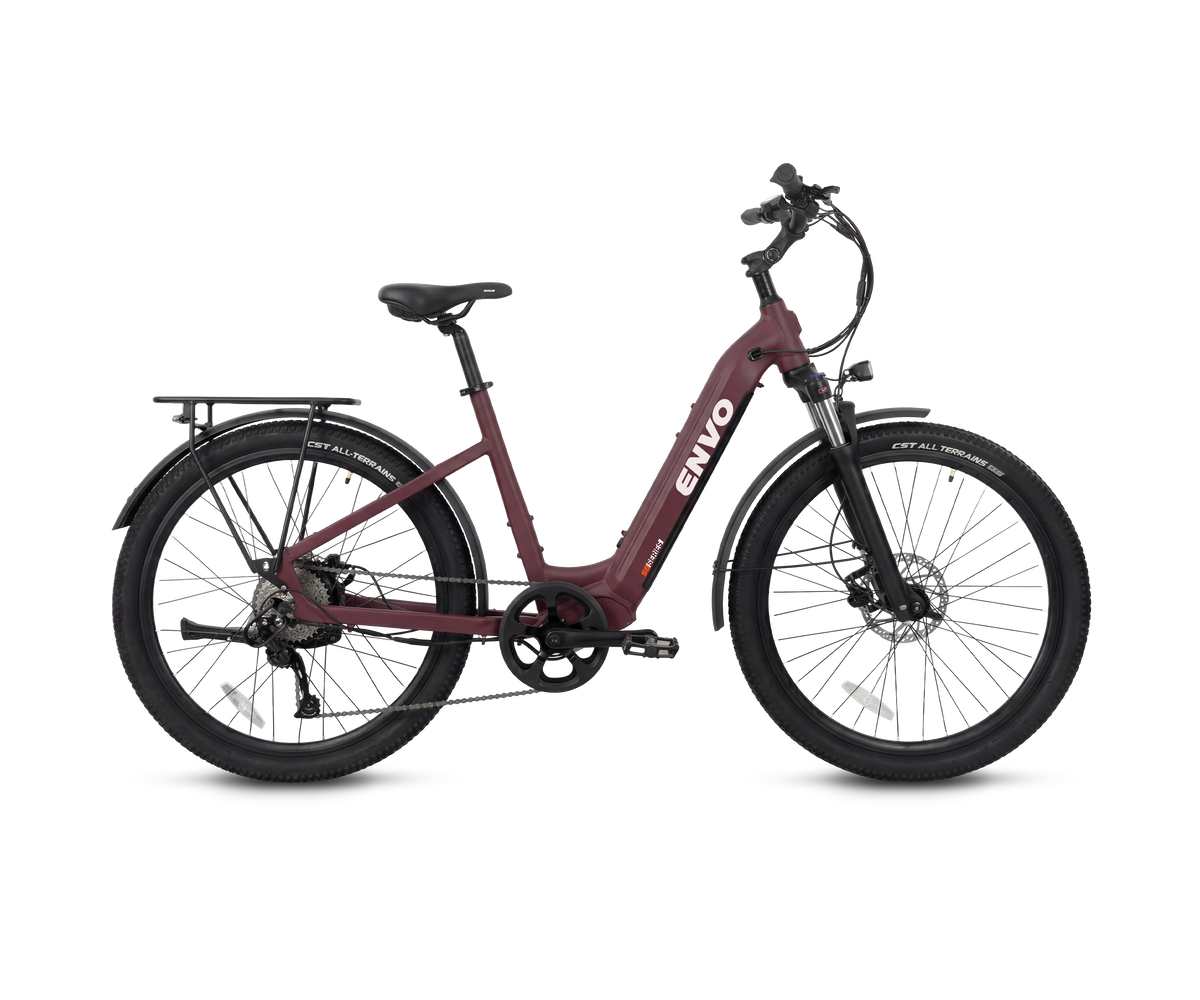
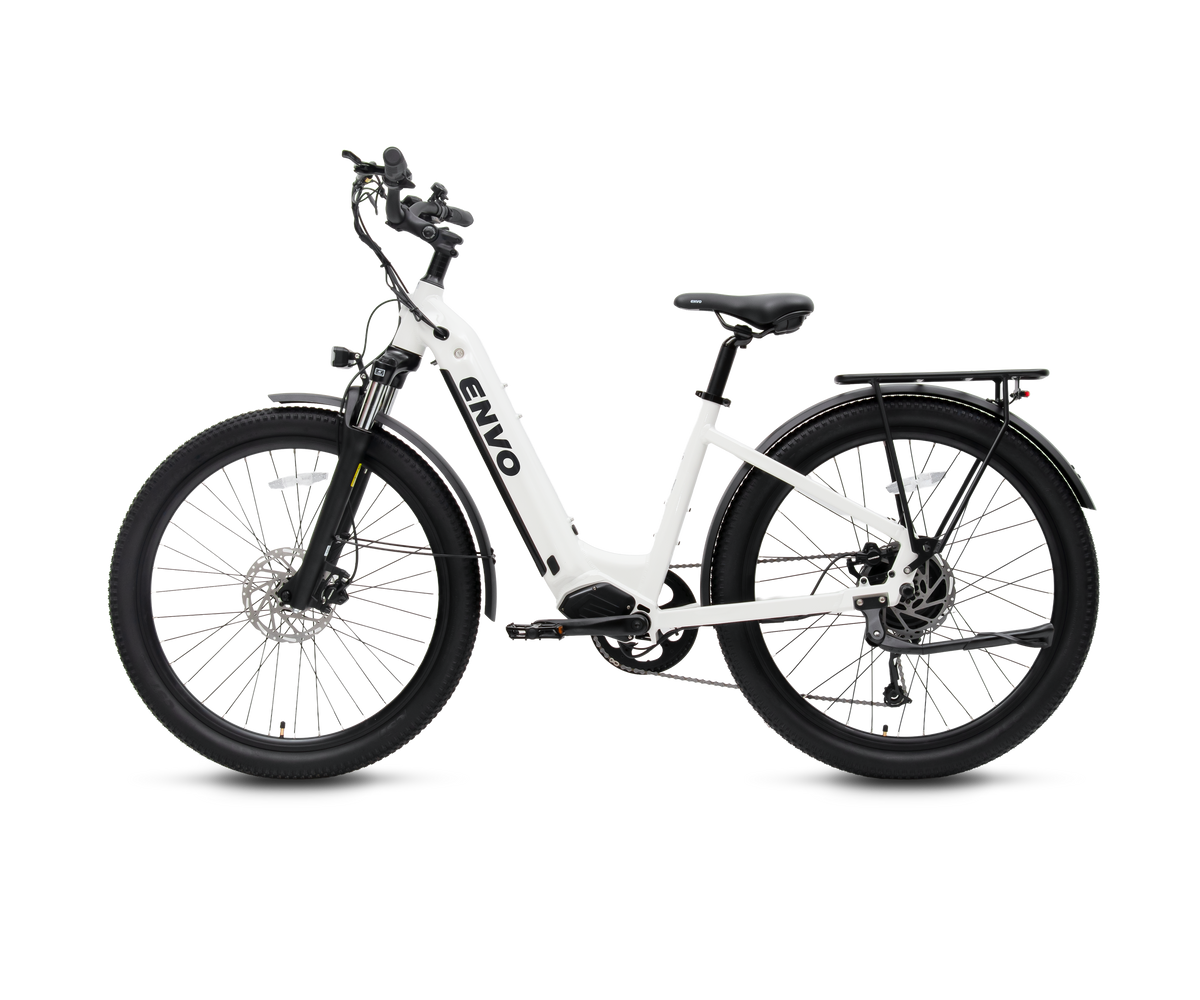
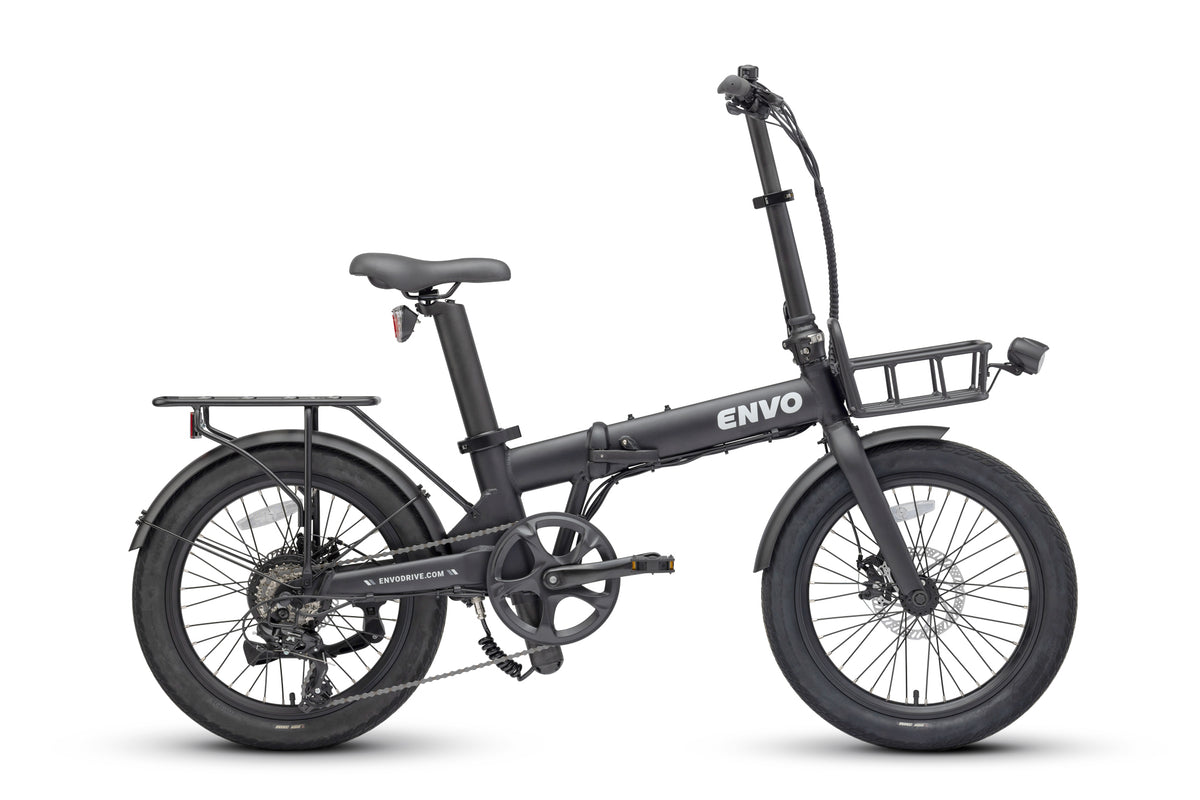
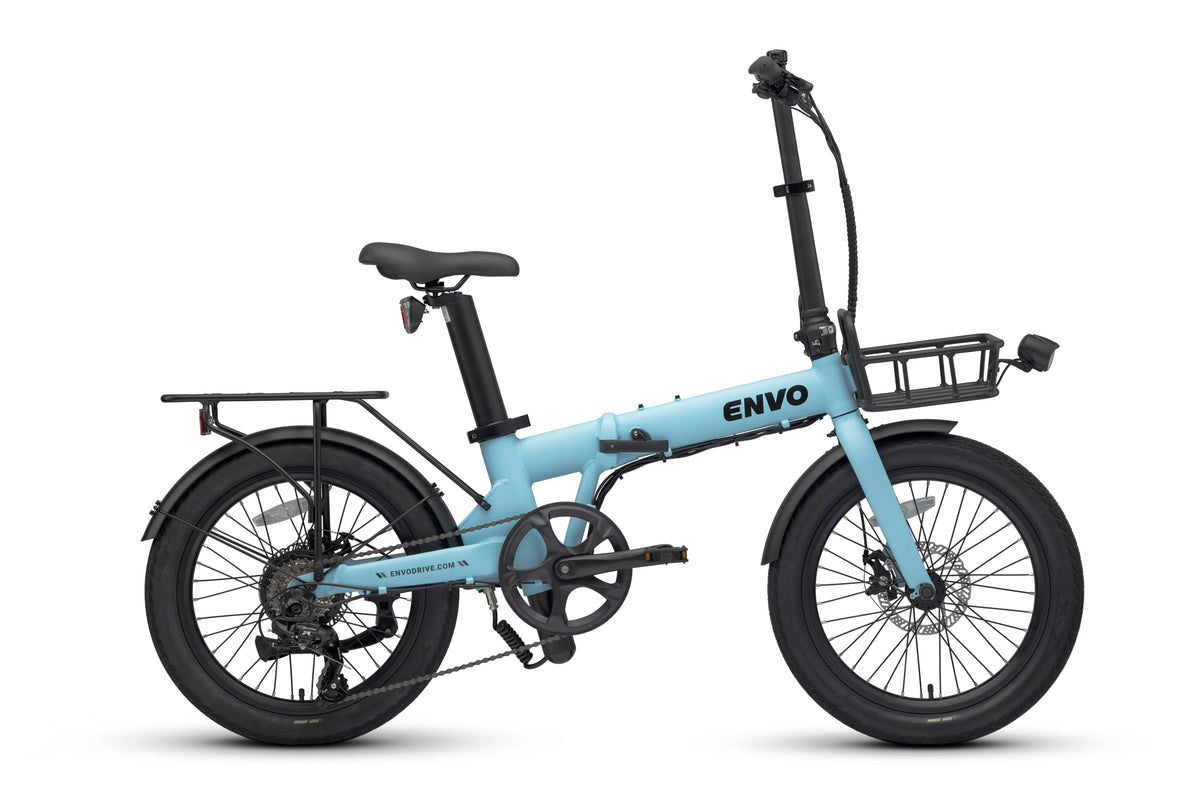
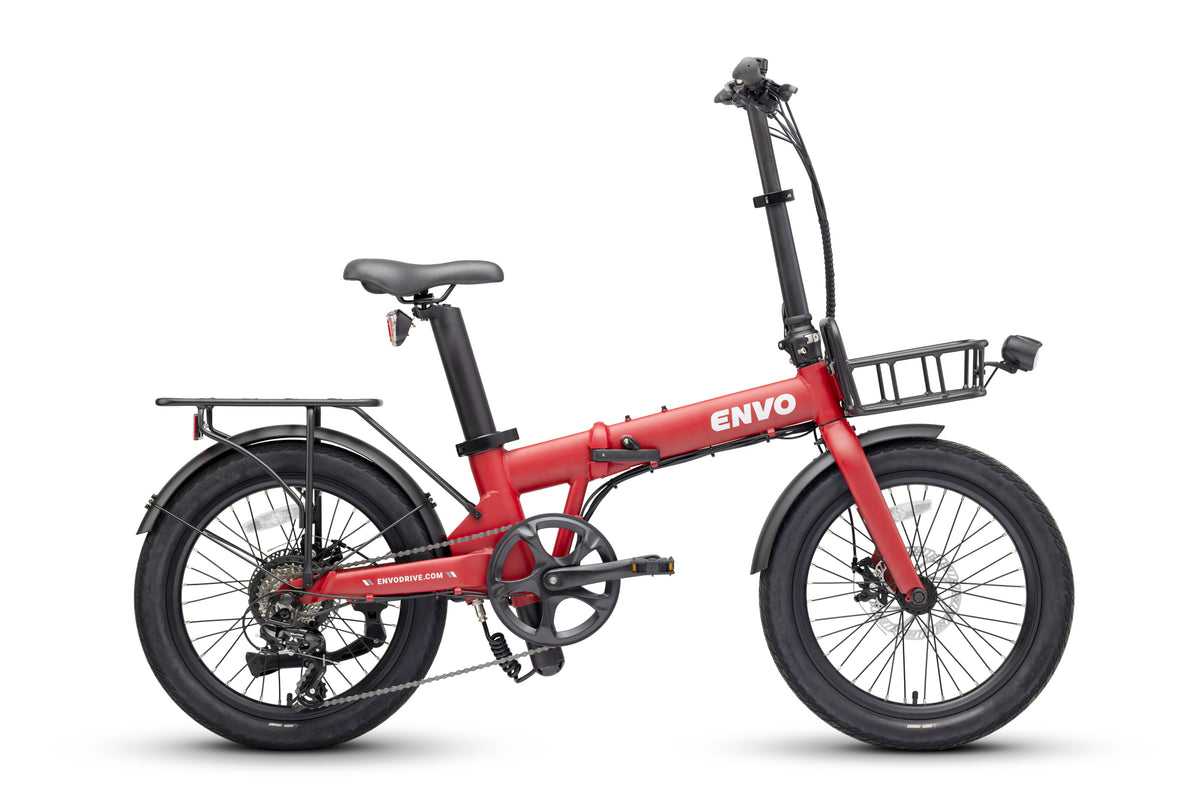
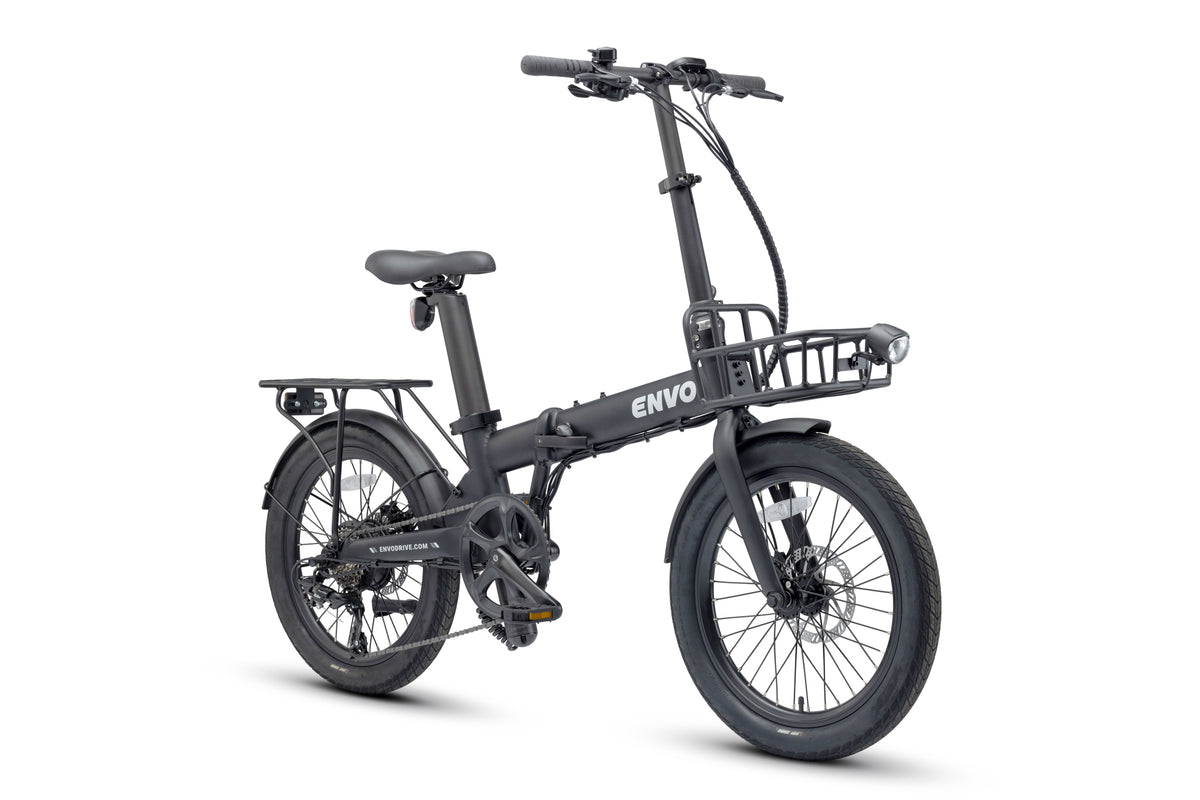
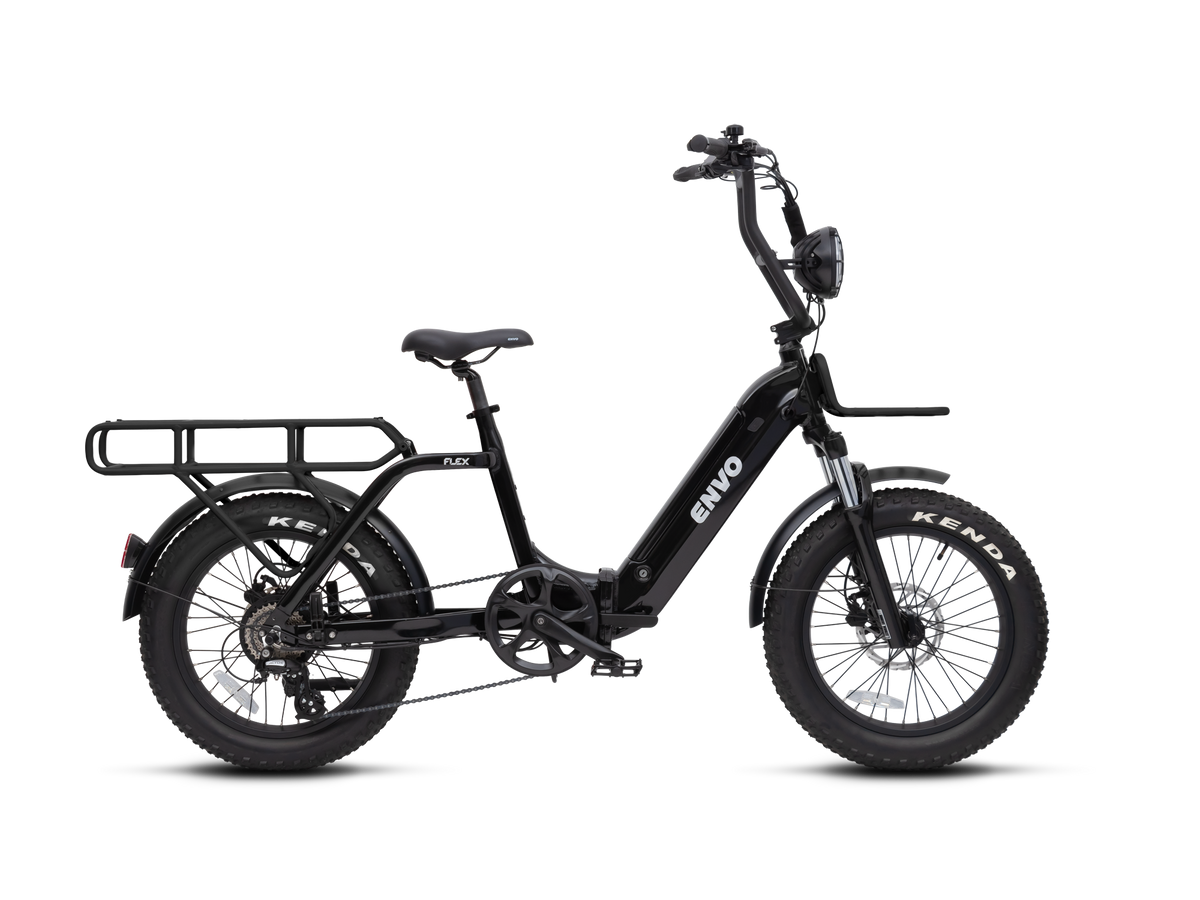
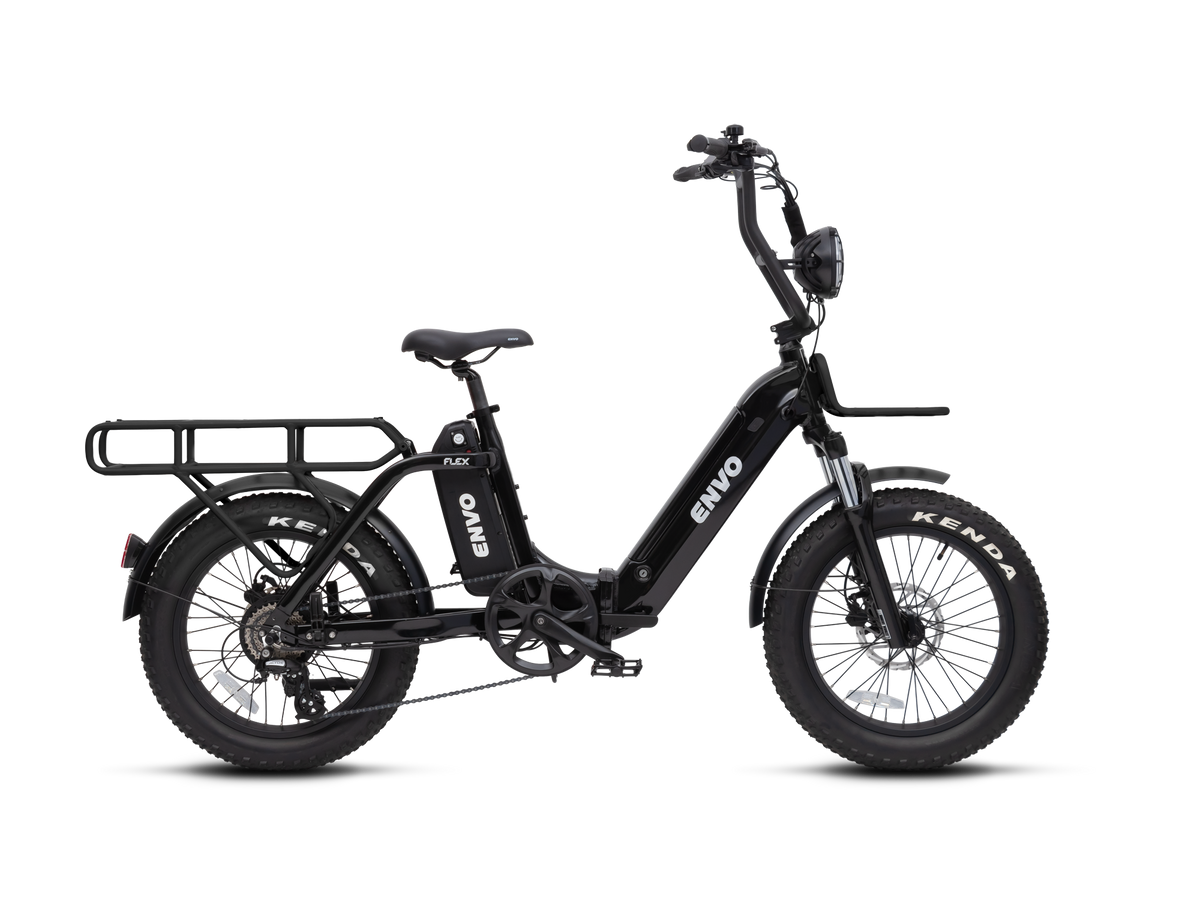
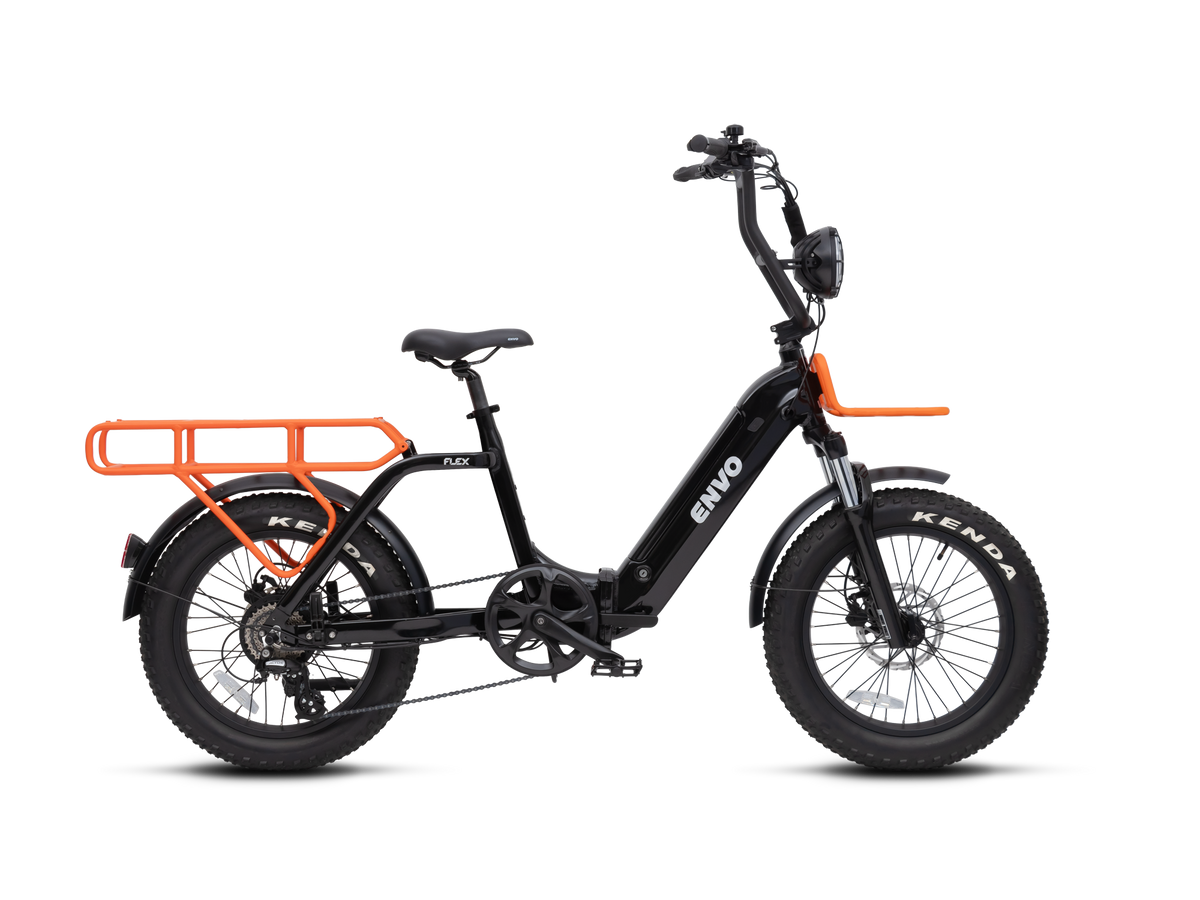
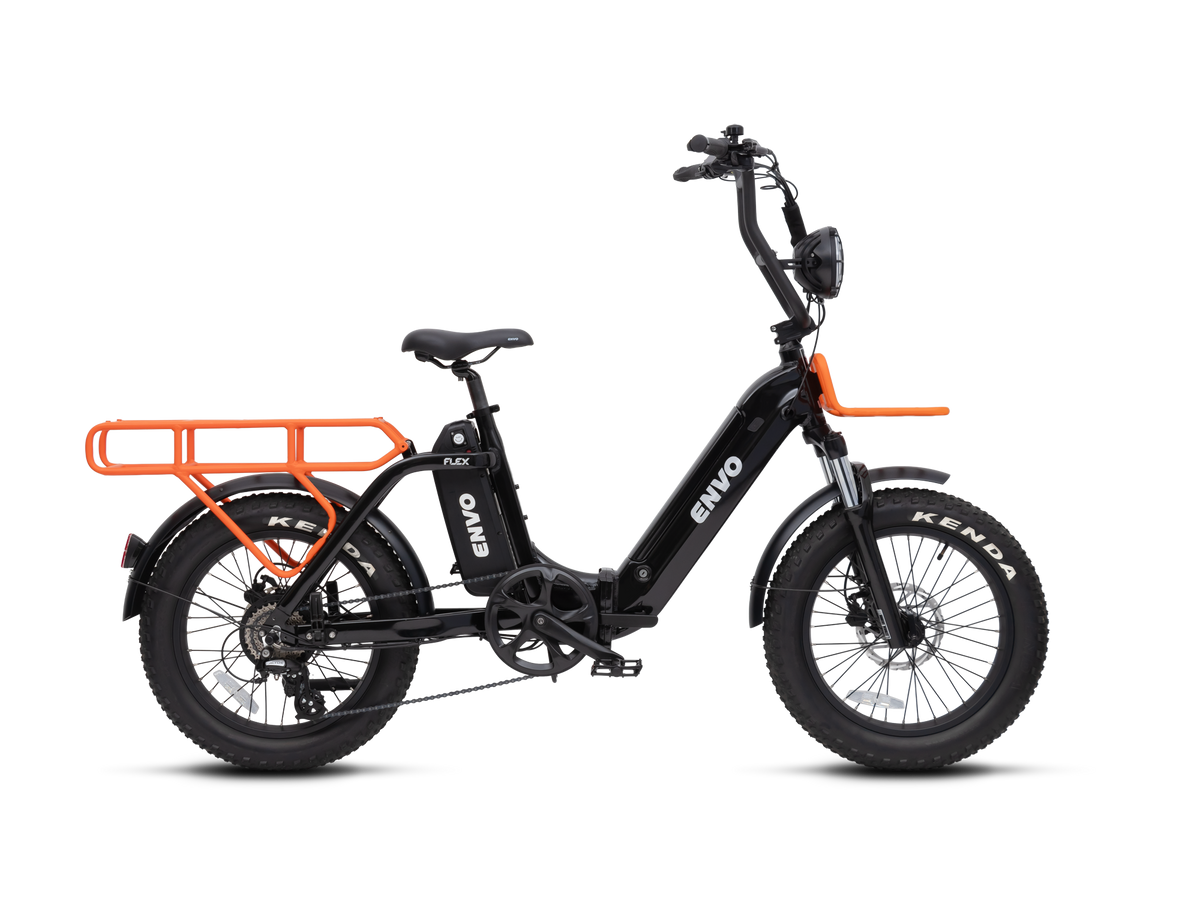
By contrast, Aima in Canada today is best understood as an emerging brand with serious global backing but shallow local roots. That's a fundamentally different risk profile from a brand that has spent close to a decade building Canadian after-sales infrastructure — for example ENVO Drive Systems, founded in 2016 and headquartered in Burnaby, BC. If you want to see that contrast in practice, the EbikeBC electric bike collection is a reasonable starting point, and specific models like the ENVO D50, the ENVO Lynx 20, and the ENVO ST50 show how a locally rooted lineup actually maps to use cases.
For buyers who specifically prioritize battery-safety certification, the UL-certified e-bike collection is worth a look as part of the same comparison.
How Likely Is Aima Still in Canada in 2031?
No one can guarantee an answer to this. But it's possible to think about it probabilistically rather than emotionally.
Most likely scenario: still present, but structure may evolve.
The highest-probability outcome is that Aima still has some Canadian presence in five years — but not necessarily under the exact same setup. That could be a continuing UNIVELO relationship, a different distributor, or a more direct North American model anchored by the US subsidiary. The parent is too large and too internationally ambitious to dismiss the possibility entirely.
Real risk scenario: Canada remains marginal.
If overseas sales stay near 1% of group revenue and Canada doesn't reach meaningful scale, Aima may keep the country alive only lightly — with limited parts depth and modest investment. This is a more plausible concern than a dramatic overnight disappearance, and it's the scenario most likely to quietly degrade owner experience over time.
Lower-probability but real downside: distributor disruption.
If the exclusive distributor relationship weakens, Canadian service could become messy before it becomes clear. Distributor-dependent brands can hit a gray zone where the brand still "exists" but support becomes slow, fragmented, or dealer-specific.
So the balanced answer is: Aima is not currently a red-alert brand in Canada. But it isn't yet a deeply entrenched one either.
What Buyers Can Do to Mitigate Risk
Even if you decide an Aima makes sense for your situation, there are practical things you can do to reduce your exposure to support risk over the next 5+ years.
Buy through a dealer with an actual service department — not just a showroom. Ask who does diagnostics, who handles warranty claims, and what turnaround times look like in practice.
Ask about parts before purchase. Specifically: battery availability, charger replacements, display availability, controller/motor lead times, and crash parts (derailleur hangers, fenders, racks, kickstands).
Save all documentation. Proof of purchase, serial number photos, warranty terms at the time of sale, battery model information, and dealer contact details. Distributor-led warranty chains tend to depend on paperwork.
Prefer mainstream component ecosystems. Common brake systems, drivetrain parts, and known motor suppliers make future maintenance easier even if the brand-side support degrades.
Keep a relationship with the selling dealer. In distributor-led brands, your dealer often matters more than the headline brand promise. A good local shop is genuine protection.
Don't overpay for uncertainty. If two bikes are similar but one comes with clearly stronger Canadian support, that should factor into value. Support is part of the price.
Frequently Asked Questions
The Bottom Line: Buy With Eyes Open
Aima has more substance behind it than many new-market e-bike entrants. It's a large public manufacturer with genuine international operations, a visible North American strategy, and signs that it's taking the dealer channel seriously. That's the good news, and it shouldn't be dismissed.
But Aima Canada is still young. It launched through a newly established exclusive distributor — not a mature Aima-owned Canadian operating structure. Overseas business remains a very small share of Aima's total revenue, and distributor-led service models always carry more execution risk than deeply rooted local operations.
So if the question is "Will Aima definitely still be in Canada in 5 years?" — no one can honestly guarantee that.
If the question is "Does Aima currently look serious enough that a careful buyer could consider it, provided they manage the support risk intelligently?" — yes.
The right conclusion in 2026 is neither panic nor blind faith. It's informed caution: weigh the bull case and bear case honestly, watch the warning signs over time, and make sure you've at least looked at the deeper-rooted Canadian alternatives before you commit.
Want Lower Long-Haul Support Risk?
Explore established Canadian e-bike brands with a longer Canadian operating history, in-house design, and direct manufacturer warranty — starting with the ENVO lineup, designed and assembled in Burnaby, BC.
Disclaimer: This article is for informational purposes only and reflects publicly available information as of May 2026, including Aima Technology Group's published annual disclosures, the company's Canadian launch announcements, public CES 2025 communications, and the warranty terms posted on aimamobility.ca. Forward-looking statements about market presence in 2031 are probabilistic assessments, not predictions. Corporate structures, distribution arrangements, warranty terms, and business operations may change at any time. We are not affiliated with Aima Technology Group, Aima Mobility Canada, or UNIVELO. Always verify current terms directly with the manufacturer or distributor before purchasing. This article does not constitute legal, financial, or investment advice.