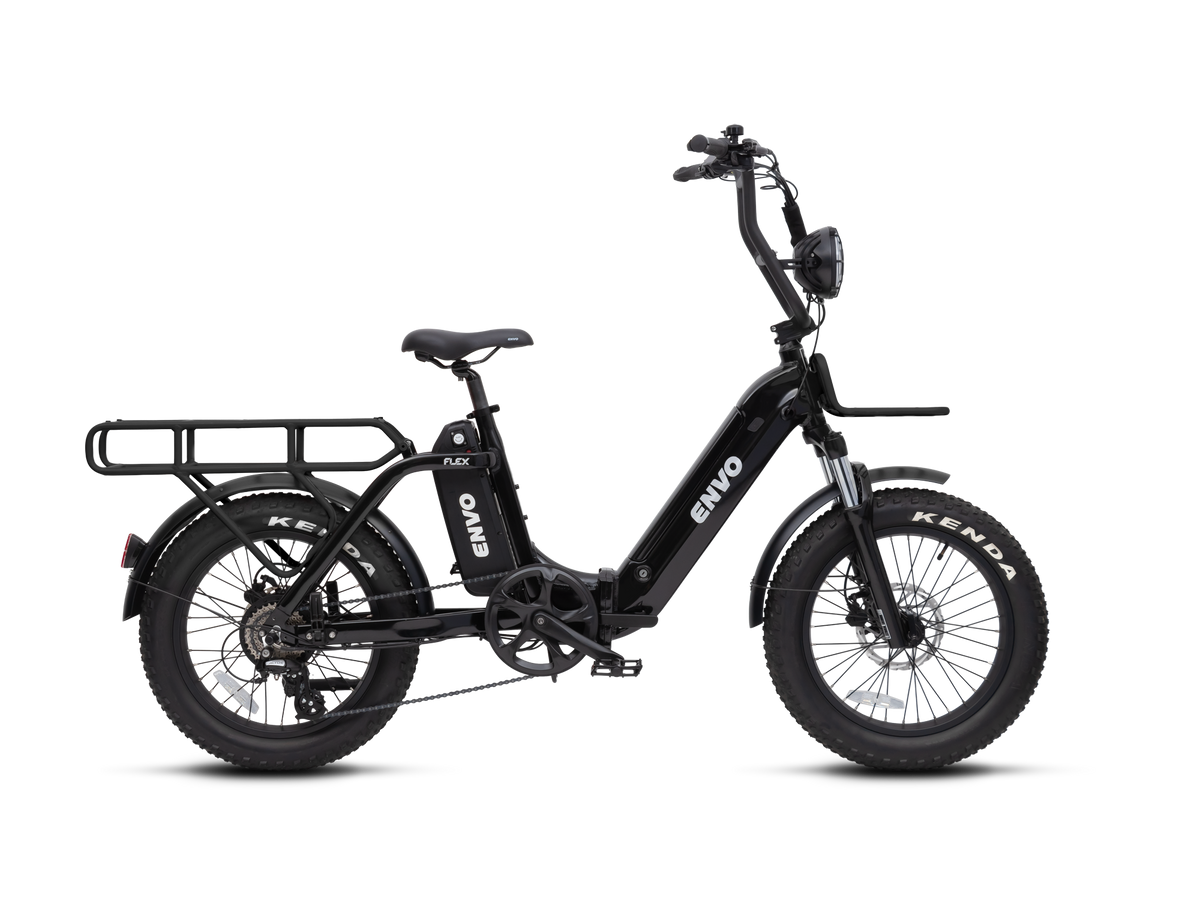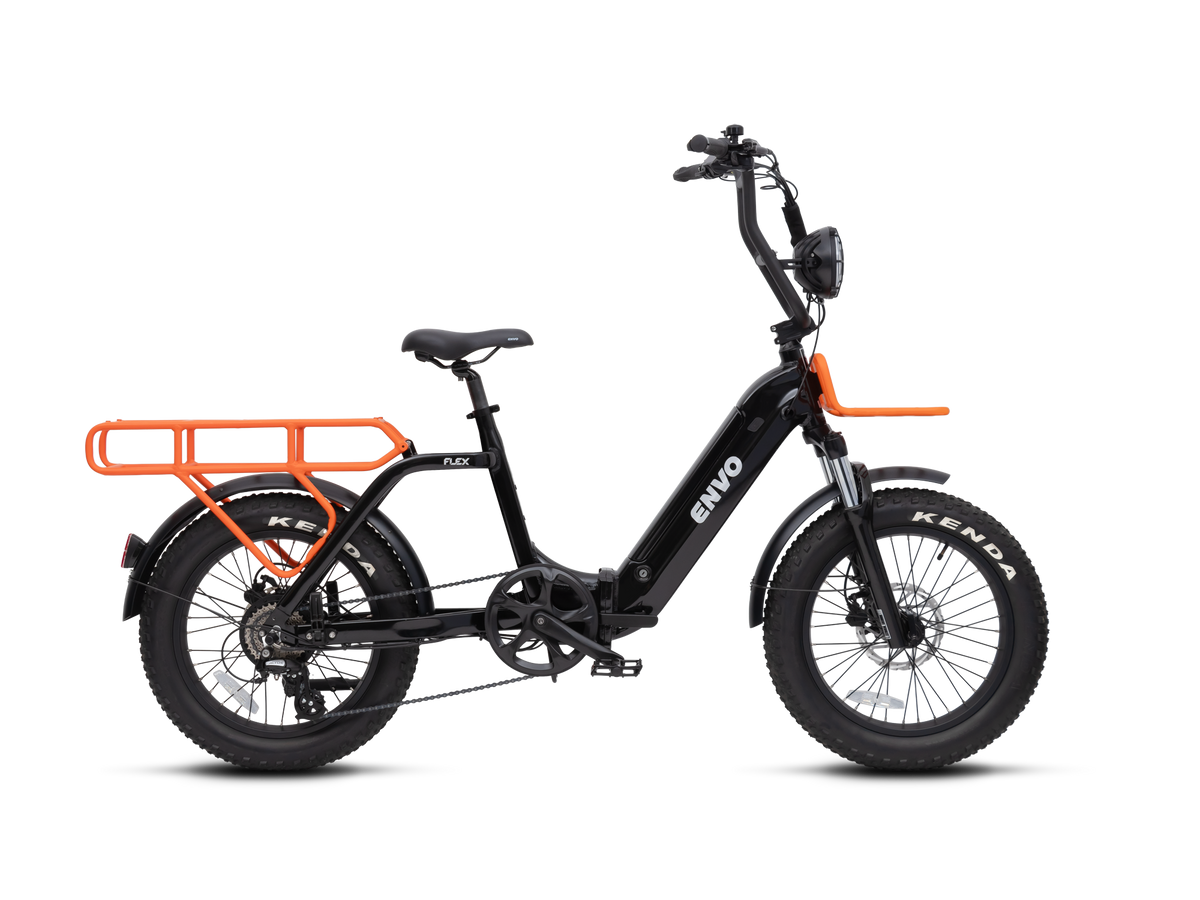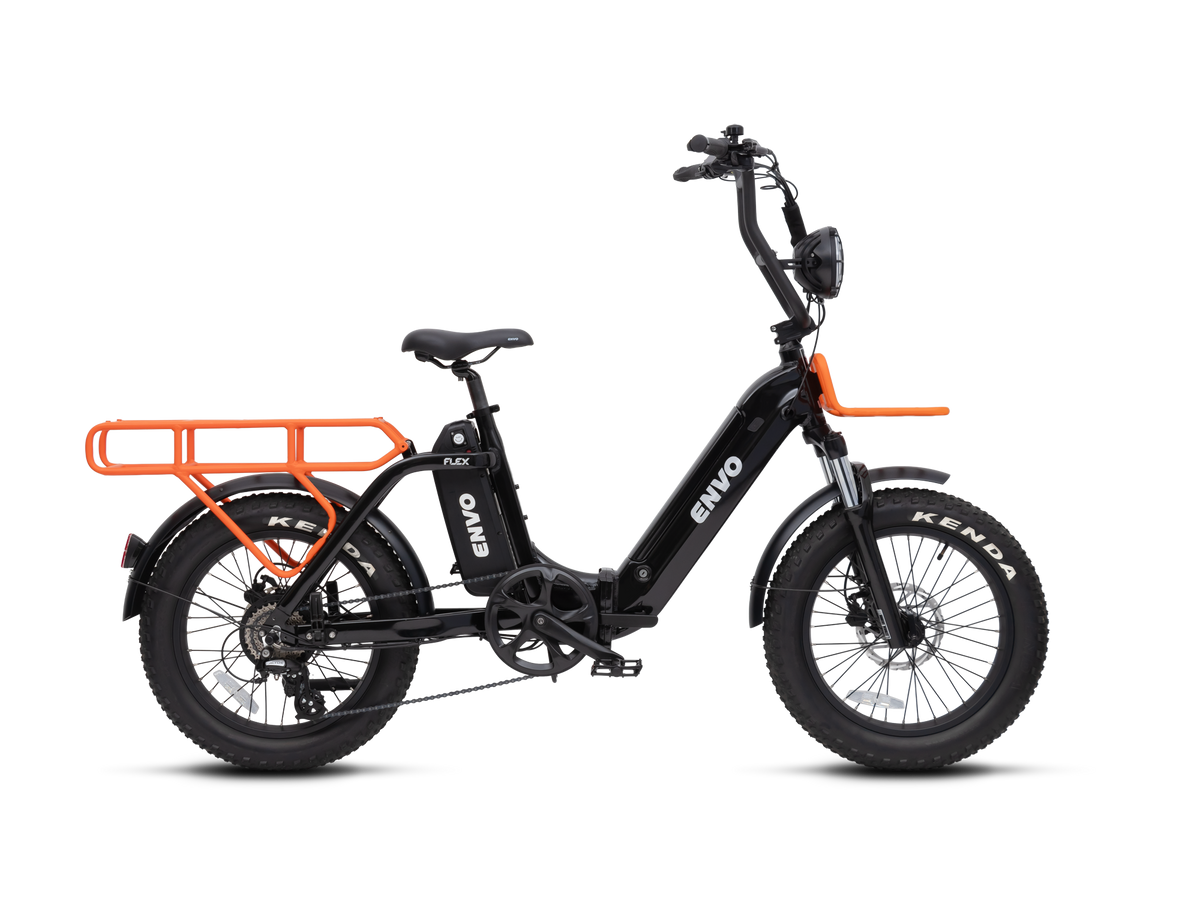



Aima vs ENVO
Which eBike Brand Is Better for Canadian Buyers? (2026)
A Chinese-owned global manufacturer vs a Canadian-rooted brand — head-to-head on warranty, support, capabilities, and long-term Canadian ownership.
Key Numbers at a Glance
Before diving into the full comparison, these numbers tell a lot of the story on their own.
Aima in Canada
Launched November 28, 2024 through UNIVELO in Quebec. About 18 months in market as of May 2026.
ENVO in Canada
Burnaby, BC at 1685 Ingleton Ave. Operating history traceable to 2016 (with origins in 2015).
Aima Overseas Revenue
Overseas business was ~1.1% of Aima's 2024 revenue. Canada is part of a small international slice.
ENVO Canadian-Focused
Canadian-owned, Canadian-headquartered, Canadian-assembled — Canada is the home market, not a 1.1% slice.
Aima — Advertised
Aima advertises UL 2849 compliance for its Canadian electrical systems and 720Wh LG-cell battery packs.
ENVO — Publicly Listed
ENVO publishes a dedicated UL 2849 page listing D50/ST50, Lynx 20, and additional product families.
1. Founding, Ownership & Scale
On one side is AIMA, a giant Chinese public company founded in 1999, listed on the Shanghai Stock Exchange under ticker 603529, with 2024 revenue of roughly RMB 21.61 billion. It only entered Canada on November 28, 2024 via exclusive distributor UNIVELO in Quebec, and its current Canadian e-bike range is relatively focused: 8 SKUs priced from about C$2,590 to C$3,290.
Across that range, AIMA leans on a standardized package of 500W Bafang hub motors, Bafang torque sensors, Shimano drivetrains (entry-tier Acera shifters with Altus derailleurs on Key West and Big Sur G2), Tektro 203mm hydraulic brakes, 720Wh batteries using LG cells, and an advertised UL 2849-compliant system. Overseas revenue represented only about 1.1% of AIMA's 2024 revenue — useful context: Canada is part of a very small international slice of a much larger domestic business.
This is the structural fact most buyers miss. Aima's North American headquarters is in City of Industry, California, USA (subsidiary AIMA EBIKE; aimatech.us; info@aimausa.com; (213) 315-0602). There is no Aima legal entity in Canada. Even Aima USA cannot directly handle Canadian consumer warranty escalations because of cross-border legal and consumer-law differences. The "Canadian" part of Aima Canada is UNIVELO — a third-party distributor based in Quebec, operating under a single exclusive contract.
The product itself is designed in China, engineered in China, and manufactured in China. The sales arm is in California. The distribution is in Quebec via a third party. Canadian buyers sit at the far end of that chain.
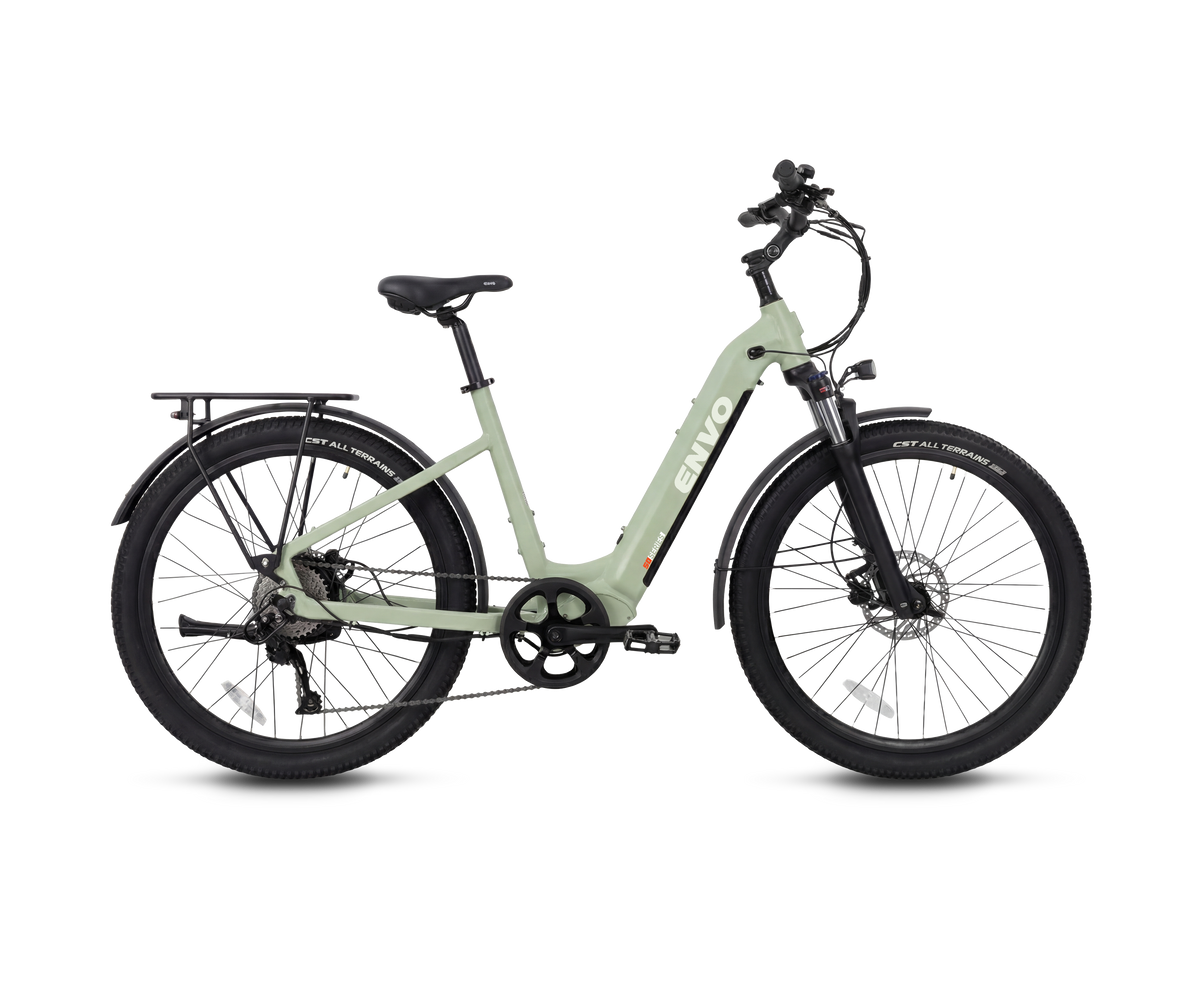
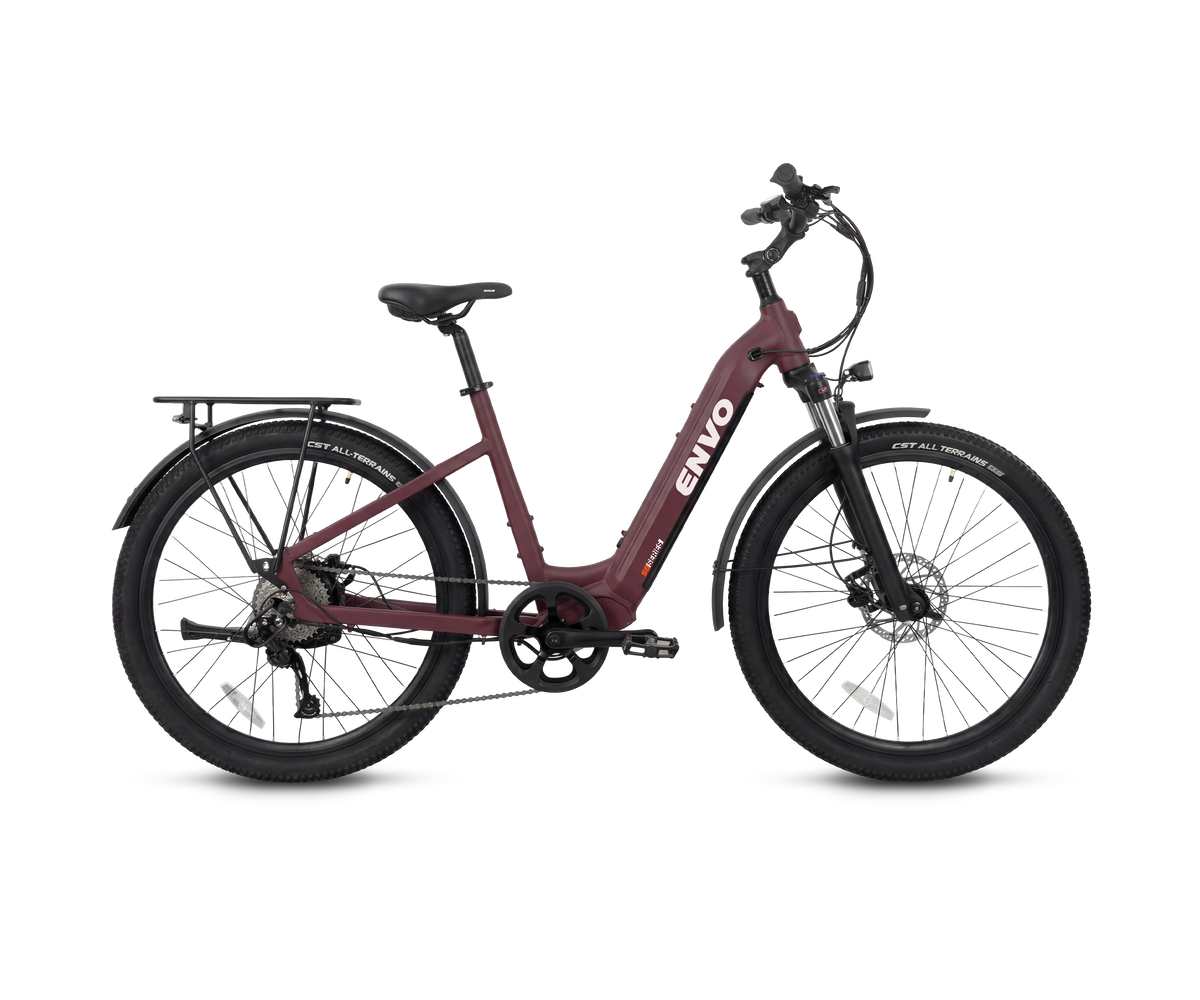
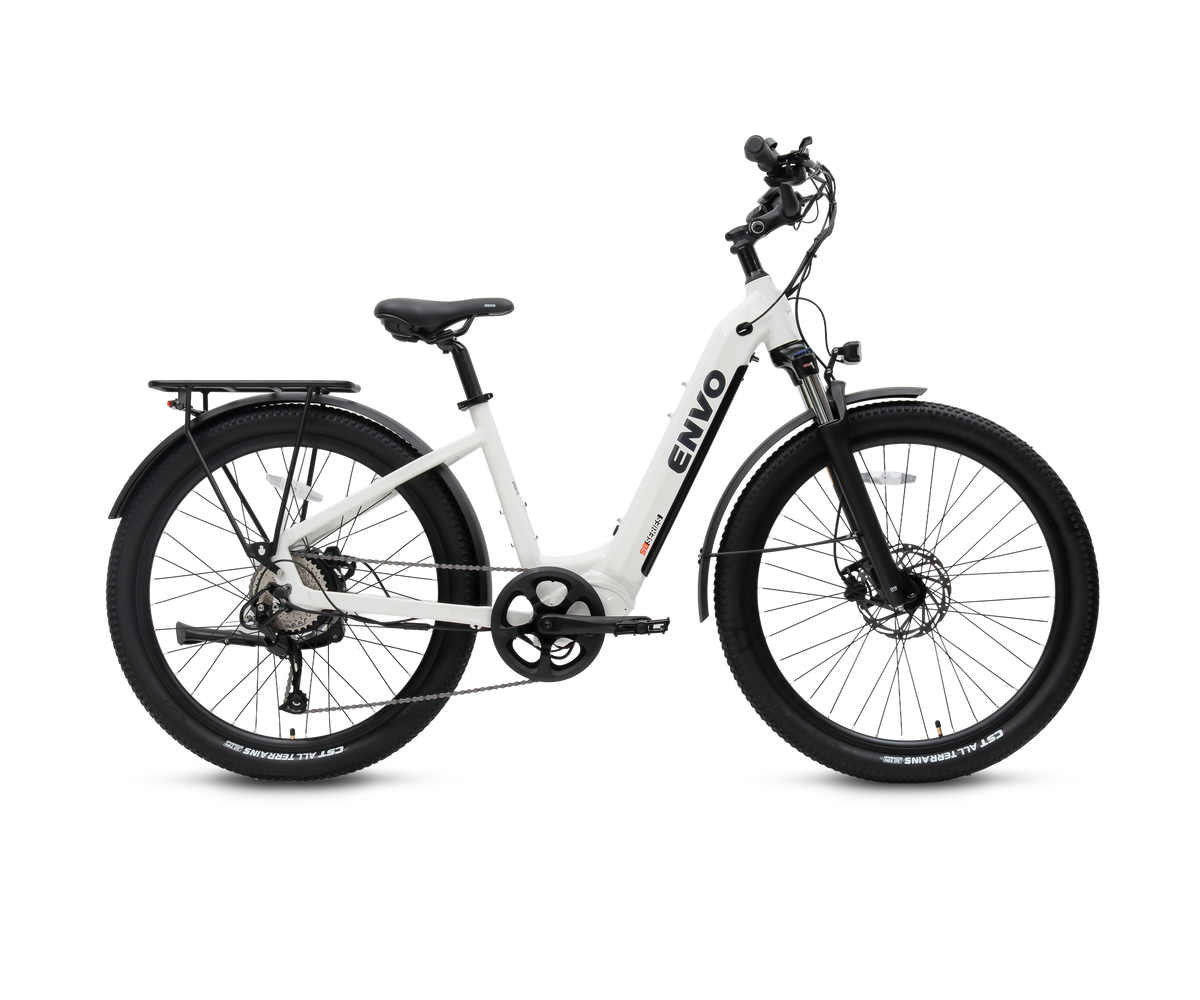
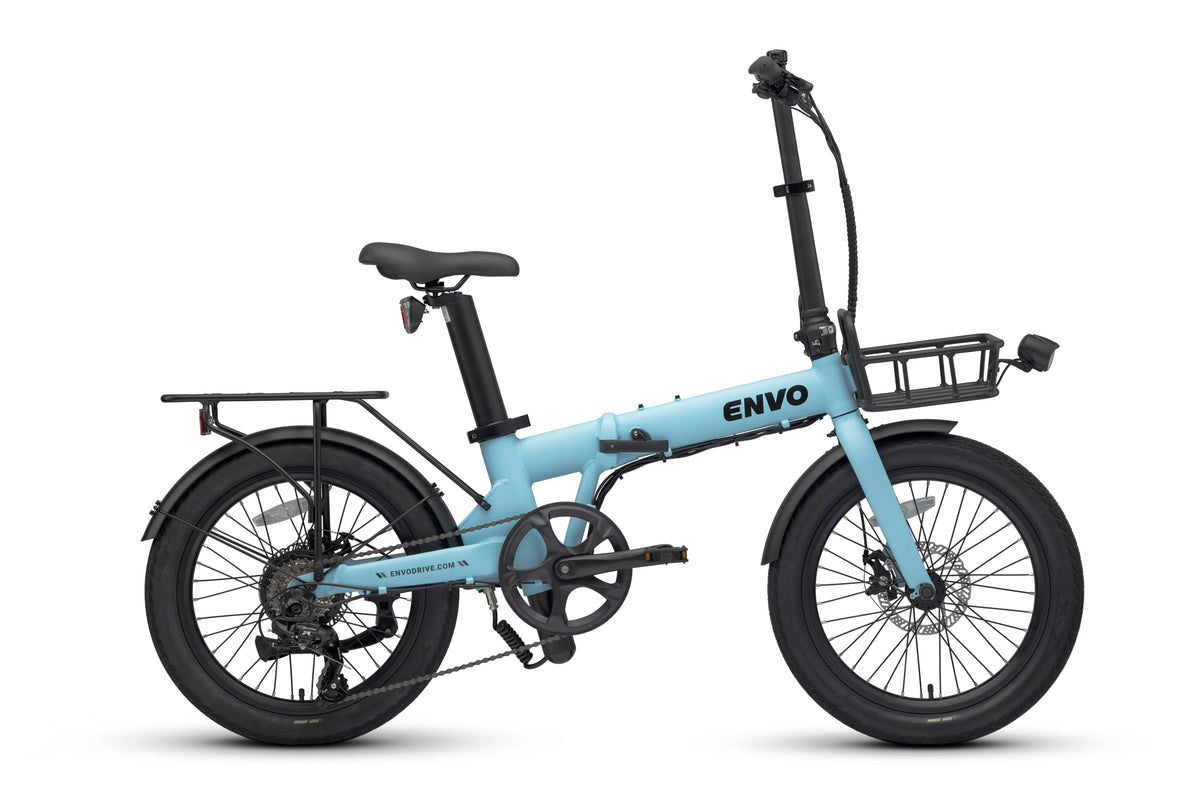
On the other side is ENVO, a Canadian-owned private company based in Burnaby, BC at 1685 Ingleton Ave. ENVO's public company timeline points to 2016 as a key founding year, though its contact page notes the business began in 2015 as a one-person operation in Vancouver. Either way, by May 2026 ENVO has roughly nine years of Canadian operating history in the space buyers actually care about: Canadian-owned, Canadian-designed, Canadian-engineered, Canadian-assembled (Burnaby BC). ENVO also has a broader category spread than AIMA, covering commuters, fat-tire models, family cargo, folding bikes, trikes, and more — explore the full EbikeBC e-bike collection.
AIMA wins pure scale, easily. It is a much larger business, publicly listed, with a long history back to 1999 and multibillion-RMB annual revenue. If your comfort comes from corporate size and financial reporting, AIMA looks substantial. ENVO wins local identity in the most structural sense possible — Canadian-owned, private, rooted in Burnaby, with no California intermediary. For buyers whose decision framework includes "buy Canadian," there is no contest here.
2. Canadian Operating History
This category strongly favors ENVO. AIMA's Canadian distribution started on November 28, 2024, which means roughly 18 months in market as of May 12, 2026. ENVO's operating story in Canada reaches back roughly nine years in practical terms.
For buyers worried about long-haul service continuity, institutional knowledge, and local familiarity, this is one of the biggest differences in the entire comparison. For a deeper read on Aima's Canadian corporate structure, see "Is Aima eBikes a Canadian Company?"
3. Manufacturing & Assembly Model
AIMA's products are made through its larger Asia-based manufacturing system and sold in Canada through UNIVELO. That can be perfectly fine; many good e-bikes are made in China or Southeast Asia. But AIMA's Canadian pitch is not "locally assembled in Canada."
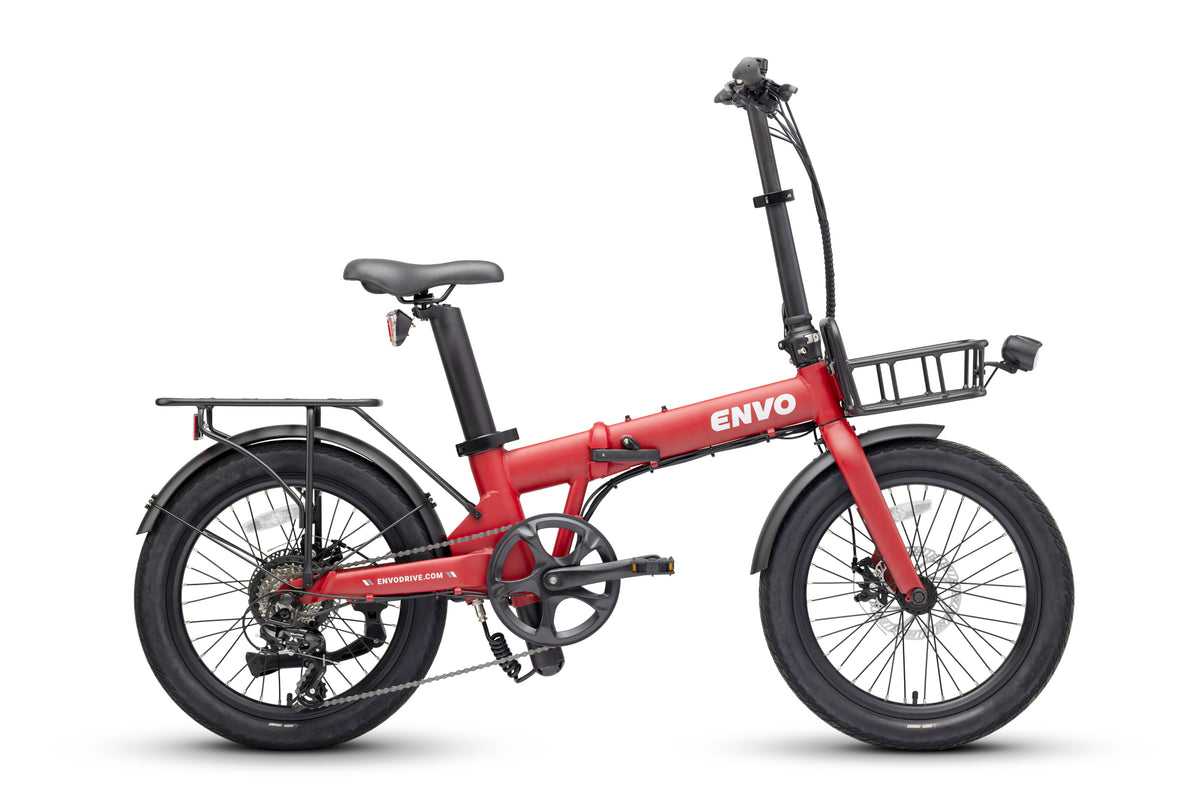
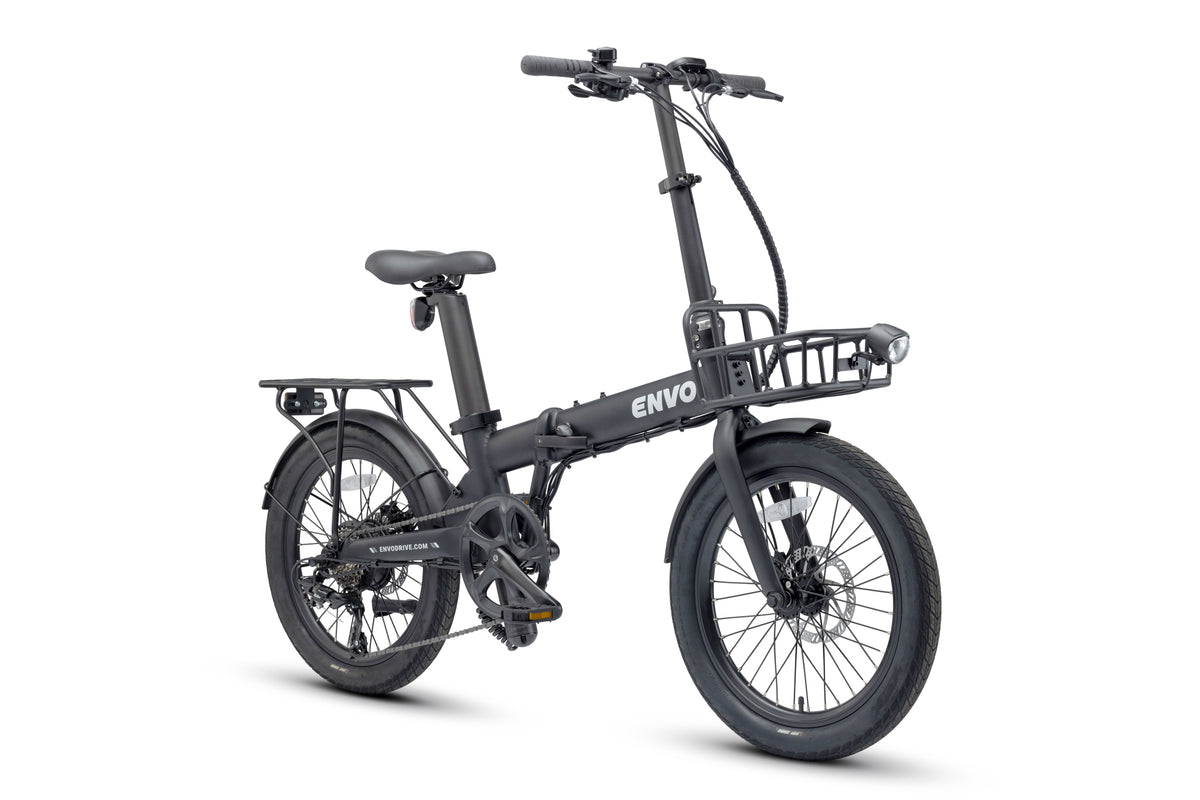
ENVO, by contrast, emphasizes local design and assembly in Burnaby. For many Canadian shoppers, that is a meaningful differentiator, especially if the bike is expected to be kept for years. You can see the Canadian-assembled options in the EbikeBC lineup, including the D50, ST50, and Lynx 20.
4. Distribution & Service Model
AIMA's Canadian setup is exclusive distribution through UNIVELO and partner bicycle retailers. That gives it a clear dealer-only identity. Some buyers genuinely prefer this because they want a store relationship, not a box shipped to the house.
ENVO uses a broader model: direct plus partners/dealers. That usually gives buyers more flexibility in how they shop and how they access support. This category is close because buyer preference matters — but ENVO's flexibility gives it the edge.
5. Warranty
AIMA's Canadian pages indicate a stronger baseline warranty position than ENVO's default 12-month coverage. ENVO's contact and terms pages state products including e-bikes and components are covered by 12 months free warranty unless otherwise specified, with extended warranty options available in some cases.
AIMA's published Canadian warranty (2 years frame, 2 years power-assist, 2 years or 300 cycles on the battery, 1 year on mechanical components) is materially longer than ENVO's default 12 months. This is one of the few places AIMA has a clear practical edge — though the practical experience also depends on whether your nearest Aima-partner retailer can process the claim quickly through UNIVELO.
6. Performance Flexibility: Class 3 & Dual Battery
This is where ENVO creates real separation.
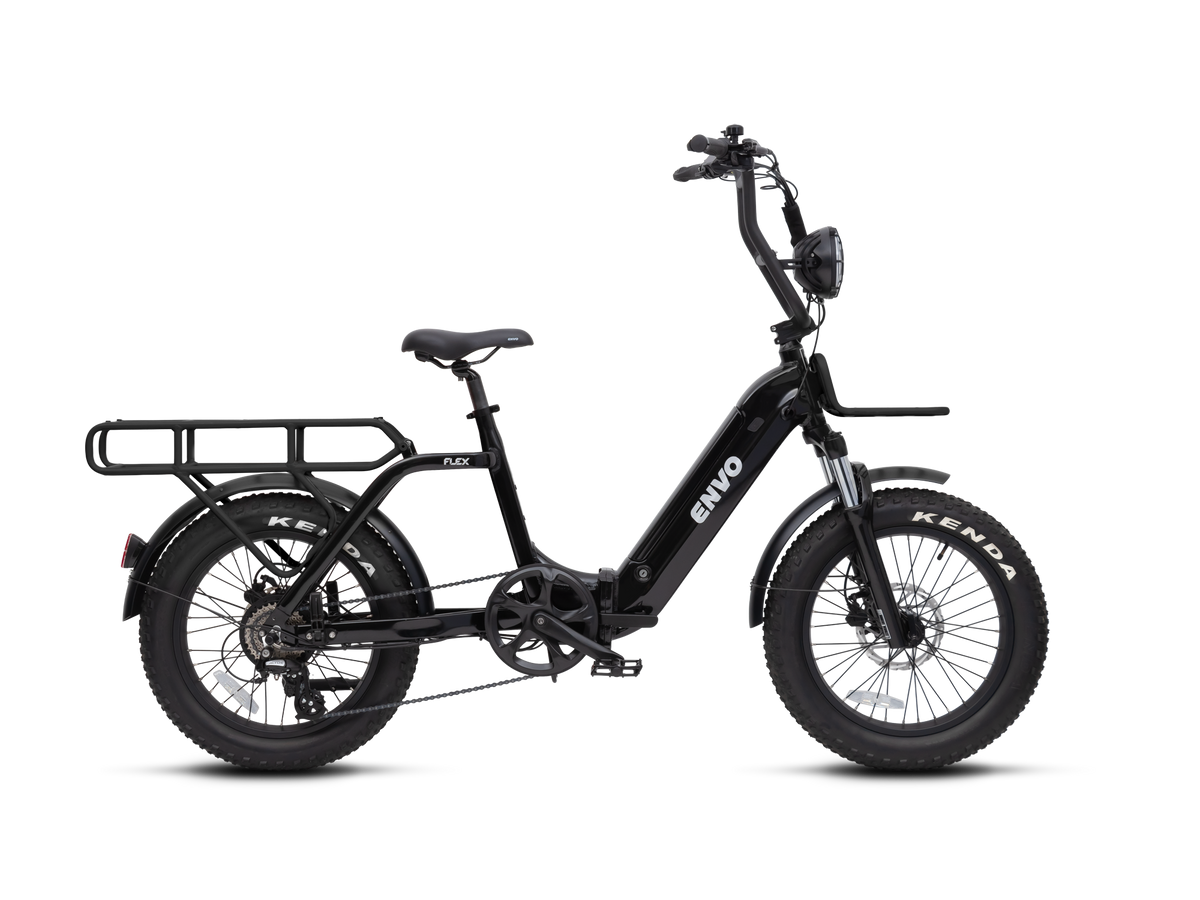
AIMA's current Canadian range does not present itself around Class 3 capability or dual-battery modularity. ENVO, on the other hand, explicitly supports dual-battery configurations on D50/ST50, and the U50 cargo platform also lists a dual-battery setup. ENVO's D50/ST50 manual further states those bikes can be configured as Class 3.
If your riding needs may grow over time, ENVO is simply more flexible.
7. Lineup Breadth
AIMA has a tidy Canadian lineup: 8 SKUs across commuter, fat-tire, and cargo formats. That simplicity is not bad; it can make shopping easier.
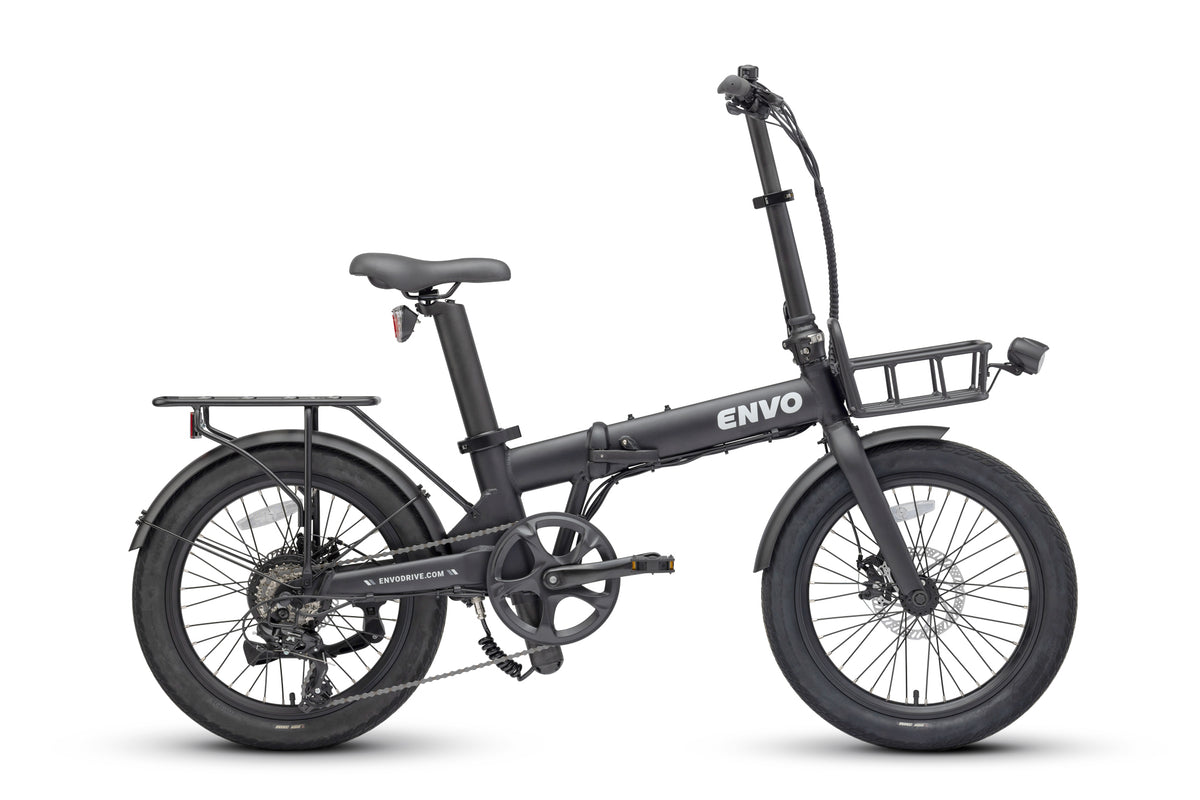
ENVO's range is broader. It covers commuter bikes, fat-tire/adventure bikes, family cargo, folding bikes like the Lynx 20, trikes, and more. ENVO also publishes UL 2849 certification across multiple product families in its UL-certified collection. For buyers wanting category choice, ENVO wins.
8. Weight Comparison Across the Lineup
Weight is one of the most under-discussed differences between these two brands. Across every direct comparison, ENVO is lighter than its Aima counterpart — and in the fat-tire family the gap is dramatic.
| Comparison | ENVO | AIMA | Difference |
|---|---|---|---|
| Folding vs Compact City | Lynx 20 — 22.5 kg | Key West — 25 kg | ENVO 2.5 kg lighter |
| Step-thru Commuter | ST50 — 28 kg | Santa Monica — 29 kg | ENVO 1 kg lighter |
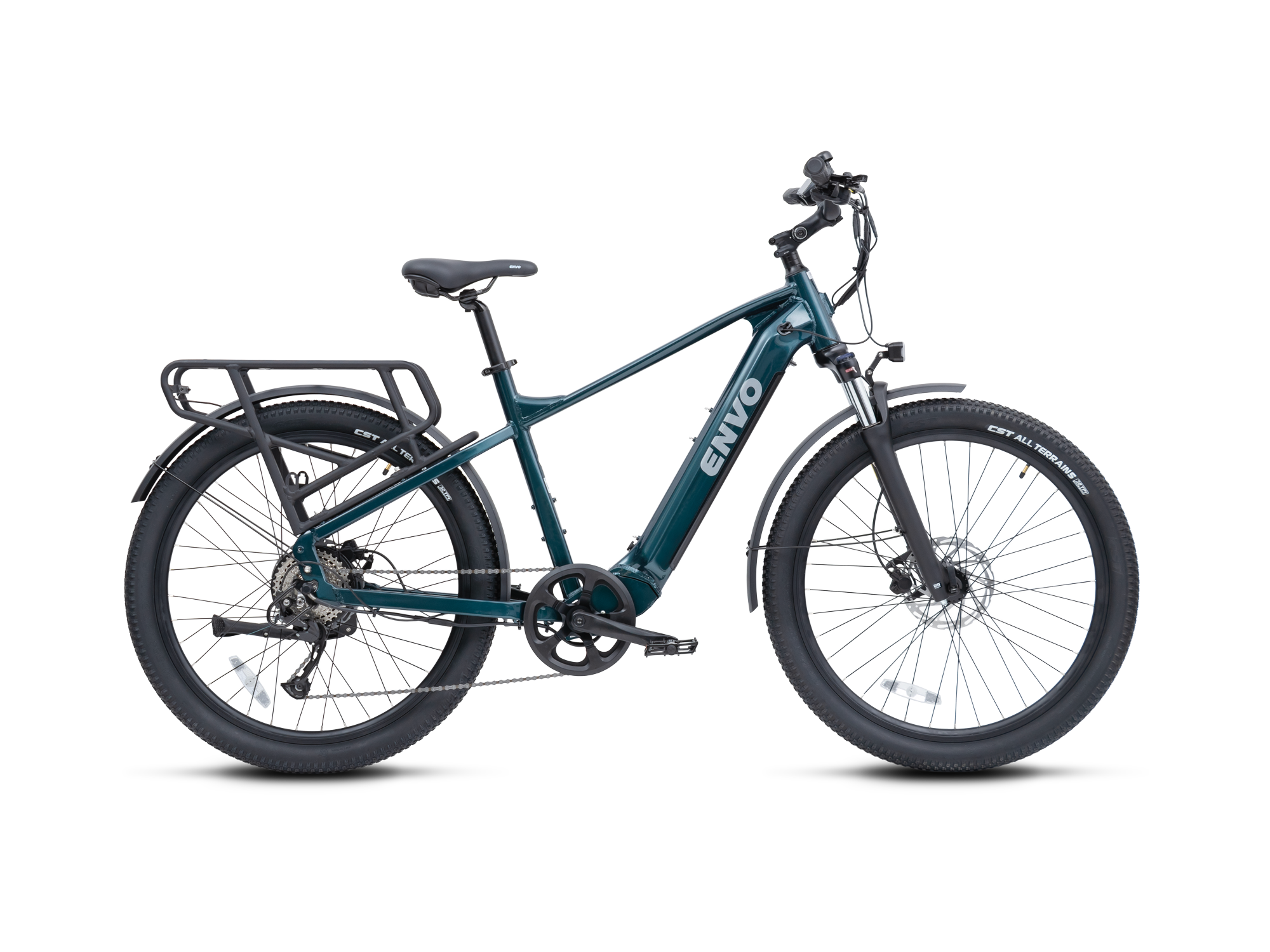
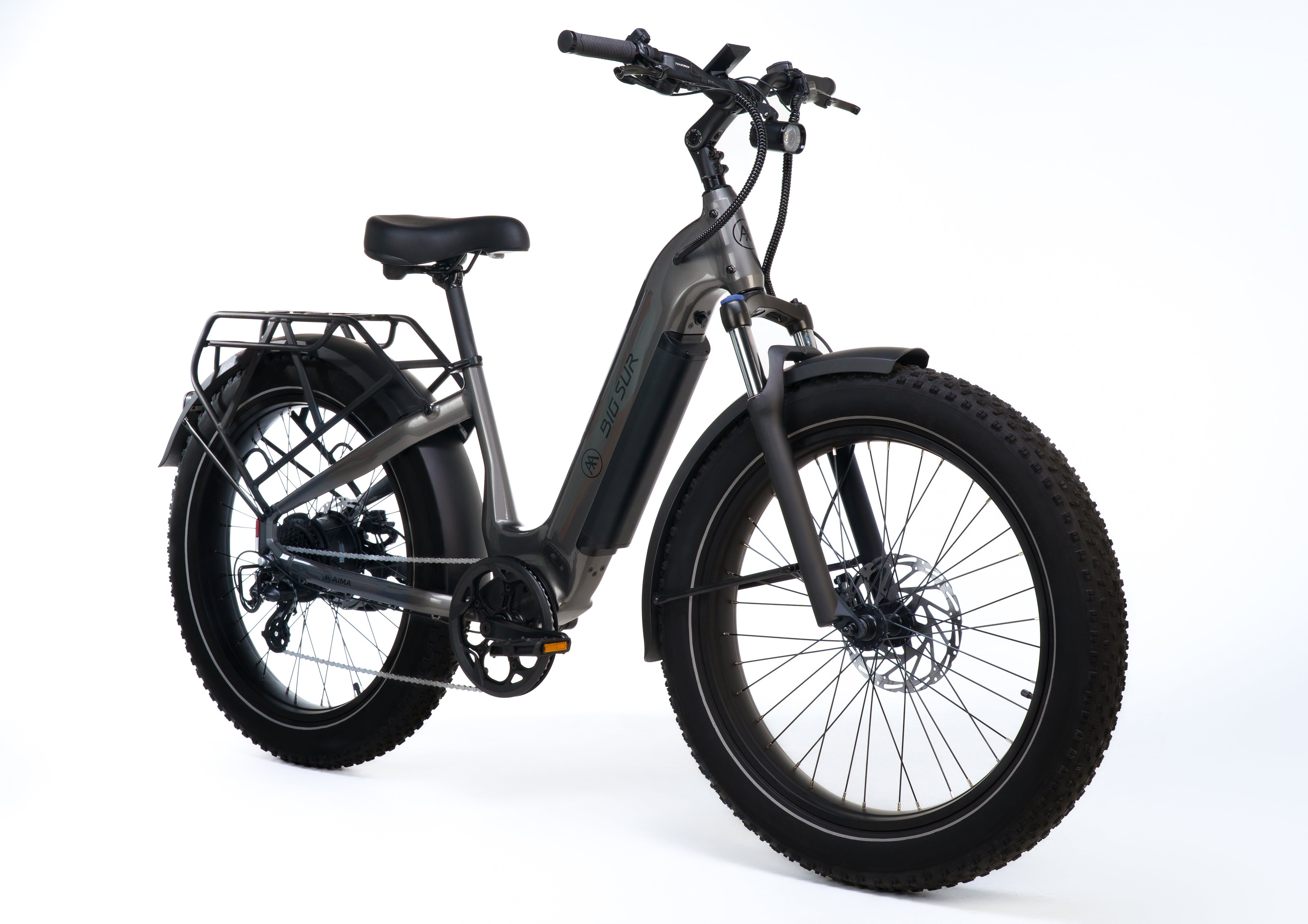
| Fat-tire All-terrain | D50 — 28 kg | Big Sur G2 — 37 kg | ENVO 9 kg lighter |
| Fat-tire Sport | D50 — 28 kg | Big Sur Sport G2 — 37 kg | ENVO 9 kg lighter |
| Cargo / Utility | U50 — 32 kg | Big Sur Cargo — 36 kg | ENVO 4 kg lighter |
The 9-kilogram gap on the fat-tire pairing is the headline. On a bike that gets loaded onto a hitch rack, walked up a curb, stored in a garage, or pushed without power assist, 9 kg is enormous. It translates into easier handling, less fatigue lifting, easier rack loading, and easier indoor storage. The Big Sur family carries that extra mass partly because of frame and fork material choices and partly because of overall design philosophy — and it's visible. Aima's Big Sur looks visually bulkier and more utilitarian, where the ENVO D50 reads sleeker and more considered. Style is subjective, but the weight gap is not.
9. Drivetrain, Ride Quality & Geometry
Drivetrain Tier
Both brands say "Shimano" — but which Shimano matters. Aima's Key West and Big Sur G2 are verified to use Shimano Acera ST-M315 Rapidfire shifters paired with the Shimano Altus RD-M310 derailleur. Acera and Altus are Shimano's entry-tier components — below Alivio, well below Deore. ENVO's ST50 and D50 use 9-speed drivetrains with broader gear range. For most riders, the difference shows up on hills and headwinds rather than the parking-lot loop, but it's a real spec-tier gap not the equivalence implied by "Shimano vs Shimano."
PAS Responsiveness & Ride Quality
ENVO reviews consistently mention ride quality that doesn't show on spec sheets — particularly the natural, intuitive feel of the pedal assist. ENVO has tuned PAS responsiveness over years of Canadian rider feedback. Aima uses Bafang's off-the-shelf tuning, which is functional but generic. This is the kind of difference test rides reveal and spec tables hide.
Frame Geometry
Aima's frame geometry shows signs of being designed for the Chinese domestic market — reach, stack, and seat-tube angles can feel slightly off to taller North American riders with longer torsos. ENVO's frames are geometrically designed for North American sizing. This is an observation rather than a hard fact, and it varies by rider, but it's worth a test-ride comparison if you can manage one.
Tire Disclosure
Aima discloses the Bafang motor and the LG cells transparently — but the tire brand is conspicuously absent on Canadian product pages. The Santa Monica spec sheet, for example, simply lists "27.5 × 2.1″ reflective sidewall" with no manufacturer. That's consistent with an unbranded Chinese-source e-bike tire. ENVO is more transparent about tire suppliers. Selective transparency on a consumable component is worth flagging.
Quick Comparison Table
| Category | AIMA | ENVO | Winner |
|---|---|---|---|
| Founding / scale | 9 | 8 | AIMA |
| Canadian operating history | 5 | 9 | ENVO |
| Manufacturing / assembly story | 6 | 9 | ENVO |
| Distribution flexibility | 7 | 8 | ENVO |
| Warranty | 8 | 6 | AIMA |
| Class 3 / dual battery flexibility | 4 | 10 | ENVO |
| Lineup breadth | 6 | 9 | ENVO |
| Weight / handling | 5 | 9 | ENVO |
| Drivetrain tier / ride feel | 5 | 8 | ENVO |
| Canadian corporate roots | 2 | 10 | ENVO |
| Total | 57/100 | 86/100 | ENVO |
Category Score Comparison
Scores out of 10 for each of the seven categories, based on the factors most relevant to Canadian buyers in 2026.
Where AIMA Is Still a Good Choice
AIMA is still reasonable if you are this buyer:
Buyers AIMA Suits
- You want a dealer-sold bike, not a direct-style purchase.
- You prefer a clean, fixed spec package without fiddling over options.
- You want a strong component baseline at mid-market prices.
- You value a bigger corporate parent and a longer global history.
Buyers ENVO Suits
- Can I add more range later? (Yes — dual battery)
- Can I go faster where legal? (Yes — Class 3 capable per manual)
- Is there a folding option? (Yes — Lynx 20)
- Is there a purpose-built family cargo option? (Yes — U50)
- Is the company meaningfully rooted in Canada? (Yes — Burnaby, BC)
- Is there a local assembly and engineering story? (Yes)
In other words, AIMA makes sense if you care more about "arrive at a shop, choose a nice bike, ride away" than about future modularity. ENVO is better for most Canadian buyers because it answers more of the questions that come up after the honeymoon period.
Final Verdict
For most Canadian buyers comparing AIMA and ENVO in 2026, this comes down to whether you prize a polished dealer-sold package from a giant global parent (AIMA) or a flexible, Canadian-rooted brand with more capability headroom (ENVO).
Best For Shop-First, Spec-Forward Buyers
- ✅ Listed on Shanghai SE (603529), RMB 21.61B 2024 revenue
- ✅ Bafang 500W + Bafang torque + Shimano + Tektro 203mm
- ✅ 720Wh LG-cell battery across the range
- ✅ UL 2849 advertised compliance
- ✅ Dealer-only via UNIVELO (Quebec, since Nov 2024)
- ✅ Stronger published warranty (frame 2yr / battery 2yr / mech 1yr)
- ⚠️ No published Class 3 capability
- ⚠️ No dual-battery growth path
- ⚠️ No folding bike in Canadian lineup
- ⚠️ Only ~18 months of Canadian operating history
- ⚠️ Shimano drivetrain is entry-tier Acera/Altus
- ⚠️ Tire brand undisclosed on Canadian product pages
- ⚠️ Heavier across every comparison (9 kg heavier than D50 on Big Sur G2)
- ⚠️ North American HQ in City of Industry, California — no Aima legal entity in Canada
- ⚠️ Designed, engineered, AND made in China
Best For Long-Haul Canadian Ownership
- ✅ Canadian-owned, Canadian-designed, Canadian-engineered, Canadian-assembled (Burnaby, BC)
- ✅ ~9 years of Canadian operating history
- ✅ Dual-battery support on D50/ST50/U50
- ✅ Class 3 capability per ENVO D50/ST50 manual
- ✅ Publicly listed UL 2849 certifications
- ✅ Folding option (Lynx 20) AIMA lacks
- ✅ Purpose-built family cargo (U50)
- ✅ Direct + dealer hybrid distribution flexibility
- ✅ LG / Panasonic battery cell transparency
- ✅ Lighter across every direct comparison (up to 9 kg on D50 vs Big Sur G2)
- ✅ PAS responsiveness tuned over years of Canadian rider feedback
- ✅ Geometry designed for North American riders
- ⚠️ Default warranty 12 months (extended options exist)
ENVO is the better e-bike brand for most Canadian buyers in 2026. It has deeper Canadian operating history, stronger local identity, broader lineup breadth, folding and cargo solutions AIMA lacks, dual-battery flexibility, and Class 3 capability on key models.
AIMA is still reasonable for buyers who want a tidy dealer-based purchase, like its standardized Bafang/Shimano/Tektro package, and are comfortable buying from a brand that is still relatively new in Canada despite its much larger global scale. Short version: most buyers should choose ENVO; specific shop-first buyers who like AIMA's current package will be fine with AIMA.
Shop the ENVO Lineup — Built for Canada
Canadian-owned, Burnaby-assembled, with dual-battery support and Class 3 capability on the D50 and ST50. Explore the full lineup or jump straight to the D50.
Browse ENVO eBikes View the ENVO D50Disclaimer: Pricing in CAD is approximate. Aima financials sourced from Aima Technology Group's 2024 annual report disclosures (Shanghai Stock Exchange ticker 603529). Canadian launch and distribution details sourced from UNIVELO press release dated November 28, 2024. ENVO product and manual references sourced from envodrive.com, including the UL 2849 page and D50/ST50 manuals. Scores reflect editorial assessment based on publicly available information as of May 2026. ebikebc.com is an authorized ENVO dealer. This post may contain affiliate links.